
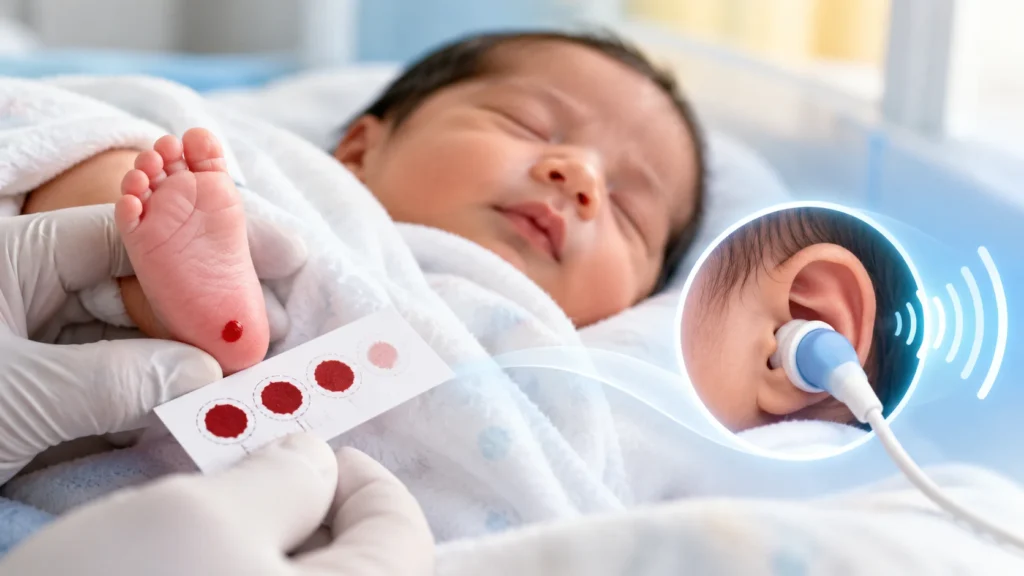
Newborn screening is one of the most important steps in protecting a baby’s health in the first days of life. Many serious conditions do not show any visible signs at birth. A baby may look completely healthy, feed normally, and sleep well, yet still have an underlying condition that can affect growth, brain development, hearing, metabolism, or hormone function. Newborn screening helps detect such conditions early, often before symptoms appear.
The most well-known newborn screening test is the Guthrie test, also called the heel prick test or blood spot screening. It is a simple test where a few drops of blood are taken from the baby’s heel and tested for certain inherited and metabolic conditions. Along with this, hearing screening is done to check whether the baby can hear normally. Early detection of hearing loss is important because it can affect speech, language, and learning if not addressed in time.
Newborn screening is a set of simple tests done shortly after birth to check for certain serious but treatable conditions. The goal is to identify babies who may be at risk of health problems before symptoms develop. Early detection allows doctors to start treatment quickly, which can prevent serious complications and support normal growth and development.
Newborn screening usually includes:
These tests are quick, safe, and usually done before the baby leaves the hospital. They do not replace regular baby check-ups but act as an early safety net to catch hidden conditions.
Many conditions screened at birth do not show symptoms in the first few days. By the time symptoms appear, some damage may already have occurred. Newborn screening helps avoid this delay.
For many conditions, treatment started in the first days or weeks of life can prevent severe problems. For example, early thyroid hormone replacement in congenital hypothyroidism can support normal brain development. Early dietary management in metabolic disorders can prevent serious illness. Early hearing support can help speech and language development.
The Guthrie test, also called the heel prick test or newborn blood spot screening, is a simple blood test done in the first few days of life. A few drops of blood are collected from the baby’s heel and placed on a special card. This card is then sent to a laboratory for testing.
The test checks for a range of inherited and metabolic conditions that may not be visible at birth. It is named after Dr. Robert Guthrie, who developed the original method for detecting phenylketonuria, a metabolic disorder. Over time, the test has expanded to screen for many more conditions.
The test may cause brief discomfort or a small prick sensation, similar to a routine blood test. It is quick and safe. Most babies settle soon after the test, especially when comforted by a parent.
The exact list of conditions screened may vary by hospital and region, but commonly includes the following.
Newborn hearing screening is a quick, painless test done to check whether a baby can hear normally. Hearing is essential for speech, language, learning, and social development. Early detection of hearing loss allows timely support and intervention.
Hearing loss in newborns may not be obvious. Babies cannot tell us they cannot hear. If hearing loss is missed, it can affect speech, language, learning, and social skills. Early detection allows early support such as hearing aids, therapy, or further evaluation.
In addition to the Guthrie test and hearing screening, some hospitals may offer other checks.
Timing is important for accurate results.
Some conditions are only detectable after the baby has been feeding for a day or two. Testing too early may give false results. Testing too late may delay treatment. That is why hospitals follow standard timing guidelines.
After the tests are done, results are reviewed by the medical team.
An abnormal screening result does not always mean the baby has the condition. It means more testing is needed to confirm or rule it out. Many babies with initial abnormal results are found to be normal after further testing.
The main benefit of newborn screening is early treatment.
Early treatment can prevent serious complications such as intellectual disability, developmental delay, severe illness, or permanent hearing damage. In many cases, babies who are treated early grow and develop normally.
Parents play an important role in the screening process.
Parents often have questions and concerns about newborn screening.
Yes, newborn screening tests are safe. The Guthrie test involves a small heel prick, and the hearing test is painless. There are no known long-term risks from these screening tests.
The heel prick may cause brief discomfort. The hearing test is painless. Most babies settle quickly, especially when held or fed after the test.
If screening was missed, it should be done as soon as possible. Late screening is still better than no screening, though early testing gives the best results.
Yes, screening tests can sometimes give false positives or false negatives. That is why abnormal results are always followed by confirmatory testing.
A normal screening result means the baby is unlikely to have the screened conditions. It does not replace regular check-ups or rule out every possible health issue.
Newborn screening is not just a one-time test. It is part of a larger system of early child health care.
Newborn screening requires accurate testing, clear communication, and timely follow-up. A hospital with experienced pediatric and neonatal teams can make a major difference in early detection and care.
The Guthrie test, also called the heel prick test, is a blood spot screening done in the first few days of life. A few drops of blood from the baby’s heel are tested for certain metabolic and hormonal conditions. It is quick, safe, and painless apart from a brief prick.
The test may cause brief discomfort similar to a small pinprick. Most babies settle quickly, especially when comforted. The benefit of early detection far outweighs the brief discomfort.
The newborn hearing test checks whether the baby can hear normally. It uses soft sounds and measures the baby’s response. It is painless and takes only a few minutes.
The Guthrie test is usually done between 24 and 72 hours after birth. Hearing screening is often done before discharge or within the first month. Timing may vary based on the baby’s health and hospital protocol.
An abnormal result does not always mean the baby has a condition. It means more testing is needed. The hospital will contact parents for follow-up and confirmatory tests.
No, screening covers a specific list of conditions. It does not replace regular check-ups or detect every possible issue. Regular pediatric visits are still important.
In many places, newborn screening is strongly recommended and may be required by hospital protocol. Parents are encouraged to complete it because early detection can prevent serious health problems.
Newborn screening is a simple but powerful step in protecting a baby’s health. The Guthrie test and hearing test can detect serious conditions before symptoms appear, allowing early treatment and better outcomes. For parents, it offers reassurance and a clear plan if any issue is found.
The most important things are timely screening, clear communication, and prompt follow-up if results are abnormal. With early detection and the right care, many babies go on to grow and develop normally. Newborn screening is not just a test, it is an early investment in a child’s lifelong health.
Rama Hospital can help provide complete newborn screening, including the Guthrie test and hearing test, along with clear guidance and follow-up care for parents.

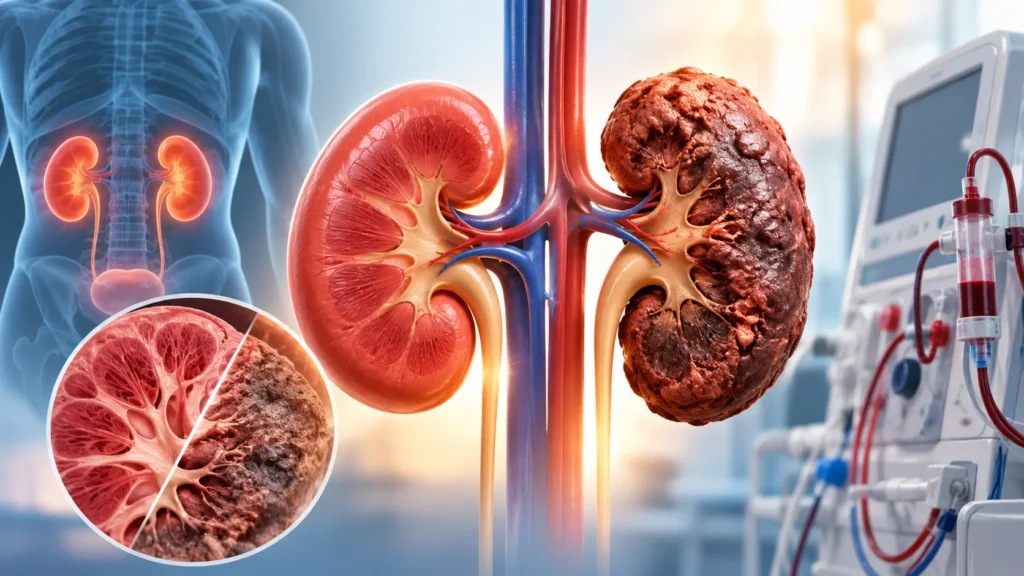

Newborn screening (NBS) is a public health program that identifies infants with serious but treatable congenital disorders before symptoms develop, enabling early intervention and improved outcomes.
No rows found.