The music gets louder, the Garba circle grows faster, and everyone is enjoying the festive energy of Navratri. Friends are dancing together, colourful outfits fill the dance floor, and taking a break feels like the last thing anyone wants to do.
But what happens when someone suddenly feels dizzy, experiences chest discomfort or struggles to catch their breath? Many people dismiss these symptoms as exhaustion, dehydration or the result of dancing too much.
In most cases, a faster heartbeat and increased breathing during exercise are normal responses to physical activity. However, certain symptoms can signal a more serious heart problem that should never be ignored.
Sudden cardiac arrest can happen during physical activity, even in young people who appear healthy. It is a life-threatening emergency in which the heart suddenly stops pumping blood effectively. Immediate recognition, cardiopulmonary resuscitation (CPR) and rapid access to an automated external defibrillator (AED) can improve the chances of survival.
What Is Sudden Cardiac Arrest?
Sudden cardiac arrest occurs when the heart’s electrical system malfunctions, causing the heart to stop pumping blood effectively. As a result, blood flow to the brain and other vital organs is interrupted.
One common cause is a dangerous abnormal heart rhythm, known as an arrhythmia. Ventricular fibrillation is one such rhythm, in which the heart’s lower chambers quiver chaotically instead of pumping blood effectively.
Without immediate treatment, cardiac arrest can lead to death within minutes. CPR helps maintain blood circulation, while an AED can deliver an electrical shock when an appropriate shockable rhythm is present.
Is cardiac arrest the same as a heart attack?
No. Although the terms are often used interchangeably, a heart attack and sudden cardiac arrest are two different medical emergencies.
| Feature | Heart attack | Sudden cardiac arrest |
| What happens? | Blood flow to part of the heart muscle is blocked. | The heart suddenly stops pumping blood effectively. |
| Main problem | Circulation to the heart muscle. | Electrical activity and effective pumping. |
| Common symptoms | Chest pressure, discomfort, breathlessness, sweating or nausea. | Sudden collapse, unresponsiveness and absent or abnormal breathing. |
| Immediate response | Emergency medical assessment and treatment. | Immediate emergency call, CPR and AED use when indicated. |
A heart attack can sometimes trigger cardiac arrest, but cardiac arrest can also occur because of other heart conditions.
Understanding this difference matters because someone experiencing cardiac arrest may not have time to describe chest pain or ask for help. In some cases, the first obvious sign is sudden collapse.
Can Dancing Garba Trigger Sudden Cardiac Arrest?
Garba involves continuous movement, repeated turns, coordinated steps and periods of vigorous dancing. Depending on the pace, duration and intensity, it can be a demanding physical activity.
During exercise, the heart beats faster to supply working muscles with oxygen-rich blood. This is a normal physiological response.
However, physical exertion can sometimes trigger a serious cardiac event in a person with an underlying heart condition, including an undiagnosed electrical or structural abnormality. Some inherited heart conditions, for example, can cause dangerous arrhythmias during exercise.
This does not mean that Garba itself causes cardiac arrest in most people. Nor does it mean that a young person who dances regularly is automatically at risk.
The important distinction is between normal exercise-related exertion and symptoms that are unusual, severe or persistent.
For example, a person may normally breathe faster after several energetic dance rounds. But chest pressure, fainting during exertion or sudden severe breathlessness should not be dismissed as ordinary fatigue.
7 Warning Signs Young People Should Never Ignore
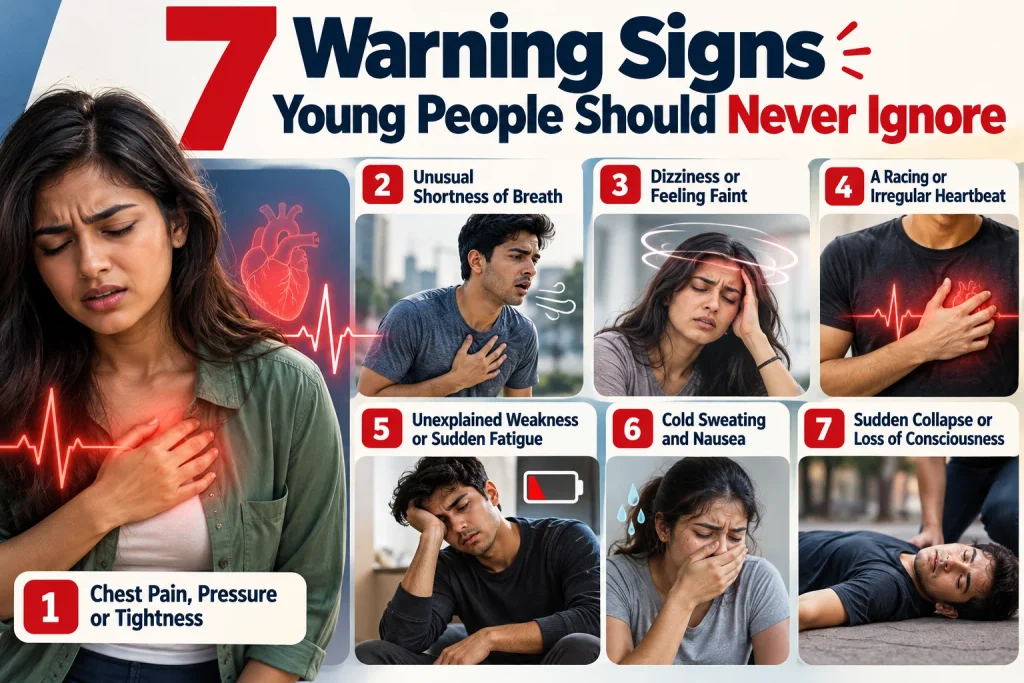
One reason cardiac emergencies can be difficult to recognise is that people often associate heart disease with older adults. Young people may assume that they are safe because they exercise regularly, have no known medical condition or feel healthy most of the time.
However, some heart conditions can remain undiagnosed until symptoms appear.
The following warning signs deserve attention, particularly when they occur during physical activity.
1. Chest Pain, Pressure or Tightness
Chest discomfort during dancing should not automatically be attributed to muscle strain or exhaustion.
A person may experience pressure, squeezing, heaviness or discomfort in the centre of the chest. The sensation may persist, recur or occur alongside breathlessness, sweating or nausea.
Chest discomfort can have several causes, and not every episode indicates a heart problem. However, new or unexplained chest pain during exertion requires prompt medical assessment.
2. Unusual Shortness of Breath
Breathing faster after vigorous dancing is expected. The concern arises when breathlessness seems disproportionate to the activity, begins suddenly or does not improve appropriately with rest.
Warning signs include:
- Struggling to breathe despite slowing down.
- Being unable to speak comfortably because of breathlessness.
- Breathlessness accompanied by chest discomfort or dizziness.
- Sudden severe difficulty breathing.
3. Dizziness or Feeling Faint
A crowded Garba venue, heat, dehydration and prolonged standing can contribute to dizziness. But feeling as though you might faint during physical exertion may also indicate a heart rhythm problem or another serious medical condition.
Pay particular attention to dizziness that occurs alongside palpitations, chest pain or severe breathlessness.
Fainting during exercise is a warning sign that warrants medical evaluation, especially when the cause is unclear.
4. A Racing or Irregular Heartbeat
Your heart rate normally increases during physical activity. What matters is whether the sensation is unusual for you.
Some people describe palpitations as a fluttering sensation, pounding heartbeat, skipped beats or a sudden rapid pulse.
Palpitations that repeatedly occur during exercise, begin abruptly or are associated with faintness, chest discomfort or breathlessness need medical assessment.
5. Unexplained Weakness or Sudden Fatigue
Everyone becomes tired after sustained physical activity. But sudden, unusual weakness that feels out of proportion to the effort may be a reason to stop and assess what is happening.
If weakness occurs with cold sweating, nausea, chest discomfort or difficulty breathing, seek urgent medical attention.
6. Cold Sweating and Nausea
Sweating is normal during dancing, particularly in crowded venues. Cold, clammy sweating accompanied by chest discomfort, breathlessness, nausea or lightheadedness is different.
These symptoms can occur during a heart attack and should not be ignored merely because the person is young.
7. Sudden Collapse or Loss of Consciousness
This is the most urgent warning sign.
If someone suddenly collapses, does not respond when spoken to or tapped on the shoulders, and is not breathing normally or is only gasping, they may be experiencing cardiac arrest.
Do not assume the person has simply fainted, become tired or needs fresh air.
Call emergency services immediately, begin CPR and arrange for an AED to be brought to the scene.
Why Can Sudden Cardiac Arrest Affect Young Indians?
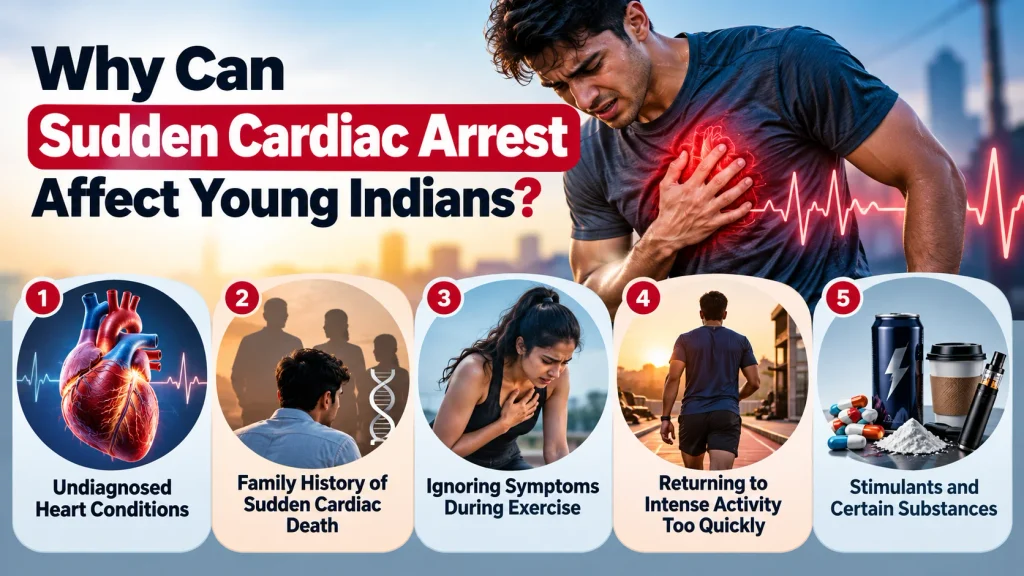
Sudden cardiac arrest in young people may be associated with previously undiagnosed heart conditions. Some individuals have no obvious symptoms until a dangerous rhythm develops.
Several underlying conditions and risk factors are worth understanding.
1. Undiagnosed Heart Conditions
Some structural or electrical heart conditions can increase the risk of serious arrhythmias.
Examples include:
- Hypertrophic cardiomyopathy: A condition in which the heart muscle becomes abnormally thick.
- Long QT syndrome: An electrical disorder that can predispose a person to dangerous heart rhythms.
- Other inherited arrhythmia disorders: Conditions that affect the heart’s electrical activity.
- Certain congenital heart conditions: Structural abnormalities present from birth.
2. Family History of Sudden Cardiac Death
Family history can provide important clues about inherited heart conditions.
If a close family member died unexpectedly at a young age, experienced unexplained fainting or was diagnosed with an inherited heart rhythm disorder, share this information with your doctor.
A family history does not automatically mean that you have the same condition. However, it may influence whether further cardiac evaluation is appropriate.
3. Ignoring Symptoms During Exercise
Young people may ignore warning signs because they believe that heart problems are unlikely at their age.
For example, someone might continue dancing despite repeated dizziness or assume that chest discomfort is caused by exhaustion.
The problem is not dancing itself. It is continuing intense activity despite symptoms that may require medical assessment.
4. Returning to Intense Activity Too Quickly
Someone who is not accustomed to sustained physical activity may find a long Garba session demanding.
Gradually increasing exercise intensity can make physical activity more manageable. However, poor conditioning alone does not explain every cardiac emergency, and even fit individuals can have underlying heart conditions.
5. Stimulants and Certain Substances
Some substances, including certain recreational stimulants, can affect heart rate, blood pressure and heart rhythm.
If you take prescribed medicines or supplements, discuss any potential cardiovascular effects with your healthcare professional. Do not stop prescribed medication without medical advice.
Avoid relying on stimulant products to overcome fatigue during prolonged dancing.
How to Distinguish Normal Exercise Fatigue From a Warning Sign
It can be difficult to decide whether a symptom is simply the result of exertion. Looking at its severity, onset and accompanying symptoms can help guide your response, although a table cannot diagnose the cause.
| Symptom | More consistent with ordinary exertion | When to be concerned |
| Faster heartbeat | Gradually increases with activity and settles during recovery. | Sudden or unusual racing heartbeat, especially with dizziness or chest discomfort. |
| Breathlessness | Proportionate to the intensity of dancing and improves with rest. | Severe, sudden or disproportionate breathlessness. |
| Sweating | Develops with heat and physical activity. | Cold, clammy sweating with chest discomfort, nausea or faintness. |
| Tiredness | Develops gradually after sustained activity. | Sudden, unexplained weakness or collapse. |
| Dizziness | Mild lightheadedness may have several causes. | Fainting during exertion or dizziness with palpitations or chest pain. |
What Should You Do If Someone Collapses While Dancing Garba?
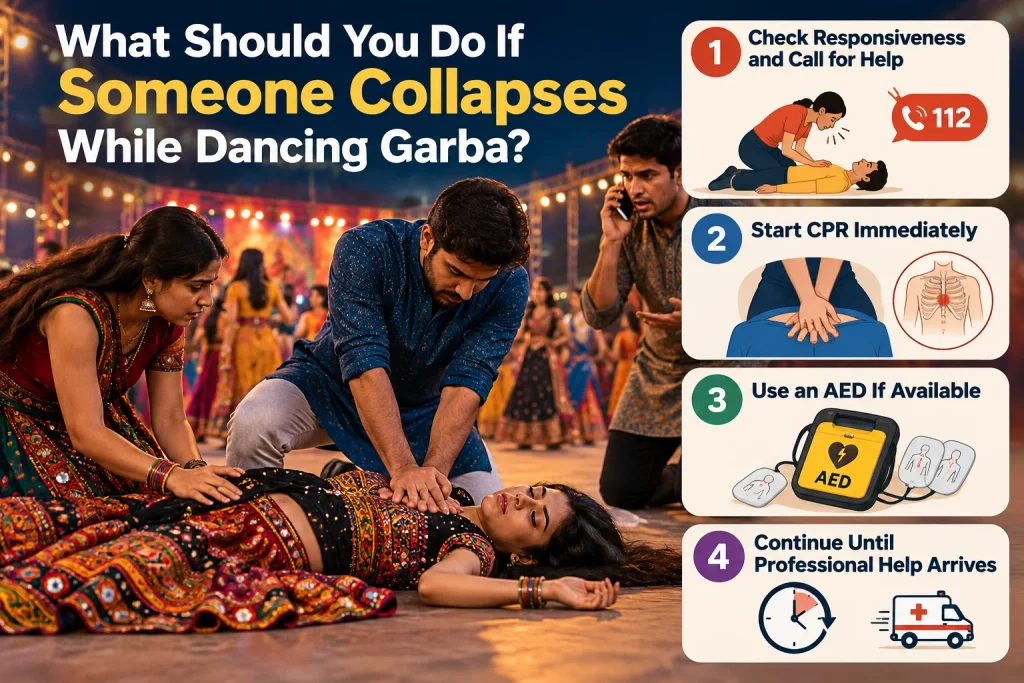
A cardiac emergency at a crowded festival can be frightening. People may gather around the person, look for family members or try to move them away from the dance floor.
The most useful response is to act quickly and give clear instructions.
Step 1: Check Responsiveness and Call for Help
Make sure the immediate area is safe. Tap the person’s shoulders and call out to see whether they respond.
If they are unresponsive and not breathing normally, or are only gasping, treat the situation as a possible cardiac arrest.
Ask a specific person to call emergency services and another person to find an AED, if one is available.
In India, call 112 for emergency assistance. An ambulance service can also be contacted through 108 where available.
Step 2: Start CPR Immediately
For an unresponsive adult who is not breathing normally, begin chest compressions as soon as possible.
For an adult, Hands-Only CPR involves:
- Placing the heel of one hand in the centre of the chest, with the other hand on top.
- Keeping your arms straight and shoulders positioned above your hands.
- Pushing hard and fast at a rate of 100–120 compressions per minute.
- Allowing the chest to return to its normal position between compressions.
Continue until emergency responders take over, the person shows clear signs of recovery, or you cannot continue. Follow the emergency call handler’s instructions.
If you are not trained in CPR, emergency dispatchers may guide you through the process. Do not delay seeking help because you are worried about performing CPR perfectly.
Step 3: Use an AED If Available
An automated external defibrillator, or AED, analyses the heart’s rhythm and determines whether a shock is needed.
If an AED is available:
- Turn it on.
- Follow its spoken and visual instructions.
- Attach the pads to the person’s bare chest as shown.
- Make sure nobody touches the person while the AED analyses the rhythm or delivers a shock.
- Resume CPR when instructed.
AEDs are designed to guide users through the process. Use one as soon as possible while following the device’s prompts.
Step 4: Continue Until Professional Help Arrives
Do not stop CPR simply because the person has not responded immediately.
Continue until emergency medical personnel take over or the person begins to move and breathe normally. If the person starts breathing normally, monitor them closely and follow the emergency responder’s instructions.
Even if someone appears to recover after collapsing, they still need urgent medical assessment.
Remember: Calling for help, starting CPR and using an AED promptly can make a critical difference.
When Should You Consult a Cardiologist?
It is worth discussing your heart health with a medical professional if you notice symptoms that repeatedly occur during exercise or if you have risk factors that may warrant further evaluation.
Consider seeking a cardiology consultation if you experience:
- Repeated palpitations during physical activity.
- Unexplained fainting or near-fainting episodes.
- Chest discomfort during exercise.
- Breathlessness that seems disproportionate to your activity.
- A family history of inherited heart disease or unexplained sudden death at a young age.
If symptoms are sudden or severe, do not wait for a routine appointment. Call emergency services.
For people seeking a cardiologist in Noida, a consultation can help assess symptoms, review family history and determine whether investigations are needed. An appropriate heart checkup in Noida should be based on the individual’s medical history and clinical assessment.
Frequently Asked Questions (FAQs)
1. Can sudden cardiac arrest happen to young people?
Yes. Sudden cardiac arrest can affect young people, including those without a previously diagnosed heart condition. Some cases are associated with inherited electrical disorders or structural heart conditions that may not have been recognised earlier.
2. Can dancing Garba cause a heart attack?
Dancing does not ordinarily cause a heart attack in healthy people. However, vigorous physical activity can place additional demands on the cardiovascular system and may trigger a cardiac event in someone with an underlying condition. Chest discomfort or unusual breathlessness during activity should not be ignored.
3. What are the early warning signs of sudden cardiac arrest?
Some people experience warning symptoms before an event, such as fainting, palpitations, chest discomfort or unexplained breathlessness. Others may have no obvious warning signs. Sudden collapse, unresponsiveness and absent or abnormal breathing are critical signs of possible cardiac arrest.
4. Is a racing heartbeat during Garba normal?
A faster heartbeat is expected during vigorous dancing. However, a sudden, unusual or irregular heartbeat, particularly when accompanied by dizziness, chest discomfort or faintness, needs medical assessment.
5. Should young people get a heart checkup before Navratri?
Not every young person requires extensive cardiac testing before dancing. However, people with known heart conditions, unexplained fainting, exertional symptoms or a family history of inherited heart disease or sudden cardiac death should discuss their individual risk with a healthcare professional.
6. Can drinking water prevent cardiac arrest during dancing?
Staying hydrated can help prevent problems related to fluid loss, but it cannot prevent every cause of cardiac arrest. Hydration should not be used as a substitute for medical evaluation when concerning symptoms occur.
7. What should I do if someone suddenly collapses during Garba?
Check whether the person responds and is breathing normally. Call emergency services, ask someone to bring an AED, and start CPR immediately if the person is unresponsive and not breathing normally or is only gasping. Follow the emergency call handler’s instructions.
8. Can a person survive sudden cardiac arrest?
Survival is possible, and immediate CPR and rapid defibrillation when indicated can improve the chances of survival. The response should begin immediately rather than waiting for professional help to arrive before taking action.
Conclusion
Navratri is a time to celebrate, connect with family and friends, and enjoy the energy of Garba. For most people, dancing is a healthy form of physical activity.
But enjoying the festivities also means recognising when something does not feel right.
Chest discomfort, fainting during exercise, unusual palpitations and severe breathlessness should never be dismissed simply because someone is young or appears fit. And if a person suddenly collapses and is not breathing normally, immediate emergency assistance, CPR and access to an AED can save a life.
If you have recurring symptoms during exercise or concerns about your family history, consider speaking with a qualified cardiologist. Patients looking for a cardiologist in Noida can seek an individual assessment to understand their symptoms and determine the next steps.
Celebrate the festival. Enjoy the dance. And remember that listening to your body is part of taking care of your heart.