Shoulder dislocation is one of the most common joint injuries, especially in young people, athletes, and those involved in sports, falls, or accidents. The shoulder is the most mobile joint in the body, which allows a wide range of movement such as lifting, throwing, reaching, and rotating the arm. However, this high mobility also makes it more vulnerable to injury and dislocation.
A shoulder dislocation happens when the upper end of the arm bone, called the humeral head, comes out of its normal position in the shoulder socket. This can happen due to a fall, direct impact, sudden twisting, or forceful movement of the arm. In many cases, the shoulder goes out of place in the front direction, which is called anterior dislocation. Less commonly, it may dislocate backward or downward.
Shoulder dislocation is painful and needs prompt medical attention. The joint must be put back in place safely, usually by a trained orthopaedic doctor. After that, proper rest, rehabilitation, and strengthening are needed to prevent repeat dislocations. Some people may develop recurrent shoulder instability, where the shoulder keeps coming out of place even with minor movements.
What is Shoulder Dislocation?
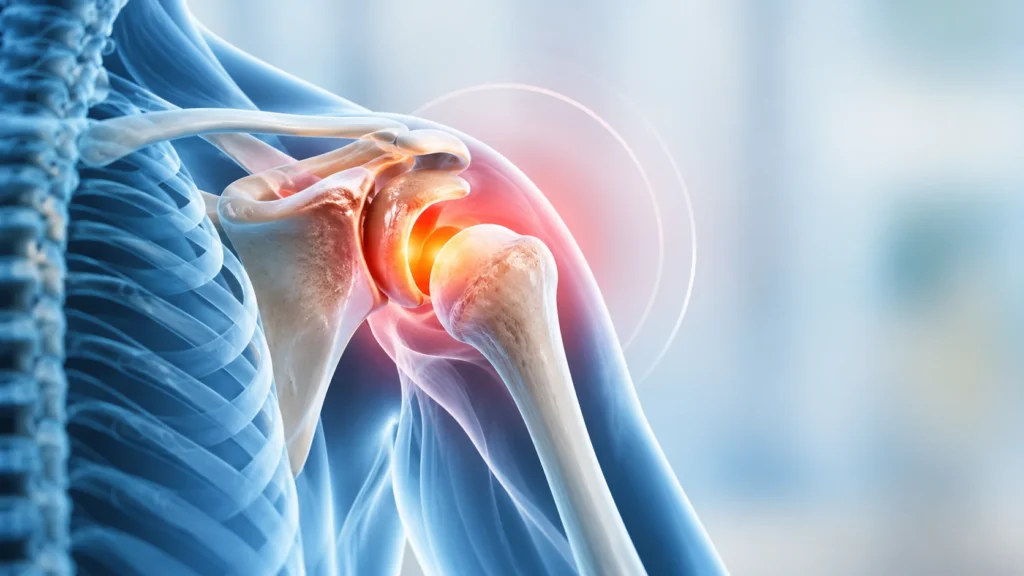
Shoulder dislocation happens when the ball of the shoulder joint comes out of the socket. The shoulder joint is made up of the head of the humerus, which is the upper arm bone, and the glenoid, which is the shallow socket on the shoulder blade. Because the socket is shallow, the shoulder can move in many directions, but it also depends on muscles, ligaments, and the joint capsule to stay stable.
When the shoulder dislocates, the ball slips out of the socket, causing pain, swelling, and loss of movement. The muscles around the shoulder go into spasm, making it difficult or impossible to move the arm normally. In some cases, nerves, blood vessels, or surrounding soft tissues may also get injured.
Shoulder dislocation can happen once due to a strong injury, or it can become a repeated problem. When it happens again and again, it is called recurrent shoulder dislocation or shoulder instability. This is more common in young patients and athletes because the tissues around the joint may become stretched or damaged after the first injury.
Types of Shoulder Dislocation
Shoulder dislocation can be classified based on the direction in which the ball moves out of the socket.
Based on direction
- Anterior dislocation, which is the most common type and happens when the ball moves forward and downward out of the socket.
- Posterior dislocation, which is less common and happens when the ball moves backward out of the socket.
- Inferior dislocation, which is rare and happens when the ball moves downward out of the socket.
- Superior dislocation, which is very rare and happens when the ball moves upward out of the socket.
Based on frequency
- First-time or acute dislocation, which happens for the first time due to injury.
- Recurrent dislocation, which happens repeatedly after the first injury.
- Chronic instability, where the shoulder feels loose or unstable even if it does not fully dislocate every time.
Based on severity
- Simple dislocation, where only the joint is displaced without major damage to surrounding structures.
- Complex dislocation, where there is associated fracture, nerve injury, or damage to soft tissues.
- Fracture-dislocation, where the shoulder bone or socket is broken along with dislocation.
Causes of Shoulder Dislocation
Shoulder dislocation usually happens due to a strong force that pushes the ball out of the socket.
Common causes include:
- Fall on an outstretched arm.
- Direct blow to the shoulder during sports or accident.
- Sudden twisting or pulling of the arm.
- Road traffic accidents.
- Contact sports such as football, rugby, wrestling, or kabaddi.
- Overhead sports such as cricket, volleyball, basketball, or swimming.
- Lifting heavy objects with poor technique.
- Repetitive overhead movements that weaken the shoulder over time.
- Muscle weakness or poor shoulder control.
- Previous shoulder injury that has not fully healed.
Why the shoulder is vulnerable
The shoulder is designed for mobility rather than stability. The socket is shallow, and the joint relies on soft tissues such as the labrum, capsule, ligaments, and rotator cuff muscles to stay in place. When a strong force is applied, these structures may not be enough to hold the joint, leading to dislocation.
Risk Factors for Shoulder Dislocation
Some people are more likely to dislocate their shoulder than others.
Higher-risk groups
- Young adults, especially those between fifteen and thirty years.
- Athletes involved in contact or overhead sports.
- People with previous shoulder dislocation.
- People with naturally loose joints or hypermobility.
- Those with weak rotator cuff muscles.
- People with poor posture or muscle imbalance.
- Individuals with a history of shoulder injury.
- People involved in heavy physical work.
- Those with connective tissue disorders.
Why risk increases in these groups
- Younger patients have more active lifestyles and higher injury exposure.
- Athletes face repeated stress and impact on the shoulder.
- Previous dislocation weakens the joint structures.
- Loose joints are more prone to instability.
- Weak muscles provide less support to the joint.
- Poor technique during lifting or sports increases injury risk.
Symptoms of Shoulder Dislocation
Symptoms of shoulder dislocation are usually sudden and severe.
Common symptoms include:
- Sudden severe pain in the shoulder.
- Visible deformity or abnormal shape of the shoulder.
- Inability to move the arm.
- Swelling and bruising.
- Numbness or tingling in the arm or hand.
- Weakness in the arm.
- Feeling that the shoulder is out of place.
- Muscle spasm around the shoulder.
- Loss of normal shoulder contour.
Symptoms of recurrent dislocation
- Repeated episodes of the shoulder coming out.
- Feeling of instability or looseness.
- Apprehension when moving the arm in certain positions.
- Pain during overhead activity.
- Weakness or fatigue in the shoulder.
- Clicking or catching sensation.
Emergency warning signs
- Severe pain that does not settle.
- Complete inability to move the arm.
- Numbness or loss of sensation in the arm or hand.
- Pale or cold hand.
- Visible deformity.
- Open wound near the shoulder.
- Signs of nerve or blood vessel injury.
Shoulder Dislocation in Different Age Groups
Shoulder dislocation can affect people of different ages, but the pattern and recovery may vary.
In young adults
- More common due to sports and high activity.
- Higher risk of recurrent dislocation.
- May need surgery if instability continues.
- Recovery is usually faster if treated early.
In middle-aged adults
- May be associated with rotator cuff injury.
- Recovery may take longer due to muscle weakness.
- Rehabilitation is important to restore strength.
In older adults
- Higher risk of fracture along with dislocation.
- Recovery may be slower due to reduced healing capacity.
- Associated conditions such as arthritis may affect outcome.
How is Shoulder Dislocation Diagnosed?
Diagnosis is based on history, physical examination, and imaging tests. Since shoulder dislocation can be associated with fractures or nerve injury, proper evaluation is important.
Diagnostic steps
- History of injury and how it happened.
- Assessment of pain, swelling, and deformity.
- Checking movement and strength.
- Neurological examination to check sensation and reflexes.
- Vascular examination to check blood flow to the hand.
- Imaging tests to confirm dislocation and rule out fracture.
Common tests that may be done
- X-ray of the shoulder to confirm dislocation and check for fracture.
- CT scan if fracture or complex injury is suspected.
- MRI to assess soft tissue injury such as labrum or rotator cuff.
- Nerve conduction study if nerve injury is suspected.
- Ultrasound in some cases to assess soft tissues.
Why diagnosis matters
Accurate diagnosis helps determine the type of dislocation, whether there is associated fracture or soft tissue injury, and the best treatment plan. Missing an associated injury can lead to poor recovery or recurrent instability.
Treatment for Shoulder Dislocation
Treatment depends on whether it is a first-time dislocation or recurrent, and whether there is associated injury.
1. Immediate first aid
Before reaching the hospital, some basic steps can help reduce pain and prevent further injury.
- Do not try to force the shoulder back into place.
- Keep the arm still and supported.
- Apply ice wrapped in cloth to reduce swelling.
- Avoid lifting or moving the arm.
- Seek urgent medical help.
2. Shoulder reduction
The main treatment is to put the shoulder back into place, called reduction.
- Usually done by an orthopaedic doctor in emergency or clinic.
- May require pain relief or sedation.
- Different techniques may be used depending on the case.
- After reduction, the shoulder is immobilized temporarily.
3. Immobilization
After reduction, the shoulder is kept still for a short period to allow healing.
- Sling or shoulder immobilizer is used.
- Duration depends on age and severity.
- Usually a few days to a few weeks.
- Too long immobilization can cause stiffness, so early guided movement is important.
4. Pain management
Pain relief is important in the early phase.
- Anti-inflammatory medicines may be prescribed.
- Ice packs help reduce swelling.
- Rest and support reduce strain on the joint.
5. Physiotherapy and rehabilitation
Rehabilitation is the most important part of recovery after shoulder dislocation.
- Range of motion exercises to restore movement.
- Strengthening exercises for rotator cuff and shoulder muscles.
- Scapular stability exercises.
- Proprioception and balance training.
- Gradual return to sports or work.
- Prevention of stiffness and weakness.
6. Surgery
Surgery may be needed in certain cases.
- Recurrent dislocation or instability.
- Significant labrum or capsule injury.
- Fracture-dislocation.
- Failed conservative treatment.
- Young athletes with high demand on the shoulder.
Types of surgery
- Arthroscopic stabilization, which is minimally invasive and uses small incisions.
- Open stabilization, which may be needed for complex cases.
- Latarjet procedure, which is used in cases with significant bone loss.
- Repair of associated rotator cuff or labrum injury.
Recovery After Treatment
Recovery depends on the type of dislocation, treatment method, and patient factors.
Recovery after first-time dislocation
- Shorter recovery in many cases.
- Return to daily activities within weeks.
- Full sports return may take a few months.
- Rehabilitation is key to prevent recurrence.
Recovery after recurrent dislocation or surgery
- Longer recovery period.
- Gradual return to activity.
- Regular physiotherapy needed.
- Monitoring for stability and strength.
Rehabilitation phases
- Early phase focuses on pain control and gentle movement.
- Middle phase focuses on strength and stability.
- Later phase focuses on sport-specific or work-specific training.
- Final phase focuses on full return to activity.
Possible Complications
Shoulder dislocation can lead to complications if not treated properly.
Complications may include:
- Recurrent dislocation.
- Chronic shoulder instability.
- Nerve injury.
- Blood vessel injury.
- Rotator cuff tear.
- Labrum injury.
- Fracture.
- Shoulder stiffness.
- Arthritis in the long term.
- Weakness or reduced function.
- Persistent pain.
Why complications happen
Repeated dislocation can damage the labrum, capsule, and bone. Nerve or vessel injury can happen during the initial trauma or during reduction. Long-term instability can lead to arthritis and reduced shoulder function.
When to See a Doctor
Medical evaluation is important for anyone with suspected shoulder dislocation.
- Sudden severe shoulder pain after injury.
- Visible deformity.
- Inability to move the arm.
- Numbness or tingling.
- Recurrent episodes of dislocation.
- Feeling of instability.
- Pain that does not improve with rest.
Prevention of Shoulder Dislocation
Prevention is possible in many cases through strengthening, technique, and awareness.
Prevention pointers
- Strengthen rotator cuff and shoulder muscles.
- Maintain good posture.
- Use proper technique during sports and lifting.
- Warm up before activity.
- Avoid overtraining.
- Use protective gear in contact sports.
- Seek early treatment for shoulder injuries.
- Follow rehabilitation advice after any shoulder injury.
For athletes
- Sport-specific training.
- Balance and proprioception exercises.
- Gradual return after injury.
- Regular monitoring for instability.
Why Choose Rama Hospital for Shoulder Dislocation Treatment?
Shoulder dislocation requires expert orthopaedic care, accurate diagnosis, and structured rehabilitation. A hospital with experienced orthopaedic and shoulder specialists can make a major difference in outcomes.
- Expert evaluation by orthopaedic and shoulder specialists.
- Advanced imaging for accurate diagnosis.
- Safe and effective reduction of dislocation.
- Structured rehabilitation program.
- Surgical options for recurrent or complex cases.
- Long-term follow-up to prevent recurrence.
Frequently Asked Questions (FAQs)
Is shoulder dislocation serious?
Yes, it can be serious, especially if there is nerve, vessel, or fracture involvement. Even without complications, it needs proper treatment and rehabilitation to prevent recurrent instability.
Can shoulder dislocation be treated without surgery?
Yes, many first-time dislocations can be treated with reduction, immobilization, and physiotherapy. Surgery is usually needed for recurrent dislocation or significant soft tissue injury.
How long does recovery take?
Recovery depends on the severity and treatment. Simple cases may recover in a few weeks, while recurrent or surgical cases may take several months. Rehabilitation is important for full recovery.
Can shoulder dislocation happen again?
Yes, recurrent dislocation is common, especially in young patients and athletes. Proper rehabilitation and, in some cases, surgery can reduce the risk of recurrence.
What is the difference between dislocation and subluxation?
Dislocation means the joint is fully out of place. Subluxation means the joint partially comes out but returns on its own. Both can cause instability and pain.
Can I move my shoulder after dislocation?
Not immediately. The shoulder should be immobilized for a short period after reduction. Gradual movement is started under physiotherapy guidance to prevent stiffness.
When is surgery needed for shoulder dislocation?
Surgery is considered for recurrent dislocation, significant labrum or capsule injury, fracture-dislocation, or failed conservative treatment. The goal is to restore stability and prevent future episodes.
Conclusion
Shoulder dislocation is a common but serious joint injury that needs prompt medical attention. It can happen due to falls, sports, accidents, or sudden twisting of the arm. While many first-time dislocations recover well with reduction and rehabilitation, recurrent dislocation can lead to long-term instability and arthritis.
The most important steps are early diagnosis, safe reduction, proper immobilization, and structured rehabilitation. For patients with recurrent instability or associated injuries, surgical treatment may be needed to restore stability. With the right care, most people can return to normal activity and prevent future episodes.
Rama Hospital can help evaluate shoulder dislocation, provide safe and effective treatment, and guide patients through rehabilitation to restore full function and prevent recurrence.