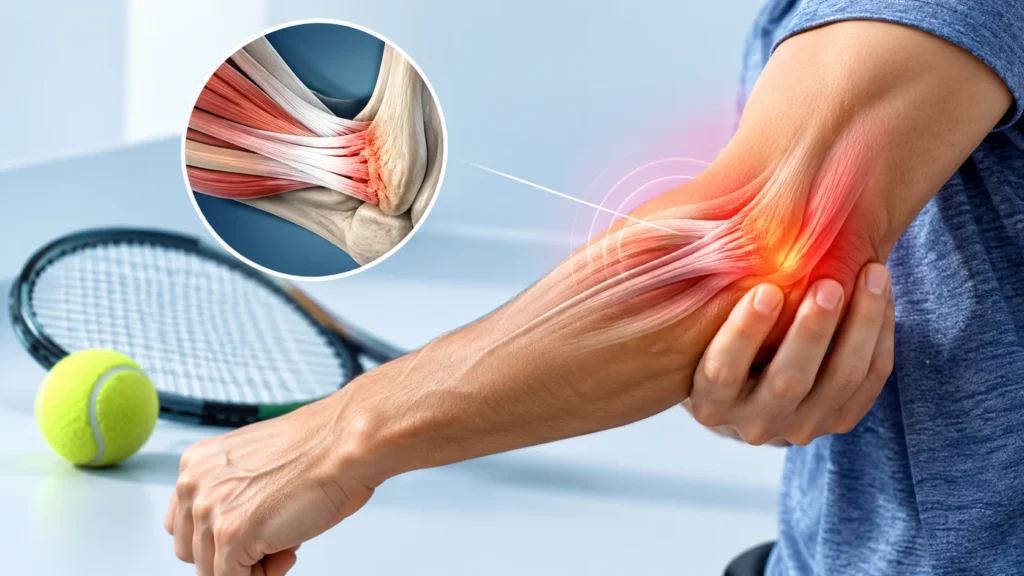
Tennis elbow is a common cause of pain on the outer side of the elbow. Despite its name, most people who develop this condition are not tennis players. It is seen in office workers, homemakers, manual labourers, athletes, painters, carpenters, and anyone who repeatedly uses the forearm and wrist. The pain usually starts gradually and may worsen with gripping, lifting, typing, or twisting movements.
Tennis elbow, medically known as lateral epicondylitis, happens when the tendons that attach to the outer part of the elbow become irritated or damaged due to overuse. This leads to pain, weakness, and reduced grip strength. Many people ignore the early pain and continue working, which can make the problem last longer.
Tennis elbow is an overuse injury that affects the tendons on the outer side of the elbow. These tendons connect the forearm muscles to the bone at the elbow. When these tendons are used repeatedly, small tears or irritation can develop, leading to pain and weakness.
The condition is called tennis elbow because it was first noticed in tennis players. However, it is much more common in people who do repetitive work with the hands and arms, such as typing, lifting, cooking, cleaning, or using tools. Tennis elbow can affect anyone, not just athletes.
Most cases improve with rest, physiotherapy, and proper treatment. But if ignored for a long time, the pain can become chronic and affect daily activities.
Tennis elbow is caused by repeated stress on the tendons at the outer elbow.
When the same movement is repeated many times, the tendons at the elbow get stressed. Small micro-tears can develop in the tendon fibres. The body tries to repair these tears, but if the stress continues, healing cannot keep up. This leads to pain, inflammation, and weakness.
Some people are more likely to develop tennis elbow than others.
Symptoms usually develop gradually and worsen over time if not treated.
The pain is usually sharp or burning and is felt on the outside of the elbow. It may start mild and become stronger over weeks or months. In some cases, even simple tasks like holding a phone or shaking hands can hurt.
Tennis elbow can affect different people in different ways.
Diagnosis is usually based on symptoms and physical examination. Imaging is not always needed but may be used in some cases.
Tennis elbow can sometimes be confused with other conditions such as nerve compression, arthritis, or referred pain from the neck. Proper diagnosis ensures the right treatment is given.
Most cases of tennis elbow improve with non-surgical treatment. The goal is to reduce pain, promote healing, and restore strength.
The first step is to reduce or stop the activity that is causing the pain.
Ice can help reduce pain and inflammation in the early stage.
Physiotherapy is one of the most important parts of treatment.
A counterforce brace or elbow strap can help reduce strain on the tendon.
Medicines may be used to reduce pain and inflammation.
In some cases, injections may be considered.
Surgery is rarely needed and is considered only when other treatments fail.
Recovery time varies depending on the severity and how early treatment is started.
If tennis elbow is not treated, it can lead to long-term problems.
Continued stress on an already damaged tendon prevents healing. Over time, the tendon may degenerate further, making recovery harder and longer.
Medical evaluation is important if symptoms persist or worsen.
Prevention is possible with proper habits and conditioning.
Tennis elbow may seem like a minor problem, but if not treated properly, it can affect work, sports, and daily life. A hospital with experienced orthopaedic specialists and physiotherapists can provide accurate diagnosis and effective treatment.
Yes, most people who get tennis elbow do not play tennis. It is common in office workers, manual labourers, and anyone who does repetitive arm movements.
Most cases improve within a few weeks to a few months with rest and physiotherapy. Chronic cases may take longer and need more intensive treatment.
Yes, most cases improve with rest, physiotherapy, bracing, and medicines. Surgery is only needed in rare, severe cases that do not respond to other treatment.
Eccentric wrist exercises are often recommended. These involve slowly lowering the wrist against resistance to strengthen the tendon. A physiotherapist can guide the correct technique.
Yes, it can come back if the underlying cause is not addressed. Proper technique, strengthening, and avoiding overuse are important to prevent recurrence.
Surgery is considered only when pain is severe, chronic, and does not improve with months of conservative treatment. It involves repairing or removing damaged tendon tissue.
It depends on the severity. Light work may be possible with modifications, but heavy or repetitive tasks may need to be reduced or avoided until healing improves.
Tennis elbow is a common overuse injury that causes pain and weakness on the outer side of the elbow. It affects many people beyond athletes, including office workers, manual labourers, and homemakers. The good news is that most cases improve with proper treatment and physiotherapy.
The key to recovery is early recognition, rest, physiotherapy, and gradual return to activity. For patients with persistent pain, weakness, or difficulty doing daily tasks, a medical evaluation can make a major difference. With the right care, most people recover fully and return to normal activities.
Rama Hospital can help evaluate tennis elbow, identify the cause, and provide a clear treatment plan that supports healing, strength, and prevention of recurrence.

Tennis elbow (lateral epicondylitis) is an overuse injury that affects a tendon in your elbow. It happens when you do a repetitive motion, like twisting or swinging your lower arm a lot.
No rows found.