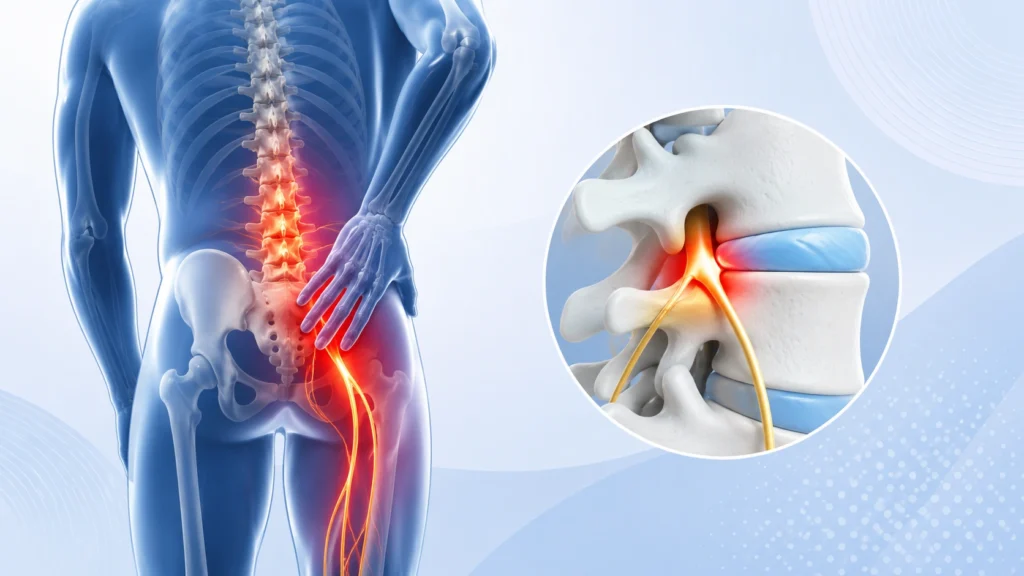
Sciatica is a common condition that causes pain, tingling, numbness, or weakness along the path of the sciatic nerve. This nerve runs from the lower back, through the hips and buttocks, and down each leg. Sciatica usually affects only one side of the body. The pain can range from mild discomfort to severe, sharp, or burning pain that makes it difficult to sit, stand, or walk.
Many people use the word sciatica to describe any lower back pain, but true sciatica involves nerve irritation or compression. It often happens when a disc in the spine presses on the nerve, or when there is narrowing of the spinal canal. In most cases, sciatica improves with time, rest, and simple treatment. However, some patients need more advanced care, especially if symptoms are severe, persistent, or associated with weakness.
What is Sciatica?
Sciatica refers to pain that travels along the path of the sciatic nerve. The sciatic nerve is the longest nerve in the body. It starts in the lower spine, passes through the buttock, and branches down the back of the thigh into the leg and foot.
When this nerve is irritated, compressed, or inflamed, it can cause pain, tingling, numbness, or weakness. The pain is often described as shooting, burning, or electric shock-like. It may start in the lower back or buttock and travel down the leg, sometimes reaching the foot or toes.
Sciatica is not a disease by itself. It is a symptom of an underlying problem affecting the spine or nerve. Common causes include disc herniation, spinal stenosis, or bone spurs pressing on the nerve. In some cases, muscle spasm or inflammation around the nerve can also cause sciatica-like symptoms.
Causes of Sciatica
Sciatica happens when something presses on or irritates the sciatic nerve or its roots in the lower spine.
Common causes include:
- Herniated or slipped disc in the lower spine.
- Degenerative disc disease with age-related changes.
- Spinal stenosis, which is narrowing of the spinal canal.
- Bone spurs or overgrowth of bone pressing on the nerve.
- Spondylolisthesis, where one vertebra slips over another.
- Piriformis syndrome, where a muscle in the buttock irritates the nerve.
- Injury or trauma to the lower back or pelvis.
- Tumors or growths near the spine in rare cases.
- Infection or inflammation affecting the spine.
- Pregnancy-related changes putting pressure on the nerve.
Why the nerve gets irritated: The nerve roots that form the sciatic nerve exit the spine through small openings. When a disc bulges or the spine narrows, these openings can become tight. The nerve then gets compressed, leading to pain, tingling, or weakness along its path. Inflammation around the nerve can also make it more sensitive and painful.
Risk Factors for Sciatica
Some people are more likely to develop sciatica than others.
Higher-risk groups
- People between thirty and fifty years of age.
- Those with a history of back pain or disc problems.
- People who do heavy lifting or repetitive bending.
- Individuals who sit for long hours with poor posture.
- People who are overweight or obese.
- Smokers, as smoking affects disc health.
- Those with diabetes, which can affect nerve health.
- People with weak core and back muscles.
- Individuals with previous spine injury or surgery.
- Pregnant women due to added pressure on the spine.
Why risk increases in these groups
- Age-related wear increases disc and spine changes.
- Heavy lifting or bending increases disc pressure.
- Poor posture strains the lower back over time.
- Extra weight adds load to the spine and discs.
- Smoking reduces blood supply to discs, making them weaker.
- Diabetes can cause nerve sensitivity and slower healing.
- Weak muscles provide less support to the spine.
Symptoms of Sciatica
Symptoms can vary from mild to severe and may come and go.
Common symptoms include:
- Pain in the lower back, buttock, or leg.
- Pain that travels down the back of the thigh.
- Pain that may reach the calf, foot, or toes.
- Burning, shooting, or electric shock-like pain.
- Tingling or pins-and-needles sensation.
- Numbness in the leg or foot.
- Weakness in the leg or foot muscles.
- Pain that worsens with sitting, coughing, or sneezing.
- Pain that improves with walking or changing position.
- Stiffness in the lower back or hip.
Patterns of pain
- Pain may be constant or come in episodes.
- It may be worse after sitting for long periods.
- It may increase when bending forward or lifting.
- It may improve with gentle movement or lying down.
- It may shift from one area to another over time.
Warning signs that need medical attention
- Severe or worsening leg weakness.
- Numbness in the groin or inner thigh area.
- Loss of bladder or bowel control.
- Severe pain after an injury or fall.
- Fever with back pain.
- Unexplained weight loss with back pain.
- Pain that does not improve with rest or medicines.
Sciatica in Different Age Groups
Sciatica can affect people of different ages, but the pattern and cause may vary.
In younger adults
- Often related to disc herniation or injury.
- May happen after heavy lifting, sports, or sudden movement.
- Pain may be sharp and severe but often improves with treatment.
In middle-aged adults
- More likely to be associated with disc degeneration.
- May be linked to long-term posture or work-related strain.
- Symptoms may be more persistent and recurrent.
In older adults
- More likely to be related to spinal stenosis or arthritis.
- May be associated with multiple spine changes.
- Recovery may be slower due to other health conditions.
How is Sciatica Diagnosed?
Diagnosis is based on symptoms, physical examination, and sometimes imaging tests.
Diagnostic steps
- Detailed history of pain pattern and triggers.
- Review of work, activity, and past spine problems.
- Physical examination of the back, legs, and nerves.
- Testing of strength, reflexes, and sensation.
- Special tests to check nerve irritation.
Common tests that may be done
- X-ray of the spine to look for bone changes.
- MRI of the lumbar spine to see discs and nerves.
- CT scan if MRI is not possible.
- Nerve conduction tests in selected cases.
- Blood tests if infection or inflammation is suspected.
Why diagnosis matters: Most sciatica improves with conservative care, but some cases need more specific treatment. Imaging helps identify the exact cause, such as disc herniation or spinal stenosis. This guides the right treatment plan and helps rule out serious conditions.
Treatment for Sciatica
Treatment depends on the cause, severity, and duration of symptoms. Most patients improve with non-surgical care.
1. Rest and activity modification
- Short-term rest may help in the acute phase.
- Avoid heavy lifting, bending, or twisting.
- Gradually return to normal activity as pain improves.
- Prolonged bed rest is not recommended.
2. Medicines
- Pain relievers to reduce discomfort.
- Anti-inflammatory medicines to reduce swelling around the nerve.
- Muscle relaxants for spasm-related pain.
- Nerve pain medicines for tingling or burning symptoms.
- Short-term use of stronger pain medicines in severe cases.
3. Physiotherapy and exercises
- Guided exercises to improve flexibility and strength.
- Stretching for the lower back, hip, and leg muscles.
- Core strengthening to support the spine.
- Posture training for sitting, standing, and lifting.
- Gentle walking and movement to reduce stiffness.
4. Heat and cold therapy
- Cold packs may help in the first few days to reduce inflammation.
- Heat therapy may help later to relax muscles and improve blood flow.
- Alternating heat and cold may provide relief in some cases.
5. Injections
- Steroid injections near the nerve may reduce inflammation.
- Used when pain is severe and not improving with medicines.
- Provides temporary relief to allow physiotherapy and recovery.
6. Surgery
- Surgery is needed only in selected cases.
- Considered when there is severe weakness, bladder or bowel issues, or persistent pain.
- Options include disc removal, nerve decompression, or spine stabilization.
- Most patients do not need surgery and improve with conservative care.
Home Care for Mild Sciatica
Many mild cases can be managed at home with careful support.
Helpful home care steps
- Take prescribed medicines regularly.
- Use heat or cold packs as advised.
- Avoid positions that worsen pain.
- Take frequent breaks if sitting for long hours.
- Use a supportive chair and maintain good posture.
- Sleep on a firm mattress with proper pillow support.
- Do gentle stretching as tolerated.
- Avoid heavy lifting or sudden twisting movements.
Activities to avoid initially
- Prolonged sitting without breaks.
- Heavy lifting or carrying loads.
- Repetitive bending or twisting.
- High-impact exercises or running.
- Positions that increase leg pain or numbness.
Exercises and Physiotherapy for Sciatica
Exercise is an important part of recovery and prevention.
Common exercise types
- Gentle stretching for the lower back and legs.
- Nerve gliding exercises to reduce nerve sensitivity.
- Core strengthening for abdominal and back muscles.
- Hip and hamstring stretching to reduce tension.
- Walking and low-impact aerobic activity.
Important exercise pointers
- Start slowly and increase gradually.
- Stop if pain becomes severe or spreads.
- Do exercises under guidance initially.
- Be consistent rather than doing too much at once.
- Combine exercises with posture and lifestyle changes.
Why exercise matters: Exercise improves blood flow, reduces stiffness, and strengthens the muscles that support the spine. It also helps prevent future episodes by improving flexibility and core stability.
Possible Complications
Most patients recover well, but some may develop complications if the condition is severe or untreated.
Possible complications include:
- Chronic or recurrent back and leg pain.
- Persistent numbness or tingling.
- Weakness in the leg or foot.
- Difficulty walking or standing for long.
- Reduced quality of life and activity.
- Sleep disturbance due to pain.
- Mood changes due to chronic pain.
- Need for surgery in advanced cases.
In severe cases
- Significant nerve damage may occur.
- Muscle wasting in the leg may develop.
- Bladder or bowel control may be affected in rare cases.
- Long-term disability may occur if not treated properly.
When should you see a doctor?
Medical evaluation is important if symptoms are persistent or severe:
- Pain lasts more than a few weeks.
- Pain is severe and not improving with rest or medicines.
- There is numbness or weakness in the leg or foot.
- Pain affects daily activities or sleep.
- There is a history of spine problems or injury.
- Symptoms keep coming back frequently.
Prevention of Sciatica
Prevention focuses on spine health, posture, and lifestyle.
- Maintain a healthy weight to reduce spine load.
- Exercise regularly to strengthen core and back muscles.
- Practice good posture while sitting, standing, and lifting.
- Avoid prolonged sitting without breaks.
- Use proper techniques when lifting heavy objects.
- Take regular breaks during long drives or desk work.
- Sleep on a supportive mattress.
- Manage stress and avoid smoking.
- Treat back pain early before it becomes chronic.
For people with past sciatica
- Continue regular exercise and stretching.
- Avoid sudden heavy lifting or twisting.
- Maintain good posture during work and daily activities.
- Seek early care if symptoms start again.
Why Choose Rama Hospital for Sciatica Treatment?
Sciatica may seem like simple back pain, but it involves the nerve and spine. Proper diagnosis and treatment are important to prevent long-term problems. A hospital with experienced spine specialists, physiotherapy, and imaging support can provide comprehensive care.
- Accurate diagnosis with proper imaging and examination.
- Treatment plans tailored to the cause and severity.
- Access to physiotherapy and pain management support.
- Advanced care for severe or complicated cases.
- Follow-up to monitor recovery and prevent recurrence.
Frequently Asked Questions (FAQs)
Can sciatica go away on its own?
Yes, many cases improve with time, rest, and simple treatment. Most people recover within a few weeks. However, persistent or severe symptoms need medical evaluation and guided treatment.
Is surgery needed for sciatica?
Surgery is needed only in selected cases. Most patients improve with medicines, physiotherapy, and lifestyle changes. Surgery is considered if there is severe weakness, bladder or bowel issues, or pain that does not improve.
Can exercise help sciatica?
Yes, the right exercises can reduce pain and prevent recurrence. Stretching, core strengthening, and gentle walking are often helpful. Exercises should be done under guidance, especially in the acute phase.
Can sciatica come back?
Yes, sciatica can recur, especially if the underlying cause is not addressed. Good posture, regular exercise, weight management, and spine care can reduce the risk of future episodes.
How long does sciatica last?
Most cases improve within a few weeks. Some may take longer if the cause is severe or if there are multiple spine changes. Early treatment and consistent care help speed up recovery.
Can sciatica cause permanent damage?
In most cases, no. But if severe nerve compression is ignored, it can lead to lasting weakness or numbness. That is why warning signs like severe weakness or bladder issues need urgent care.
Conclusion
Sciatica is a common condition that causes pain, tingling, numbness, or weakness along the sciatic nerve. It is usually caused by disc herniation, spinal stenosis, or nerve irritation in the lower spine. Most cases improve with time, rest, medicines, and physiotherapy. However, some patients need more advanced care, especially if symptoms are severe or persistent.
The most important steps are proper diagnosis, early treatment, posture correction, and regular exercise. For patients with ongoing leg pain, numbness, weakness, or recurrent back problems, a medical evaluation can make a major difference. With the right care, most people recover well and return to normal activities.
Rama Hospital can help evaluate sciatica, identify the underlying cause, and provide a clear treatment plan that supports pain relief, nerve recovery, and long-term spine health.