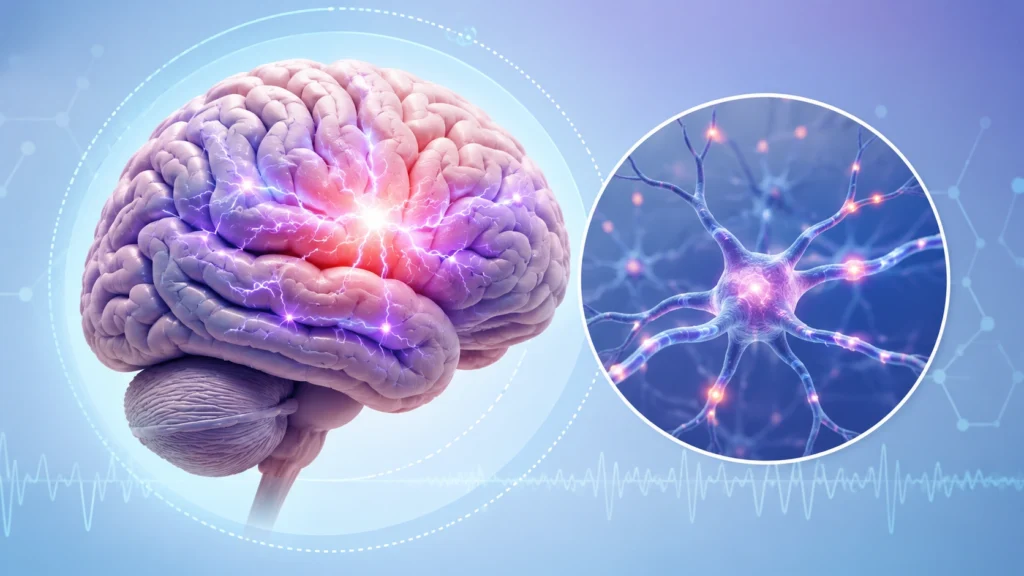
Seizures are sudden, uncontrolled electrical disturbances in the brain. They can cause changes in behavior, movement, feelings, or awareness. A seizure may last from a few seconds to several minutes. Some people have only one seizure in their lifetime, while others may have repeated episodes. When a person has two or more unprovoked seizures, it is often called epilepsy.
This can happen to anyone, at any age. They may be caused by fever in children, head injury, stroke, brain infection, low blood sugar, alcohol withdrawal, or certain medicines. In many cases, the exact cause is not found. The most important thing to understand is that a seizure is a symptom, not a disease by itself. Proper evaluation is needed to find the cause and decide the right treatment.
What are Seizures?
A seizure happens when there is a sudden burst of abnormal electrical activity in the brain. Normally, brain cells communicate in an organized way. During a seizure, this communication becomes disrupted, leading to unusual symptoms.
Seizures can affect different parts of the brain. Some involve the whole brain, while others affect only one area. The symptoms depend on where the seizure starts and how far it spreads. Some people may lose consciousness and have shaking movements. Others may only have brief staring spells, confusion, or unusual sensations.
A single seizure does not always mean a person has epilepsy. This can be provoked by fever, low sugar, alcohol withdrawal, infection, or head injury. When this happen repeatedly without a clear trigger, the condition is often called epilepsy.
Types of Seizures
Seizures are classified based on where they start in the brain and how they affect awareness and movement.
Based on where they start
- Focal seizures, which start in one area of the brain.
- Generalized seizures, which involve both sides of the brain from the beginning.
- Unknown onset seizures, where the starting point is not clear.
Focal seizures
- Focal aware type, where the person remains conscious but may feel unusual sensations, emotions, or movements.
- Focal impaired awareness type, where the person becomes confused, stares, or performs repetitive actions without full awareness.
- Symptoms may include tingling, flashing lights, strange smells, fear, stomach rising sensation, or automatic movements like lip smacking.
Generalized seizures
- Tonic-clonic seizures, previously called grand mal seizures, where the person loses consciousness, falls, and has stiffening followed by jerking movements.
- Absence seizures, previously called petit mal seizures, where the person briefly stares and may not respond, often seen in children.
- Myoclonic seizures, which cause sudden brief jerks of muscles.
- Atonic seizures, which cause sudden loss of muscle tone and may lead to falls.
- Tonic seizures, which cause stiffening of muscles.
- Clonic seizures, which cause repeated jerking movements.
Based on cause
- Provoked seizures, which happen due to a clear trigger such as fever, low sugar, alcohol withdrawal, or acute illness.
- Unprovoked seizures, which happen without an immediate trigger and may suggest epilepsy.
Causes of Seizures
This can have many different causes. The cause often depends on the age of the person and their medical history.
Common causes in children
- Fever, known as febrile seizures.
- Birth-related brain injury.
- Congenital brain abnormalities.
- Infections such as meningitis or encephalitis.
- Low blood sugar or low calcium.
- Genetic or metabolic conditions.
Common causes in adults
- Head injury or trauma.
- Stroke.
- Brain tumors.
- Brain infections.
- Alcohol withdrawal.
- Drug abuse or certain medicines.
- Low blood sugar or electrolyte imbalance.
- High fever or severe infection.
- Lack of sleep or extreme stress.
Common causes in older adults
- Stroke.
- Brain degeneration or dementia.
- Brain tumors.
- Metabolic problems such as low sodium.
- Side effects of multiple medicines.
Why seizures happen: The brain normally controls electrical signals carefully. When this balance is disturbed, abnormal electrical activity can spread. This may be due to injury, infection, lack of oxygen, chemical imbalance, or structural changes in the brain.
Risk Factors for Seizures
Some people are more likely to have more than others.
Higher-risk groups
- People with a family history of epilepsy.
- Children with frequent high fevers.
- People who have had head injury.
- People who have had stroke or brain infection.
- People with brain tumors or structural brain problems.
- People who abuse alcohol or drugs.
- People with certain genetic or metabolic conditions.
- Older adults with multiple medical problems.
Why risk increases in these groups
- Genetic factors can make the brain more prone to abnormal electrical activity.
- Brain injury or infection can leave scars that trigger this.
- Stroke damages brain tissue and can cause this later.
- Alcohol and drug use can disturb brain chemistry.
- Aging increases the risk of stroke and brain degeneration.
Symptoms of Seizures
Symptoms vary widely depending on the type of seizure and the part of the brain involved.
Common symptoms
- Sudden loss of consciousness.
- Stiffening of the body.
- Jerking or shaking movements.
- Staring blankly.
- Confusion or disorientation.
- Unusual sensations such as tingling, flashing lights, or strange smells.
- Sudden fear or anxiety without a clear reason.
- Repetitive movements like lip smacking, hand rubbing, or chewing.
- Loss of bladder or bowel control.
- Biting the tongue or inside of the cheek.
- Falling suddenly without warning.
- Brief pauses in activity or speech.
Before a seizure
Some people experience warning signs, called an aura, before a seizure.
- Strange smell or taste.
- Rising sensation in the stomach.
- Sudden fear or anxiety.
- Dizziness.
- Visual changes.
- Numbness or tingling.
After a seizure
After a seizure, a person may feel:
- Tired or sleepy.
- Confused or disoriented.
- Headache.
- Muscle pain.
- Difficulty speaking or remembering.
- Weakness in one part of the body.
Seizures in Different Age Groups
Seizures can affect people of all ages, but the pattern and causes may differ.
In infants and young children
- Febrile seizures are common with high fever.
- May present as staring, jerking, or loss of consciousness.
- Often outgrow with age, but evaluation is still important.
In older children and teenagers
- May have absence with brief staring.
- May have generalized tonic-clonic seizures.
- School performance or behavior may be affected.
In adults
- This may be due to head injury, stroke, or unknown causes.
- May affect work, driving, and daily activities.
- Stress, lack of sleep, or alcohol may trigger episodes.
In older adults
- Stroke and brain degeneration are common causes.
- This may be subtle, such as confusion or staring.
- May be mistaken for dementia or fainting.
How are Seizures Diagnosed?
Diagnosis is based on the history of the event, witness description, and tests to find the cause.
Diagnostic steps
- Detailed history of the event from the patient and witnesses.
- Description of what happened before, during, and after the episode.
- Medical history, including head injury, stroke, infection, or family history.
- Physical and neurological examination.
- Blood tests to check sugar, electrolytes, infection, or other causes.
- Brain imaging such as CT scan or MRI.
- EEG, which records electrical activity of the brain.
- Sometimes prolonged EEG monitoring or video EEG.
Why diagnosis matters: Not all episodes that look like this are actually seizures. Fainting, panic attacks, sleep disorders, or movement disorders can sometimes be confused with seizures. Accurate diagnosis ensures the right treatment and avoids unnecessary medicines.
Treatment for Seizures
Treatment depends on the cause, type of seizure, frequency, and the patient’s age and overall health.
1. Treating the underlying cause
- If these are due to low blood sugar, sugar is corrected.
- If due to infection, appropriate antibiotics or antivirals are given.
- If due to alcohol withdrawal, supportive care and medicines are provided.
- If due to brain tumor or structural problem, surgery or other treatments may be needed.
2. Anti-seizure medicines
- Medicines are the main treatment for epilepsy and recurrent seizures.
- The choice of medicine depends on the type of seizure and patient profile.
- Medicines help reduce the frequency and severity.
- Regular follow-up is needed to adjust dose and monitor side effects.
3. Emergency treatment
- For prolonged seizures or repeated seizures without recovery, emergency medicines are given.
- IV medicines may be needed in hospital.
- Airway and breathing support may be required.
4. Surgery for selected cases
- Surgery may be considered when medicines do not control this.
- It is done only after detailed evaluation.
- The goal is to remove or disconnect the area causing this.
5. Lifestyle and trigger management
- Adequate sleep.
- Avoiding alcohol and recreational drugs.
- Managing stress.
- Taking medicines regularly without missing doses.
- Avoiding known triggers such as flashing lights in sensitive individuals.
First Aid for Seizures
Knowing what to do during a seizure can prevent injury and help the person recover safely.
Do
- Stay calm and stay with the person.
- Gently guide them to the floor if they are standing.
- Clear the area of hard or sharp objects.
- Place something soft under the head.
- Turn the person on their side to help breathing and prevent choking.
- Loosen tight clothing around the neck.
- Time the seizure duration.
- Stay until the person is fully awake and oriented.
Do not
- Do not put anything in the mouth.
- Do not try to hold the person down.
- Do not give water or food until fully awake.
- Do not crowd around the person.
Possible Complications of Seizures
Seizures can lead to complications, especially if they are frequent, prolonged, or untreated.
Physical complications
- Falls and injuries.
- Head injury.
- Fractures.
- Burns or accidents during a seizure.
- Tongue or cheek bites.
Neurological complications
- Memory or concentration problems.
- Learning difficulties in children.
- Mood changes such as anxiety or depression.
- Rarely, prolonged type can cause brain damage.
Social and daily life impact
- Restrictions on driving in some cases.
- Impact on school or work.
- Fear or stigma around this.
- Need for family support and understanding.
Status epilepticus
- This is a medical emergency where these last more than five minutes or occur repeatedly without recovery.
- It requires immediate hospital treatment.
- Delay in treatment can lead to serious complications.
When Should you See a Doctor?
Medical evaluation is important for anyone who has had a seizure or suspected seizure.
- A first-time seizure.
- Repeated episodes of staring, confusion, or unusual movements.
- That are becoming more frequent.
- Despite taking medicines.
- New neurological symptoms such as weakness, speech problems, or vision changes.
- A child with repeated febrile seizures or without fever.
Prevention of Seizures
Not all types can be prevented, but risk can be reduced.
- Take prescribed medicines regularly without missing doses.
- Get adequate sleep every night.
- Avoid alcohol and recreational drugs.
- Manage stress with relaxation techniques.
- Treat fever promptly in children.
- Wear helmets during high-risk activities to prevent head injury.
- Control blood pressure, sugar, and cholesterol to reduce stroke risk.
- Avoid known triggers such as flashing lights if sensitive.
- Keep regular follow-up with the treating doctor.
For people with epilepsy
- Never stop medicines suddenly without medical advice.
- Keep a seizure diary to track episodes and triggers.
- Inform family, friends, and teachers about seizure first aid.
- Carry medical identification if advised.
Why Choose Rama Hospital for Seizure Treatment?
This require expert neurological evaluation, accurate diagnosis, and long-term management. A hospital with experienced neurologists, advanced EEG, and imaging facilities can make a major difference in care.
- Expert evaluation by neurology specialists.
- Advanced EEG and video EEG monitoring.
- MRI and CT imaging for detailed brain assessment.
- Emergency care for prolonged or severe one.
- Personalized treatment plans for children and adults.
- Long-term follow-up and medication management.
Frequently Asked Questions (FAQs)
Is every seizure epilepsy?
No, not every seizure means epilepsy. A single seizure can happen due to fever, low sugar, alcohol withdrawal, or or acute illness. Epilepsy is usually diagnosed when a person has two or more unprovoked.
Can seizures be cured?
Many people with this can achieve good control with medicines. Some children outgrow certain types of seizures. In selected cases, surgery or other treatments may reduce or stop completely.
Are seizures dangerous?
This can be dangerous if they cause falls, injuries, or prolonged episodes. Most brief are not life-threatening, but status epilepticus is a medical emergency that needs immediate treatment.
Can stress cause seizures?
Stress does not directly cause this, but it can lower the seizure threshold in people who are prone to them. Lack of sleep, illness, and missed medicines along with stress can increase the risk.
Can a person drive after having seizures?
Driving rules depend on local laws and seizure control. Many places require a seizure-free period before driving is allowed. The treating doctor can guide based on individual case and legal requirements.
What should I do if someone has a seizure?
Stay calm, protect the person from injury, turn them on their side, and do not put anything in the mouth. Time the seizure and call emergency services if it lasts more than five minutes or if there are repeated.
Can children outgrow seizures?
Yes, many children with certain types of seizures, especially febrile one or some childhood epilepsy syndromes, may outgrow them with age. Regular follow-up is important to monitor progress.
Conclusion
These are common neurological events that can affect people of all ages. They may be caused by fever, head injury, stroke, infection, metabolic problems, or unknown factors. While a single seizure may not always mean a long-term problem, repeated seizures need proper evaluation and treatment.
The most important steps are accurate diagnosis, appropriate medicines, trigger management, and long-term follow-up. For patients with new seizures, changing seizure patterns, or despite treatment, a neurological evaluation can make a major difference. With the right care, most people with this can live full, active, and independent lives.
Rama Hospital can help evaluate seizures, identify the underlying cause, and provide a clear treatment plan that supports seizure control, safety, and better quality of life.