
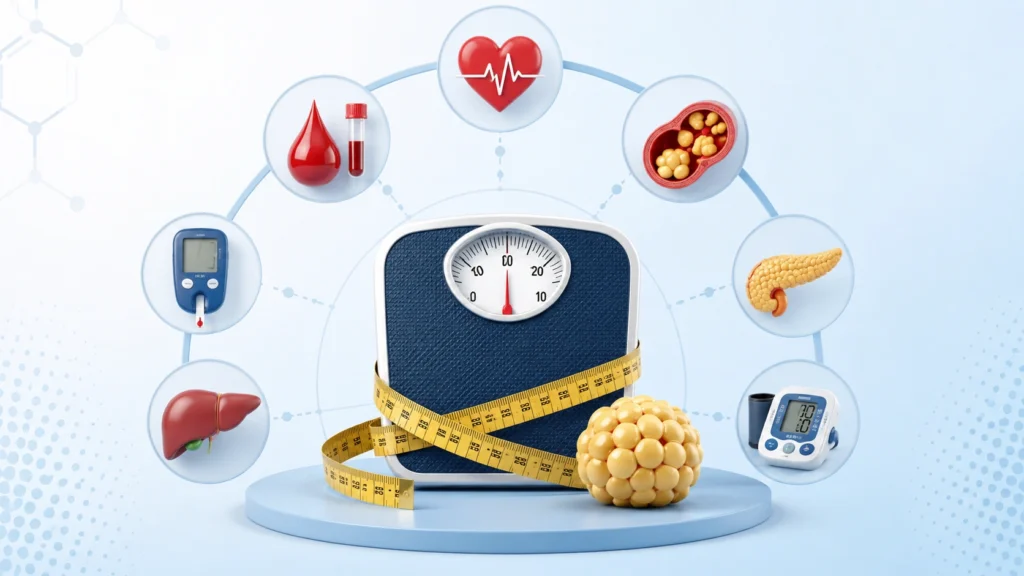
Obesity and metabolic syndrome are two of the most common health problems seen in modern life. Many people think of obesity only as a weight issue, but it is far more than that. It is a medical condition that affects metabolism, hormones, heart health, joints, sleep, fertility, liver, and long-term risk of diseases such as diabetes, heart disease, and high blood pressure. Metabolic syndrome is a group of conditions that occur together, increasing the risk of heart disease, stroke, and diabetes. These conditions include increased belly fat, high blood pressure, high blood sugar, high triglycerides, and low good cholesterol.
Obesity and metabolic syndrome often develop slowly over years. Many people do not realize the seriousness of the problem until tests show high sugar, high blood pressure, abnormal cholesterol, or liver changes. Others may struggle with breathlessness, joint pain, fatigue, snoring, poor sleep, or low confidence. Because these problems affect so many parts of the body, they need a complete medical approach, not just diet advice.
Obesity is a condition where a person has excess body fat that may affect health. It is not just about appearance. Excess fat, especially around the abdomen, can change the way the body handles sugar, fat, and blood pressure. It can also increase strain on the heart, lungs, joints, liver, and other organs.
Obesity is usually measured using body mass index, waist circumference, and body fat percentage. A higher BMI and larger waist size often indicate higher risk. However, doctors also look at other factors such as blood tests, blood pressure, sleep, breathing, joint health, and family history.
Obesity can affect people of all ages, including children, adults, and older adults. It is more common in people with a family history of weight gain, poor diet, low activity, or certain medical conditions. In many cases, it is linked to a combination of lifestyle, genetics, hormones, and environment.
Metabolic syndrome is not a single disease. It is a group of risk factors that occur together and increase the risk of serious health problems. When a person has several of these factors at once, the risk of heart disease, stroke, and diabetes becomes much higher.
Features of metabolic syndrome
A person may have some of these features for years without knowing. Often, the first sign is a blood test showing high sugar or cholesterol, or a blood pressure reading that is consistently high. If left untreated, metabolic syndrome can lead to diabetes, heart attack, stroke, kidney disease, fatty liver, and other complications.
Obesity and metabolic syndrome are not just about weight or appearance. They are medical conditions with long-term effects.
Effects on the body
Why early attention is important: The earlier these conditions are addressed, the easier it is to prevent long-term complications. Many people do not realize that even a small reduction in weight, waist size, or blood sugar can greatly reduce health risk. Early treatment can improve energy, sleep, mobility, mood, and confidence.
Obesity can appear in different patterns. Understanding the pattern helps guide treatment.
Based on fat distribution
Based on cause
Based on severity
Obesity and metabolic syndrome do not happen for just one reason. In most patients, there is a mix of factors.
Common causes
Medical conditions that may contribute
Medicines that may contribute
Some people are more likely to develop obesity and metabolic syndrome than others.
Higher-risk groups
Why risk increases in these groups
Many people do not realize they have a medical problem until tests are done. However, some symptoms can give early warning.
Common symptoms
Signs of metabolic syndrome
Diagnosis is based on history, examination, measurements, and blood tests.
Diagnostic steps
Important measurements
Why diagnosis matters: Many people think they are simply “overweight” and do not need medical help. But when tests show high sugar, high pressure, or abnormal fats, the situation is more serious. Proper diagnosis allows a doctor to plan treatment, reduce risk, and prevent long-term complications.
Treatment depends on the severity of weight gain, the presence of other conditions, and the patient’s overall health. The goal is not only weight loss, but also improvement in blood sugar, blood pressure, cholesterol, liver health, and quality of life.
1. Lifestyle and diet changes
This is the foundation of treatment.
2. Diet support
Diet is not about starvation. It is about balance.
3. Physical activity
Movement is important for metabolism, heart health, and weight control.
4. Medicines when needed
Some patients may need medicines to support weight loss or control metabolic risk. Medicines should always be taken under medical supervision.
5. Treatment for related conditions
Obesity and metabolic syndrome often come with other problems.
6. Advanced treatment options
For some patients with severe obesity or high risk, advanced options may be considered.
7. Monitoring and follow-up
Regular follow-up is important.
Diet plays a major role in treatment and prevention.
Nutrient-rich foods to include
Foods to limit
Important dietary points
Lifestyle changes are as important as diet. Medicines and diet plans can help, but long-term improvement depends on daily habits. If lifestyle does not change, weight and metabolic risk often return.
Helpful habits
Untreated obesity and metabolic syndrome can lead to serious health problems. Excess fat and insulin resistance change how the body works. Over time, this affects blood vessels, organs, hormones, and metabolism. The risk increases with time, especially if there is no intervention.
Possible complications
Medical review is important if weight is increasing, waist size is growing, or tests show abnormal results.
Preventing obesity and metabolic syndrome starts with small, consistent lifestyle changes. Maintaining a healthy weight, eating a balanced diet, staying physically active, and getting enough sleep can significantly lower your risk. Regular health check-ups also help detect early warning signs before they develop into serious health problems.
Healthy Habits for Prevention
Special prevention advice for high-risk groups
Obesity and metabolic syndrome need more than just diet advice. They need medical evaluation, risk assessment, and long-term support. A hospital-based program helps identify the root cause, treat related conditions, and reduce the risk of complications.
Obesity is a condition where a person has excess body fat that may affect health. It increases the risk of diabetes, heart disease, high blood pressure, and other problems. It is not only about appearance, but also about long-term health risk.
Metabolic syndrome is a group of conditions that occur together, including increased belly fat, high blood pressure, high blood sugar, high triglycerides, and low good cholesterol. It increases the risk of heart disease, stroke, and diabetes.
Yes, many people improve with diet, activity, sleep, and stress management. However, some patients also need medicines to control blood sugar, blood pressure, cholesterol, or appetite. Treatment should be based on individual risk and medical advice.
Yes, belly fat is more strongly linked to metabolic problems than fat around the hips or thighs. Visceral fat around the abdomen is active and can increase insulin resistance, inflammation, and heart risk. That is why waist size is an important part of diagnosis and risk assessment.
Yes, obesity is one of the strongest risk factors for type 2 diabetes. Excess fat, especially around the abdomen, makes the body less sensitive to insulin. This can raise blood sugar and eventually lead to diabetes. Weight management can significantly reduce this risk.
Yes, metabolic syndrome can often be improved or even reversed with the right changes. Weight loss, better diet, regular activity, good sleep, and stress control can lower blood pressure, blood sugar, and triglycerides while improving good cholesterol. Early action gives the best chance of reversal.
Even a small weight loss can make a big difference. Losing 5 to 10 percent of body weight can improve blood sugar, blood pressure, cholesterol, and fatty liver. The goal is not perfection, but steady and sustainable improvement over time.
No, surgery is not the only option and is not needed for everyone. It is considered only for selected patients with severe obesity or those who have not responded to other treatments. Many people improve with structured medical weight management, diet, activity, and medicines under supervision.
Yes, children and teenagers can also develop obesity and early signs of metabolic syndrome. This is more common with high screen time, poor diet, low activity, and family history. Early lifestyle changes and medical guidance can prevent long-term complications.
Results vary from person to person. Some people see improvement in energy, sleep, and blood tests within weeks. Others may take months to notice significant weight or waist changes. Consistency and long-term follow-up are more important than rapid short-term results.
Obesity and metabolic syndrome are common, serious, and often underestimated health problems. They affect far more than appearance. They increase the risk of diabetes, heart disease, stroke, fatty liver, joint problems, sleep disorders, hormonal imbalance, and reduced quality of life. The good news is that both conditions can be managed and often improved with the right medical support.
The most important steps are proper diagnosis, realistic diet and activity changes, treatment of related conditions, and long-term follow-up. For patients with increasing weight, growing waist size, abnormal blood tests, or symptoms such as breathlessness, snoring, or joint pain, a medical evaluation can make a major difference. With a structured plan and consistent effort, patients can reduce risk, gain energy, and protect their long-term health.
Rama Hospital can help evaluate obesity and metabolic syndrome, identify individual risk factors, and provide a clear treatment plan that supports safe weight management, improved metabolism, and better overall health.

Metabolic syndrome involves having at least 3 out of 5 health conditions that increase your risk of cardiovascular disease, stroke and Type 2 diabetes.
No rows found.