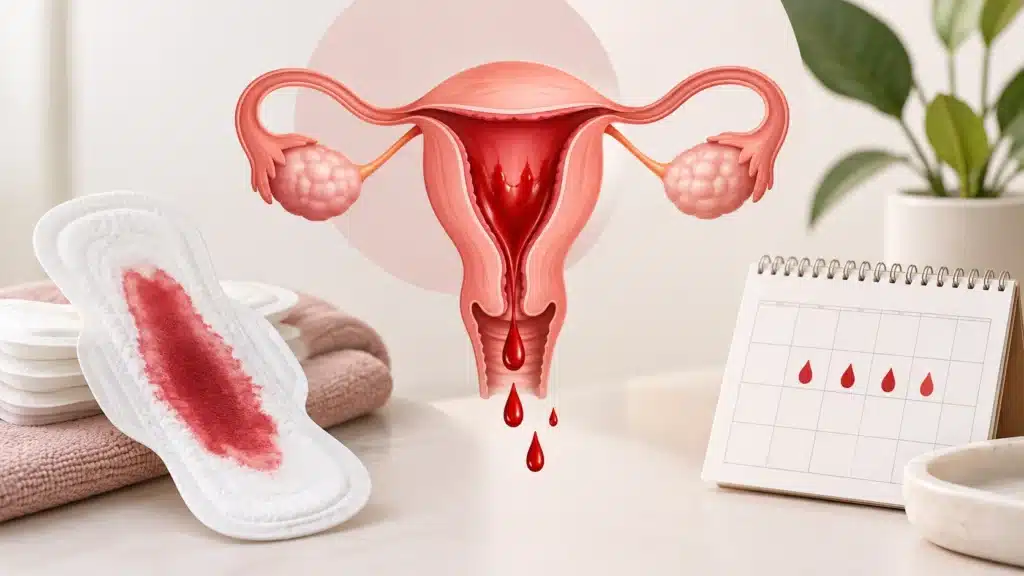
Heavy menstrual bleeding, also called menorrhagia, is a common problem that affects many women and adolescent girls. It means bleeding that is heavier than normal, lasts longer than usual, or both. For some, it means soaking through pads or tampons very quickly, passing large clots, or bleeding for more than seven days. For others, it means feeling weak, tired, or breathless due to blood loss.
Many women accept heavy periods as normal, but persistent heavy bleeding is not something to ignore. Over time, it can lead to anemia, low energy, poor concentration, and reduced quality of life. In some cases, it may be a sign of an underlying condition such as fibroids, hormonal imbalance, thyroid problems, or issues with the lining of the uterus.
What is Heavy Menstrual Bleeding?
Heavy menstrual bleeding means periods that are heavier or longer than what is considered typical. While every woman’s cycle is different, certain patterns suggest that bleeding may be abnormally heavy.
Signs that suggest heavy menstrual bleeding
- Soaking through one or more pads or tampons every hour for several hours.
- Needing to use double protection, such as a pad and a tampon together.
- Waking up at night to change protection.
- Passing large blood clots, especially bigger than a coin.
- Bleeding for more than seven days.
- Having to restrict daily activities due to heavy flow.
- Feeling tired, weak, or breathless during or after periods.
Normal periods usually last between three and seven days, with moderate flow that does not interfere significantly with daily life. When bleeding regularly exceeds this pattern, it is important to consider medical evaluation.
Causes of Heavy Menstrual Bleeding
Heavy periods can happen for many reasons. In some women, more than one factor may be involved.
Common causes include:
- Hormonal imbalance, especially in teenagers and women approaching menopause.
- Uterine fibroids, which are non-cancerous growths in the uterus.
- Polyps, which are small growths on the lining of the uterus.
- Adenomyosis, where the lining grows into the muscle wall of the uterus.
- Endometrial hyperplasia, which is thickening of the uterine lining.
- Bleeding disorders that affect blood clotting.
- Thyroid problems, especially hypothyroidism.
- Pelvic inflammatory disease or infection.
- Use of certain medicines, such as blood thinners or some hormonal treatments.
- Copper intrauterine device in some women.
- Complications related to pregnancy, such as miscarriage or ectopic pregnancy.
- Rarely, cancer of the uterus, cervix, or vagina.
Why these causes lead to heavy bleeding
Hormonal imbalance can cause the lining of the uterus to build up more than usual, leading to heavier shedding. Fibroids and polyps increase the surface area of the lining and can disrupt normal contraction of the uterus. Bleeding disorders make it harder for the body to stop bleeding normally. Thyroid and other medical conditions can affect the cycle and flow pattern.
Risk Factors for Heavy Menstrual Bleeding
Some women are more likely to develop heavy periods than others.
Higher-risk groups
- Teenagers in the first few years after periods start.
- Women approaching menopause.
- Women with a family history of fibroids or bleeding disorders.
- Women with obesity, which can affect hormone balance.
- Women with thyroid disease or polycystic ovary syndrome.
- Women who have never been pregnant.
- Women with a history of irregular cycles.
- Women using certain medicines or devices that affect bleeding.
Why risk increases in these groups
Hormonal changes are common in early and late reproductive years. Obesity can increase estrogen levels, which may thicken the uterine lining. Medical conditions and medicines can interfere with normal cycle regulation. Genetic factors may predispose some women to fibroids or clotting problems.
Symptoms of Heavy Menstrual Bleeding
Symptoms can vary from mild inconvenience to severe disruption of daily life.
Common symptoms
- Very heavy flow during periods.
- Periods lasting more than seven days.
- Passing large clots.
- Needing to change pads or tampons very frequently.
- Bleeding through clothes or bedding.
- Feeling weak, tired, or dizzy during periods.
- Shortness of breath on exertion.
- Pale skin or lips.
- Headache or low energy around the time of periods.
- Anxiety about leakage or odor.
Signs of anemia due to heavy bleeding
- Persistent fatigue.
- Weakness.
- Dizziness.
- Pale skin.
- Fast heartbeat.
- Shortness of breath.
- Difficulty concentrating.
- Cold hands and feet.
When these symptoms are present, it is important to check hemoglobin and iron levels, as anemia is a common complication of long-standing heavy bleeding.
Heavy Menstrual Bleeding in Different Age Groups
The pattern and causes of heavy bleeding can differ depending on age.
In teenagers
- Often related to immature hormonal regulation.
- Cycles may be irregular and heavy in the first few years.
- Bleeding disorders should be considered if bleeding is very heavy from the start.
- Anemia can develop quickly if bleeding is not managed.
In women of reproductive age
- Fibroids, polyps, and adenomyosis become more common.
- Hormonal imbalance, thyroid issues, or PCOS may contribute.
- Pregnancy-related causes must be ruled out if there is any chance of pregnancy.
- Impact on work, family life, and daily activities can be significant.
In women approaching menopause
- Cycles may become irregular and heavier before they stop.
- Risk of endometrial thickening or hyperplasia increases.
- Evaluation is important to rule out precancerous or cancerous changes.
- Treatment focuses on controlling bleeding and protecting the uterine lining.
How is Heavy Menstrual Bleeding Diagnosed?
Diagnosis is based on history, examination, and tests to find the cause and assess the impact on health.
Diagnostic steps
- Detailed history of menstrual pattern and flow.
- Questions about clot size, pad or tampon use, and cycle length.
- Medical history, including thyroid disease, bleeding disorders, or medications.
- Family history of fibroids, bleeding problems, or gynecological conditions.
- Physical examination, including abdominal and pelvic exam when appropriate.
- Assessment for signs of anemia or other systemic issues.
Common tests that may be done
- Complete blood count to check for anemia.
- Iron studies to assess iron stores.
- Thyroid function tests.
- Pregnancy test if there is any possibility of pregnancy.
- Coagulation profile if a bleeding disorder is suspected.
- Pelvic ultrasound to look at the uterus and ovaries.
- Endometrial biopsy in selected women, especially over forty or with risk factors.
- Hysteroscopy or saline infusion sonography if polyps or submucosal fibroids are suspected.
Why diagnosis matters
Heavy bleeding can have many different causes, and treatment depends on the underlying problem. Finding the cause helps choose the most effective and safest treatment. It also helps rule out serious conditions that need urgent attention.
Treatment for Heavy Menstrual Bleeding
Treatment depends on the cause, severity of bleeding, age, future pregnancy plans, and overall health.
Goals of treatment
- Reduce blood loss during periods.
- Correct anemia and improve energy.
- Regulate the menstrual cycle.
- Treat the underlying cause when possible.
- Improve quality of life and daily functioning.
1. Medicines to reduce bleeding
Several medicines can help reduce menstrual flow.
- Non-steroidal anti-inflammatory drugs can reduce bleeding and ease cramps.
- Tranexamic acid helps blood clot more effectively during periods.
- Hormonal tablets can regulate cycles and reduce lining buildup.
- Progesterone therapy may be used in certain patterns of bleeding.
- Iron supplements are often needed to treat or prevent anemia.
These medicines are usually taken only during periods or for a short course each month, depending on the prescription.
2. Hormonal treatments
Hormonal options can help control heavy bleeding, especially when there is hormonal imbalance.
- Combined oral contraceptive pills can make periods lighter and more regular.
- Progesterone-only pills may be used in some women.
- Hormonal injections can reduce or stop periods in selected cases.
- Hormonal intrauterine device can greatly reduce bleeding over time.
The choice depends on age, medical history, and whether future pregnancy is planned.
3. Treatment of underlying conditions
If a specific cause is found, treating that condition often improves bleeding.
- Fibroids may need medicines, procedures, or surgery depending on size and symptoms.
- Polyps are often removed through a minor procedure.
- Thyroid problems are treated with appropriate thyroid medication.
- Bleeding disorders are managed with help from a hematologist.
- Infections are treated with suitable antibiotics.
4. Procedures for heavy bleeding
When medicines are not enough, procedures may be considered.
- Dilation and curettage may be done to diagnose and temporarily reduce bleeding.
- Hysteroscopic removal of polyps or submucosal fibroids.
- Endometrial ablation, which reduces or stops the lining from building up.
- Uterine artery embolization for fibroid-related bleeding.
- Surgery such as myomectomy or hysterectomy in selected cases.
The choice of procedure depends on the cause, severity, and whether the patient wishes to preserve fertility.
5. Emergency care for severe bleeding
Some women may need urgent care if bleeding is very heavy.
- IV fluids may be given if there is signs of significant blood loss.
- Blood transfusion may be needed in severe anemia.
- High-dose hormonal therapy may be used to stop acute bleeding.
- Hospital observation may be required until bleeding is controlled.
Recovery and Follow-up After Treatment
Recovery depends on the type of treatment and the underlying cause.
After medical treatment
- Periods usually become lighter over a few cycles.
- Energy and hemoglobin levels improve with iron and reduced bleeding.
- Regular follow-up helps adjust medicines as needed.
- Lifestyle support helps maintain long-term improvement.
After procedures
- Some cramping and light bleeding may occur for a few days.
- Most women return to normal activities within a short time.
- Follow-up ensures healing and checks for recurrence.
- Further treatment may be needed if symptoms return.
Long-term management
- Periodic blood tests to monitor hemoglobin and iron.
- Ongoing management of fibroids, hormonal issues, or thyroid disease.
- Regular gynecological check-ups.
- Early review if bleeding pattern changes again.
Lifestyle and Self-Care Support
Lifestyle measures can support medical treatment and improve overall well-being.
Helpful self-care pointers
- Keep a record of cycle dates, flow, and clot size.
- Take iron-rich foods such as leafy greens, pulses, eggs, and fortified foods.
- Stay hydrated, especially during heavy flow days.
- Rest when needed and avoid overexertion during heavy bleeding.
- Use heat pads for cramp relief if helpful.
- Avoid self-medicating with random hormones or herbal products.
- Attend all follow-up appointments and blood tests.
Diet support for anemia
- Include iron-rich foods in daily meals.
- Combine iron-rich foods with vitamin C sources to improve absorption.
- Avoid tea or coffee immediately after iron-rich meals.
- Take iron supplements as prescribed, not only when feeling weak.
Possible Complications
Untreated or poorly managed heavy menstrual bleeding can lead to complications over time.
- Iron deficiency anemia.
- Severe fatigue and weakness.
- Reduced ability to work or study.
- Emotional stress and anxiety about bleeding.
- Need for emergency care or blood transfusion.
- Underlying conditions such as fibroids or endometrial changes going undiagnosed.
- Impact on fertility if the cause is related to uterine pathology.
Why complications happen
Continuous blood loss without adequate replacement leads to low hemoglobin and low iron stores. This affects oxygen delivery to tissues, causing tiredness and weakness. Underlying structural or hormonal problems may worsen if not evaluated and treated.
When Should You See a Doctor?
Medical evaluation is important if heavy bleeding is affecting daily life or health.
- Periods lasting more than seven days regularly.
- Soaking through pads or tampons every hour for several hours.
- Passing large clots frequently.
- Feeling weak, dizzy, or breathless.
- Needing to miss work or school due to bleeding.
- Bleeding between periods or after sex.
- Very painful periods along with heavy flow.
- Signs of anemia such as pale skin or fast heartbeat.
Prevention and Long-term Management
Not all causes of heavy menstrual bleeding can be prevented, but some steps can reduce risk and improve control.
Prevention and management pointers
- Maintain a healthy weight to support hormonal balance.
- Manage thyroid or other medical conditions properly.
- Avoid unnecessary use of medicines that increase bleeding.
- Have regular gynecological check-ups.
- Seek early care for irregular or heavy cycles.
- Keep a menstrual diary to track changes.
- Follow prescribed treatment consistently.
- Do not ignore new or worsening bleeding patterns.
Why Choose Rama Hospital for Heavy Menstrual Bleeding Care?
Heavy menstrual bleeding can have many causes and can affect physical, emotional, and social well-being. A hospital with experienced gynecologists, proper diagnostic tools, and a range of treatment options can provide comprehensive care.
- Accurate diagnosis with appropriate blood tests and imaging.
- Evaluation for anemia, thyroid issues, and bleeding disorders.
- Access to medical, hormonal, and procedural treatments.
- Personalized plans based on age, symptoms, and future pregnancy plans.
- Follow-up care to monitor improvement and prevent recurrence.
Frequently Asked Questions (FAQs)
Is heavy bleeding normal during periods?
Some variation in flow is normal, but regularly soaking through protection quickly, passing large clots, or bleeding for more than a week is not considered normal. Persistent heavy bleeding should be evaluated by a doctor.
Can heavy periods cause anemia?
Yes, heavy periods are a common cause of iron deficiency anemia in women. Continuous blood loss reduces hemoglobin and iron stores, leading to tiredness, weakness, and breathlessness.
Can stress cause heavy menstrual bleeding?
Stress can affect hormones and may contribute to irregular or heavier periods in some women. However, persistent heavy bleeding usually has other underlying causes that need evaluation.
Can fibroids cause heavy periods?
Yes, uterine fibroids are a common cause of heavy menstrual bleeding. They can increase the surface area of the uterine lining and affect how the uterus contracts, leading to heavier flow.
Is surgery always needed for heavy bleeding?
No, surgery is not always needed. Many women improve with medicines, hormonal treatment, or minor procedures. Surgery is considered only when other options are not suitable or effective.
Can heavy bleeding affect fertility?
Heavy bleeding itself may not always affect fertility, but the underlying cause, such as fibroids, polyps, or hormonal imbalance, can. Proper diagnosis and treatment can help protect reproductive health.
When should I seek emergency care for heavy bleeding?
Seek urgent care if you are soaking through pads in less than an hour for several hours, feel faint or extremely weak, have severe pain, or if there is any chance of pregnancy with heavy bleeding.
Conclusion
Heavy menstrual bleeding is a common but often underreported problem that can significantly affect a woman’s health and quality of life. It is not something that must be accepted as normal. With proper evaluation, the cause can often be identified and treated effectively.
The most important steps are recognizing the pattern of heavy bleeding, seeking timely medical advice, and following a structured treatment plan. For women with very heavy flow, large clots, prolonged periods, or symptoms of anemia, a gynecological evaluation can make a major difference. With the right care, most women can achieve lighter periods, better energy, and improved well-being.
Rama Hospital can help evaluate heavy menstrual bleeding, identify the underlying cause, and provide a clear treatment plan that supports safe and effective management of menorrhagia.