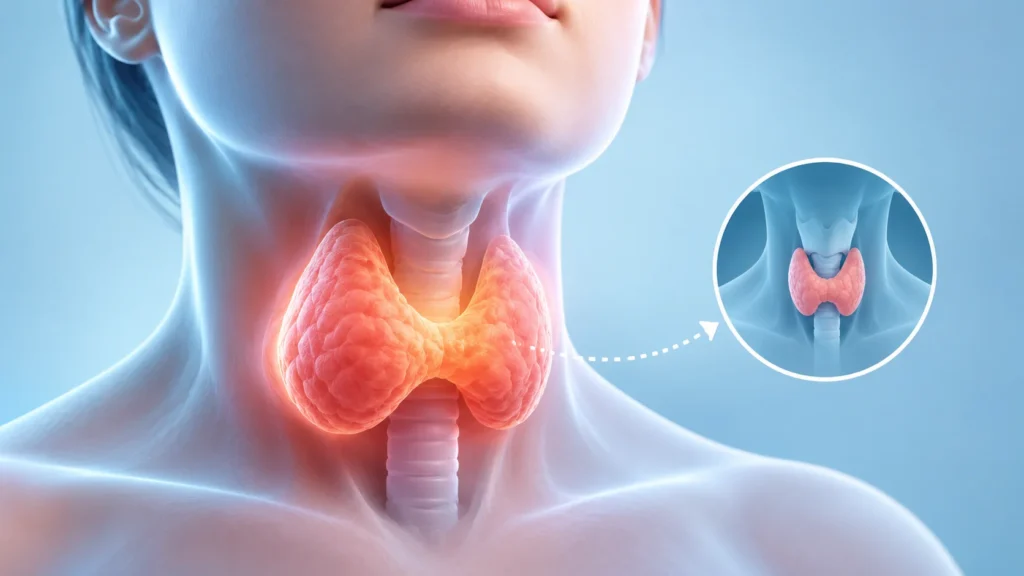
Goiter is a condition where the thyroid gland becomes enlarged. The thyroid is a small, butterfly-shaped gland located at the front of the neck, just below the Adam’s apple. It produces hormones that control metabolism, energy, growth, body temperature, and many other important functions. When the thyroid enlarges, it may appear as a visible swelling at the base of the neck or may be felt as a lump during examination.
Many people notice a goiter only when they see a swelling in the mirror or feel tightness around the neck. In some cases, the enlargement is small and causes no symptoms. In others, it may grow large enough to press on the windpipe or food pipe, causing difficulty breathing, swallowing problems, or a feeling of pressure in the neck. Thyroid enlargement can happen due to iodine deficiency, thyroid hormone imbalance, autoimmune disease, nodules, or other thyroid conditions.
What is Goiter?
Goiter is an enlargement of the thyroid gland. It is not a disease by itself but a sign that something is affecting the thyroid. The enlargement may be uniform, where the whole gland grows, or it may be nodular, where one or more lumps develop inside the gland.
The thyroid gland is located at the front of the neck and wraps around the windpipe. It produces hormones called T3 and T4, which regulate how the body uses energy. When the thyroid becomes enlarged, it may still function normally, or it may produce too much or too little hormone. This is why thyroid enlargement can be linked to different thyroid conditions.
Thyroid enlargement can affect people of any age, but it is more common in women and in areas where iodine intake is low. In some cases, the swelling is mild and harmless. In others, it may need medical evaluation and treatment to rule out nodules, cancer risk, or hormone imbalance.
Types of Goiter
Goiter can be classified in different ways depending on its appearance, cause, and thyroid function.
Based on appearance
- Diffuse goiter, where the entire thyroid gland is enlarged evenly.
- Nodular goiter, where one or more lumps or nodules form inside the thyroid.
- Multinodular goiter, where multiple nodules are present in the gland.
Based on thyroid function
- Euthyroid goiter, where the thyroid is enlarged but hormone levels are normal.
- Hypothyroid goiter, where the thyroid is underactive and produces too little hormone.
- Hyperthyroid goiter, where the thyroid is overactive and produces too much hormone.
Based on cause
- Iodine deficiency goiter, caused by lack of iodine in the diet.
- Autoimmune goiter, linked to conditions like Hashimoto’s thyroiditis or Graves’ disease.
- Nodular goiter, caused by benign or sometimes cancerous nodules.
- Inflammatory goiter, caused by thyroiditis or infection.
- Goiter due to thyroid cancer, which is less common but important to rule out.
Causes of Goiter
Goiter has many possible causes. Understanding the cause helps guide the right treatment.
Common causes include:
- Iodine deficiency in the diet.
- Autoimmune thyroid disease such as Hashimoto’s thyroiditis.
- Graves’ disease, which causes overactive thyroid.
- Thyroid nodules, which may be benign or rarely cancerous.
- Thyroiditis or inflammation of the thyroid.
- Pregnancy-related hormonal changes.
- Certain medicines that affect thyroid function.
- Genetic factors or family history.
- Radiation exposure to the neck in childhood.
- Thyroid cancer in rare cases.
Why iodine matters
Iodine is essential for making thyroid hormones. When the body does not get enough iodine, the thyroid tries to compensate by growing larger. This is one of the most common causes of goiter worldwide, especially in areas where iodized salt is not used regularly.
Other contributing factors
- Diet low in iodine-rich foods.
- High intake of goitrogenic foods like raw cabbage or soy in large amounts.
- Smoking, which can affect thyroid function.
- Chronic stress or illness.
- Hormonal changes during puberty, pregnancy, or menopause.
Risk Factors for Goiter
Some people are more likely to develop thyroid enlargement than others.
Higher-risk groups
- Women, who are more prone to thyroid problems.
- People over the age of forty.
- Those with a family history of thyroid disease.
- People living in areas with low iodine in soil or water.
- Pregnant or breastfeeding women.
- People with autoimmune conditions.
- Those with a history of radiation exposure to the neck.
- Smokers.
- People with poor dietary habits.
Why risk increases in these groups
- Hormonal changes in women affect thyroid function.
- Aging increases the chance of nodules.
- Low iodine intake directly affects thyroid growth.
- Autoimmune disease can cause inflammation and enlargement.
- Radiation exposure damages thyroid cells over time.
Symptoms of Goiter
Many people with thyroid enlargement have no symptoms, especially if the enlargement is small. Symptoms appear when the thyroid enlargement grows large or affects thyroid hormone levels.
Common symptoms
- Visible swelling at the base of the neck.
- Feeling of tightness or fullness in the neck.
- Difficulty swallowing.
- Difficulty breathing, especially when lying down.
- Cough or wheezing.
- Hoarseness or voice change.
- Neck pain or discomfort in some cases.
Symptoms related to thyroid function
- Fatigue and weakness if thyroid is underactive.
- Weight gain or difficulty losing weight.
- Cold intolerance.
- Dry skin and hair.
- Constipation.
- Slow heart rate.
- Depression or low mood.
- Palpitations or rapid heartbeat if thyroid is overactive.
- Weight loss despite normal appetite.
- Heat intolerance.
- Anxiety or irritability.
- Tremors in hands.
Symptoms that need urgent attention
- Sudden increase in neck swelling.
- Severe difficulty breathing.
- Severe difficulty swallowing.
- Rapid growth of the thyroid enlargement.
- Pain or redness over the swelling.
- Hoarseness that is new or worsening.
- Signs of thyroid cancer such as hard fixed lump or swollen lymph nodes.
Goiter in Different Age Groups
Goiter can affect people of different ages, but the pattern and cause may vary.
In children and teenagers
- Often linked to iodine deficiency or congenital thyroid problems.
- May affect growth and development if untreated.
- Early diagnosis and treatment are important.
In adults
- More commonly linked to nodules, autoimmune disease, or iodine deficiency.
- May be discovered during routine check-ups or when symptoms appear.
- Risk of cancer increases with age, especially in nodular thyroid enlargement.
In older adults
- Higher chance of multinodular thyroid enlargement.
- More likely to cause compression symptoms like breathing or swallowing difficulty.
- Need careful evaluation to rule out cancer or other complications.
How is Goiter Diagnosed?
Diagnosis is based on physical examination, medical history, and thyroid function tests. Imaging and biopsy may be needed in some cases.
Diagnostic steps
- Physical examination of the neck.
- Assessment of thyroid size and nodules.
- Review of symptoms and risk factors.
- Blood tests to check thyroid hormone levels.
- Imaging tests to visualize the gland and nodules.
- Biopsy if cancer is suspected.
Common tests that may be done
- Thyroid function tests including TSH, T3, and T4.
- Thyroid ultrasound to check size, nodules, and structure.
- Fine needle aspiration biopsy if nodules are suspicious.
- Thyroid scan to assess function of nodules.
- Blood tests for thyroid antibodies if autoimmune disease is suspected.
- CT or MRI scan if the goiter is very large or extends into the chest.
Why diagnosis matters
Goiter can be caused by many different conditions. Proper testing helps identify whether the thyroid is underactive, overactive, or normal, and whether nodules are benign or need further evaluation. Early diagnosis prevents complications and guides the right treatment.
Treatment for Goiter
Treatment depends on the cause, size of the thyroid enlargement, thyroid function, and symptoms.
1. Observation
For small thyroid enlargement with normal thyroid function and no symptoms, regular monitoring may be enough.
- Periodic ultrasound to check size.
- Blood tests to monitor hormone levels.
- Follow-up visits to assess any change.
2. Iodine supplementation
If thyroid enlargement is due to iodine deficiency, iodine supplements or iodized salt may help.
- Iodized salt in daily diet.
- Iodine-rich foods like seafood, dairy, and eggs.
- Supplements prescribed by a doctor in some cases.
3. Thyroid hormone treatment
If thyroid enlargement is linked to hypothyroidism, thyroid hormone replacement may be given.
- Levothyroxine tablets to normalize hormone levels.
- May reduce size of thyroid enlargement in some cases.
- Long-term treatment often needed.
4. Anti-thyroid medicines
If goiter is linked to hyperthyroidism, medicines to reduce hormone production may be used.
- Methimazole or carbimazole.
- Beta-blockers to control symptoms like palpitations.
- Regular monitoring of thyroid function.
5. Radioactive iodine therapy
This treatment shrinks the thyroid gland by destroying some thyroid cells.
- Used for hyperthyroid goiter or large goiters.
- Taken as a capsule or liquid.
- May cause hypothyroidism later, requiring hormone replacement.
6. Surgery
Surgery may be needed for large thyroid enlargement causing compression, suspicious nodules, or cancer.
- Partial or total thyroidectomy depending on the case.
- Recommended when breathing or swallowing is affected.
- Necessary if cancer is confirmed or strongly suspected.
- May require lifelong thyroid hormone replacement after surgery.
7. Ethanol ablation or laser therapy
In some cases, minimally invasive procedures may be used to shrink benign nodules.
- Used for cystic or benign nodules.
- Less invasive than surgery.
- May be an option for patients who cannot undergo surgery.
Diet Advice for Goiter
Diet plays an important role in both treatment and prevention of thyroid enlargement.
Iodine-rich foods to include
- Iodized salt.
- Seafood and fish.
- Dairy products like milk, yogurt, and cheese.
- Eggs.
- Seaweed in moderation.
- Iodized bread or cereals where available.
Foods to be careful with
- Raw cruciferous vegetables like cabbage, cauliflower, and broccoli in very large amounts.
- Soy products in excess.
- Highly processed foods low in nutrients.
- Excess caffeine or stimulants if hyperthyroid.
General diet tips
- Eat a balanced diet with a variety of food groups.
- Ensure adequate iodine intake through iodized salt.
- Avoid extreme diets that cut out major food groups.
- Stay hydrated.
- Include selenium and zinc-rich foods like nuts, seeds, and whole grains for thyroid support.
Possible Complications
Goiter can lead to complications if left untreated, especially if it grows large or affects thyroid function.
Complications may include:
- Difficulty breathing due to pressure on windpipe.
- Difficulty swallowing due to pressure on food pipe.
- Hoarseness or voice change due to pressure on nerves.
- Hypothyroidism or hyperthyroidism.
- Thyroid nodules or cancer in some cases.
- Cosmetic concerns due to visible neck swelling.
- Heart problems if hyperthyroidism is untreated.
- Myxedema coma in severe untreated hypothyroidism.
Why complications happen
As the thyroid enlargement grows, it can press on nearby structures like the windpipe, food pipe, or nerves. This causes symptoms like breathing or swallowing difficulty. If thyroid hormone levels are abnormal, other body systems are affected too.
When to See a Doctor
Medical evaluation is important if you notice any thyroid swelling or symptoms.
See a doctor if you have:
- Visible swelling in the neck.
- Feeling of tightness or pressure in the neck.
- Difficulty swallowing or breathing.
- Hoarseness or voice change.
- Symptoms of hypothyroidism or hyperthyroidism.
- Family history of thyroid disease.
- Rapid growth of neck swelling.
- Pain or redness over the swelling.
Seek urgent care if you have:
- Severe difficulty breathing.
- Severe difficulty swallowing.
- Sudden increase in swelling.
- High fever with neck pain.
- Signs of severe hyperthyroidism like chest pain or confusion.
Prevention of Goiter
Prevention is possible in many cases through diet and lifestyle.
Prevention pointers
- Use iodized salt in daily cooking.
- Include iodine-rich foods in the diet.
- Avoid extreme dietary restrictions.
- Get regular thyroid check-ups if at risk.
- Manage autoimmune conditions with medical guidance.
- Avoid smoking.
- Seek early treatment for thyroid symptoms.
For people at higher risk
- Women over forty should get periodic thyroid checks.
- People with family history should be more vigilant.
- Pregnant women should ensure adequate iodine intake.
- Those living in iodine-deficient areas should use iodized salt regularly.
Why Choose Rama Hospital for Goiter Treatment?
Goiter may seem like a simple neck swelling, but it can be linked to many different thyroid conditions. A hospital-based evaluation helps identify the exact cause and guide the right treatment.
Why hospital care matters
- Expert evaluation by endocrinology and thyroid specialists.
- Advanced ultrasound and imaging for accurate diagnosis.
- Blood tests for thyroid function and antibodies.
- Biopsy and pathology support if needed.
- Medical, radioactive iodine, and surgical treatment options.
- Follow-up care to monitor thyroid health.
Trust and authority points
- Experienced thyroid care team.
- Modern diagnostic technology.
- Comprehensive treatment from medication to surgery.
- Patient education about thyroid health.
- Long-term follow-up and monitoring.
Frequently Asked Questions (FAQs)
1. What is goiter?
Goiter is an enlargement of the thyroid gland, which is located at the front of the neck. It may appear as a visible swelling or lump. It can be caused by iodine deficiency, thyroid disease, or nodules.
2. Is goiter dangerous?
Not always. Many thyroid enlargement are benign and cause no symptoms. However, large thyroid enlargement can press on the windpipe or food pipe, and some may be linked to cancer, so medical evaluation is important.
3. Can goiter be treated without surgery?
Yes, many thyroid enlargement can be managed with iodine supplements, thyroid hormone treatment, or medicines depending on the cause. Surgery is needed only for large thyroid enlargement, compression symptoms, or suspicious nodules.
4. What causes goiter?
Goiter can be caused by iodine deficiency, autoimmune thyroid disease, nodules, thyroiditis, or rarely thyroid cancer. Hormonal changes during pregnancy or puberty can also contribute.
5. Can goiter cause breathing problems?
Yes, if the thyroid enlargement is large, it can press on the windpipe and cause difficulty breathing, especially when lying down. This is a sign that needs medical attention.
6. Is goiter the same as thyroid cancer?
No, thyroid enlargement is not the same as cancer. Most goiters are benign. However, some nodules within a goiter may be cancerous, so proper testing and sometimes biopsy are needed.
7. Can goiter be prevented?
Yes, in many cases thyroid enlargement can be prevented by ensuring adequate iodine intake through iodized salt and a balanced diet. Regular thyroid check-ups help in early detection.
8. Does goiter always mean thyroid disease?
Not always. Some thyroid enlargement occur with normal thyroid function. However, goiter can also be linked to hypothyroidism or hyperthyroidism, so thyroid function tests are important.
Conclusion
Goiter is a common thyroid condition that causes enlargement of the thyroid gland. It can be caused by iodine deficiency, autoimmune disease, nodules, or other thyroid problems. While many thyroid enlargement are harmless, some can cause breathing or swallowing difficulty and may need treatment.
The most important steps are proper diagnosis, identifying the cause, and getting the right treatment based on thyroid function and symptoms. For people with neck swelling, difficulty swallowing, or thyroid symptoms, a medical evaluation can make a major difference. With the right care, thyroid enlargement can be managed effectively and complications prevented.
Rama Hospital can help evaluate thyroid enlargement, identify the cause, and provide a clear treatment plan that supports thyroid health and overall well-being.