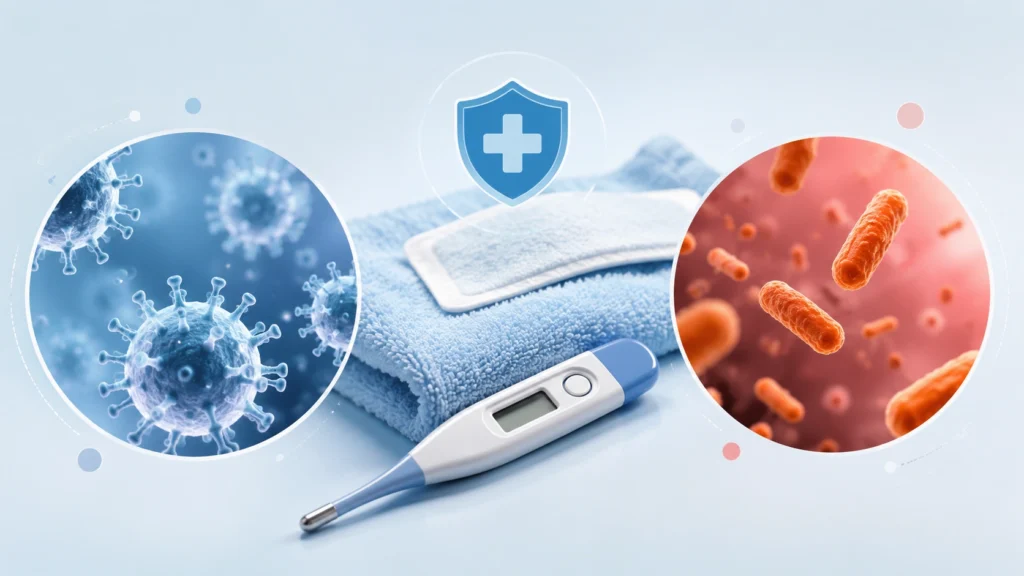
Fever is one of the most common reasons people visit a doctor or emergency room. It is not a disease by itself, but a sign that the body is fighting an infection or dealing with inflammation. Most fevers are caused by viral or bacterial infections. Some are mild and improve on their own. Others can be serious and need urgent medical attention.
Many people use the word “fever” for any rise in body temperature, but medically, this usually means a temperature above 100.4°F (38°C). The pattern, associated symptoms, and duration help doctors decide whether it is likely viral, bacterial, or due to another cause. Understanding this difference is important because treatment for viral is not the same as treatment for bacterial.
What is Fever?
This is a rise in body temperature above the normal range. Normal body temperature can vary from person to person and during the day, but it is generally around 98.6°F (37°C). When the body detects an infection or inflammation, the immune system releases chemicals that raise the body’s temperature set point. This is the body’s natural defence mechanism.
A mild to moderate can actually help the body fight infection. Many viruses and bacteria do not grow well at higher temperatures. However, very high or that that lasts too long can be harmful, especially in young children, elderly people, and those with chronic illnesses.
This can come with many other symptoms such as chills, body ache, headache, weakness, cough, sore throat, diarrhea, vomiting, rash, or pain in specific areas. The pattern and associated symptoms help doctors identify the likely cause.
Types of Fever Based on Cause
This can be classified in different ways depending on the underlying cause.
Viral fever
- Caused by viruses such as influenza, dengue, chikungunya, common cold viruses, adenovirus, enterovirus, and others.
- Often comes with body ache, headache, runny nose, sore throat, cough, or rash.
- Usually improves on its own within a few days.
- Antibiotics do not work against viral infections.
Bacterial fever
- Caused by bacteria such as Streptococcus, Staphylococcus, E. coli, Salmonella, Pneumococcus, and others.
- May present with high, localized pain, pus formation, severe throat infection, urinary symptoms, or pneumonia.
- Often requires antibiotics for proper treatment.
- Can become serious if not treated on time.
Other causes of fever
- Parasitic infections such as malaria.
- Fungal infections in certain patients.
- Inflammatory or autoimmune conditions.
- Drug reactions.
- Heat-related illness.
- Post-surgical or post-procedure.
- Some cancers or blood disorders.
Causes of Viral Fever
Viral are very common and spread easily from person to person.
Common causes include:
- Influenza virus causing flu-like illness.
- Common cold viruses causing upper respiratory infection.
- Dengue virus transmitted by mosquitoes.
- Chikungunya virus causing this with severe joint pain.
- Enteroviruses causing with rash or gastrointestinal symptoms.
- Adenoviruses causing respiratory or eye infections.
- Epstein-Barr virus causing prolonged and fatigue.
- Viral gastroenteritis causing this with vomiting and diarrhea.
- Childhood viral infections such as measles, mumps, chickenpox, and others.
How viral fever spreads
- Through droplets when an infected person coughs or sneezes.
- Through close contact with an infected person.
- Through contaminated hands, surfaces, or utensils.
- Through mosquito bites in diseases like dengue and chikungunya.
- Through contaminated food or water in some viral gastroenteritis.
Causes of Bacterial Fever
Bacterial can range from mild throat infections to serious conditions like pneumonia, sepsis, or meningitis.
Common causes include:
- Streptococcal throat infection causing sore throat.
- Pneumonia caused by bacteria in the lungs.
- Urinary tract infection causing this with burning urination.
- Skin and soft tissue infections causing this with redness and swelling.
- Typhoid fever caused by Salmonella bacteria.
- Tuberculosis causing with weight loss and cough.
- Bacterial gastroenteritis causing this with diarrhea.
- Dental infections causing this with facial swelling or pain.
- Post-surgical or wound infections.
How bacterial fever spreads
- Through direct contact with infected secretions.
- Through contaminated food or water.
- Through breaks in the skin allowing bacteria to enter.
- Through medical devices or catheters in hospitalized patients.
- Through close contact in crowded or poorly ventilated spaces.
Symptoms of Fever
Symptoms depend on the cause, age of the patient, and severity of infection.
Common symptoms of fever
- Elevated body temperature.
- Chills or shivering.
- Sweating.
- Headache.
- Body ache and muscle pain.
- Weakness and fatigue.
- Loss of appetite.
- Dehydration.
- Irritability in children.
- Sleep disturbance.
Symptoms suggesting viral fever
- Runny or blocked nose.
- Sore throat.
- Dry or productive cough.
- Red eyes or eye pain.
- Rash on the body.
- Diarrhea or vomiting in some cases.
- Severe body ache and joint pain in dengue or chikungunya.
Symptoms suggesting bacterial fever
- High fever with chills.
- Severe sore throat with pus.
- Cough with yellow or green sputum.
- Painful urination or frequent urination.
- Abdominal pain with diarrhea or constipation.
- Red, swollen, painful area on the skin.
- Persistent not improving after a few days.
Warning signs that need medical attention
- This above 103°F (39.5°C).
- This lasting more than three days.
- Severe headache with neck stiffness.
- Difficulty breathing.
- Chest pain.
- Confusion or altered consciousness.
- Seizures.
- Rash that does not fade on pressure.
- Severe dehydration with very little urine.
- Persistent vomiting or inability to drink fluids.
- Severe abdominal pain.
- This in infants under three months.
Fever in Children
Children get more often than adults because their immune systems are still developing and they are exposed to many new infections.
Common features in children
- This may rise quickly and cause chills.
- Children may become irritable, sleepy, or clingy.
- Appetite often decreases.
- Some children may have febrile seizures.
- Dehydration can develop faster than in adults.
When to worry in children
- Age under three months.
- This above 102°F (38.9°C) in infants.
- This lasting more than three days.
- Poor feeding or reduced urine output.
- Excessive sleepiness or difficulty waking.
- Breathing difficulty or fast breathing.
- Rash, stiff neck, or severe headache.
- Persistent vomiting or diarrhea.
- Known chronic illness or weak immunity.
Fever in Adults
Adults usually tolerate this better than children, but high or prolonged fever can still be serious.
Common features in adults
- This may come with work-related stress, travel, or exposure.
- Adults may ignore early symptoms and present late.
- Underlying conditions like diabetes, heart disease, or kidney disease can complicate.
- Medications may mask this or alter symptoms.
Higher-risk adult groups
- Elderly people.
- Pregnant women.
- People with diabetes.
- People on steroids or chemotherapy.
- People with chronic lung, heart, or kidney disease.
- People with weak immunity.
How is Fever Diagnosed?
Diagnosis is based on history, examination, and tests when needed. Not every requires extensive testing.
Diagnostic steps
- Detailed history of symptoms and duration.
- Travel history and exposure to sick contacts.
- Medication history and allergies.
- Past medical conditions.
- Physical examination including throat, lungs, abdomen, skin, and urine symptoms.
- Measurement of temperature pattern.
Tests that may be done if needed
- Complete blood count to check for infection pattern.
- Blood culture if bacterial infection is suspected.
- Urine test and urine culture for urinary symptoms.
- Chest X-ray if cough or breathing issues are present.
- Throat swab for strep or viral testing.
- Dengue, malaria, or typhoid tests based on symptoms and area.
- Liver and kidney function tests in prolonged fever.
- Inflammatory markers such as CRP or ESR.
When tests are more likely
- High fever not responding to basic care.
- This lasting more than three to five days.
- Severe symptoms or warning signs.
- Underlying chronic illness.
- Recent travel to high-risk areas.
- Suspicion of serious bacterial infection.
Treatment for Fever
Treatment depends on the cause, severity, and patient’s overall health.
1. General supportive care
The main goal is to keep the patient comfortable and hydrated.
- Drink plenty of fluids such as water, oral rehydration solution, soups, and coconut water.
- Rest adequately to allow the body to recover.
- Wear light clothing and keep the room well-ventilated.
- Use lukewarm sponging if this is very high and uncomfortable.
- Avoid heavy blankets that can trap heat.
2. Fever-reducing medicines
Medicines can help reduce this and relieve body ache.
- Paracetamol is commonly used and safe for most people when taken correctly.
- Ibuprofen may be used in some cases but should be avoided in certain conditions.
- Avoid aspirin in children unless specifically advised by a doctor.
- Do not exceed recommended doses or combine multiple medicines without advice.
3. Treatment for viral fever
Most viral fevers do not need antibiotics.
- Supportive care with fluids, rest, and medicines.
- Antiviral medicines in selected cases such as influenza.
- Monitoring for warning signs of dengue or other serious viral infections.
- Isolation and hygiene to prevent spread to others.
4. Treatment for bacterial fever
Bacterial infections often need antibiotics.
- Antibiotics should be taken only when prescribed by a doctor.
- Complete the full course even if symptoms improve.
- Do not share or reuse antibiotics from previous illnesses.
- Follow up if does not improve within 48 to 72 hours.
5. Hospital care if needed
Some patients need admission for closer monitoring and treatment.
- IV fluids for dehydration.
- IV antibiotics for severe bacterial infection.
- Oxygen support if breathing is affected.
- Monitoring of vital signs and organ function.
- Treatment of complications such as sepsis, pneumonia, or meningitis.
Home Care for Mild Fever
Many mild can be managed at home with careful support.
Helpful home care steps
- Monitor temperature regularly.
- Encourage fluid intake in small frequent sips.
- Give light, easy-to-digest food when appetite returns.
- Ensure adequate rest and sleep.
- Use medicine only as needed and as advised.
- Keep the environment cool and comfortable.
- Wash hands frequently to prevent spread.
- Avoid sending children to school until resolves.
Foods that are usually easier to tolerate
- Plain rice or khichdi.
- Toast or plain biscuits.
- Banana or applesauce.
- Clear soups and broths.
- Boiled vegetables.
- Yogurt if tolerated.
- Warm water or herbal teas.
Foods and habits to avoid
- Heavy, oily, or spicy food during high fever.
- Caffeinated drinks that can increase dehydration.
- Alcohol, which can worsen dehydration and interact with medicines.
- Self-medication with multiple drugs or antibiotics.
- Ignoring warning signs or delaying medical care.
Prevention of Fever
Many fevers can be prevented with good hygiene, vaccination, and healthy habits.
- Wash hands regularly with soap and water.
- Cover mouth and nose while coughing or sneezing.
- Avoid close contact with sick people.
- Drink safe and clean water.
- Eat freshly prepared and properly cooked food.
- Keep living spaces well-ventilated and clean.
- Stay up to date with recommended vaccinations.
- Use mosquito nets and repellents in high-risk areas.
- Avoid sharing utensils, towels, or personal items.
- Seek early medical care for persistent symptoms.
For children
- Follow the vaccination schedule strictly.
- Teach handwashing habits early.
- Keep sick children at home until recovered.
- Ensure adequate nutrition and sleep.
For travelers
- Check vaccination requirements before travel.
- Carry basic medicines and oral rehydration solution.
- Be careful with street food and unsafe water.
- Seek medical advice if fever develops after travel.
When Should You See a Doctor?
Not every fever needs hospital treatment, but some symptoms should never be ignored.
- Fever lasts more than three days.
- Temperature is above 103°F (39.5°C).
- There is severe headache, neck stiffness, or rash.
- Breathing is difficult or chest pain is present.
- There is persistent vomiting or diarrhea.
- Urine output is reduced or urine is very dark.
- There is severe abdominal pain.
- The patient is very drowsy, confused, or irritable.
- There is a known chronic illness or weak immunity.
- This occurs in an infant under three months.
Why Choose Rama Hospital for Fever Treatment?
Fever may seem simple, but it can be a sign of serious infection or underlying illness. A hospital-based evaluation helps identify the exact cause and guide the right treatment.
- Accurate diagnosis with appropriate tests.
- Differentiation between viral and bacterial causes.
- Safe use of antibiotics and other medicines.
- Monitoring for complications in high-risk patients.
- Emergency care for severe fever and warning signs.
- Support from internal medicine, pediatrics, and emergency departments.
Frequently Asked Questions (FAQs)
1. What is the difference between viral and bacterial fever?
Viral is caused by viruses and usually improves with supportive care, while bacterial is caused by bacteria and often needs antibiotics. Symptoms can overlap, so doctors use history, examination, and tests to decide the likely cause and treatment.
2. How high must temperature be to call it a fever?
A temperature above 100.4°F (38°C) is generally considered. However, the pattern, duration, and associated symptoms are more important than a single reading. Repeated high readings or with warning signs need medical evaluation.
3. Can fever be dangerous?
Mild to moderate is usually not dangerous and helps the body fight infection. Very high fever, prolonged, or with warning signs such as confusion, breathing difficulty, or seizures can be serious and needs urgent medical care.
4. Should antibiotics be taken for every fever?
No, antibiotics should not be taken for every fever. They work only against bacterial infections and are not effective for viral fever. Unnecessary antibiotic use can cause side effects and contribute to antibiotic resistance.
5. How can fever be reduced at home?
Fever can be managed with adequate fluids, rest, light clothing, and fever-reducing medicines like paracetamol when needed. Lukewarm sponging can help if is very high. Medical advice is important if persists or warning signs appear.
6. When should a child with fever be taken to the doctor?
A child should be taken to the doctor if this lasts more than three days, is very high, or is accompanied by poor feeding, reduced urine, breathing difficulty, rash, seizures, or extreme sleepiness. Infants under three months with any need immediate evaluation.
7. Can fever lead to dehydration?
Yes, increases fluid loss through sweating and faster breathing. If fluid intake is not adequate, dehydration can develop, especially in children and elderly people. Oral rehydration solution and frequent small sips of fluids help prevent this.
8. Is it normal to have fever after vaccination?
Mild fever for a day or two after vaccination can be normal and shows the immune system is responding. However, high fever, prolonged fever, or with other severe symptoms should be discussed with a doctor.
Conclusion
This is a common symptom that can range from a mild viral illness to a sign of serious bacterial infection. Most improve with rest, fluids, and basic care, but some need medical evaluation and treatment. Understanding the difference between viral and bacterial fever, recognizing warning signs, and seeking care at the right time can prevent complications.
The most important steps are proper hydration, appropriate use of medicines, avoiding unnecessary antibiotics, and getting medical help when symptoms are severe or prolonged. For patients with high fever, persistent symptoms, or underlying health conditions, a hospital evaluation can make a major difference.
Rama Hospital can help evaluate, identify the likely cause, and provide safe, effective treatment along with guidance on home care and prevention to support quick and complete recovery.