Bronchiolitis is a common lung infection that mainly affects babies and young children, especially those under two years of age. It causes inflammation and swelling in the small airways of the lungs, called bronchioles. When these airways become narrowed, the child may develop coughing, wheezing, fast breathing, and difficulty feeding or breathing.
Most cases of bronchiolitis are caused by viruses, especially respiratory syncytial virus, also known as RSV. The illness often starts like a common cold with a runny nose, mild fever, and cough. Over the next few days, the cough may become worse and the child may develop wheezing or noisy breathing. In many children, the illness is mild and improves with home care. But in some babies, especially those who were born early, have heart problems, or have weak immunity, it can become serious quickly.
Bronchiolitis matters because young children have small airways that can get blocked easily. Even a small amount of swelling and mucus can make breathing difficult. Parents should know the warning signs that need medical attention, such as fast breathing, poor feeding, bluish lips, or extreme sleepiness.
What is Bronchiolitis?
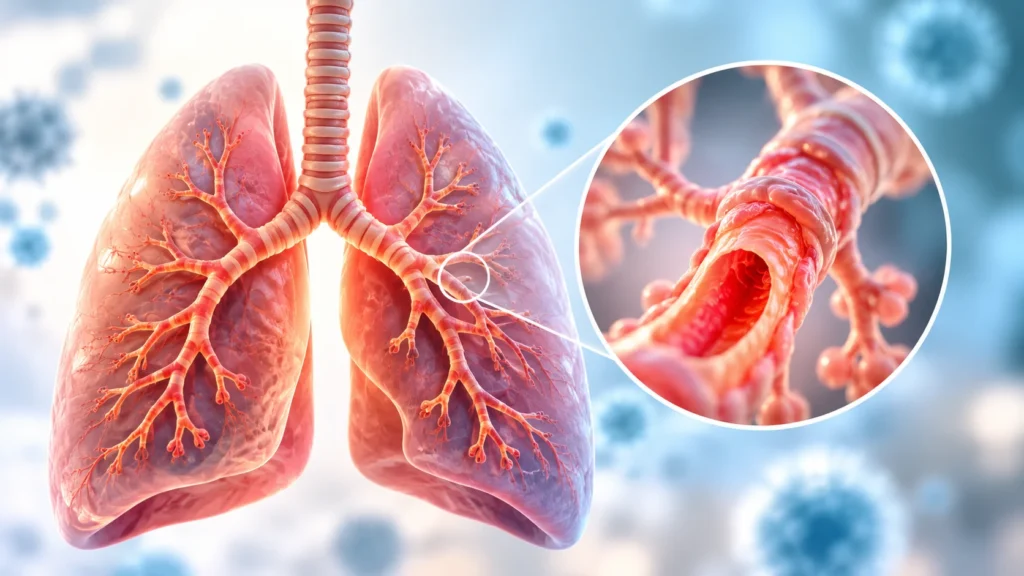
Bronchiolitis is an infection and inflammation of the smallest airways in the lungs. These airways are called bronchioles. They carry air from the larger breathing tubes into the tiny air sacs where oxygen passes into the blood.
When a virus infects these airways, the walls become swollen and produce extra mucus. The airways become narrow, making it harder for air to move in and out. This is why children with bronchiolitis often cough, wheeze, and breathe faster than usual.
Bronchiolitis is different from bronchitis. Bronchitis usually affects older children and adults and involves the larger airways. Bronchiolitis mainly affects infants and toddlers and involves the smaller airways. It is also different from asthma, although wheezing can happen in both conditions.
The illness is most common during the winter and early spring months, but it can occur at any time of the year. It spreads easily in homes, daycare centers, schools, and crowded places.
Why Bronchiolitis Matters
Bronchiolitis is usually mild, but it can become serious in some children.
- Babies have very small airways that can get blocked easily.
- Even mild swelling can cause significant breathing difficulty.
- Young children may not be able to explain how they feel.
- Poor feeding and dehydration can develop quickly.
- Some children need oxygen support or hospital care.
- Early recognition of warning signs can prevent complications.
Types of Bronchiolitis
Bronchiolitis can be classified in different ways based on the cause and severity.
Based on cause
- Viral bronchiolitis, which is the most common type and is usually caused by RSV.
- Bronchiolitis caused by other viruses such as influenza, adenovirus, rhinovirus, or human metapneumovirus.
- Bronchiolitis associated with other infections such as COVID-19 in some cases.
Based on severity
- Mild bronchiolitis, where the child has cough, runny nose, and mild breathing changes but is feeding normally.
- Moderate bronchiolitis, where breathing is faster, feeding is reduced, and the child may need closer monitoring.
- Severe bronchiolitis, where the child has significant breathing difficulty, poor oxygen levels, or needs hospital care.
Based on risk level
- Low-risk bronchiolitis in healthy full-term babies.
- High-risk bronchiolitis in premature babies, children with heart disease, lung disease, or weak immunity.
Causes of Bronchiolitis
Bronchiolitis is usually caused by a viral infection. The most common cause is respiratory syncytial virus, or RSV.
Common causes include:
- Respiratory syncytial virus, also called RSV.
- Rhinovirus, which is a common cold virus.
- Influenza virus.
- Adenovirus.
- Human metapneumovirus.
- Parainfluenza virus.
- COVID-19 virus in some cases.
How the infection affects the lungs
- The virus enters the nose and throat first.
- It then travels down into the smaller airways.
- The airway walls become inflamed and swollen.
- Extra mucus is produced inside the airways.
- The airways become narrow.
- Air movement becomes difficult.
- The child develops cough, wheezing, and fast breathing.
How Bronchiolitis Spreads
Bronchiolitis spreads very easily from one child to another, especially in close-contact settings.
It can spread through:
- Coughing or sneezing droplets from an infected child.
- Touching surfaces contaminated with the virus.
- Sharing toys, cups, or utensils.
- Close contact with an infected person.
- Poor hand hygiene.
- Crowded indoor spaces.
High-risk settings
- Homes with multiple young children.
- Daycare centers.
- Play schools.
- Hospitals and clinics.
- Family gatherings during winter.
- Crowded public places.
Symptoms of Bronchiolitis
Symptoms usually start like a common cold and then progress over a few days.
Early symptoms
- Runny nose.
- Blocked nose.
- Mild fever.
- Sneezing.
- Mild cough.
- Reduced appetite.
- Irritability.
Later symptoms
- Cough that becomes more frequent.
- Wheezing or whistling sound while breathing.
- Fast breathing.
- Noisy breathing.
- Difficulty feeding.
- Poor sleep.
- Tiredness.
- Mild chest retractions in some children.
Signs of breathing difficulty
- Breathing faster than usual.
- Nostrils flaring while breathing.
- Skin pulling in between the ribs or below the neck.
- Belly moving strongly with each breath.
- Grunting sounds while breathing.
- Pauses in breathing.
- Bluish lips or fingertips.
- Extreme sleepiness or difficulty waking up.
Signs of dehydration
- Dry mouth.
- Fewer wet diapers.
- No tears while crying.
- Sunken eyes.
- Weakness.
- Poor feeding.
- Reduced urine output.
Bronchiolitis in Babies
Babies under six months are at higher risk of developing more severe symptoms.
Why babies are more vulnerable
- Their airways are very small.
- Their immune system is still developing.
- They cannot clear mucus effectively.
- They may not feed well when the nose is blocked.
- They can become dehydrated quickly.
Common signs in babies
- Poor feeding.
- Crying more than usual.
- Difficulty sleeping.
- Fast breathing.
- Noisy breathing.
- Reduced wet diapers.
- Tiredness.
- Mild fever.
When parents should be extra careful
- Baby is under three months old.
- Baby was born prematurely.
- Baby has heart or lung problems.
- Baby has weak immunity.
- Baby is not feeding well.
- Baby is breathing fast or has bluish lips.
How is Bronchiolitis Diagnosed?
Most cases are diagnosed based on symptoms and physical examination. Tests are not always needed, but they may be done if the child is very unwell or if the diagnosis is unclear.
Diagnostic steps
- Detailed history of symptoms.
- Duration of cough and cold.
- Feeding pattern and urine output.
- History of prematurity or heart/lung problems.
- Physical examination of the chest.
- Checking breathing rate and oxygen level.
- Listening to the lungs for wheezing or crackles.
Tests that may be done if needed
- Pulse oximetry to check oxygen level.
- Chest X-ray if pneumonia or another lung problem is suspected.
- Blood tests if the child is very unwell.
- Nasal swab test to identify the virus, especially in high-risk or hospitalized children.
- Blood gas test in severe cases.
Why diagnosis matters
Some other conditions can look similar to bronchiolitis, such as pneumonia, asthma, croup, or foreign body in the airway. Proper examination helps ensure the child gets the right treatment.
Treatment for Bronchiolitis
Most children with bronchiolitis improve with supportive care. Antibiotics are not usually needed because the illness is caused by a virus.
1. Supportive care at home
- Keep the child comfortable.
- Ensure adequate rest.
- Offer frequent small feeds.
- Use saline nasal drops to clear the nose.
- Use a bulb syringe gently if needed.
- Keep the room air clean and smoke-free.
- Monitor breathing and activity level.
2. Nasal care
Blocked nose can make feeding and breathing difficult in babies.
- Use saline drops before feeds.
- Gently suction mucus if needed.
- Avoid forceful suction.
- Keep the baby’s head slightly elevated during sleep if advised.
3. Hydration
Keeping the child hydrated is very important.
- Offer breast milk or formula more frequently.
- Give small feeds more often.
- Watch urine output and wet diapers.
- Seek medical help if the child refuses fluids or has fewer wet diapers.
4. Oxygen support
Some children need oxygen if their oxygen level is low.
- Given through nasal prongs or face mask.
- Usually needed in moderate to severe cases.
- Helps the child breathe more comfortably.
- May require hospital admission.
5. Medicines
Most children do not need strong medicines.
- Fever medicines may be given if fever is present.
- Bronchodilators may be tried in some children with significant wheezing.
- Steroids are not usually helpful in typical bronchiolitis.
- Antibiotics are only used if there is a bacterial infection or complication.
- Antiviral medicines are rarely needed except in special high-risk cases.
6. Hospital care
Some children need admission for closer monitoring.
- Severe breathing difficulty.
- Poor oxygen level.
- Poor feeding or dehydration.
- Very young age, especially under three months.
- Underlying heart or lung disease.
- Extreme tiredness or poor responsiveness.
- Need for oxygen or IV fluids.
Home Care for Mild Bronchiolitis
Many mild cases can be managed at home with careful monitoring.
Helpful home care steps
- Keep the child hydrated.
- Use saline nasal drops.
- Keep the child away from smoke.
- Avoid crowded places until recovery.
- Keep the child’s room clean and well-ventilated.
- Wash hands before touching the child.
- Monitor breathing and feeding.
- Follow up if symptoms worsen.
Foods and fluids
- Continue breastfeeding if possible.
- Offer small frequent feeds.
- Avoid forcing large feeds.
- Keep the baby upright after feeding if needed.
- Ensure adequate urine output.
Comfort measures
- Keep the child calm.
- Avoid over-bundling.
- Maintain comfortable room temperature.
- Use a humidifier if advised.
- Keep the child away from dust and strong smells.
Possible Complications
Most children recover fully, but complications can happen in some cases.
Possible complications include:
- Dehydration.
- Low oxygen level.
- Respiratory failure in severe cases.
- Pneumonia.
- Ear infection.
- Repeat wheezing episodes.
- Hospitalization.
- Feeding difficulty.
- Fatigue and poor weight gain in prolonged illness.
Why complications happen
Young children have small airways and limited reserve. When swelling and mucus block the airways, oxygen levels can drop quickly. That is why early recognition of warning signs is important.
When to See a Doctor
Parents should seek medical advice if symptoms are not improving or if the child seems unwell.
- Cough or wheezing is getting worse.
- Breathing is fast or labored.
- The child is feeding poorly.
- Fever is high or persistent.
- The child is very sleepy or irritable.
- Symptoms last more than a few days.
- There is reduced urine output.
- The child has underlying heart or lung problems.
Prevention of Bronchiolitis
Prevention is possible in many cases through hygiene and avoiding exposure to infection.
Prevention pointers
- Wash hands frequently.
- Avoid close contact with sick people.
- Keep the baby away from crowded places during peak season.
- Avoid smoking around the child.
- Clean toys and surfaces regularly.
- Do not share utensils or towels.
- Keep the child’s vaccinations up to date.
- Ensure good ventilation at home.
- Avoid sending sick children to daycare or school.
For high-risk babies
- Be extra careful during RSV season.
- Avoid unnecessary exposure to crowds.
- Follow doctor’s advice on preventive measures.
- Seek early care if any breathing symptoms appear.
Why Choose Rama Hospital for Bronchiolitis Care?
Bronchiolitis can look mild at first but may become serious quickly in some babies. A hospital with experienced paediatricians and respiratory support can make a big difference in outcomes.
- Expert evaluation by paediatric specialists.
- Oxygen support when needed.
- Monitoring of breathing and hydration.
- Safe treatment for fever and wheezing.
- Care for high-risk babies.
- Support for parents and families.
- Emergency care for severe breathing difficulty.
Frequently Asked Questions (FAQs)
Is bronchiolitis the same as bronchitis?
No, they are different. Bronchiolitis affects the small airways and is common in infants. Bronchitis affects the larger airways and is more common in older children and adults.
Is bronchiolitis serious?
Most cases are mild and improve with home care. But in some babies, especially those born early or with heart or lung problems, it can become serious and need hospital care.
Can bronchiolitis be treated at home?
Yes, mild cases can often be managed at home with fluids, rest, and nasal care. However, if the child has breathing difficulty, poor feeding, or bluish lips, medical care is needed.
Do antibiotics help in bronchiolitis?
No, antibiotics do not help because bronchiolitis is usually caused by a virus. Antibiotics are only used if there is a bacterial infection or complication.
How long does bronchiolitis last?
Most children improve within a week or two. Cough may last longer in some cases. If symptoms are not improving or getting worse, a doctor should be consulted.
Can bronchiolitis cause wheezing?
Yes, wheezing is a common symptom. It happens because the small airways become narrow due to swelling and mucus. Wheezing may continue for some days even after other symptoms improve.
How can I prevent bronchiolitis in my baby?
Good hand hygiene, avoiding contact with sick people, and keeping the baby away from smoke and crowded places can help. Regular cleaning of toys and surfaces also reduces the risk.
Conclusion
Bronchiolitis is a common lung infection in babies and young children. It usually starts like a cold but can quickly lead to coughing, wheezing, and breathing difficulty. Most cases are mild and improve with supportive care, but some children need closer monitoring or hospital treatment.
The key to managing bronchiolitis is early recognition, proper hydration, nasal care, and timely medical help when warning signs appear. Parents should watch for fast breathing, poor feeding, bluish lips, or extreme tiredness. With the right care, most children recover fully and return to normal health.
Rama Hospital can provide evaluation, treatment, and supportive care for bronchiolitis, along with guidance on home care, prevention, and follow-up to reduce the risk of complications.