Missing teeth can affect more than just your smile. They can make chewing difficult, change the way you speak, affect your confidence, and even cause nearby teeth to shift over time. A dental bridge is one of the most common and effective ways to replace one or more missing teeth. It fills the gap using artificial teeth that are anchored to the surrounding natural teeth or dental implants.
Many people choose dental bridges because they are fixed, comfortable, and natural-looking. Unlike removable dentures, a bridge stays in place and does not need to be taken out daily. It helps restore normal function, improves appearance, and protects the remaining teeth from shifting.
What is a Dental Bridge?
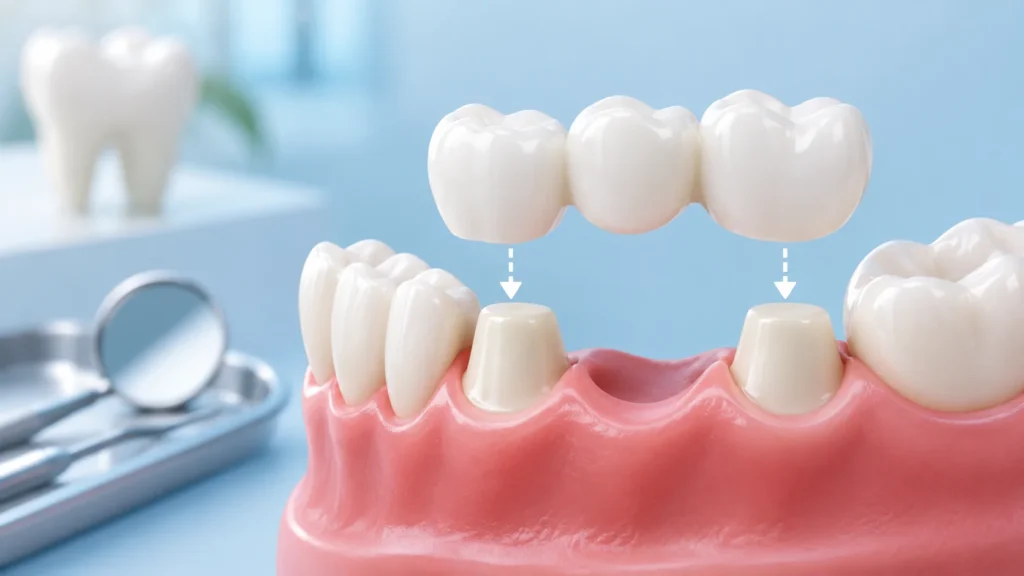
A dental bridge is a fixed dental restoration used to replace one or more missing teeth. It literally “bridges” the gap left by a missing tooth. The bridge is made up of artificial teeth, called pontics, which are held in place by crowns or supports on the teeth next to the gap.
The teeth on either side of the gap are called abutment teeth. These teeth are usually shaped and covered with crowns to hold the bridge in place. In some cases, dental implants are used instead of natural teeth as supports.
A dental bridge is custom-made to match the shape, size, and color of your natural teeth. Once placed, it looks and functions like a real tooth. It is a permanent solution, meaning it does not need to be removed like dentures.
Why Missing Teeth Need to Be Replaced
Many people think a missing tooth is only a cosmetic issue. In reality, it can affect the whole mouth over time.
- Chewing becomes difficult, especially for hard or fibrous foods.
- Nearby teeth may shift into the empty space.
- Bite alignment can change, causing jaw pain or discomfort.
- Speech may be affected, especially if front teeth are missing.
- The face may look older or sunken in some cases.
- Remaining teeth may experience more stress and wear.
- Confidence and self-esteem may be affected.
Replacing missing teeth early helps prevent these problems and keeps the mouth healthy.
Types of Dental Bridges
There are different types of dental bridges, and the right one depends on the location of the missing tooth, the condition of the surrounding teeth, and the patient’s needs.
Traditional dental bridge
- Most common type.
- Uses crowns on the teeth on both sides of the gap.
- Suitable when there are healthy natural teeth on both sides.
- Strong and durable.
Cantilever dental bridge
- Used when there is only one healthy tooth next to the gap.
- The bridge is supported on one side only.
- Less common today due to higher stress on the supporting tooth.
- Suitable in selected cases.
Maryland dental bridge
- Uses a metal or porcelain framework bonded to the back of nearby teeth.
- Less invasive because it does not require crowns.
- Often used for front teeth.
- May not be as strong as traditional bridges.
Implant-supported dental bridge
- Uses dental implants instead of natural teeth as supports.
- Suitable when multiple teeth are missing.
- Very stable and long-lasting.
- Requires enough bone and healthy gums.
Who is a Good Candidate for a Dental Bridge?
A dental bridge is suitable for many people, but a proper dental evaluation is needed first.
Good candidates include:
- People with one or more missing teeth.
- Those with healthy teeth or implants on either side of the gap.
- Patients with healthy gums and good oral hygiene.
- People who want a fixed, non-removable solution.
- Those who do not want removable dentures.
- Patients with enough bone support if implants are needed.
People who may need extra evaluation
- Those with gum disease or tooth decay.
- Patients with weak or damaged supporting teeth.
- People with insufficient bone for implants.
- Those with certain medical conditions affecting healing.
- Smokers, as healing may be slower.
Benefits of Dental Bridges
Dental bridges offer many benefits beyond just filling a gap.
Functional benefits
- Restore normal chewing ability.
- Improve speech clarity.
- Maintain bite alignment.
- Prevent nearby teeth from shifting.
- Distribute chewing force evenly.
Aesthetic benefits
- Improve the appearance of the smile.
- Match the color and shape of natural teeth.
- Restore facial structure in some cases.
- Boost confidence and self-esteem.
Long-term benefits
- Protect remaining teeth from excessive wear.
- Maintain jawbone health indirectly by restoring function.
- Provide a fixed, comfortable solution.
- Last many years with proper care.
The Dental Bridge Procedure
Getting a dental bridge usually takes more than one visit. The exact steps depend on the type of bridge and whether implants are used.
Step 1: Initial consultation and examination
- Dentist examines the mouth, teeth, and gums.
- X-rays or scans may be taken.
- Discussion of the best type of bridge.
- Planning of treatment and timeline.
Step 2: Preparation of supporting teeth
- For traditional bridges, the teeth on either side are shaped.
- A small amount of enamel is removed to make space for crowns.
- Impressions or digital scans are taken.
- A temporary bridge may be placed to protect the teeth.
Step 3: Bridge fabrication
- The impressions or scans are sent to a dental lab.
- The bridge is custom-made to match your teeth.
- Material may be porcelain, ceramic, metal, or a combination.
Step 4: Fitting and placement
- The temporary bridge is removed.
- The new bridge is checked for fit, bite, and appearance.
- Adjustments are made if needed.
- The bridge is permanently cemented in place.
Step 5: Follow-up and care
- Dentist checks the bridge after a few days or weeks.
- Instructions are given for cleaning and maintenance.
- Regular dental visits are recommended.
Materials Used in Dental Bridges
Different materials can be used depending on the location and needs.
- Porcelain, which looks natural and is often used for front teeth.
- Ceramic, which is strong and tooth-colored.
- Metal alloys, which are very strong and durable.
- Porcelain fused to metal, which combines strength and appearance.
- Zirconia, which is strong, durable, and aesthetic.
The choice of material depends on the location of the bridge, bite force, and aesthetic needs.
Dental Bridge vs Dental Implant
Many patients wonder whether a bridge or implant is better. Both are effective, but they work differently.
- A bridge uses nearby teeth or implants as support.
- An implant replaces the tooth root with a titanium post.
- Bridges are usually faster to complete.
- Implants may take longer due to healing time.
- Bridges may require shaping of healthy teeth.
- Implants do not affect nearby teeth.
- Both can last many years with good care.
The best option depends on the number of missing teeth, bone health, budget, and patient preference.
Aftercare for Dental Bridges
Proper care is essential to make a dental bridge last.
Daily care tips
- Brush twice a day with fluoride toothpaste.
- Floss daily, including under the bridge using special floss or a floss threader.
- Use an antiseptic mouthwash if recommended.
- Avoid chewing very hard foods like ice or hard candy.
- Do not use teeth as tools to open packages.
Regular dental visits
- Visit the dentist every six months.
- Get professional cleaning to prevent gum disease.
- Check the bridge for wear or damage.
- Address any discomfort early.
Diet tips
- Eat a balanced diet rich in calcium and vitamins.
- Limit sugary snacks and drinks.
- Avoid sticky foods that can pull on the bridge.
- Drink plenty of water.
Possible Complications
Dental bridges are generally safe, but some issues can occur.
Possible problems include:
- Decay under the crowns if oral hygiene is poor.
- Gum disease around the supporting teeth.
- Bridge becoming loose or falling off.
- Chipping or cracking of the bridge material.
- Sensitivity to hot or cold.
- Bite discomfort if not fitted properly.
How to prevent complications
- Maintain good oral hygiene.
- Avoid hard or sticky foods.
- Visit the dentist regularly.
- Report any discomfort or looseness early.
How Long Do Dental Bridges Last?
With proper care, a dental bridge can last many years.
- Average lifespan is 5 to 15 years.
- Some bridges last even longer with excellent care.
- Longevity depends on oral hygiene, diet, and regular dental visits.
- Implant-supported bridges may last longer.
Cost Factors for Dental Bridges
The cost of a dental bridge depends on several factors.
- Type of bridge.
- Material used.
- Number of teeth being replaced.
- Whether implants are needed.
- Complexity of the case.
- Location and expertise of the dental clinic.
A detailed consultation is needed to get an accurate estimate.
Why Choose Rama Hospital for Dental Bridges?
Getting a dental bridge is not just about filling a gap. It is about restoring function, protecting oral health, and improving quality of life. A hospital with experienced dentists, modern technology, and a patient-focused approach can make a big difference.
Why hospital care matters
- Expert evaluation by dental specialists.
- Advanced imaging and digital scanning.
- Custom-made bridges for natural look and fit.
- Use of high-quality materials.
- Comfortable and safe procedure.
- Follow-up care and maintenance guidance.
Trust and authority points
- Experienced dental team.
- Modern dental technology.
- Patient education and support.
- Comprehensive care from consultation to aftercare.
- Focus on long-term oral health.
Frequently Asked Questions (FAQs)
1. What is a dental bridge?
A dental bridge is a fixed restoration used to replace one or more missing teeth. It uses artificial teeth supported by crowns or implants to fill the gap.
2. How long does a dental bridge last?
With good care, a dental bridge can last 5 to 15 years or more. Regular dental visits and good oral hygiene help extend its life.
3. Is getting a dental bridge painful?
The procedure is usually done under local anesthesia, so pain is minimal. Some sensitivity or discomfort may occur after the procedure but usually settles in a few days.
4. Can a dental bridge be removed?
No, a traditional dental bridge is fixed and cannot be removed by the patient. It is cemented in place and functions like natural teeth.
5. How do I clean under a dental bridge?
Special floss, floss threaders, or interdental brushes can be used to clean under the bridge. Keeping this area clean is important to prevent gum disease.
6. Can a dental bridge be whitened?
No, the material of a dental bridge does not respond to whitening treatments. If you want a brighter smile, whitening should be done before the bridge is made.
7. What if my dental bridge feels loose?
If a bridge feels loose, contact your dentist immediately. It may need to be re-cemented or adjusted. Do not try to fix it yourself.
8. Can I eat normally with a dental bridge?
Yes, once the bridge is properly fitted and healed, you can eat most foods normally. Avoid very hard or sticky foods that could damage the bridge.
Conclusion
A dental bridge is a reliable, effective, and natural-looking solution for missing teeth. It restores chewing function, improves appearance, and protects the remaining teeth from shifting. With proper care, a bridge can last many years and significantly improve quality of life.
The most important steps are proper evaluation, choosing the right type of bridge, and maintaining good oral hygiene. For patients with missing teeth, a dental bridge can restore confidence and comfort. With the right care, it can be a long-lasting solution.
Rama Hospital can help evaluate your dental needs, recommend the best type of bridge, and provide a comfortable, safe procedure with excellent aftercare.