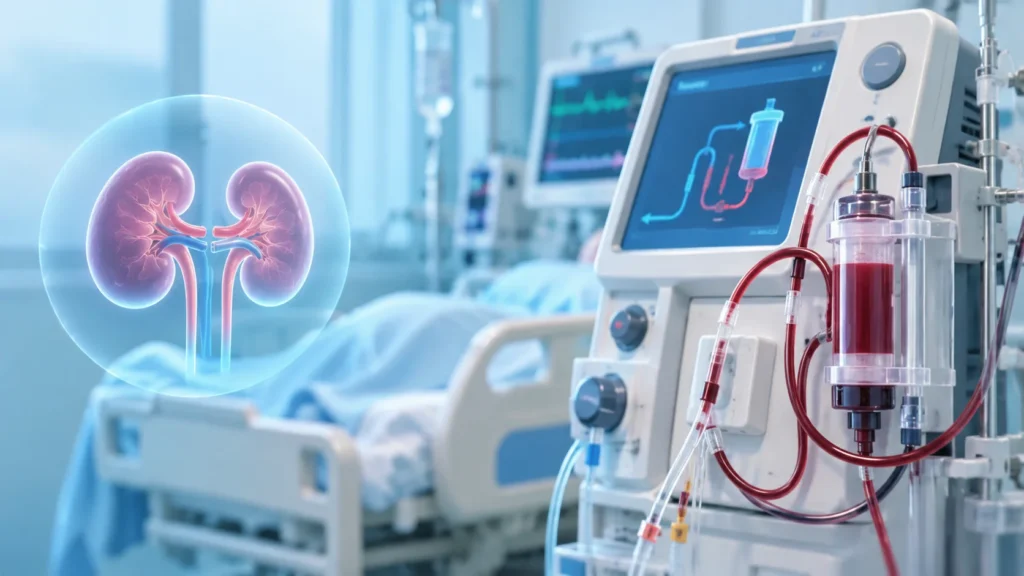
Continuous Venovenous Hemodialysis, commonly called CVVHD, is a type of kidney support therapy used in critically ill patients whose kidneys are not working properly. It is a form of continuous renal replacement therapy, or CRRT, and is usually given in an intensive care unit setting. Unlike regular dialysis, which is done for a few hours at a time, CVVHD runs slowly and continuously over many hours or even days.
This treatment is used when the kidneys suddenly stop working, a condition called acute kidney injury. In such patients, waste products, extra fluid, and salts build up in the body. If not removed, this can lead to dangerous complications such as fluid overload, high potassium, acid buildup, and organ failure. CVVHD helps remove these harmful substances gently and steadily, giving the kidneys time to recover.
CVVHD is different from regular hemodialysis in an important way. Because it works slowly and continuously, it puts less stress on the heart and blood pressure. This makes it especially useful for patients who are very sick, have low blood pressure, or cannot tolerate the rapid fluid shifts of standard dialysis.
What is CVVHD?
CVVHD stands for Continuous Venovenous Hemodialysis. It is a slow, continuous form of dialysis used mainly in critically ill patients with acute kidney injury or severe fluid and electrolyte problems.
The term can be broken down to understand it better.
- Continuous means the treatment runs for many hours or days without long breaks.
- Venovenous means blood is taken out from a vein and returned to another vein.
- Hemodialysis means the blood is filtered through a special machine to remove waste and extra fluid.
In CVVHD, blood is slowly drawn from the patient through a catheter, passed through a filter called a dialyzer, and then returned to the body. During this process, waste products, extra salts, and excess fluid are removed. The treatment is gentle because it works slowly, which is safer for patients with unstable blood pressure or heart problems.
When is CVVHD Used?
CVVHD is mainly used in intensive care units for patients who are very sick and need kidney support.
Common reasons for using CVVHD
- Acute kidney injury, where the kidneys suddenly stop working.
- Severe fluid overload that the body cannot remove on its own.
- High potassium levels that are dangerous for the heart.
- Severe acid buildup in the blood, called metabolic acidosis.
- Removal of certain toxins or drugs in poisoning cases.
- Kidney failure in patients with sepsis or severe infection.
- Kidney failure after major surgery or trauma.
- Multi-organ failure where kidneys are affected.
- Patients who cannot tolerate regular dialysis due to low blood pressure.
Why CVVHD is chosen over regular dialysis
- It works slowly, which is safer for unstable patients.
- It causes less drop in blood pressure.
- It is better for patients with heart problems.
- It allows continuous fluid removal.
- It is suitable for patients who cannot handle rapid fluid shifts.
- It gives the kidneys time to recover while supporting the body.
How Does CVVHD Work?
Continuous Venovenous Hemodialysis works by passing the patient’s blood through a special filter that removes waste and extra fluid.
Step-by-step process
- Blood is drawn from the patient through a catheter placed in a large vein.
- The blood passes through a pump that controls the flow rate.
- The blood enters a dialyzer, which is a filter with tiny hollow fibers.
- Dialysis fluid, called dialysate, flows on the other side of the filter.
- Waste products and extra salts move from the blood into the dialysate.
- Extra fluid is removed through a process called ultrafiltration.
- Cleaned blood is returned to the patient through another vein.
What is removed during CVVHD
- Urea and other waste products.
- Extra potassium.
- Extra sodium and other salts.
- Excess fluid.
- Certain acids that build up in kidney failure.
- Some toxins or drugs in poisoning cases.
Why the process is gentle
Because the treatment runs slowly over many hours, the body does not experience sudden changes in fluid or blood pressure. This is why Continuous Venovenous Hemodialysis is preferred for critically ill patients who cannot handle the faster pace of regular dialysis.
The CVVHD Procedure
The procedure involves placing a catheter, connecting the patient to the machine, and running the treatment continuously under close monitoring.
Catheter placement
- A special double-lumen catheter is placed in a large vein, usually in the neck, chest, or groin.
- This is done under sterile conditions, often with local anesthesia.
- The catheter has two channels, one to take blood out and one to return it.
- Proper placement is important to ensure good blood flow and reduce complications.
Starting the treatment
- The catheter is connected to the Continuous Venovenous Hemodialysis machine.
- The machine is primed with saline to remove air.
- Blood flow is started slowly and increased to the target rate.
- Dialysate flow and fluid removal rates are set based on the patient’s needs.
- The treatment runs continuously, often for 24 hours or more.
During the treatment
- Nurses and critical care staff monitor the patient closely.
- Blood pressure, heart rate, and oxygen levels are checked regularly.
- Blood tests are done to check electrolytes and waste levels.
- Fluid balance is carefully tracked.
- The machine settings are adjusted as needed.
Duration of treatment
- Continuous Venovenous Hemodialysis may run for several days.
- It continues until kidney function improves or the patient no longer needs support.
- In some cases, it may be needed for a week or more.
- The duration depends on the cause of kidney failure and the patient’s recovery.
Benefits of CVVHD
Continuous Venovenous Hemodialysis offers several important benefits, especially for critically ill patients.
Main benefits
- Gentle and continuous removal of waste and fluid.
- Better tolerated by patients with low blood pressure.
- Less stress on the heart compared to regular dialysis.
- Allows precise control of fluid balance.
- Helps manage dangerous electrolyte levels.
- Supports the body while kidneys recover.
- Can be used in patients with multi-organ failure.
- Reduces the risk of sudden complications from rapid fluid shifts.
Why these benefits matter
In critically ill patients, sudden changes in blood pressure or fluid levels can be dangerous. CVVHD avoids these sudden changes by working slowly and steadily. This makes it a safer option for patients who are already very sick.
Risks and Complications
Like any medical procedure, Continuous Venovenous Hemodialysis has some risks, though it is generally safe when done under expert care.
Common risks
- Bleeding or clotting at the catheter site.
- Infection at the catheter site.
- Low blood pressure during treatment.
- Electrolyte imbalances if not monitored properly.
- Clotting of the dialysis filter.
- Air embolism, which is rare but serious.
- Hypothermia, or low body temperature, due to blood cooling in the machine.
How risks are managed
- Strict sterile technique during catheter placement.
- Regular monitoring of vital signs and blood tests.
- Use of anticoagulants to prevent clotting when needed.
- Careful adjustment of fluid removal rates.
- Warming of blood or dialysate if needed.
- Regular machine checks and alarm monitoring.
Why expert care matters
Because Continuous Venovenous Hemodialysis is used in very sick patients, close monitoring is essential. A trained critical care and nephrology team can detect and manage complications early, keeping the treatment safe and effective.
Monitoring During CVVHD
Continuous monitoring is a key part of CVVHD to ensure the treatment is working safely.
What is monitored
- Blood pressure and heart rate.
- Oxygen levels and breathing.
- Fluid intake and output.
- Electrolyte levels such as potassium, sodium, and calcium.
- Waste levels such as urea and creatinine.
- Blood clotting parameters.
- Catheter site for signs of infection or bleeding.
- Machine function and alarm status.
Why monitoring matters
Because Continuous Venovenous Hemodialysis runs continuously, small changes in the patient’s condition can affect treatment. Regular monitoring allows the team to adjust settings quickly and prevent complications.
Recovery After CVVHD
Recovery depends on the cause of kidney failure and the patient’s overall condition.
Signs that kidneys are recovering
- Increase in urine output.
- Improvement in waste levels in blood tests.
- Stabilization of electrolytes.
- Reduced need for fluid removal.
- Improvement in overall clinical condition.
What happens after CVVHD is stopped
- The catheter may be removed once it is no longer needed.
- Kidney function is monitored with blood tests and urine output.
- Some patients recover fully and do not need further dialysis.
- Others may need regular dialysis if kidney function does not fully return.
- Follow-up with a nephrologist is important.
Rehabilitation and support
- Nutritional support to help recovery.
- Physical therapy if the patient was bedridden for a long time.
- Management of other organ issues.
- Emotional support for the patient and family.
CVVHD vs Regular Hemodialysis
Understanding the difference helps explain why CVVHD is used in certain patients.
Key differences
- CVVHD runs continuously, while regular dialysis is done in sessions of a few hours.
- CVVHD is slower and gentler, while regular dialysis is faster.
- CVVHD is used in ICU for critically ill patients, while regular dialysis is used for stable patients.
- CVVHD allows continuous fluid removal, while regular dialysis removes fluid in a shorter time.
- CVVHD is better for patients with unstable blood pressure or heart problems.
Why the difference matters
For a patient who is critically ill, the slow and steady approach of CVVHD is safer. For a stable patient with chronic kidney disease, regular dialysis is more practical and efficient.
When is CVVHD Not Suitable?
While Continuous Venovenous Hemodialysis is very useful, it may not be the best option in every case.
Situations where CVVHD may not be used
- When the patient is stable enough for regular dialysis.
- When there is severe bleeding risk that cannot be managed.
- When vascular access cannot be established safely.
- When the patient or family declines intensive treatment.
- When kidney function is expected to recover quickly with other support.
Alternatives to CVVHD
- Intermittent hemodialysis for stable patients.
- Peritoneal dialysis in selected cases.
- Slow low-efficiency dialysis, which is a middle-ground option.
- Supportive care without dialysis in some end-of-life situations.
Role of the Critical Care Team
Continuous Venovenous Hemodialysis requires a team approach involving multiple specialists.
Team members involved
- Intensivists who manage overall critical care.
- Nephrologists who specialize in kidney care.
- Critical care nurses who run and monitor the machine.
- Perfusionists or dialysis technicians who manage the equipment.
- Dietitians who manage nutrition during treatment.
- Pharmacists who adjust medicines based on kidney function.
Why the team matters
Because Continuous Venovenous Hemodialysis is complex and used in very sick patients, coordination among specialists is essential. This team approach ensures the treatment is safe, effective, and tailored to the patient’s needs.
Nutrition During CVVHD
Patients on Continuous Venovenous Hemodialysis often have high nutritional needs because of their critical illness.
Nutrition considerations
- Protein needs may be higher due to illness and dialysis losses.
- Fluid intake must be carefully controlled.
- Electrolyte intake may need adjustment.
- Feeding may be given through a tube if the patient cannot eat.
- Dietitians work with the team to plan appropriate nutrition.
Why nutrition matters
Good nutrition supports healing and recovery. However, in kidney failure, too much of certain nutrients can be harmful. A balanced approach guided by experts is important.
Family Support and Communication
Families of patients on Continuous Venovenous Hemodialysis often have many questions and concerns.
What families should know
- Continuous Venovenous Hemodialysis is a life-supporting treatment, not a cure for kidney failure.
- The goal is to support the body while kidneys recover.
- Treatment may last days or weeks depending on the cause.
- Regular updates from the medical team are part of care.
- Emotional support for families is important during this stressful time.
How hospitals support families
- Regular updates on the patient’s condition.
- Clear explanation of the treatment and its goals.
- Support for decision-making.
- Counseling services if needed.
- Compassionate care throughout the treatment.
Why Choose Rama Hospital for CVVHD?
Continuous Venovenous Hemodialysis is an advanced treatment that requires expert critical care, nephrology support, and modern equipment. A hospital with experienced intensivists, nephrologists, and trained nursing staff can provide safe and effective CVVHD.
Why hospital care matters
- Experienced critical care and nephrology team.
- Modern ICU with advanced dialysis equipment.
- 24/7 monitoring and support.
- Coordinated care for multi-organ failure.
- Infection control and safety protocols.
- Family communication and support.
Trust and authority points
- Experienced intensivists and nephrologists.
- State-of-the-art ICU facilities.
- Trained nursing staff for CVVHD management.
- Comprehensive care for critically ill patients.
- Patient and family education.
Frequently Asked Questions (FAQs)
1. What is CVVHD?
Continuous Venovenous Hemodialysis stands for Continuous Venovenous Hemodialysis. It is a slow, continuous form of dialysis used in critically ill patients with kidney failure. It gently removes waste, extra fluid, and harmful salts from the blood.
2. When is CVVHD needed?
Continuous Venovenous Hemodialysis is used when the kidneys suddenly stop working, especially in critically ill patients. It is also used for severe fluid overload, high potassium, or acid buildup that the body cannot handle on its own.
3. How is CVVHD different from regular dialysis?
Continuous Venovenous Hemodialysis runs continuously and slowly, while regular dialysis is done in shorter, faster sessions. CVVHD is gentler and safer for patients with low blood pressure or heart problems.
4. How long does CVVHD last?
Continuous Venovenous Hemodialysis may run for several days or even weeks, depending on the cause of kidney failure. It continues until the kidneys recover or the patient no longer needs support.
5. Is CVVHD painful?
The catheter placement may cause some discomfort, but the treatment itself is usually not painful. Patients are often sedated or given pain relief as needed during the process.
6. What are the risks of CVVHD?
Risks include bleeding or infection at the catheter site, low blood pressure, electrolyte imbalances, and filter clotting. These are managed with close monitoring and expert care.
7. Can kidneys recover after CVVHD?
Yes, in many cases kidneys recover after the underlying cause is treated. Some patients may need ongoing dialysis if recovery is incomplete. Regular follow-up is important.
8. Who performs CVVHD?
Continuous Venovenous Hemodialysis is performed by a team including intensivists, nephrologists, critical care nurses, and dialysis technicians. This team approach ensures safe and effective treatment.
Conclusion
Continuous Venovenous Hemodialysis, or CVVHD, is a vital treatment for critically ill patients with acute kidney injury or severe fluid and electrolyte problems. It works slowly and continuously, making it safer for patients who cannot tolerate regular dialysis. By gently removing waste, extra fluid, and harmful salts, CVVHD supports the body while the kidneys recover.
The most important aspects of Continuous Venovenous Hemodialysis are proper patient selection, expert catheter placement, careful monitoring, and a coordinated team approach. With the right care, many patients recover kidney function and avoid long-term dialysis. For those who do not fully recover, CVVHD provides essential support during the most critical phase of illness.
Rama Hospital can provide Continuous Venovenous Hemodialysis with experienced critical care and nephrology teams, modern ICU facilities, and compassionate support for patients and families. Early recognition of kidney failure and timely initiation of CVVHD can make a major difference in outcomes for critically ill patients.