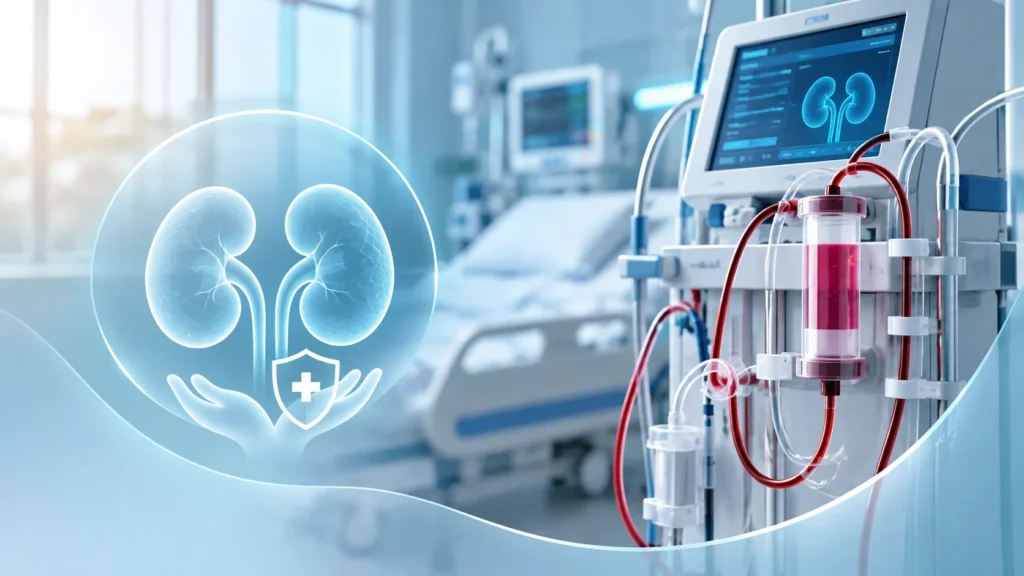
Continuous Venovenous Hemofiltration, commonly called CVVH, is a type of kidney support therapy used in critically ill patients. It is a form of continuous renal replacement therapy, or CRRT, that helps remove waste products, excess fluid, and harmful substances from the blood when the kidneys are not working properly.
Continuous Venovenous Hemofiltration is usually given in an intensive care unit, or ICU, to patients who are too unstable for regular dialysis. It works slowly and continuously over 24 hours, which makes it gentler on the body compared to standard dialysis. This is especially important for patients with low blood pressure, severe infection, heart problems, or multi-organ failure.
Many patients and families have questions about CVVH because it is often used during serious illness. They may wonder why it is needed, how it works, how long it lasts, and what to expect during treatment. This page gives a detailed, patient-friendly explanation of Continuous Venovenous Hemofiltration in a clear and practical way.
Continuous Venovenous Hemofiltration, or CVVH, is a medical treatment that helps support kidney function in critically ill patients. It is a type of continuous renal replacement therapy that works by filtering the blood slowly and continuously over 24 hours.
Unlike standard dialysis, which is done in shorter sessions a few times a week, CVVH runs continuously. This makes it gentler on the body and better suited for patients who are unstable or have low blood pressure. It is commonly used in the ICU for patients with acute kidney injury, severe infection, fluid overload, or multi-organ failure.
The main goal of CVVH is to remove waste products, excess fluid, and harmful substances from the blood when the kidneys cannot do this on their own. It does not cure kidney disease, but it supports the body while the kidneys recover or while other treatments are given.
Continuous Venovenous Hemofiltration works by passing the patient’s blood through a special filter called a hemofilter. This filter removes waste products and excess fluid from the blood.
The term venovenous means that blood is taken from a vein and returned to a vein. A pump is used to move the blood through the circuit. This is different from older methods that used the patient’s own blood pressure to drive the flow.
Hemofiltration means that the filter removes fluid and waste by pressure-driven filtration rather than diffusion. This allows removal of both small and medium-sized waste molecules. Replacement fluid is added to maintain blood volume and electrolyte balance.
Continuous Venovenous Hemofiltration is used in critically ill patients who need kidney support but may not tolerate standard dialysis.
Continuous Venovenous Hemofiltration is performed in the ICU by a trained critical care team.
Continuous Venovenous Hemofiltration offers several benefits for critically ill patients.
In critically ill patients, sudden changes in blood pressure or fluid balance can be dangerous. CVVH avoids these sudden changes by working slowly and continuously. This makes it safer and more comfortable for unstable patients.
Like any medical procedure, Continuous Venovenous Hemofiltration has some risks and possible complications.
Because Continuous Venovenous Hemofiltration runs continuously, the medical team monitors the patient closely. They check blood pressure, fluid balance, electrolytes, and filter function. This helps catch problems early and adjust treatment as needed.
Patients on Continuous Venovenous Hemofiltration are closely monitored in the ICU.
Because Continuous Venovenous Hemofiltration affects fluid and electrolyte balance, close monitoring is essential. The medical team adjusts the rate of filtration, replacement fluid, and anticoagulation based on the patient’s condition. This ensures safe and effective treatment.
Recovery depends on the underlying illness and how well the kidneys recover.
Continuous Venovenous Hemofiltration and standard dialysis both support kidney function, but they work differently.
The choice between Continuous Venovenous Hemofiltration and dialysis depends on the patient’s condition. In ICU, CVVH is often preferred for unstable patients because it is safer and more comfortable.
Nutrition is important for critically ill patients on Continuous Venovenous Hemofiltration.
Critical illness increases the body’s energy and protein needs. Continuous Venovenous Hemofiltration can remove some nutrients along with waste products, so nutrition must be adjusted to prevent deficiency and support recovery.
CVVH stands for Continuous Venovenous Hemofiltration. It is a type of kidney support therapy used in ICU to remove waste products and excess fluid from the blood when the kidneys are not working properly.
Continuous Venovenous Hemofiltration works continuously and is gentler on blood pressure, while standard dialysis is done in sessions and can cause more fluctuation. CVVH is often used for unstable ICU patients.
It depends on the patient’s condition. Some patients need it for a few days, while others may need it for weeks. The medical team decides daily whether to continue or stop.
The catheter placement may cause some discomfort, but the treatment itself is usually not painful. Patients are monitored closely and given support as needed.
Yes, in many cases kidneys recover after the underlying illness is treated. Some patients recover fully, while others may need further dialysis depending on the extent of kidney damage.
Risks include bleeding, infection, low blood pressure, electrolyte imbalance, and clotting of the filter. These are managed with close monitoring and careful adjustment of treatment.
No, Continuous Venovenous Hemofiltration is usually done in the ICU for critically ill patients. It requires continuous monitoring and specialized equipment.
Continuous Venovenous Hemofiltration is used in ICU because it provides gentle, continuous kidney support for unstable patients. It is safer for those with low blood pressure, severe infection, or multi-organ failure.
Continuous Venovenous Hemofiltration, or CVVH, is an important kidney support therapy used in critically ill patients. It works by filtering the blood slowly and continuously, removing waste products, excess fluid, and harmful substances. This makes it gentler and safer for unstable patients compared to standard dialysis.
Continuous Venovenous Hemofiltration is commonly used in the ICU for patients with acute kidney injury, severe infection, fluid overload, or multi-organ failure. It helps support the body while the kidneys recover or while other treatments are given. With careful monitoring and expert care, CVVH can improve outcomes and support recovery in seriously ill patients.
Rama Hospital provides advanced critical care and kidney support therapies, including Continuous Venovenous Hemofiltration, for patients who need intensive treatment. Our team of intensivists, nephrologists, and ICU nurses work together to provide safe, effective, and compassionate care for every patient.
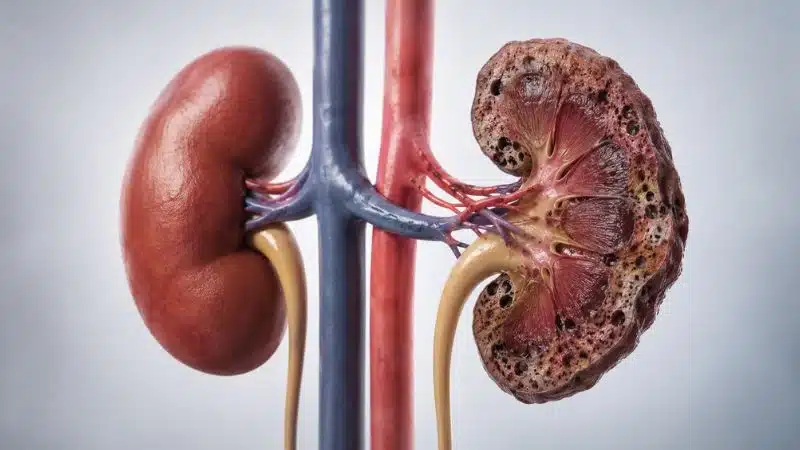

Hemodialysis is a type of dialysis that does the work of your kidneys. It removes your blood, filters out toxins and excess fluids and sends your filtered blood back into your body.
No rows found.