Cerebral angiography is a special imaging test that helps doctors see the blood vessels in the brain in detail. It is also called cerebral angiogram or brain angiography. This test uses a contrast dye and X-ray imaging to create clear pictures of the arteries and veins in the brain. It is one of the most accurate ways to check for problems such as aneurysms, blockages, abnormal blood vessel formations, or bleeding in the brain.
Many people may need cerebral angiography if they have symptoms such as sudden severe headache, weakness, vision changes, seizures, or signs of stroke. It is also used to plan treatment for conditions like brain aneurysm, arteriovenous malformation, or narrowed arteries. Because the test gives very detailed images, it helps doctors make accurate decisions about diagnosis and treatment.
What is Cerebral Angiography?
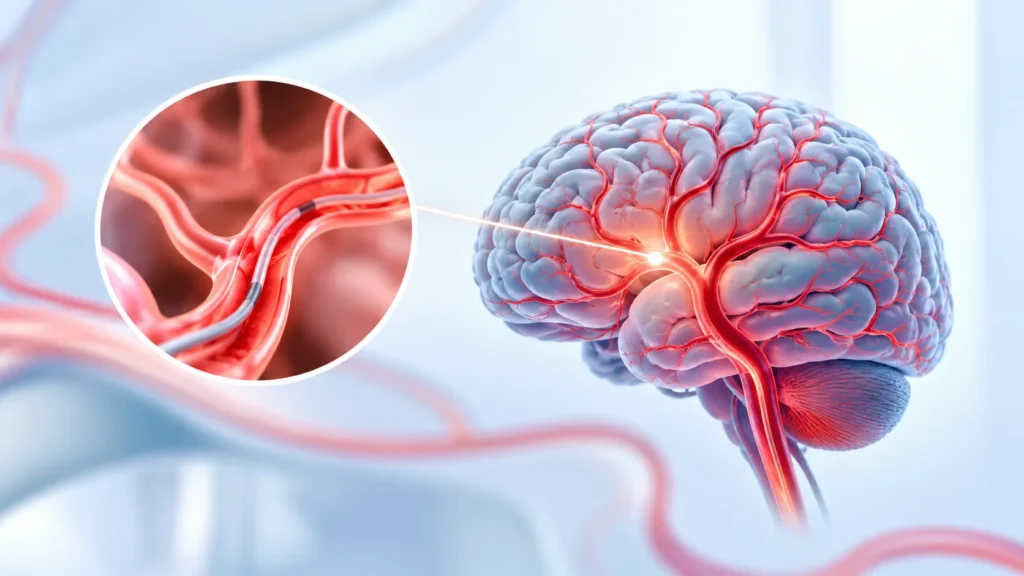
Cerebral angiography is a diagnostic imaging test that shows the blood vessels in the brain. It uses a thin, flexible tube called a catheter, which is inserted into a blood vessel, usually in the groin or wrist. A contrast dye is then injected through the catheter, and X-ray images are taken as the dye flows through the blood vessels in the brain.
The test gives very clear and detailed pictures of the arteries and veins in the brain. It helps doctors see the exact shape, size, and location of blood vessels. This is important for detecting conditions such as aneurysms, blockages, malformations, or narrowing of vessels.
Cerebral angiography is different from a regular CT scan or MRI. While those tests show the brain tissue, angiography focuses on the blood vessels. It is often used when other tests are not enough to give a clear answer.
Why is Cerebral Angiography Done?
Cerebral angiography is done to diagnose and evaluate problems in the blood vessels of the brain.
Common reasons for the test
- To detect brain aneurysms.
- To check for blockages or narrowing of brain arteries.
- To evaluate arteriovenous malformations or abnormal blood vessel connections.
- To diagnose causes of stroke or mini-stroke.
- To investigate sudden severe headache or unexplained bleeding in the brain.
- To plan treatment before surgery or endovascular procedures.
- To check blood flow after treatment such as coiling or clipping.
- To evaluate tumors that have a rich blood supply.
When doctors may recommend it
- Patient has symptoms of stroke or TIA.
- Sudden severe headache with possible bleeding.
- Abnormal finding on CT or MRI that needs further detail.
- Suspected aneurysm or vascular malformation.
- Planning for neurosurgery or interventional treatment.
- Follow-up after previous aneurysm treatment.
How Does Cerebral Angiography Work?
The test works by using a contrast dye and X-ray imaging to visualize blood flow in the brain.
Step-by-step overview
- Patient is positioned on an X-ray table.
- A small area in the groin or wrist is cleaned and numbed.
- A thin catheter is inserted into the blood vessel.
- The catheter is guided carefully to the arteries in the brain.
- Contrast dye is injected through the catheter.
- X-ray images are taken in real time as the dye flows through the vessels.
- The catheter is removed and pressure is applied to stop bleeding.
- The patient is monitored for a few hours after the test.
What the images show
- Shape and size of brain arteries and veins.
- Presence of aneurysms or bulges.
- Blockages or narrowing of vessels.
- Abnormal connections between arteries and veins.
- Blood flow direction and speed.
- Areas of bleeding or vascular damage.
Preparation for Cerebral Angiography
Proper preparation helps make the test safe and accurate.
Before the test
- Inform the doctor about all medicines, especially blood thinners.
- Tell the doctor about allergies, especially to contrast dye or iodine.
- Inform about kidney problems or previous reactions to contrast.
- Do not eat or drink for a few hours before the test as advised.
- Arrange for someone to accompany you and take you home.
- Wear comfortable clothing and avoid jewelry.
- Follow all instructions given by the hospital team.
Tests that may be done before
- Blood tests to check kidney function and clotting.
- ECG to check heart rhythm.
- Review of medical history and current medicines.
- Imaging tests such as CT or MRI if not already done.
What Happens During the Procedure?
Cerebral angiography is usually done in a special X-ray room called a cath lab or angiography suite.
During the procedure
- Patient lies on an X-ray table.
- The area in the groin or wrist is cleaned and numbed with local anesthesia.
- A small needle is used to access the blood vessel.
- A thin catheter is inserted and guided to the brain arteries.
- Contrast dye is injected.
- X-ray images are taken from different angles.
- The patient may be asked to hold still at times.
- The procedure usually takes about one to two hours.
- The patient may feel a warm sensation when the dye is injected.
What the patient may feel
- Mild pressure or discomfort at the insertion site.
- Warm or flushing sensation when dye is injected.
- Slight headache or metallic taste in some cases.
- Minimal pain due to local anesthesia.
After the Procedure
After the test, the patient is monitored for a few hours to make sure there are no complications.
Recovery steps
- Pressure is applied to the insertion site to stop bleeding.
- A bandage or small dressing is placed.
- Patient may need to lie flat for a few hours.
- Fluids are encouraged to help flush out the dye.
- Vital signs and neurological status are monitored.
- Most patients can go home the same day if no complications.
What to expect at home
- Mild soreness or bruising at the insertion site.
- Small amount of blood or oozing may occur initially.
- Avoid heavy lifting or strenuous activity for a day or two.
- Drink plenty of fluids.
- Follow instructions about medicines and activity.
Risks and Complications
Cerebral angiography is generally safe, but like any procedure, it has some risks.
Common risks
- Bruising or bleeding at the insertion site.
- Allergic reaction to contrast dye.
- Temporary headache or dizziness.
- Infection at the puncture site, though rare.
Less common but serious risks
- Stroke or mini-stroke due to blood clot or vessel injury.
- Damage to the blood vessel.
- Kidney problems due to contrast dye.
- Severe allergic reaction.
- Bleeding in the brain, though very rare.
How risks are minimized
- Careful patient selection and evaluation.
- Use of modern equipment and techniques.
- Experienced interventional radiology or neurosurgery team.
- Monitoring during and after the procedure.
- Prompt treatment if any complication occurs.
Who Should Not Have Cerebral Angiography?
Some patients may need extra caution or alternative tests.
Patients who may need caution
- Those with severe kidney disease.
- Patients with allergy to contrast dye.
- Pregnant women, unless absolutely necessary.
- Patients with severe bleeding disorders.
- Those with unstable heart or lung conditions.
Alternatives that may be considered
- CT angiography.
- MR angiography.
- Ultrasound of neck vessels.
- Other non-invasive imaging tests.
Cerebral Angiography vs Other Imaging Tests
Different tests give different types of information.
Comparison pointers
- CT scan shows brain tissue and bleeding but less detail on vessels.
- MRI shows brain structure and some vessels but may miss small aneurysms.
- CT angiography is faster and less invasive but may not show very small vessels.
- MR angiography is non-invasive and uses no radiation but may be less detailed.
- Cerebral angiography gives the most detailed view of brain vessels and is often used for planning treatment.
Recovery and Follow-Up
Most patients recover quickly after cerebral angiography.
Recovery pointers
- Rest for the rest of the day.
- Avoid strenuous activity for 24 to 48 hours.
- Keep the insertion site clean and dry.
- Watch for signs of bleeding, swelling, or severe pain.
- Follow up with the doctor as advised.
- Repeat imaging may be needed in some cases.
When to contact the doctor after the test
- Severe pain or swelling at the insertion site.
- Heavy bleeding or oozing.
- Fever or chills.
- Numbness or weakness.
- Severe headache.
- Vision changes.
- Signs of allergic reaction.
Why Choose Rama Hospital for Cerebral Angiography?
Cerebral angiography is a specialized test that needs experienced doctors, advanced equipment, and careful monitoring. A hospital with a strong neuroimaging and interventional team can make the procedure safer and more accurate.
Why hospital care matters
- Expert team of neurologists, neurosurgeons, and interventional radiologists.
- Advanced imaging equipment for accurate results.
- Safe and comfortable procedure environment.
- Careful monitoring before, during, and after the test.
- Support for further treatment if a problem is found.
- Patient education and family support.
Trust and authority points
- Experienced specialists in brain and vascular imaging.
- Modern cath lab and imaging technology.
- Emergency support for complications.
- Comprehensive care from diagnosis to treatment planning.
- Focus on patient safety and comfort.
Frequently Asked Questions (FAQs)
1. What is cerebral angiography?
Cerebral angiography is an imaging test that shows the blood vessels in the brain using contrast dye and X-rays. It helps detect aneurysms, blockages, malformations, or bleeding in the brain.
2. Is cerebral angiography painful?
Most patients feel only mild pressure or discomfort at the insertion site. Local anesthesia is used to numb the area. Some may feel a warm sensation when the dye is injected.
3. How long does the procedure take?
The procedure usually takes about one to two hours. Additional time may be needed for preparation and recovery. Most patients can go home the same day if no complications occur.
4. Is cerebral angiography safe?
Yes, it is generally safe when done by experienced specialists. Like any procedure, it has some risks such as bleeding, allergic reaction, or rarely stroke. Careful preparation and monitoring help reduce these risks.
5. Do I need to stay in the hospital after the test?
Most patients can go home the same day after a few hours of monitoring. In some cases, especially if treatment is planned or complications occur, an overnight stay may be needed.
6. Can cerebral angiography detect aneurysms?
Yes, it is one of the most accurate tests for detecting brain aneurysms. It shows the size, shape, and location of the aneurysm and helps plan treatment.
7. What should I do before the test?
Follow the hospital instructions about fasting, medicines, and allergies. Inform the team about blood thinners, kidney problems, or previous reactions to contrast dye.
8. When will I get the results?
Preliminary results may be discussed soon after the test. Detailed reports and treatment planning may take a little longer depending on the findings and the doctor’s evaluation.
Conclusion
Cerebral angiography is a detailed and accurate imaging test that helps doctors see the blood vessels in the brain. It is used to diagnose conditions such as aneurysms, blockages, malformations, and bleeding. The test is generally safe and provides valuable information for planning treatment.
The most important steps are proper preparation, experienced specialists, and careful monitoring during and after the procedure. For patients with symptoms of stroke, severe headache, or suspected brain vessel problems, cerebral angiography can make a major difference in diagnosis and treatment.
Rama Hospital can help evaluate the need for cerebral angiography, perform the test safely, and guide further treatment if any problem is found.