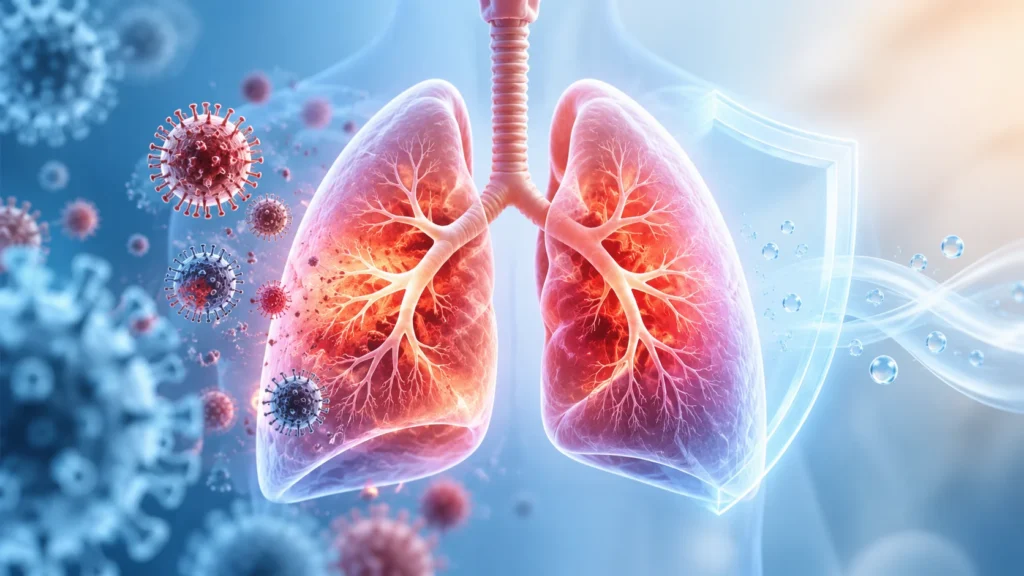
Pneumonia is a serious lung infection that affects the air sacs in one or both lungs. These air sacs, called alveoli, normally fill with air and help oxygen pass into the bloodstream. When pneumonia develops, the air sacs become inflamed and may fill with fluid or pus, making it harder for the lungs to work properly. This can lead to coughing, fever, breathlessness, chest pain, and fatigue.
This condition can affect people of any age, but it is especially dangerous for young children, older adults, pregnant women, and people with weak immunity or chronic illnesses. In many cases, this condition starts as a respiratory infection such as a cold or flu and then spreads deeper into the lungs. In other cases, it may develop suddenly due to bacteria, viruses, fungi, or aspiration of food or fluids into the lungs.
What is Pneumonia?
Pneumonia is an infection or inflammation of the lungs that affects the air sacs where oxygen exchange happens. When these air sacs become infected, they fill with fluid, mucus, or pus instead of air. This makes breathing difficult and reduces the amount of oxygen reaching the blood.
This condition can affect one lung or both lungs. It can be mild and treated at home, or it can become severe and require hospital admission. The severity depends on the cause of infection, the patient’s age, immune status, and whether other health conditions are present.
The condition is different from a common cold or bronchitis because it affects deeper parts of the lung. That is why symptoms such as breathlessness, chest pain, and high fever are more common in pneumonia.
Types of Pneumonia
This can be classified in different ways based on the cause, setting, and severity.
Based on cause
- Bacterial pneumonia, caused by bacteria such as Streptococcus pneumoniae or Mycoplasma.
- Viral pneumonia, caused by viruses such as influenza, respiratory syncytial virus, or COVID-19.
- Fungal pneumonia, caused by fungi in people with weak immunity or certain exposures.
- Aspiration pneumonia, caused by inhaling food, liquid, or vomit into the lungs.
Based on setting
- Community-acquired pneumonia, which develops outside the hospital.
- Hospital-acquired pneumonia, which develops during a hospital stay.
- Ventilator-associated pneumonia, which develops in patients on ventilators.
- Healthcare-associated pneumonia, which develops in people with recent healthcare exposure.
Based on severity
- Mild pneumonia, which can often be managed at home.
- Moderate pneumonia, which may need closer monitoring and medicines.
- Severe pneumonia, which may require hospital admission, oxygen, or ICU care.
Causes of Pneumonia
This is usually caused by an infection that reaches the lungs. The most common causes are bacteria and viruses.
Common causes include:
- Bacterial infection.
- Viral infection such as flu or COVID-19.
- Fungal infection in immunocompromised patients.
- Aspiration of food, liquid, or vomit into the lungs.
- Weakened immune system.
- Chronic lung disease.
- Smoking.
- Recent surgery or hospitalization.
- Exposure to polluted air or chemicals.
How infection reaches the lungs
- Through inhalation of infected droplets.
- Through spread from the nose or throat.
- Through aspiration of stomach contents.
- Through bloodstream spread from another infection.
- Through hospital-related exposure in some cases.
Risk Factors for Pneumonia
Some people are more likely to develop pneumonia than others.
Higher-risk groups
- Children under five years.
- Adults over sixty-five years.
- People with weak immunity.
- Patients with diabetes.
- Patients with heart disease.
- Patients with chronic lung disease.
- Smokers.
- People with kidney disease.
- Patients on long-term medicines that suppress immunity.
- People recovering from surgery or serious illness.
- Pregnant women.
- People with poor nutrition.
Why risk increases in these groups
- Weak immunity makes infection harder to fight.
- Chronic illness reduces lung reserve.
- Smoking damages lung defenses.
- Age affects immune response.
- Hospitalization increases exposure to resistant germs.
- Poor nutrition weakens overall recovery ability.
Symptoms of Pneumonia
Symptoms can vary depending on the cause, age, and severity of infection.
Common symptoms include:
- Cough, which may produce mucus or phlegm.
- Fever or chills.
- Shortness of breath.
- Chest pain, especially when breathing deeply.
- Fatigue and weakness.
- Loss of appetite.
- Sweating.
- Rapid breathing.
- Headache.
- Muscle aches.
- Confusion, especially in older adults.
Symptoms in children
- Fast breathing.
- Fever.
- Cough.
- Poor feeding.
- Irritability.
- Sleepiness.
- Vomiting.
- Chest retractions.
- Bluish lips in severe cases.
Symptoms in older adults
- Confusion.
- Weakness.
- Reduced appetite.
- Low-grade fever or no fever.
- Falls or reduced mobility.
- Worsening of existing health conditions.
Emergency warning signs
- Severe breathlessness.
- Bluish lips or fingertips.
- Chest pain that is severe.
- Confusion or fainting.
- High fever with rapid breathing.
- Inability to drink fluids.
- Worsening symptoms despite home care.
Pneumonia in Different Age Groups
This condition affects different age groups in different ways.
In children
- Symptoms may develop quickly.
- Fever and fast breathing are common.
- Dehydration can occur rapidly.
- Hospital care may be needed if feeding or breathing is affected.
In adults
- Symptoms may include cough, fever, and chest pain.
- Recovery may take one to three weeks.
- Severity depends on overall health and cause of infection.
In older adults
- Symptoms may be less obvious.
- Confusion or weakness may be the first sign.
- Risk of complications is higher.
- Recovery may take longer.
How is Pneumonia Diagnosed?
Diagnosis is based on symptoms, physical examination, and imaging tests. Since this condition can look similar to other lung conditions, proper testing is important.
Diagnostic steps
- Detailed history of symptoms.
- Duration of cough and fever.
- Exposure history.
- Vaccination history.
- Medical history and risk factors.
- Physical examination of the lungs.
- Checking oxygen levels and vital signs.
Common tests that may be done
- Chest X-ray to look for infection in the lungs.
- CT scan if X-ray is unclear or complications are suspected.
- Blood tests to check infection and inflammation.
- Sputum test to identify the organism.
- Pulse oximetry to measure oxygen levels.
- Blood culture in severe cases.
- COVID-19 or flu testing if viral cause is suspected.
- Arterial blood gas test in severe breathing difficulty.
Why diagnosis matters
Early diagnosis helps guide the right treatment. It also helps identify whether the infection is bacterial, viral, or fungal, which affects the choice of medicines and need for hospital care.
Treatment for Pneumonia
Treatment depends on the cause, severity, and overall health of the patient. The main goals are to clear the infection, improve oxygen levels, and prevent complications.
1. Antibiotics for bacterial pneumonia
- Antibiotics are used when bacteria are the cause.
- Choice of antibiotic depends on severity and likely organism.
- Treatment may last five to fourteen days depending on the case.
- It is important to complete the full course as prescribed.
2. Antiviral treatment for viral pneumonia
- Antiviral medicines may be used for influenza or COVID-19 in selected patients.
- Most viral pneumonia cases are managed with supportive care.
- Rest and hydration are important.
- Monitoring is needed if symptoms worsen.
3. Oxygen support
- Oxygen may be given if blood oxygen levels are low.
- Mild cases may need only nasal oxygen.
- Severe cases may need high-flow oxygen or ventilator support.
4. Fever and pain control
- Fever medicines may be used to reduce discomfort.
- Pain relief may be given for chest pain.
- Adequate rest supports recovery.
5. Fluids and nutrition
- Good hydration helps thin mucus.
- Nutritious food supports immune recovery.
- Small frequent meals may be easier if appetite is low.
6. Hospital care if needed
Some patients need admission, especially if oxygen levels are low or symptoms are severe.
- IV fluids and medicines may be given.
- Oxygen support may be required.
- Close monitoring of breathing and vital signs.
- ICU care in severe cases.
- Ventilator support in critical illness.
Home Care for Mild Pneumonia
Many mild cases can be managed at home with proper medical advice.
Helpful home care steps
- Take prescribed medicines on time.
- Rest as much as possible.
- Drink plenty of fluids.
- Use steam inhalation if advised.
- Avoid smoking and polluted air.
- Monitor fever and breathing.
- Return for follow-up if symptoms worsen.
Foods that support recovery
- Warm soups.
- Fruits rich in vitamin C.
- Light, easy-to-digest meals.
- Adequate protein for healing.
- Plenty of water and fluids.
Things to avoid during recovery
- Smoking.
- Alcohol.
- Dusty or polluted environments.
- Strenuous activity too soon.
- Skipping medicines.
- Ignoring worsening symptoms.
Recovery After Pneumonia
Recovery time depends on the severity of infection and the patient’s overall health.
Typical recovery timeline
- Fever may reduce within a few days of treatment.
- Cough may last longer, sometimes two to three weeks.
- Fatigue may persist for several weeks.
- Full lung recovery may take longer in severe cases.
Tips for faster recovery
- Rest adequately.
- Stay hydrated.
- Eat nutritious food.
- Avoid smoking.
- Follow up with the doctor.
- Do light activity only when advised.
- Practice deep breathing exercises if recommended.
When recovery is slower
- In elderly patients.
- In people with chronic illness.
- After severe infection.
- In smokers.
- In patients with weak immunity.
- When complications occur.
Possible Complications
This condition can lead to serious complications, especially if not treated early.
Possible complications include:
- Pleural effusion, which is fluid around the lungs.
- Lung abscess.
- Sepsis.
- Respiratory failure.
- Worsening of heart or kidney disease.
- Death in severe cases.
Complications in children
- Dehydration.
- Rapid breathing.
- Hospitalization.
- Long-term lung issues in severe cases.
Complications in older adults
- Confusion.
- Falls.
- Worsening of chronic disease.
- Longer hospital stay.
- Higher risk of death.
When to See a Doctor?
Medical evaluation is important if symptoms are persistent or severe.
- Cough lasting more than a few days.
- Fever that does not reduce.
- Breathlessness.
- Chest pain.
- Fatigue with poor appetite.
- Worsening symptoms despite home care.
- Coughing up blood.
- Confusion or severe weakness.
Prevention of Pneumonia
Prevention is possible in many cases through vaccination, hygiene, and healthy lifestyle.
Prevention pointers
- Get vaccinated as advised.
- Wash hands regularly.
- Avoid close contact with sick people.
- Avoid smoking.
- Maintain good nutrition.
- Manage chronic diseases like diabetes and asthma.
- Practice good oral hygiene.
- Avoid polluted air when possible.
- Stay hydrated.
- Seek early treatment for respiratory infections.
Special prevention advice for high-risk groups
- Elderly patients should get flu and pneumonia vaccines as advised.
- Children should follow immunization schedules.
- Smokers should quit to protect lung health.
- Patients with chronic illness should have regular follow-up.
Why Choose Rama Hospital for Pneumonia Treatment?
This condition can range from mild to life-threatening. A hospital with experienced respiratory specialists, critical care support, and modern diagnostic tools can make a major difference in outcomes.
- Expert evaluation by pulmonology and internal medicine specialists.
- Advanced imaging and lab testing.
- Oxygen and ICU support when needed.
- Treatment for bacterial, viral, and fungal causes.
- Management of complications.
- Rehabilitation and follow-up care.
Frequently Asked Questions (FAQs)
1. What is pneumonia?
This condition is an infection or inflammation of the lungs that affects the air sacs. It can be caused by bacteria, viruses, or fungi and leads to symptoms like cough, fever, and breathlessness.
2. Is pneumonia contagious?
Some types of pneumonia, especially viral and bacterial, can spread from person to person. Good hygiene, masks, and avoiding close contact with sick people help reduce the risk.
3. How long does pneumonia last?
Mild condition may improve within a week or two. Severe cases or pneumonia in older adults may take several weeks to fully recover.
4. Can pneumonia be treated at home?
Yes, mild condition can often be treated at home with medicines, rest, and fluids. However, severe cases or those with low oxygen levels need hospital care.
5. What is the most common cause of pneumonia?
Bacteria and viruses are the most common causes. In adults, bacterial pneumonia is common, while in children, viral pneumonia is often seen.
6. Can pneumonia cause chest pain?
Yes, chest pain is a common symptom, especially when breathing deeply or coughing. It happens because the lung tissue and surrounding lining become inflamed.
7. How is pneumonia different from bronchitis?
Bronchitis affects the airways, while this condition affects the air sacs in the lungs. This condition is usually more serious and may cause higher fever and breathlessness.
8. Can pneumonia come back?
Yes, this can recur, especially in people with weak immunity, chronic lung disease, or smoking habit. Prevention and follow-up are important.
9. Is pneumonia dangerous for elderly people?
Yes, this condition can be more dangerous in older adults because their immune response is weaker and they may have other health conditions. Early treatment is very important.
10. Can pneumonia be prevented?
Yes, this condition can often be prevented through vaccination, good hygiene, avoiding smoking, and managing chronic illnesses. Early treatment of colds and flu also helps.
Conclusion
Pneumonia is a serious lung infection that can affect people of all ages. It can range from mild illness to life-threatening condition, especially in children, elderly, and those with weak immunity. Early recognition, proper diagnosis, and timely treatment are key to recovery.
The most important steps are identifying symptoms early, getting the right tests, starting proper treatment, and following medical advice. For patients with persistent cough, fever, breathlessness, or chest pain, a medical evaluation can make a major difference. With the right care, most people recover fully and return to normal health.
Rama Hospital can help evaluate pneumonia, identify the cause, and provide a clear treatment plan that supports recovery and prevents complications.