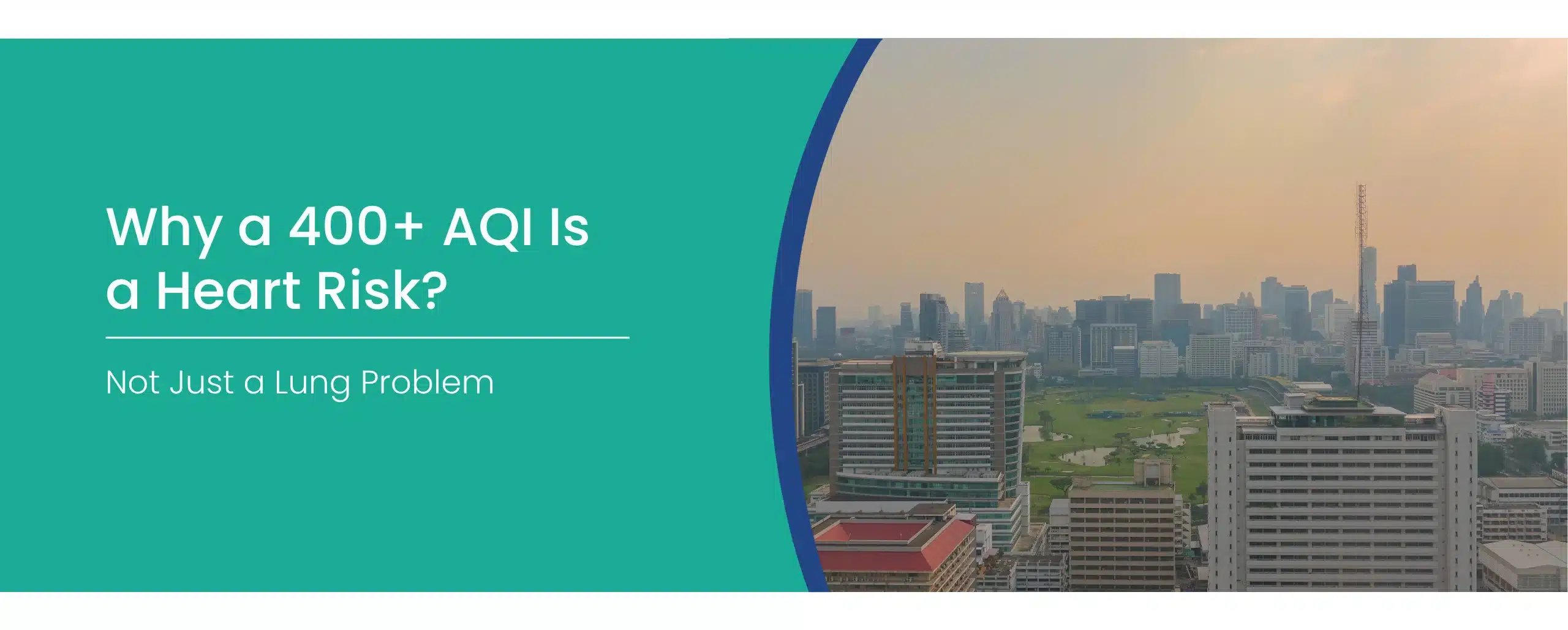
Imagine checking your phone on a winter morning in Noida and seeing an Air Quality Index (AQI) of 420. Your first thought might be about coughing, breathing difficulty or the familiar layer of smog covering the city. But there is another organ that deserves your attention: your heart health.
Severe air pollution is not just a respiratory concern. The tiny particles and harmful gases present in polluted air can enter the body, trigger inflammation and affect the blood vessels that carry oxygen throughout it. These changes can place additional stress on the cardiovascular system and may increase the risk of heart attack, stroke and other heart-related complications, particularly in people who already have cardiovascular disease.
According to India’s Central Pollution Control Board (CPCB), an AQI between 401 and 500 falls into the severe category. At these levels, air pollution can affect even healthy people, while those with existing heart health or lung conditions may face more serious health consequences.
For people living in Noida and Delhi-NCR, where pollution episodes can become a seasonal concern, understanding the connection between AQI and heart health is an important part of preventive healthcare.
What Does an AQI of 400 or Higher Actually Mean?
The Air Quality Index is a measure used to communicate how polluted the air is and what its potential health effects may be. In India, the National AQI system considers several pollutants, including particulate matter (PM10 and PM2.5), nitrogen dioxide, sulphur dioxide, ozone, carbon monoxide, ammonia and lead.
Under India’s AQI classification:
| AQI range | Category | Potential health concern |
| 0–50 | Good | Minimal health impact |
| 51–100 | Satisfactory | Minor discomfort may occur in sensitive individuals |
| 101–200 | Moderate | People with heart health or lung conditions may experience discomfort |
| 201–300 | Poor | Prolonged exposure may cause breathing discomfort; people with heart disease may be affected |
| 301–400 | Very Poor | Prolonged exposure can increase respiratory health risks |
| 401–500 | Severe | Serious health effects are possible, especially in people with existing heart health or lung disease |
An AQI reading of 400 is at the upper boundary of the Very Poor category in India’s classification, while readings above 400 enter the Severe category.
The important point is that these categories are health communication tools, not precise predictions of what will happen to an individual. The actual risk depends on the pollutants present, how long you are exposed, your activity level and your underlying health.
A severe AQI reading is a reason to reduce exposure, not a reason to panic.
Why Is Air Pollution a Heart Health Problem?
When people think about air pollution, they usually picture its effects on the nose, throat and lungs. However, the cardiovascular system can also be affected.
One of the main concerns is fine particulate matter, particularly PM2.5. These particles are 2.5 micrometres or smaller in diameter, making them small enough to travel deep into the lungs. Exposure can trigger biological responses that affect blood vessels, inflammation, blood clotting and the regulation of blood pressure.
The American Heart Association recognises air pollution as a contributor to cardiovascular disease. Research links both short-term and long-term exposure to an increased risk of heart-related events, including heart attacks and strokes.
There are several ways this can happen.
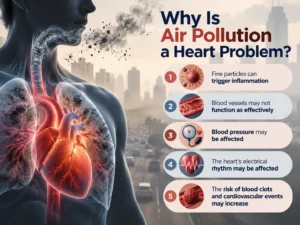
1. Fine particles can trigger inflammation
When polluted air enters the respiratory system, it can activate inflammatory responses in the lungs. These responses may affect other parts of the body, including the cardiovascular system.
Inflammation can interfere with the normal functioning of blood vessels and may contribute to processes involved in atherosclerosis, a condition in which fatty deposits build up inside artery walls.
2. Blood vessels may not function as effectively
Healthy blood vessels expand and narrow to regulate blood flow according to the body’s needs.
Air pollution exposure has been associated with impaired endothelial function. The endothelium is the thin layer of cells lining the inside of blood vessels, and it plays an important role in maintaining healthy circulation.
3. Blood pressure may be affected
Exposure to air pollution has also been associated with changes in blood pressure and the regulation of the cardiovascular system.
Blood pressure is influenced by several factors, so pollution is not necessarily the cause of a particular person’s high reading. However, it is one environmental factor worth considering, especially for people who already have hypertension.
4. The heart’s electrical rhythm may be affected
The heart health relies on a carefully coordinated electrical system to maintain a regular heartbeat.
Studies have linked air pollution exposure with an increased risk of certain rhythm disturbances, particularly among vulnerable people. These disturbances are known as arrhythmias.
5. The risk of blood clots and cardiovascular events may increase
Air pollution can influence processes involved in inflammation, platelet activity and blood clotting.
These changes may contribute to a higher risk of acute cardiovascular events in susceptible people. For example, a clot that blocks blood flow through a coronary artery can cause a heart attack, while an interruption of blood flow to the brain can cause an ischaemic stroke.
This does not mean that breathing polluted air automatically causes a clot or a heart attack. It means that air pollution can act as an additional risk factor in an already vulnerable cardiovascular system.
Can an AQI of 400 Cause a Heart Attack?
An AQI reading of 400 or higher does not mean that everyone exposed will have a heart attack. However, severe air pollution is a serious health concern, and scientific evidence links air pollution exposure with an increased risk of cardiovascular events.
Short-term exposure can be particularly concerning for people with existing coronary artery disease, heart failure, high blood pressure or other cardiovascular conditions. Long-term exposure also contributes to the development and progression of cardiovascular disease.
Consider two people exposed to the same polluted environment.
One may be a healthy adult with no known cardiovascular disease. The other may have diabetes, high blood pressure and a history of heart health problems.
Their individual responses may be different. The second person has additional underlying risk factors that can make severe pollution more concerning.
It is equally important to remember that a heart attack can occur without warning symptoms that are obvious to the person experiencing it. Do not wait for an AQI reading to improve if you develop symptoms suggestive of a cardiac emergency.
Who Is Most at Risk When Air Pollution Becomes Severe?
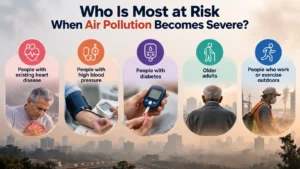
Although severe air pollution can affect healthy people, some groups need to take extra precautions because their cardiovascular or respiratory systems may be more vulnerable.
People with existing heart health disease
People with coronary artery disease, previous heart attacks, heart failure or certain heart health rhythm disorders should be particularly careful during severe pollution episodes.
Air pollution can add stress to an already compromised cardiovascular system. Follow your cardiologist’s advice about outdoor activity, medication and symptom monitoring.
People with high blood pressure
Hypertension places additional strain on the heart health and blood vessels. Because air pollution exposure has been associated with changes in blood pressure and vascular function, people with hypertension should take severe air quality warnings seriously.
Continue taking prescribed medication as directed. Do not change your treatment or take additional medication simply because pollution levels have risen.
People with diabetes
Diabetes increases the risk of cardiovascular disease. When combined with environmental factors such as air pollution, it can add to the overall health burden.
People with diabetes should pay attention to their regular cardiovascular checkups and follow their healthcare professional’s advice during periods of severe pollution.
Older adults
Ageing is associated with a higher likelihood of cardiovascular conditions, including hypertension, coronary artery disease and heart failure.
Older adults may therefore be more vulnerable to the effects of severe air pollution, even when they do not have a previously diagnosed heart health condition.
People who work or exercise outdoors
Delivery workers, traffic personnel, construction workers, street vendors and other outdoor workers may have prolonged exposure to polluted air.
Similarly, people who run, cycle or exercise outdoors may breathe more air during physical activity. When pollution levels are severe, this can increase the amount of pollutants inhaled.
If you work outdoors, follow local health advisories and use appropriate protective measures. Employers should also consider practical steps to reduce workers’ exposure during severe pollution episodes.
Warning Signs: How Can You Tell If Pollution Is Affecting Your Heart Health?
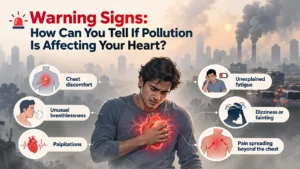
Air pollution does not always cause noticeable symptoms immediately. Some cardiovascular effects may occur without obvious warning signs, which is one reason exposure reduction matters.
However, certain symptoms should never be ignored.
Watch for:
- Chest discomfort: Pressure, tightness, heaviness or pain in the chest.
- Unusual breathlessness: Difficulty breathing during normal activities or at rest.
- Palpitations: A racing, pounding or irregular heartbeat.
- Unexplained fatigue: Unusual weakness or exhaustion, particularly when accompanied by other symptoms.
- Dizziness or fainting: Especially if it occurs with chest discomfort or breathlessness.
- Pain spreading beyond the chest: Discomfort that travels to the arm, shoulder, back, neck or jaw.
Call 112 in India or your local emergency service if you experience possible heart attack symptoms, severe breathlessness, fainting or sudden signs of stroke. Do not drive yourself to the hospital if you may be experiencing a cardiac emergency.
Stroke warning signs include sudden facial drooping, weakness in an arm or leg, or difficulty speaking. Immediate treatment can be critical.
How to Protect Your Heart Health When the AQI Crosses 400
You cannot control the air quality outside your home, but you can take practical steps to reduce your exposure.
1. Check the AQI before planning your day
Check official air quality readings and local advisories before leaving home, especially during pollution-prone periods.
The CPCB’s National AQI portal provides information about air quality across monitoring locations. Remember that pollution levels can differ between neighbourhoods, so a citywide average may not represent the exact conditions near your home or workplace.
2. Avoid strenuous outdoor exercise
Running, cycling and vigorous exercise increase your breathing rate. This can increase the amount of polluted air you inhale.
When the AQI is severely elevated, postpone outdoor workouts and choose a suitable indoor alternative if the indoor air is cleaner.
3. Keep indoor air as clean as possible
Staying indoors can reduce exposure when outdoor air quality is poor, but it does not automatically guarantee clean air.
Consider these measures:
- Keep windows and external doors closed during periods of severe outdoor pollution when this helps reduce indoor exposure.
- Use a properly sized air purifier with a high-efficiency particulate air (HEPA) filter, if available.
- Maintain air-conditioning and ventilation systems according to their manufacturer’s recommendations.
- Avoid indoor smoking, incense, unnecessary burning and other activities that generate smoke or particles.
- Follow local guidance on ventilation and indoor air quality.
If you use a room air purifier, remember that a HEPA filter is designed to remove particles; it does not remove every gaseous pollutant.
4. Wear a well-fitting N95 respirator when appropriate
A properly fitted N95 respirator can help reduce inhalation of airborne particles when worn correctly.
Fit matters. Gaps around the nose and cheeks can allow polluted air to bypass the filter. A loose cloth mask or a standard surgical mask should not be treated as equivalent protection against fine airborne particles.
A respirator is only one part of exposure reduction. It does not eliminate all pollution risks or replace medical care.
5. Continue prescribed heart health medication
If you take medication for high blood pressure, coronary artery disease, heart failure or an abnormal heart rhythm, continue following your prescribed treatment plan.
Do not stop medication, increase doses or start preventive medicines without consulting your doctor.
6. Reduce exposure during your commute
Road traffic can be an important source of air pollution. During severe pollution episodes, consider whether you can reduce unnecessary travel or adjust your route and timing.
Keep vehicle windows closed when outside air is heavily polluted, and maintain the cabin air filter according to the manufacturer’s instructions. However, a car’s standard cabin filter may not remove all fine particles or gases.
7. Make a plan if you already have heart health disease
People with established cardiovascular disease should discuss pollution-related precautions with their treating clinician.
Your plan may include:
- Knowing which symptoms require emergency attention.
- Keeping prescribed medicines available.
- Identifying a suitable indoor exercise alternative.
- Monitoring blood pressure if advised.
- Knowing how to contact your healthcare team.
Should You Get a Heart Health Checkup During Pollution Season?
An AQI reading above 400 does not automatically mean that everyone needs an ECG, echocardiogram or other cardiac investigation.
However, pollution season can be a useful reminder to review your cardiovascular health, particularly if you have existing risk factors.
Consider discussing a heart health checkup with your doctor if you have:
- High blood pressure.
- Diabetes.
- High cholesterol.
- A family history of premature cardiovascular disease.
- A history of heart attack, stroke or heart failure.
- New or worsening symptoms such as chest discomfort, palpitations or breathlessness.
Depending on your medical history and symptoms, a doctor may recommend blood pressure measurement, an ECG, blood tests or other investigations.
These tests are not required for everyone. The appropriate assessment depends on your individual risk and clinical findings.
If you are looking for a heart checkup in Noida, choose a service that can assess your cardiovascular risk and recommend appropriate investigations rather than relying on a fixed package alone.
Does Wearing a Mask Fully Protect Your Heart Health?
No. A well-fitting N95 respirator can reduce exposure to airborne particles, but no mask can eliminate every risk associated with air pollution.
Different pollutants behave differently. Particle-filtering respirators are designed to filter airborne particles, not all gases or vapours.
Your overall exposure also depends on how long you spend in polluted environments, the quality of the respirator’s fit and the concentration of pollutants.
The most effective practical approach is to combine suitable respiratory protection with reduced outdoor exposure, cleaner indoor air and adherence to medical advice.
Frequently Asked Questions (FAQs)
1. Is an AQI of 400 dangerous for the heart health?
An AQI of 400 is at the upper boundary of India’s Very Poor category; readings above 400 fall into the Severe category. These conditions can pose serious health concerns, particularly for people with existing cardiovascular or respiratory disease. Reducing exposure is advisable.
2. Can air pollution cause a heart attack?
Air pollution is associated with an increased risk of heart health and other cardiovascular events. It can contribute to inflammation, impaired blood vessel function and changes in processes involved in clotting. However, exposure does not mean that a heart attack will definitely occur.
3. Can healthy people be affected by an AQI above 400?
Yes. India’s CPCB classifies AQI readings of 401–500 as Severe, with potential effects even in healthy people. People with existing heart health or lung disease may face more serious consequences.
4. Does air pollution increase blood pressure?
Research has linked air pollution exposure with changes in blood pressure and vascular function. However, an individual’s blood pressure is influenced by several factors, and a high reading should be evaluated in the context of their overall health.
5. Is it safe to exercise outdoors when the AQI is above 400?
Strenuous outdoor exercise should be avoided when air quality is severely polluted. Choose a cleaner indoor environment for physical activity, if available, and follow local health advisories.
6. Which mask is better for severe air pollution?
A well-fitting N95 respirator can help reduce exposure to airborne particles. It does not remove all gases or eliminate every health risk. Correct fit and reduced exposure remain important.
7. Should people with heart disease stay indoors during severe pollution?
People with existing heart health disease should reduce exposure during severe pollution episodes and follow local health advisories. Staying indoors in a cleaner environment can help, but indoor air quality matters too.
8. When should I seek emergency cardiac care?
Seek immediate medical attention for chest pressure or pain, severe breathlessness, fainting, or sudden signs of stroke. Call 112 in India or your local emergency service. Do not assume that these symptoms are simply caused by pollution.
Conclusion
When the AQI crosses 400, the concern goes beyond coughing, irritated eyes or breathing discomfort. Severe air pollution can affect the cardiovascular system, and the risks may be greater for people who already have heart health disease, high blood pressure, diabetes or other chronic conditions.
The most useful response is practical: check air quality alerts, reduce unnecessary outdoor exposure, avoid strenuous outdoor exercise during severe pollution episodes, keep indoor air as clean as possible and follow your prescribed treatment plan.
Just as importantly, never ignore chest discomfort, unusual breathlessness or other possible warning signs of a heart attack or stroke. These symptoms need prompt medical assessment, regardless of the AQI.
If you are concerned about how pollution may affect your cardiovascular health, consult a qualified cardiologist. At Rama Hospital, Noida, patients can seek professional evaluation for heart health-related concerns and discuss appropriate cardiovascular risk assessment and care.
When the air becomes unhealthy, protecting your heart health starts with reducing exposure, recognising warning signs and acting early.