Hearing assessment tests are medical evaluations used to measure how well a person hears sounds, speech, and different frequencies. These tests help identify hearing loss, its type, its severity, and sometimes the underlying cause. Hearing problems can affect anyone, from newborn babies to older adults. They may develop slowly over time or appear suddenly after infection, noise exposure, injury, or certain medicines.
Many people ignore early signs of hearing loss, such as asking others to repeat themselves, increasing the TV volume, or struggling to follow conversations in noisy places. Early testing is important because untreated hearing loss can affect communication, learning, work performance, and quality of life. In children, it can also delay speech and language development.
What are Hearing Assessment Tests?
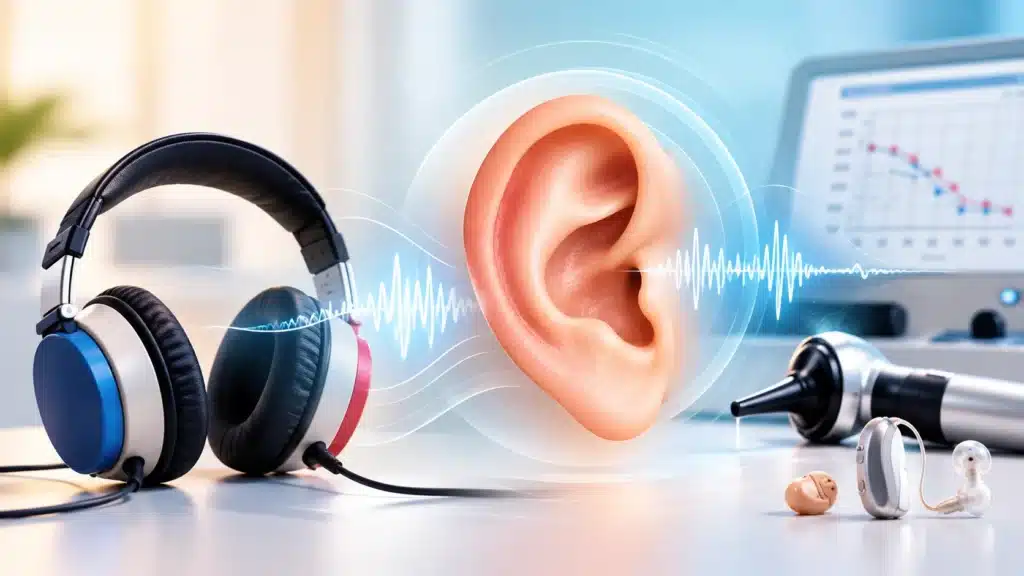
Hearing assessment tests are a group of medical tests used to evaluate the function of the ear and hearing pathway. They measure how well a person detects sounds of different pitch and loudness, how the middle ear works, and how sound signals travel to the brain.
These tests are done by an audiologist or ENT specialist. They are painless, non-invasive, and usually take only a short time. Some tests measure the outer and middle ear, while others measure the inner ear and hearing nerve. Together, they give a complete picture of hearing health.
Hearing tests are not only for people who already have hearing problems. They are also used for newborn screening, school-age children, adults exposed to loud noise, and older people as part of routine health checks.
Why are Hearing Assessment Tests Done?
Hearing tests are done for many reasons, from routine screening to diagnosis of specific problems.
Common reasons for testing
- Newborn hearing screening to detect hearing loss early.
- Delayed speech or language development in children.
- Frequent ear infections or fluid in the middle ear.
- Complaints of hearing difficulty in adults or older people.
- Ringing in the ears or tinnitus.
- Dizziness or balance problems.
- Sudden hearing loss, which is an emergency.
- Exposure to loud noise at work or through headphones.
- Monitoring hearing in people taking medicines that can affect hearing.
- Follow-up after ear surgery or treatment of ear disease.
- Evaluation before fitting hearing aids or other devices.
Why early testing matters
- Early detection allows timely treatment or rehabilitation.
- Children can get support for speech and learning.
- Adults can prevent further damage from noise or untreated disease.
- Sudden hearing loss needs urgent care to improve chances of recovery.
- Hearing aids and other devices work better when fitted early.
Types of Hearing Assessment Tests
There are several types of hearing tests, each measuring a different part of the hearing system.
1. Pure tone audiometry
This is the most common hearing test. It measures the softest sound a person can hear at different frequencies or pitches.
- The person wears headphones or earphones.
- Tones are played at different pitches and volumes.
- The person signals when they hear a sound.
- Results are plotted on an audiogram.
- It helps identify the degree and type of hearing loss.
2. Speech audiometry
This test measures how well a person understands speech, not just tones.
- The person listens to words or sentences at different volumes.
- They repeat what they hear.
- It assesses speech recognition and clarity.
- It helps determine how hearing loss affects daily communication.
- It is useful before fitting hearing aids.
3. Tympanometry
This test checks the function of the middle ear and eardrum.
- A small probe is placed in the ear canal.
- Air pressure is changed gently.
- The movement of the eardrum is measured.
- It helps detect fluid, infection, or blockage behind the eardrum.
- It is commonly used in children with ear infections.
4. Acoustic reflex testing
This test measures the automatic contraction of a tiny muscle in the middle ear in response to loud sound.
- A probe is placed in the ear canal.
- Loud sounds are played briefly.
- The reflex response is recorded.
- It helps assess the facial nerve and middle ear function.
- It is useful in diagnosing certain nerve or muscle problems.
5. Otoacoustic emissions (OAE) test
This test measures sounds produced by the inner ear in response to stimulation.
- A small probe is placed in the ear canal.
- Clicks or tones are played.
- The inner ear produces a tiny echo if it is working normally.
- It is commonly used for newborn hearing screening.
- It helps detect inner ear or cochlear problems.
6. Auditory brainstem response (ABR) test
This test measures how the hearing nerve and brain respond to sound.
- Electrodes are placed on the head.
- Clicks or tones are played through earphones.
- The brain’s electrical response is recorded.
- It does not require the person to respond actively.
- It is useful for babies, young children, and people who cannot cooperate with other tests.
7. Auditory steady-state response (ASSR) test
This is a newer test that also measures brain response to sound.
- Similar to ABR but uses modulated tones.
- Provides more detailed frequency-specific information.
- Useful for estimating hearing thresholds in difficult-to-test patients.
- Often used along with ABR for complete evaluation.
8. Whispered voice and tuning fork tests
These are simple bedside tests done by a doctor.
- Whispered speech is used to screen hearing quickly.
- Tuning fork tests help distinguish conductive from sensorineural hearing loss.
- They are useful for initial screening but not detailed assessment.
- They are often followed by formal audiometry.
How is a Hearing Test Done?
The procedure depends on the type of test, but most are simple and painless.
General steps
- The audiologist or ENT specialist explains the test.
- The ear canal is checked for wax or blockage.
- The person is seated in a quiet room or sound-treated booth.
- Headphones, earphones, or probes are placed as needed.
- Sounds, tones, or words are played at different levels.
- The person responds by raising a hand, pressing a button, or repeating words.
- For babies or young children, responses may be observed or measured with electrodes.
- Results are recorded and explained after the test.
What to expect during the test
- The test is painless and non-invasive.
- It usually takes 20 to 40 minutes for basic tests.
- More detailed tests may take longer.
- The person needs to stay still and attentive.
- For children, the test may be done during natural sleep or with mild sedation in special cases.
Preparation before the test
- Avoid loud noise exposure for a day or two before the test if possible.
- Do not use earplugs or headphones for a few hours before the test.
- Inform the audiologist about ear infections, discharge, or recent surgery.
- Bring previous hearing test reports if available.
- For children, ensure they are well-rested and fed.
Understanding Hearing Test Results
Results are usually shown on an audiogram, which is a graph of hearing thresholds at different frequencies.
What the audiogram shows
- Frequency in hertz on the horizontal axis, from low to high pitch.
- Intensity in decibels on the vertical axis, from soft to loud.
- Symbols for right and left ear results.
- The degree of hearing loss at each frequency.
Degrees of hearing loss
- Normal hearing, where thresholds are within normal range.
- Mild hearing loss, where soft sounds are difficult to hear.
- Moderate hearing loss, where normal conversation is difficult.
- Severe hearing loss, where only loud sounds are heard.
- Profound hearing loss, where even very loud sounds may not be heard.
Types of hearing loss
- Conductive hearing loss, where the problem is in the outer or middle ear.
- Sensorineural hearing loss, where the problem is in the inner ear or hearing nerve.
- Mixed hearing loss, where both conductive and sensorineural problems are present.
What results mean for treatment
- Conductive loss may be treated with medicine, surgery, or hearing aids.
- Sensorineural loss may be managed with hearing aids or cochlear implants.
- Mixed loss may need a combination of treatments.
- Normal results may need no treatment but regular monitoring if risk factors are present.
Hearing Tests in Children
Hearing assessment in children is very important because hearing loss can affect speech, language, and learning.
Newborn hearing screening
- Usually done before discharge from the hospital.
- Uses OAE or ABR tests.
- Quick, painless, and done while the baby sleeps.
- Helps detect hearing loss early for timely intervention.
Hearing tests in older children
- May be done if there is delayed speech or recurrent ear infections.
- Pure tone audiometry can be done in cooperative children.
- Tympanometry helps detect fluid or infection behind the eardrum.
- Play audiometry uses games to test hearing in young children.
Why early detection matters in children
- Early treatment supports normal speech and language development.
- Hearing aids or other devices can be fitted early.
- Educational support can be planned in time.
- Parents can be guided on communication strategies.
Hearing Tests in Adults and Older People
Hearing loss in adults is often gradual and may go unnoticed for years.
Common reasons for testing in adults
- Difficulty hearing in noisy places.
- Needing higher TV or phone volume.
- Tinnitus or ringing in the ears.
- History of loud noise exposure.
- Family history of hearing loss.
- Dizziness or balance problems.
- Monitoring after ear surgery or treatment.
Why testing matters in older adults
- Hearing loss is common with aging.
- Untreated hearing loss can lead to isolation and cognitive decline.
- Hearing aids improve communication and quality of life.
- Regular testing helps track changes over time.
Possible Complications of Untreated Hearing Loss
Hearing loss itself is not dangerous, but ignoring it can lead to other problems.
Possible complications
- Communication difficulties and social isolation.
- Reduced job performance or learning difficulties.
- Delayed speech and language in children.
- Increased risk of depression and anxiety.
- Cognitive decline in older adults.
- Safety risks due to inability to hear warnings or alarms.
- Worsening of tinnitus or balance problems.
Why complications happen
When hearing loss is not addressed, the brain gets less stimulation from sound. This can affect speech understanding, memory, and social interaction. In children, delayed treatment can affect development. In adults, it can affect work, relationships, and mental health.
When to Get a Hearing Test
Hearing tests should be done whenever there is concern about hearing or risk factors for hearing loss.
- Difficulty hearing conversations, especially in noise.
- Needing to increase TV or phone volume.
- Asking others to repeat themselves often.
- Ringing or buzzing in the ears.
- Feeling of fullness or blockage in the ear.
- Ear pain, discharge, or frequent infections.
- Dizziness or balance problems.
- Sudden hearing loss, which is an emergency.
- Family history of hearing loss.
- Exposure to loud noise at work or through headphones.
Seek urgent care if you have:
- Sudden hearing loss in one or both ears.
- Severe dizziness with hearing loss.
- Severe ear pain with fever.
- Blood or fluid discharge from the ear.
- Sudden weakness or numbness along with hearing loss.
Prevention of Hearing Loss
Not all hearing loss can be prevented, but many cases can be avoided or reduced.
Prevention pointers
- Avoid prolonged exposure to loud noise.
- Use ear protection in noisy environments.
- Keep headphone volume at a safe level.
- Follow the 60/60 rule: no more than 60 percent volume for no more than 60 minutes.
- Treat ear infections promptly.
- Avoid inserting objects into the ear canal.
- Get regular hearing checks if at risk.
- Manage chronic conditions such as diabetes and high blood pressure.
- Avoid medicines that can harm hearing unless prescribed and monitored.
Special prevention advice for high-risk groups
- Workers in noisy industries should use ear protection.
- Musicians and DJ professionals should monitor hearing regularly.
- People using headphones daily should take breaks.
- Children should be taught safe listening habits early.
- Older adults should have periodic hearing assessments.
Why Choose Rama Hospital for Hearing Assessment?
Hearing assessment requires accurate testing, proper interpretation, and expert guidance on next steps. A hospital with experienced audiologists and ENT specialists can provide complete care from diagnosis to treatment.
- Comprehensive hearing evaluation with modern equipment.
- Access to audiologists, ENT specialists, and neurologists if needed.
- Proper interpretation of results and clear explanation.
- Treatment options including medicine, surgery, hearing aids, or rehabilitation.
- Follow-up care to monitor hearing over time.
Frequently Asked Questions (FAQs)
Is a hearing test painful?
No, hearing tests are painless and non-invasive. They involve listening to sounds, tones, or words and responding to them. Some tests use small probes or electrodes but do not cause discomfort.
How long does a hearing test take?
A basic hearing test usually takes 20 to 40 minutes. More detailed tests such as ABR or full audiological evaluation may take longer. The exact time depends on the type of test and the patient’s cooperation.
Can hearing loss be cured?
It depends on the cause. Conductive hearing loss from infection, fluid, or blockage can often be treated with medicine or surgery. Sensorineural hearing loss is usually permanent but can be managed with hearing aids or cochlear implants.
What is the difference between conductive and sensorineural hearing loss?
Conductive hearing loss happens when sound is blocked in the outer or middle ear, such as from wax, fluid, or infection. Sensorineural hearing loss happens when the inner ear or hearing nerve is damaged. The treatment approach is different for each type.
Why is hearing testing important for newborns?
Newborn hearing screening helps detect hearing loss early, even before speech develops. Early detection allows timely intervention with hearing aids or other support, which is critical for normal speech and language development.
Can loud music or headphones cause hearing loss?
Yes, prolonged exposure to loud music or headphones can damage the inner ear and cause permanent hearing loss. Keeping volume at a safe level and taking breaks can reduce this risk.
When should I get my hearing tested?
You should get tested if you have difficulty hearing, ringing in the ears, frequent ear infections, or exposure to loud noise. Adults over 50 and people with risk factors should have periodic hearing checks.
Conclusion
Hearing assessment tests are essential tools for evaluating hearing health and detecting problems early. They include a range of tests such as pure tone audiometry, speech audiometry, tympanometry, OAE, and ABR, each measuring a different part of the hearing system. These tests are painless, quick, and provide valuable information for diagnosis and treatment.
Early detection of hearing loss can make a major difference in quality of life, especially for children learning to speak and older adults at risk of isolation. With proper testing, interpretation, and follow-up, most hearing problems can be managed effectively. For anyone with concerns about hearing, tinnitus, or ear health, a professional hearing assessment is the first step toward better hearing and better overall well-being.
Rama Hospital can help evaluate hearing concerns, provide comprehensive hearing assessment, and guide patients on the right treatment and rehabilitation options for long-term ear health.