UroLift is a minimally invasive treatment option for men suffering from urinary symptoms caused by an enlarged prostate, also known as benign prostatic hyperplasia or BPH. As men age, the prostate gland often grows larger and can press against the urethra, the tube that carries urine from the bladder. This pressure leads to bothersome symptoms such as frequent urination, weak stream, difficulty starting urination, nighttime urination, and incomplete emptying of the bladder.
For many years, the main treatment options were medications or major surgery. Medications can help but often have side effects and may stop working over time. Traditional surgery is effective but involves longer recovery, bleeding risk, and potential impact on sexual function. UroLift offers a middle path. It is a procedure that opens the blocked urine channel without cutting or removing prostate tissue, preserves sexual function, and allows for quicker recovery.
What is UroLift?
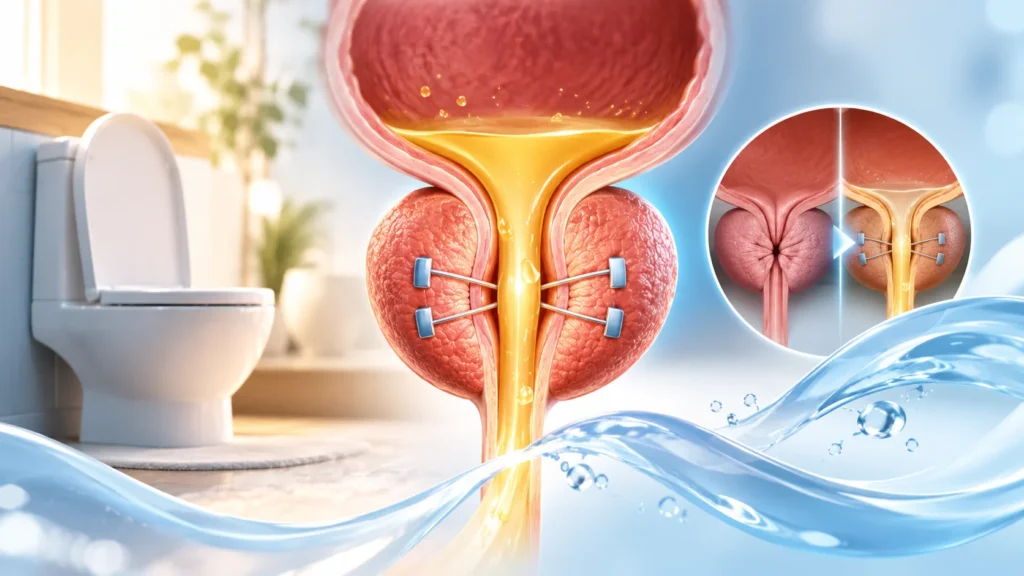
UroLift is a minimally invasive procedure designed to relieve urinary symptoms caused by an enlarged prostate. Instead of removing prostate tissue or using heat, UroLift uses tiny permanent implants to hold the enlarged prostate lobes open. This creates a wider channel for urine to flow freely from the bladder through the urethra.
The procedure is performed through the natural urinary passage, so there are no external cuts or incisions. It is typically done under local or light anesthesia, and most patients go home the same day. The implants remain in place permanently and work mechanically to keep the urethra open.
UroLift is especially suitable for men who want symptom relief without the side effects of long-term medications or the recovery time of major surgery. It is also preferred by men who wish to preserve erectile and ejaculatory function, which can be affected by some other treatments.
How UroLift Works
UroLift works by physically repositioning the enlarged prostate tissue rather than removing it.
Basic principle
- The prostate surrounds the urethra like a donut.
- When it enlarges, it squeezes the urethra and blocks urine flow.
- UroLift implants act like small clips or anchors.
- These implants pull the prostate lobes outward and hold them in place.
- This opens the urethral channel and improves urine flow.
Key features of the system
- Tiny permanent implants made of biocompatible materials.
- Delivered through a special device inserted via the urethra.
- No cutting, heating, or removal of prostate tissue.
- Preserves the natural anatomy of the prostate.
- Does not interfere with future treatment options if needed.
Why it is different from other treatments
- Medications shrink or relax the prostate but may cause side effects.
- Traditional surgery removes tissue but has longer recovery.
- UroLift mechanically opens the channel without tissue destruction.
- Sexual function is typically preserved.
- Recovery is faster with fewer restrictions.
Who is Eligible for UroLift?
Not every man with an enlarged prostate is a candidate for UroLift. Proper evaluation by a urologist is essential.
Ideal candidates
- Men with moderate to severe urinary symptoms due to BPH.
- Patients who do not want long-term medications.
- Men who wish to preserve sexual function.
- Patients with a prostate size within the treatable range.
- Those without a large median lobe obstruction in some systems.
- Men who prefer a minimally invasive option with quick recovery.
Patients who may not be suitable
- Very large prostates beyond the treatable size range.
- Certain anatomical variations that prevent safe implant placement.
- Active urinary tract infection at the time of procedure.
- Bladder stones or tumors requiring different management.
- Severe kidney problems related to urinary obstruction.
- Patients needing immediate debulking due to retention.
Evaluation before UroLift
- Detailed symptom assessment and scoring.
- Physical examination including digital rectal exam.
- Urine tests to rule out infection.
- Blood tests including prostate-specific antigen if indicated.
- Ultrasound or imaging to assess prostate size and shape.
- Urine flow test and bladder scan to evaluate function.
The UroLift Procedure
The UroLift procedure is typically performed as a day care procedure in a hospital or specialized urology center.
Before the procedure
- Pre-procedure evaluation and counseling.
- Review of medical history and medications.
- Instructions on fasting if sedation is planned.
- Arrangement for someone to accompany the patient home.
- Discussion of expectations and possible outcomes.
During the procedure
- The patient is positioned comfortably, usually lying on the back.
- Local anesthesia, sedation, or light general anesthesia is given.
- A cystoscope is gently inserted through the urethra.
- The urologist visualizes the prostate lobes compressing the urethra.
- The UroLift device delivers small implants into the prostate tissue.
- Each implant pulls and holds the lobe away from the urethra.
- Multiple implants are placed depending on prostate size and shape.
- The procedure typically takes 30 to 60 minutes.
After the procedure
- The patient is monitored in recovery for a short period.
- Most patients can urinate before discharge.
- A catheter is usually not needed, but may be used temporarily in some cases.
- Patients are given instructions on activity, fluids, and medications.
- Follow-up appointment is scheduled within a few weeks.
Benefits of UroLift Treatment
UroLift offers several advantages over medications and traditional surgery for suitable patients.
Symptom relief
- Significant improvement in urinary flow.
- Reduced frequency and urgency of urination.
- Less nighttime urination.
- Better bladder emptying.
- Decreased straining during urination.
Quality of life improvement
- Less disruption of daily activities.
- Better sleep due to reduced nighttime trips.
- Improved confidence and comfort.
- Less dependence on medications.
- Faster return to normal routine.
Preservation of sexual function
- Erectile function is typically maintained.
- Ejaculatory function is usually preserved.
- No impact on fertility in most cases.
- Important benefit for sexually active men.
- Psychological comfort regarding intimacy.
Minimal invasiveness
- No external cuts or incisions.
- Minimal bleeding during and after procedure.
- Lower risk of complications compared to major surgery.
- Short procedure time.
- Day care or short stay in hospital.
Quick recovery
- Most patients resume normal activities within days.
- Less pain and discomfort after procedure.
- Minimal restrictions on movement.
- Faster return to work and exercise.
- Less need for prolonged catheterization.
Recovery After UroLift
Recovery is generally quick and straightforward, but patients should follow medical advice carefully.
Immediate recovery
- Mild burning or discomfort during urination is common.
- Some blood in urine may occur for a few days.
- Urgency or frequency may be present initially.
- Pain is usually mild and manageable with simple painkillers.
- Most patients go home the same day.
First week after procedure
- Increase fluid intake to flush the bladder.
- Avoid heavy lifting or strenuous activity.
- Take prescribed medications as directed.
- Watch for signs of infection or severe symptoms.
- Attend follow-up appointment as scheduled.
Long-term recovery
- Symptoms continue to improve over weeks to months.
- Implants remain in place permanently.
- Regular follow-up to monitor urinary function.
- Most patients notice sustained improvement.
- Lifestyle measures support long-term outcomes.
Activity guidelines
- Light walking is encouraged soon after procedure.
- Avoid cycling or straddle activities for a few weeks.
- Sexual activity can usually be resumed within 1 to 2 weeks.
- Return to work depends on job nature and comfort.
- Follow urologist’s advice on exercise progression.
Possible Side Effects and Complications
While UroLift is generally safe, some side effects and complications can occur.
Common temporary side effects
- Burning or stinging during urination.
- Blood in urine for a few days.
- Increased urinary frequency or urgency.
- Mild pelvic or perineal discomfort.
- Temporary difficulty controlling urine in some cases.
Less common complications
- Urinary tract infection requiring antibiotics.
- Persistent bleeding or clots in urine.
- Temporary urinary retention needing catheter.
- Implant migration or irritation in rare cases.
- Need for additional procedure if symptoms persist.
Why side effects happen
- The urethra and prostate are manipulated during the procedure.
- Implants cause local tissue adjustment.
- Healing process can cause temporary irritation.
- Individual anatomy and response vary.
- Most side effects resolve with time and care.
Long-Term Outcomes of UroLift
Long-term data shows that UroLift provides durable symptom relief for many patients.
Symptom sustainability
- Most patients maintain improvement for years.
- Urinary flow remains better than before treatment.
- Nighttime urination frequency stays reduced.
- Quality of life scores remain improved.
- Many patients do not need additional BPH treatment.
Durability of implants
- Implants are designed to remain in place permanently.
- They do not dissolve or require removal.
- Tissue grows around them, securing their position.
- Long-term studies show stable outcomes.
- Future treatments remain possible if needed.
Patient satisfaction
- High satisfaction rates reported in studies.
- Many patients would recommend the procedure.
- Preservation of sexual function is highly valued.
- Quick recovery is appreciated by working men.
- Minimal impact on daily life is a major benefit.
UroLift Versus Other BPH Treatments
Understanding how UroLift compares to other options helps patients make informed choices.
Compared to medications
- Medications require daily intake and may have side effects.
- UroLift is a one-time procedure with lasting effect.
- Medications may lose effectiveness over time.
- UroLift does not cause systemic side effects.
- Some patients still use medications after UroLift if needed.
Compared to traditional surgery
- Surgery removes tissue and has longer recovery.
- UroLift preserves tissue and has quicker recovery.
- Surgery has higher risk of bleeding and sexual side effects.
- UroLift preserves sexual function in most cases.
- Surgery may be needed for very large prostates.
Compared to other minimally invasive options
- Some options use heat or vaporization of tissue.
- UroLift uses mechanical repositioning without heat.
- Recovery profiles differ between procedures.
- Suitability depends on prostate anatomy and patient goals.
- Urologist guidance is essential for selection.
When to Consider UroLift
UroLift is not the first step for every man with urinary symptoms, but it is an important option to consider.
- Medications are not helping or cause side effects.
- Symptoms affect quality of life significantly.
- You want to avoid major surgery.
- Preservation of sexual function is important.
- You prefer a minimally invasive option.
- Your prostate size and anatomy are suitable.
- You want a quicker recovery and less downtime.
Why Choose Rama Hospital for UroLift Treatment?
UroLift requires specialized equipment, trained urologists, and a supportive care environment. A hospital-based urology department can offer comprehensive care from evaluation to long-term follow-up.
- Expert evaluation by qualified urologists.
- Access to advanced UroLift system and technology.
- Safe and sterile procedural environment.
- Combined medical and procedural management.
- Long-term follow-up and symptom monitoring.
- Patient education and realistic goal setting.
Frequently Asked Questions (FAQs)
Is UroLift painful?
Most patients experience mild discomfort during and after the procedure. Local anesthesia or sedation is used to minimize pain. Post-procedure burning or urgency is common but usually settles within days.
How long does the UroLift procedure take?
The procedure typically takes 30 to 60 minutes depending on prostate size and number of implants. It is usually done as a day care procedure. Most patients go home the same day.
Will I need a catheter after UroLift?
Many patients do not need a catheter after UroLift. In some cases, a temporary catheter may be used for a short period. Your urologist will advise based on your individual situation.
Does UroLift affect sexual function?
UroLift is designed to preserve erectile and ejaculatory function in most men. This is one of its major advantages over some other treatments. Sexual activity can usually be resumed within 1 to 2 weeks.
How soon will I feel better after UroLift?
Some improvement may be noticed within weeks, but full benefit can take 1 to 3 months. Symptoms continue to improve as swelling settles and healing progresses. Long-term outcomes are generally durable.
Can UroLift be repeated if needed?
Yes, additional implants or other treatments can be considered if symptoms return. UroLift does not prevent future procedures if necessary. Your urologist will guide you based on long-term needs.
Who is not suitable for UroLift?
Men with very large prostates, certain anatomical variations, active infection, or severe obstruction may not be ideal candidates. A detailed evaluation by a urologist is needed to determine suitability. Other treatments may be recommended in such cases.
Conclusion
UroLift is a valuable treatment option for men suffering from urinary symptoms due to an enlarged prostate. It offers symptom relief, quick recovery, and preservation of sexual function without the need for major surgery or long-term medications. For suitable patients, it can significantly improve quality of life and daily comfort.
The most important steps are proper evaluation, understanding all treatment options, and choosing the approach that best fits individual needs and goals. For men with persistent urinary symptoms, medication side effects, or desire for a minimally invasive solution, UroLift may be an excellent choice. With expert urology care and long-term follow-up, patients can achieve lasting improvement and better urinary health.
Rama Hospital can help evaluate enlarged prostate symptoms, determine eligibility for UroLift, and provide safe, effective treatment that supports long-term urinary function and patient satisfaction.