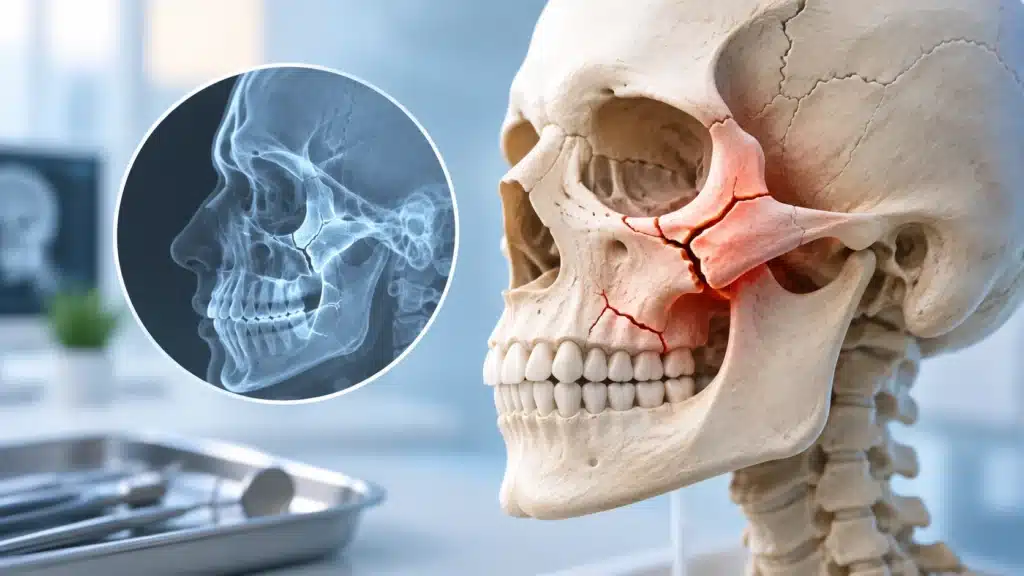
Facial bone fractures are injuries that affect the bones of the face, including the nose, cheekbones, eye sockets, upper jaw, lower jaw, and forehead. These fractures usually happen due to trauma such as road accidents, falls, sports injuries, physical assault, or workplace accidents. Because the face has many small, delicate bones packed closely together, even a single injury can affect multiple areas at once.
Facial fractures are not just a cosmetic concern. They can affect breathing, vision, chewing, speaking, bite alignment, and facial symmetry. Some fractures cause obvious deformity and swelling. Others may be hidden under swelling and only become clear after imaging. In severe cases, facial fractures can be associated with head injury, eye injury, or airway problems, making them a medical emergency.
What are Facial Bone Fractures?
Facial bone fractures are breaks or cracks in one or more bones of the face. The facial skeleton includes several important bones that support the eyes, nose, mouth, and teeth, and give the face its shape. When these bones are subjected to strong force, they can crack, shift, or break into multiple pieces.
The severity of a facial fracture depends on the force of injury, the direction of impact, the area involved, and whether other injuries are present. Some fractures are simple and heal well with minimal treatment. Others are complex and need surgical repair to restore function and appearance.
Facial fractures often occur along with soft tissue injuries such as cuts, bruises, swelling, and bleeding. In high-energy trauma, they may also be associated with head injury, neck injury, or injuries to other parts of the body.
Types of Facial Bone Fractures
Facial fractures can involve different bones and regions of the face. Each type has its own symptoms and treatment considerations.
Nasal bone fractures
- These are the most common facial fractures.
- Usually caused by direct blow to the nose.
- May cause deformity, bleeding, swelling, and difficulty breathing through the nose.
- Often associated with other facial injuries.
Cheekbone or zygomatic fractures
- Involve the bone that forms the prominence of the cheek and part of the eye socket.
- Can cause flattening of the cheek, swelling, bruising, and pain.
- May affect eye movement or cause double vision.
- Can interfere with mouth opening if the bone presses on nearby structures.
Orbital or eye socket fractures
- Involve the bones surrounding the eye.
- May cause double vision, sunken eye, restricted eye movement, or numbness around the eye.
- Can trap eye muscles or fat within the fracture.
- Sometimes associated with vision changes or eye injury.
Upper jaw or maxillary fractures
- Involve the bone that holds the upper teeth and forms part of the nose and eye socket.
- Can affect bite alignment, chewing, and speech.
- May cause mobility of the upper jaw or teeth.
- Often part of more complex mid-face fractures.
Lower jaw or mandibular fractures
- Involve the bone that holds the lower teeth and forms the chin and jawline.
- Can cause pain, swelling, difficulty opening the mouth, and misaligned bite.
- May cause numbness of the lower lip or chin.
- Can affect chewing, speaking, and airway in severe cases.
Frontal bone or forehead fractures
- Involve the bone of the forehead and upper part of the eye socket.
- Often associated with significant force and possible head injury.
- Can cause deformity of the forehead or brow area.
- May be associated with sinus or brain involvement in severe trauma.
Complex or multiple facial fractures
- Involve more than one bone or region of the face.
- Often seen in high-speed accidents or severe falls.
- May require coordinated surgical planning.
- Higher risk of functional and cosmetic complications.
Causes of Facial Bone Fractures
Facial fractures are almost always caused by trauma. The type and severity of injury depend on the force, direction, and object involved.
Common causes include:
- Road traffic accidents involving cars, motorcycles, bicycles, or pedestrians.
- Falls from height or slips, especially in children and older adults.
- Sports injuries, particularly contact sports or activities without protective gear.
- Physical assault or interpersonal violence.
- Workplace accidents involving machinery, construction, or heavy objects.
- Blast injuries or high-energy impacts.
- Animal attacks in some cases.
Why the face is vulnerable
The face is exposed and contains many thin bones with air spaces such as sinuses. It is often the first point of impact in many types of trauma. Without protection such as helmets, seat belts, or safety equipment, the risk of facial fracture increases significantly.
Risk Factors for Facial Bone Fractures
Some people and situations carry higher risk of facial trauma.
Higher-risk groups and situations
- People who ride two-wheelers without helmets.
- People who do not use seat belts in vehicles.
- Workers in high-risk occupations without safety gear.
- Athletes in contact sports without face protection.
- Individuals involved in physical fights or assault.
- Children playing in unsafe environments.
- Older adults with balance problems or weak bones.
- People under the influence of alcohol or drugs.
Why risk increases in these groups
- Lack of protective equipment increases direct impact.
- High-speed accidents cause more severe injuries.
- Weak bones or poor balance increase fall risk.
- Impaired judgment increases accident and violence risk.
- Occupational hazards increase exposure to trauma.
Symptoms of Facial Bone Fractures
Symptoms depend on which bones are fractured, how severe the injury is, and whether other structures are involved.
Common symptoms include:
- Pain and tenderness over the injured area.
- Swelling and bruising of the face.
- Visible deformity or asymmetry of the face.
- Bleeding from the nose, mouth, or cuts on the face.
- Difficulty breathing through the nose.
- Double vision or blurred vision.
- Pain or difficulty moving the eyes.
- Numbness of the cheek, lip, chin, or teeth.
- Loose, broken, or misaligned teeth.
- Difficulty opening or closing the mouth.
- Change in bite or how the teeth fit together.
- Crepitus or a crackling feeling when touching the area.
- Headache or dizziness.
- Clear fluid draining from the nose in severe cases.
Emergency warning signs
- Difficulty breathing or airway obstruction.
- Severe bleeding that does not stop.
- Loss of consciousness or confusion.
- Severe headache or repeated vomiting.
- Vision loss or severe double vision.
- Inability to move the eye normally.
- Clear fluid leaking from the nose or ear.
- Severe deformity with exposed bone.
Facial Bone Fractures in Different Age Groups
Facial fractures can affect people of all ages, but patterns may differ.
In children
- Bones are more flexible, so fractures may be less displaced.
- Growth centers can be affected, requiring careful management.
- Dental development may be involved.
- Emotional support is important due to fear and pain.
In adults
- Fractures are often due to accidents, sports, or assault.
- Functional and cosmetic outcomes are major concerns.
- Work and daily activities may be significantly affected.
- Smoking or health conditions can affect healing.
In older adults
- Bones may be more brittle and fracture more easily.
- Recovery may be slower due to other health issues.
- Risk of complications such as infection or poor healing may be higher.
- Falls prevention and bone health become important.
How are Facial Bone Fractures Diagnosed?
Diagnosis is based on history of injury, physical examination, and imaging tests. Because swelling can hide deformity, imaging is often essential.
Diagnostic steps
- Detailed history of how the injury happened.
- Assessment of symptoms such as pain, vision changes, bite problems, or numbness.
- Examination of the face for swelling, deformity, cuts, and tenderness.
- Check of eye movement, vision, and pupil response.
- Examination of the nose, mouth, teeth, and bite alignment.
- Assessment of airway and breathing.
- Neurological check if head injury is suspected.
Common tests that may be done
- X-rays of the facial bones in selected cases.
- CT scan of the face, which is the gold standard for most facial fractures.
- CT scan of the head if head injury is suspected.
- MRI in selected cases involving soft tissue or eye structures.
- Dental X-rays or scans if teeth and jaw are involved.
- Eye examination by an ophthalmologist if vision or eye movement is affected.
Why diagnosis matters
Accurate diagnosis helps plan the right treatment. Some fractures need early surgery, while others can be managed with observation. Missed or delayed diagnosis can lead to poor healing, deformity, or long-term functional problems.
Treatment for Facial Bone Fractures
Treatment depends on the type of fracture, displacement, functional impact, and overall health of the patient.
Initial emergency care
- Ensure the airway is clear and breathing is stable.
- Control bleeding with gentle pressure and cleaning.
- Manage pain with appropriate medicines.
- Protect the eyes if orbital injury is suspected.
- Avoid blowing the nose if orbital or sinus fracture is possible.
- Keep the head elevated to reduce swelling.
- Apply cold packs gently in the first hours after injury.
Non-surgical management
Some fractures do not need surgery if they are not displaced and function is preserved.
- Observation and regular follow-up.
- Pain relief and anti-inflammatory medicines.
- Antibiotics if there is risk of infection or open fracture.
- Soft diet for jaw fractures.
- Nasal decongestants or sprays if advised.
- Avoiding contact sports or trauma during healing.
Surgical management
Surgery is needed when bones are displaced, function is affected, or cosmetic deformity is significant.
- Closed reduction, where bones are repositioned without large incisions.
- Open reduction and internal fixation, where plates and screws are used to hold bones in place.
- Reconstruction of orbital walls if the eye is at risk.
- Repair of jaw fractures to restore bite and chewing.
- Nasal bone reduction to restore shape and breathing.
- Soft tissue repair along with bone fixation.
Timing of surgery
- Some fractures are treated early within days of injury.
- Others are treated after swelling subsides for better accuracy.
- Delayed treatment may be needed if other life-threatening injuries take priority.
- Late presentation may still be treatable but may require more complex reconstruction.
Recovery After Treatment
Recovery depends on the type of fracture, treatment method, and individual healing capacity.
Recovery after non-surgical management
- Swelling and bruising improve over one to two weeks.
- Pain reduces gradually with medicines and rest.
- Regular follow-up to ensure proper healing.
- Avoidance of trauma to the area during recovery.
Recovery after surgical management
- Hospital stay may range from same-day discharge to several days depending on severity.
- Swelling and bruising peak in the first few days and then subside.
- Stitches may be removed after about a week if non-dissolvable.
- Soft or liquid diet may be advised for jaw fractures.
- Avoid blowing the nose or straining if sinus or orbital fractures are present.
- Gradual return to normal activities as advised by the surgeon.
Rehabilitation and support
- Jaw exercises if recommended for stiffness.
- Eye exercises or follow-up for orbital fractures.
- Dental follow-up for bite and tooth alignment.
- Scar care and sun protection for incision sites.
- Emotional support for anxiety or body image concerns.
Possible Complications
Facial fractures can lead to complications, especially if severe, multiple, or not treated properly.
Early complications
- Infection of the fracture or surgical site.
- Bleeding or hematoma formation.
- Poor wound healing.
- Airway problems in severe trauma.
- Eye injury or vision problems.
- Nerve injury causing numbness or weakness.
Late complications
- Malunion or improper healing of bones.
- Non-union where the bone does not heal properly.
- Facial asymmetry or deformity.
- Persistent numbness or altered sensation.
- Chronic sinus problems or nasal obstruction.
- Bite problems or difficulty chewing.
- Eye position changes or persistent double vision.
- Scarring or cosmetic concerns.
- Need for revision surgery in some cases.
Why complications happen
Complications may occur due to severe injury, delayed treatment, infection, poor bone quality, smoking, or other health conditions. Careful surgical planning and follow-up reduce these risks.
When Should You See a Doctor?
Medical evaluation is important for any significant facial injury.
- Persistent pain and swelling after facial trauma.
- Visible deformity or asymmetry of the face.
- Difficulty breathing through the nose.
- Double vision or eye movement problems.
- Numbness of the face, lip, or chin.
- Loose or misaligned teeth.
- Change in bite or difficulty chewing.
- Clear fluid draining from the nose after injury.
Prevention of Facial Bone Fractures
Not all facial fractures can be prevented, but risk can be reduced.
Prevention pointers
- Always wear helmets while riding two-wheelers.
- Use seat belts in all vehicles.
- Use protective gear during sports and high-risk activities.
- Follow safety rules at work and wear recommended equipment.
- Avoid physical fights and high-risk situations.
- Ensure good lighting and remove trip hazards at home.
- Supervise children during play and in unsafe areas.
- Avoid driving or operating machinery under the influence of alcohol or drugs.
For high-risk occupations
- Follow all safety protocols strictly.
- Use face shields, helmets, and protective equipment.
- Report hazards and maintain equipment regularly.
- Attend safety training and refresher courses.
Why Choose Rama Hospital for Facial Bone Fractures Treatment?
Facial bone fractures require specialized care from trained maxillofacial and trauma surgeons. A hospital with experience in facial trauma can provide accurate diagnosis, timely surgery, and comprehensive recovery support.
- Expert evaluation by maxillofacial and trauma specialists.
- Advanced imaging for precise diagnosis.
- Modern surgical techniques for better functional and cosmetic outcomes.
- Coordinated care with ophthalmology, ENT, neurosurgery, and dental teams.
- Intensive care support for severe trauma cases.
- Structured follow-up and rehabilitation.
Frequently Asked Questions (FAQs)
How are facial fractures diagnosed?
Diagnosis is based on history of injury, physical examination, and imaging tests such as CT scan of the face. CT scan is the most accurate test to see the exact location and extent of the fracture and plan treatment.
Do all facial fractures need surgery?
No, not all facial fractures need surgery. Some minor or non-displaced fractures can heal with observation, pain control, and diet modification. Surgery is needed when bones are displaced, function is affected, or deformity is significant.
How long does it take for facial fractures to heal?
Most facial bones take about four to six weeks to heal significantly, though full recovery may take longer. Swelling and bruising usually improve within one to two weeks. Healing time depends on the type of fracture and overall health.
Can facial fractures affect vision?
Yes, fractures around the eye socket can affect eye movement, cause double vision, or in severe cases threaten vision. Prompt evaluation by a specialist and sometimes surgery can help protect eye function.
What should I do immediately after facial injury?
Apply gentle cold packs to reduce swelling, keep the head elevated, avoid blowing the nose, and seek medical evaluation. If there is severe bleeding, breathing difficulty, or vision loss, go to the emergency department immediately.
Will there be visible scars after surgery?
Surgeons try to place incisions in natural creases or inside the mouth to minimize visible scars. Some small external scars may fade over time. Proper wound care and sun protection help improve scar appearance.
Can old facial fractures be treated?
Yes, even old or malunited fractures can often be improved with corrective surgery, though it may be more complex. Evaluation by a maxillofacial specialist can determine the best options for function and appearance.
Conclusion
Facial bone fractures are serious injuries that can affect breathing, vision, chewing, speech, and facial appearance. They often result from accidents, falls, sports injuries, or violence and may involve multiple bones at once. Early diagnosis and appropriate treatment are essential to prevent long-term complications and achieve the best functional and cosmetic outcomes.
The most important steps are prompt medical evaluation, accurate imaging, timely surgery when needed, and careful follow-up. For patients with facial trauma, deformity, bite problems, vision changes, or persistent pain, specialist care can make a major difference. With modern surgical techniques and comprehensive support, most patients recover well and regain normal function and appearance.
Rama Hospital can help evaluate facial bone fractures, provide expert surgical and non-surgical treatment, and support patients through recovery with coordinated care from maxillofacial, ophthalmology, ENT, dental, and trauma teams.