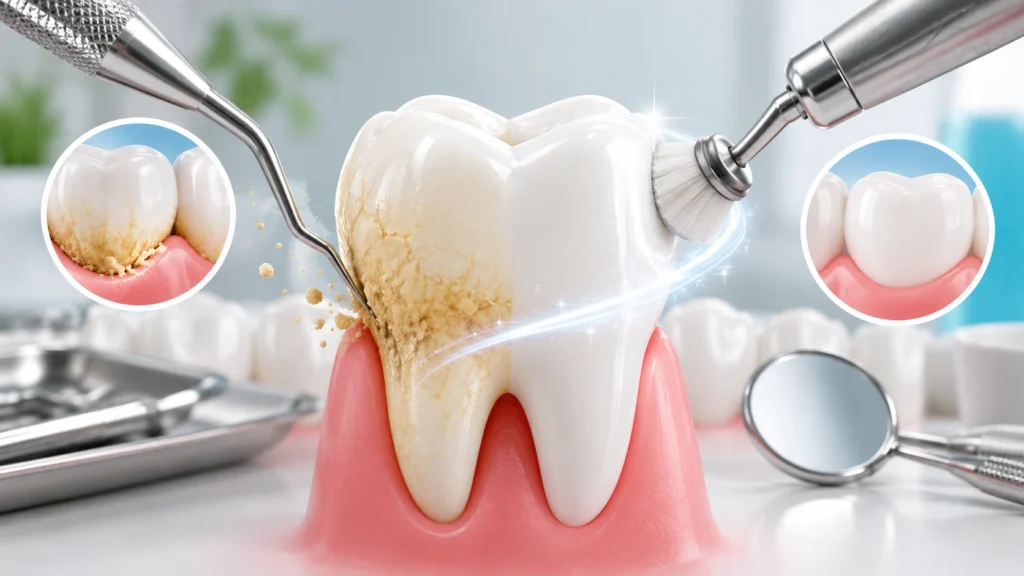
Teeth cleaning, also known as scaling and polishing, is one of the most common and important dental procedures for maintaining oral health. Over time, even with regular brushing and flossing, plaque and tartar can build up on the teeth, especially along the gumline and between teeth. Plaque is a sticky film of bacteria that forms on teeth. If not removed, it hardens into tartar, which cannot be removed by brushing alone. This buildup can lead to gum disease, bad breath, cavities, and tooth loss.
Professional teeth cleaning removes plaque and tartar, smooths the tooth surface, and helps prevent gum disease and decay. It also improves the appearance of teeth by removing surface stains. Many people think teeth cleaning is only for cosmetic reasons, but it is actually a key preventive treatment that supports long-term oral and overall health.
What is Teeth Cleaning?
Teeth cleaning is a professional dental procedure performed by a dentist or dental hygienist to remove plaque, tartar, and stains from the teeth. It is also called prophylaxis or preventive dental cleaning. The procedure usually includes two main steps: scaling and polishing.
Scaling involves removing plaque and tartar from the tooth surface and below the gumline. Tartar, also called calculus, is hardened plaque that sticks firmly to teeth. It can only be removed with special dental instruments. Polishing involves smoothing the tooth surface after scaling to remove stains and make it harder for new plaque to stick.
Teeth cleaning is not the same as teeth whitening. Whitening changes the color of teeth using bleaching agents. Cleaning removes buildup and stains to restore the natural color and health of teeth. Both procedures can be done together in some cases, but they serve different purposes.
Why Teeth Cleaning is Needed?
Even with good daily oral hygiene, some areas of the mouth are hard to clean thoroughly. Plaque can accumulate in these areas and harden into tartar within days. Over time, this buildup irritates the gums and leads to inflammation, bleeding, and gum disease.
Reasons teeth cleaning is needed
- To remove plaque and tartar that brushing and flossing cannot remove.
- To prevent gum disease such as gingivitis and periodontitis.
- To reduce bad breath caused by bacterial buildup.
- To prevent cavities and tooth decay.
- To remove surface stains from tea, coffee, tobacco, or food.
- To smooth the tooth surface and make it harder for plaque to stick.
- To support overall health, as gum disease is linked to heart disease, diabetes, and other conditions.
- To prepare teeth for other dental treatments such as fillings, crowns, or orthodontics.
What happens if teeth are not cleaned regularly
- Plaque and tartar buildup increases.
- Gums become red, swollen, and bleed easily.
- Gum disease progresses from gingivitis to periodontitis.
- Bone supporting the teeth may be lost.
- Teeth may become loose or fall out.
- Bad breath becomes persistent.
- Risk of cavities and tooth sensitivity increases.
- Overall health may be affected due to chronic gum infection.
Types of Teeth Cleaning
There are different types of dental cleaning depending on the patient’s oral health.
Routine prophylaxis
- For patients with healthy gums and mild plaque or tartar.
- Includes scaling above the gumline and polishing.
- Usually done every six months.
- Aimed at prevention and maintenance.
Deep cleaning or scaling and root planing
- For patients with gum disease and tartar below the gumline.
- Involves cleaning the root surfaces to remove bacteria and smooth the roots.
- May require local anesthesia for comfort.
- Often done in multiple visits.
- Followed by regular maintenance cleaning.
Full mouth debridement
- For patients with heavy buildup who have not had cleaning in a long time.
- Involves removing large amounts of plaque and tartar to allow proper examination.
- May be followed by more detailed cleaning in subsequent visits.
Maintenance cleaning
- For patients who have been treated for gum disease.
- Done more frequently, such as every three to four months.
- Aimed at preventing recurrence of gum problems.
Procedure Steps for Scaling and Polishing
Teeth cleaning is usually a quick and painless procedure. It may take thirty to sixty minutes depending on the amount of buildup and the type of cleaning needed.
Before the procedure
- The dentist or hygienist reviews medical and dental history.
- A brief oral examination is done to check gums and teeth.
- X-rays may be taken if needed to assess bone and tartar below the gums.
- The patient is informed about the steps and any sensations to expect.
During scaling
- Ultrasonic scalers may be used to loosen and remove tartar with vibrations and water spray.
- Hand instruments may be used to remove smaller deposits and smooth the tooth surface.
- Cleaning is done above and below the gumline as needed.
- The mouth is rinsed frequently to remove debris.
During polishing
- A rotating brush or rubber cup is used with a gritty paste.
- The paste helps remove surface stains and smooth the enamel.
- Polishing makes the teeth feel smooth and clean.
- Flossing is done to remove any remaining paste and check between teeth.
After the procedure
- The dentist checks the gums and teeth for any missed areas.
- Oral hygiene instructions are given.
- The next cleaning appointment is scheduled based on individual needs.
- The patient is advised on home care to maintain results.
Benefits of Teeth Cleaning
Professional teeth cleaning offers many benefits beyond just clean teeth.
Oral health benefits
- Removes plaque and tartar that cause gum disease.
- Reduces gum inflammation and bleeding.
- Prevents cavities and tooth decay.
- Reduces bad breath.
- Removes surface stains for a brighter smile.
- Smooths tooth surface to slow future plaque buildup.
- Helps detect early signs of dental problems during examination.
Overall health benefits
- Reduces risk of gum disease progression.
- Supports better blood sugar control in diabetics.
- May reduce risk of heart disease linked to gum infection.
- Supports healthy pregnancy outcomes.
- Improves nutrition by maintaining ability to chew properly.
Cosmetic and confidence benefits
- Teeth look cleaner and brighter.
- Smile appears healthier.
- Increased confidence in social and professional settings.
- Better first impression due to fresh breath and clean teeth.
Aftercare Following Teeth Cleaning
Proper aftercare helps maintain the benefits of cleaning and reduces sensitivity or discomfort.
Immediate aftercare
- Avoid eating or drinking for thirty minutes if fluoride was applied.
- Avoid very hot or very cold foods if teeth feel sensitive.
- Avoid smoking or tobacco for at least twenty-four hours.
- Rinse with warm salt water if gums feel tender.
Home care instructions
- Brush twice daily with a soft-bristled toothbrush.
- Use fluoride toothpaste to strengthen enamel.
- Floss daily to clean between teeth and along the gumline.
- Use an antimicrobial mouthwash if recommended.
- Clean the tongue to reduce bacteria and bad breath.
- Replace toothbrush every three months or when bristles are worn.
Diet advice
- Limit sugary and sticky foods that promote plaque.
- Reduce tea, coffee, and tobacco to prevent stains.
- Drink water after meals to rinse food particles.
- Eat crunchy fruits and vegetables that help clean teeth naturally.
When to contact the dentist
- If bleeding does not stop after a day.
- If pain or sensitivity is severe or worsening.
- If swelling or signs of infection develop.
- If any tooth feels loose or unusual.
Frequency of Teeth Cleaning
The ideal frequency of teeth cleaning depends on individual oral health.
General recommendations
- Every six months for most adults with healthy gums.
- Every three to four months for patients with gum disease.
- More frequently for smokers, diabetics, or those with heavy tartar buildup.
- As advised by the dentist based on examination findings.
Special considerations
- Children may need cleaning as soon as permanent teeth come in.
- Pregnant women should maintain regular cleaning to support gum health.
- Elderly patients may need more frequent cleaning due to dry mouth or medications.
- Orthodontic patients may need cleaning every three to four months due to braces.
Special Considerations for Teeth Cleaning
Some patients may need special care during cleaning.
For patients with sensitive teeth
- Desensitizing agents may be applied before or after cleaning.
- Gentle techniques and lighter pressure may be used.
- Fluoride treatment may be recommended to strengthen enamel.
For patients with gum disease
- Deep cleaning with root planing may be needed.
- Local anesthesia may be used for comfort.
- More frequent maintenance visits are important.
For pregnant women
- Teeth cleaning is safe during pregnancy.
- Second trimester is often the most comfortable time.
- Good gum health supports healthy pregnancy outcomes.
For children
- Cleaning is done gently with child-friendly instruments.
- Focus is on education and building good habits.
- Fluoride may be applied to protect new teeth.
For elderly patients
- Care is taken with dry mouth or exposed roots.
- Cleaning may be combined with other dental treatments.
- Emphasis is on maintaining function and comfort.
Possible Side Effects and Risks
Teeth cleaning is generally safe, but some temporary side effects may occur.
Common temporary effects
- Mild gum tenderness or bleeding for a day or two.
- Tooth sensitivity to hot or cold for a few days.
- Slight gum recession appearance as swelling reduces.
- Awareness of spaces between teeth as tartar is removed.
Rare complications
- Gum infection if oral hygiene is poor after cleaning.
- Scratching of tooth surface if improper instruments are used.
- Dislodgement of old fillings or crowns if they were already loose.
- Allergic reaction to cleaning materials in very rare cases.
How to minimize risks
- Choose a qualified dentist or hygienist.
- Follow aftercare instructions carefully.
- Maintain good oral hygiene at home.
- Attend regular follow-up appointments.
Myths and Facts About Teeth Cleaning
There are many misconceptions about teeth cleaning that can prevent people from seeking care.
Common myths
- Myth: Teeth cleaning makes teeth loose.
- Myth: Cleaning damages enamel.
- Myth: Cleaning is only for cosmetic reasons.
- Myth: If I brush well, I do not need cleaning.
- Myth: Cleaning causes gaps between teeth.
Facts
- Fact: Teeth may feel different after tartar removal, but cleaning does not make healthy teeth loose.
- Fact: Professional cleaning is safe for enamel when done correctly.
- Fact: Cleaning is a preventive health treatment, not just cosmetic.
- Fact: Even with good brushing, tartar can form in hard-to-reach areas.
- Fact: Gaps may appear more visible after removing tartar that was filling the space, but cleaning does not create new gaps.
When to See a Dentist for Teeth Cleaning?
Regular dental visits are important for maintaining oral health.
- Bleeding gums when brushing or flossing.
- Persistent bad breath.
- Visible tartar or stains on teeth.
- Gum swelling or tenderness.
- Tooth sensitivity.
- No dental cleaning in the last six to twelve months.
- History of gum disease or cavities.
Why Choose Rama Hospital for Teeth Cleaning?
Professional teeth cleaning requires skill, proper instruments, and a focus on patient comfort. A hospital-based dental department can provide comprehensive care with high standards of hygiene and safety.
- Experienced dentists and hygienists.
- Modern ultrasonic and hand instruments.
- Strict infection control and sterilization protocols.
- Ability to manage patients with medical conditions safely.
- Coordination with other specialties if needed.
- Comprehensive oral health evaluation during cleaning.
Frequently Asked Questions (FAQs)
Is teeth cleaning painful?
Most patients find teeth cleaning comfortable with only mild pressure or vibration. Some sensitivity may occur if gums are inflamed or if there is heavy tartar. Local anesthesia can be used for deep cleaning if needed.
How long does teeth cleaning take?
A routine cleaning usually takes thirty to sixty minutes. Deep cleaning or full mouth debridement may take longer or require multiple visits depending on the amount of buildup.
How often should I get my teeth cleaned?
Most people benefit from cleaning every six months. Patients with gum disease, heavy tartar, or risk factors may need cleaning every three to four months as advised by their dentist.
Does teeth cleaning damage enamel?
No, professional cleaning done correctly does not damage enamel. Ultrasonic and hand instruments are designed to remove tartar without harming the tooth surface when used properly.
Why do my teeth feel sensitive after cleaning?
Sensitivity can occur because tartar that was covering the teeth is removed, exposing the natural surface. This usually improves within a few days. Desensitizing toothpaste or fluoride can help.
Can teeth cleaning whiten my teeth?
Cleaning removes surface stains and makes teeth look brighter, but it does not change the natural color like whitening treatments. For significant color change, professional whitening may be needed.
Is teeth cleaning safe during pregnancy?
Yes, teeth cleaning is safe and recommended during pregnancy. Good gum health supports healthy pregnancy outcomes. The second trimester is often the most comfortable time for dental visits.
Conclusion
Teeth cleaning, including scaling and polishing, is a simple but powerful preventive treatment that supports oral and overall health. It removes plaque and tartar that brushing cannot, prevents gum disease and cavities, reduces bad breath, and improves the appearance of teeth. Regular cleaning, combined with good home care, is one of the best investments a person can make for long-term dental health.
The most important steps are visiting a dentist regularly, following oral hygiene instructions, and addressing gum problems early. For patients with bleeding gums, bad breath, visible tartar, or no cleaning in over six months, a dental evaluation can make a major difference. With professional care and consistent habits, patients can maintain healthy teeth and gums for life.
Rama Hospital can provide professional teeth cleaning, oral health evaluation, and personalized advice to support clean teeth, healthy gums, and a confident smile.