-

-

Regional Flap Procedures

Regional Flap Procedures

Regional Flap Procedures

Regional Flap Procedures: Types, Uses, Recovery, and Care

Regional flap procedures are advanced reconstructive surgery techniques used to repair and rebuild areas of the body where skin, muscle, or tissue has been lost due to injury, surgery, infection, burns, or other conditions. Unlike simple skin grafts, which only transfer a thin layer of skin, flap procedures move a larger section of tissue along with its blood supply to the area that needs reconstruction. This makes flaps stronger, more reliable, and better suited for deeper or more complex wounds.

Regional flap procedures are commonly used in plastic and reconstructive surgery, especially after cancer removal, trauma, burns, chronic wounds, or congenital defects. The goal is not only to close the wound but also to restore function, shape, and appearance as much as possible. Because the tissue keeps its own blood supply, it has a better chance of healing well in its new location.

What are Regional Flap Procedures?

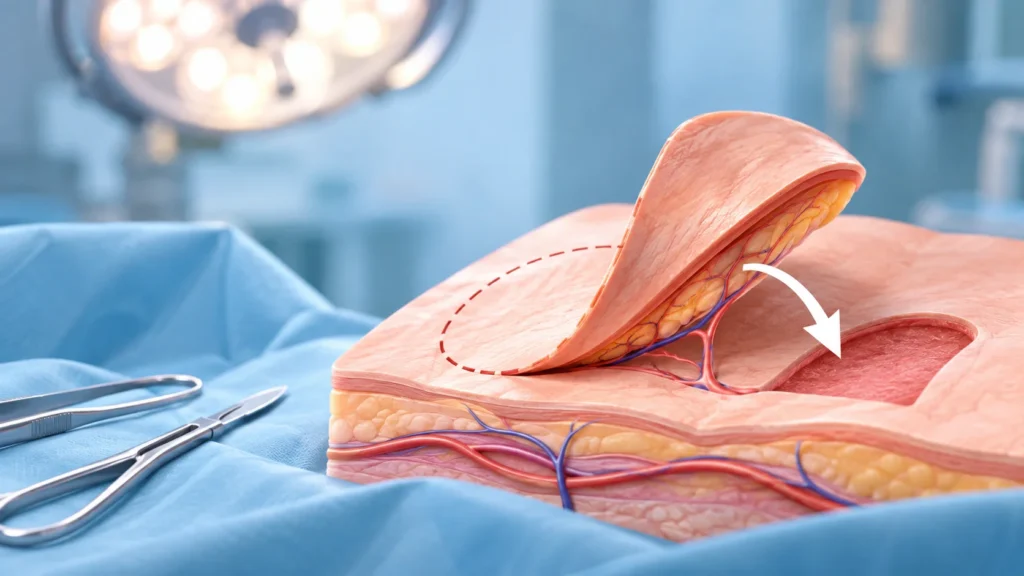
A regional flap procedure is a type of reconstructive surgery where a section of tissue, including skin, fat, muscle, or sometimes bone, is moved from a nearby area of the body to repair a defect elsewhere. The key feature of a flap is that it keeps its own blood supply, either through a pedicle or through microsurgical connection of blood vessels.

Because the tissue remains connected to its blood supply, it is more likely to survive and heal well in the new location. This makes flaps especially useful for large, deep, or complex wounds where a simple skin graft would not be enough.

Regional flaps are called “regional” because the tissue is taken from an area close to the defect, rather than from a distant part of the body. This reduces surgery time and complexity compared to free flaps, which require microsurgical connection of blood vessels.

Types of Regional Flap Procedures

Regional flaps can be classified in different ways based on the type of tissue moved, the blood supply, and the location.

Based on tissue type

  • Skin flap, which includes skin and underlying fat.
  • Fasciocutaneous flap, which includes skin, fat, and fascia.
  • Muscle flap, which includes muscle tissue.
  • Musculocutaneous flap, which includes muscle, fat, and skin.
  • Bone flap, which includes bone along with soft tissue.
  • Composite flap, which includes more than one tissue type such as skin, muscle, and bone.

Based on blood supply

  • Random pattern flap, which relies on the general blood supply of the skin.
  • Axial pattern flap, which follows a specific blood vessel.
  • Pedicled flap, which remains attached to its original blood supply through a pedicle.
  • Free flap, which is completely detached and reconnected using microsurgery, though this is not strictly regional.

Based on location

  • Local flap, taken from immediately adjacent tissue.
  • Regional flap, taken from a nearby but not adjacent area.
  • Distant flap, taken from a far part of the body.

Common regional flap examples

  • Pectoralis major flap, used for head and neck reconstruction.
  • Latissimus dorsi flap, used for breast and chest reconstruction.
  • Rectus abdominis flap, used for breast and abdominal reconstruction.
  • Gracilis flap, used for perineal and pelvic reconstruction.
  • Tensor fascia lata flap, used for hip and groin reconstruction.
  • Anterolateral thigh flap, used for various defects.
  • Radial forearm flap, used for head, neck, and hand reconstruction.

Uses of Regional Flap Procedures

Regional flap procedures are used in many different medical situations where tissue has been lost or damaged.

Common uses include:

  • Reconstruction after cancer surgery, especially in head, neck, breast, and skin cancers.
  • Repair of traumatic injuries from accidents or burns.
  • Coverage of chronic wounds that do not heal with simple treatment.
  • Reconstruction of congenital defects.
  • Repair of pressure sores or bedsores.
  • Reconstruction after infection or tissue death.
  • Coverage of exposed bone, joints, tendons, or implants.
  • Breast reconstruction after mastectomy.
  • Facial reconstruction after trauma or tumor removal.
  • Repair of defects in the mouth, throat, or neck.

Why flaps are needed

Some wounds are too large, too deep, or too complex to heal with simple closure or skin grafts. In such cases, a flap provides more tissue, better blood supply, and better long-term results. Flaps also allow reconstruction of shape and function, not just wound coverage.

Benefits of Regional Flap Procedures

Regional flap procedures offer several advantages over simpler methods.

Key benefits

  • Better blood supply and healing.
  • More durable and long-lasting reconstruction.
  • Ability to cover deep or complex defects.
  • Better cosmetic and functional outcome.
  • Reduced risk of wound breakdown.
  • Suitable for areas with poor blood supply.
  • Can include multiple tissue types for better reconstruction.
  • Lower risk of graft failure compared to simple skin grafts.

Why blood supply matters

Tissue needs a good blood supply to heal. Because flaps keep their own blood vessels, they bring a rich blood supply to the wound area. This is especially important in areas where blood flow is poor, such as after radiation, infection, or chronic wounds.

Risks and Complications

Like any surgery, regional flap procedures carry some risks.

Common risks

  • Bleeding.
  • Infection.
  • Poor healing.
  • Flap failure or tissue death.
  • Scarring.
  • Loss of sensation in the flap area.
  • Donor site complications.
  • Blood clots.
  • Need for further surgery.

Why risks happen

Flap failure can happen if the blood supply is compromised during or after surgery. Infection, smoking, poor nutrition, and certain medical conditions can also increase risk. Careful planning, skilled surgery, and good aftercare reduce these risks.

How is a Regional Flap Procedure Done?

The procedure is planned carefully based on the defect, the tissue available, and the patient’s overall health.

Steps in the procedure

  • Detailed evaluation of the wound or defect.
  • Imaging and planning of the flap.
  • Marking of the flap area.
  • Anesthesia and preparation.
  • Harvesting of the flap tissue.
  • Transfer of the flap to the defect area.
  • Securing the flap in place.
  • Closure of the donor site.
  • Dressing and monitoring.

Anesthesia and hospital stay

Most flap procedures are done under general anesthesia. Hospital stay depends on the size and location of the flap, but many patients stay for several days to monitor healing and blood flow.

Recovery After Regional Flap Surgery

Recovery depends on the type of flap, the size of the defect, and the patient’s overall health.

Early recovery

  • Monitoring of flap blood flow in the first few days.
  • Pain management with medicines.
  • Keeping the flap area elevated if needed.
  • Avoiding pressure on the flap.
  • Regular dressing changes.

Later recovery

  • Gradual return to normal activities.
  • Physical therapy if muscle or joint function is affected.
  • Scar management.
  • Follow-up visits to monitor healing.
  • Possible secondary procedures for refinement.

Tips for better recovery

  • Follow all post-operative instructions.
  • Avoid smoking, which can reduce blood flow.
  • Eat a healthy diet to support healing.
  • Keep the flap area clean and dry as advised.
  • Attend all follow-up appointments.
  • Report any signs of infection or poor healing early.

Aftercare and Follow-Up

Good aftercare is important for the success of a flap procedure.

Aftercare pointers

  • Keep the flap area protected from pressure or injury.
  • Follow dressing and wound care instructions.
  • Take medicines as prescribed.
  • Avoid smoking and alcohol.
  • Watch for signs of infection such as redness, swelling, or discharge.
  • Attend all follow-up visits.
  • Be patient, as full healing can take weeks to months.

Signs to watch for

  • Increased redness or swelling.
  • Warmth or discharge from the wound.
  • Fever.
  • Color change in the flap.
  • Severe pain.
  • Bleeding.
  • Any concern about flap survival.

When is a Regional Flap Procedure Needed?

A regional flap is considered when simpler methods are not enough.

Situations where flap is needed

  • Large or deep wounds.
  • Wounds with exposed bone, tendon, or implants.
  • Areas with poor blood supply.
  • Chronic non-healing wounds.
  • Defects after cancer removal.
  • Complex trauma injuries.
  • Pressure sores.
  • Burns with tissue loss.
  • Reconstruction requiring shape and function.

Why not just a skin graft

Skin grafts are thin layers of skin without their own blood supply. They rely on the wound bed for nutrition. In deep or poorly vascularized areas, grafts may not survive. Flaps bring their own blood supply and more tissue, making them more reliable in such cases.

Why Choose Rama Hospital for Regional Flap Procedures?

Regional flap surgery requires skill, planning, and careful post-operative care. A hospital with experienced plastic and reconstructive surgeons, modern facilities, and a multidisciplinary team can make a major difference in outcomes.

Why hospital care matters

  • Expert evaluation by plastic and reconstructive surgeons.
  • Advanced imaging and planning tools.
  • Skilled surgical team for flap harvest and transfer.
  • Intensive monitoring after surgery.
  • Multidisciplinary support for complex cases.
  • Rehabilitation and long-term follow-up.

Trust and authority points

  • Experienced reconstructive surgery team.
  • Modern operating rooms and critical care support.
  • Personalized treatment plans.
  • Patient education and family support.
  • Comprehensive care from planning to recovery.

Frequently Asked Questions (FAQs)

1. What is a regional flap procedure?

A regional flap procedure is a reconstructive surgery where tissue with its own blood supply is moved from a nearby area to repair a defect. It is used for large, deep, or complex wounds that cannot heal with simple closure or grafts.

2. How is a flap different from a skin graft?

A flap includes more tissue and keeps its own blood supply, while a graft is a thin layer of skin without blood supply. Flaps are more reliable for deep or poorly vascularized wounds.

3. Is flap surgery painful?

Some pain is expected after surgery, but it is managed with medicines. Pain levels depend on the size and location of the flap. Most patients find the pain manageable with proper care.

4. How long does recovery take?

Recovery varies but often takes several weeks to months. Early healing happens in the first few weeks, while full recovery and scar maturation can take longer. Follow-up is important.

5. Can flap surgery fail?

There is a small risk of flap failure if the blood supply is compromised. Careful planning, skilled surgery, and good aftercare reduce this risk significantly.

6. Will there be a scar?

Yes, some scarring is expected at both the flap and donor sites. Surgeons try to place incisions in less visible areas and use techniques to minimize scarring. Scar appearance improves over time.

7. Can I move normally after flap surgery?

Movement may be limited initially, especially if muscle is involved. Physical therapy and gradual activity help restore function. Most patients regain good function over time.

8. When should I contact the doctor after surgery?

Contact the doctor if you notice increased redness, swelling, discharge, fever, color change in the flap, or severe pain. Early reporting helps prevent complications.

Conclusion

Regional flap procedures are advanced reconstructive surgeries that help repair complex wounds and restore both function and appearance. By moving tissue with its own blood supply, flaps provide a reliable solution for defects that cannot heal with simpler methods.

The most important steps are careful planning, skilled surgery, and diligent aftercare. For patients with large wounds, tissue loss after cancer or trauma, or chronic non-healing wounds, a regional flap can make a major difference in healing and quality of life.

Rama Hospital can help evaluate the need for flap reconstruction, plan the procedure, and provide comprehensive care from surgery to full recovery.

Table of Contents

Explore More

What to Know More About Regional Flap Procedures

Find Ailments & Treatments

Search Ailments

Quickly find the information you need. Search our database to explore detailed information on various diseases and conditions, including symptoms, causes, and treatment options.

Search Treatments

Quickly find the information you need. Search our database to explore detailed information on various diseases and conditions, including symptoms, causes, and treatment options.

Recommended Reading

Video Playlist

No rows found.

Experience Healthcare the Rama Way

Emergency • OPD • Surgery • ICU Care

Need Help? Talk to our experts

Get a callback from our experts

Request a callback