
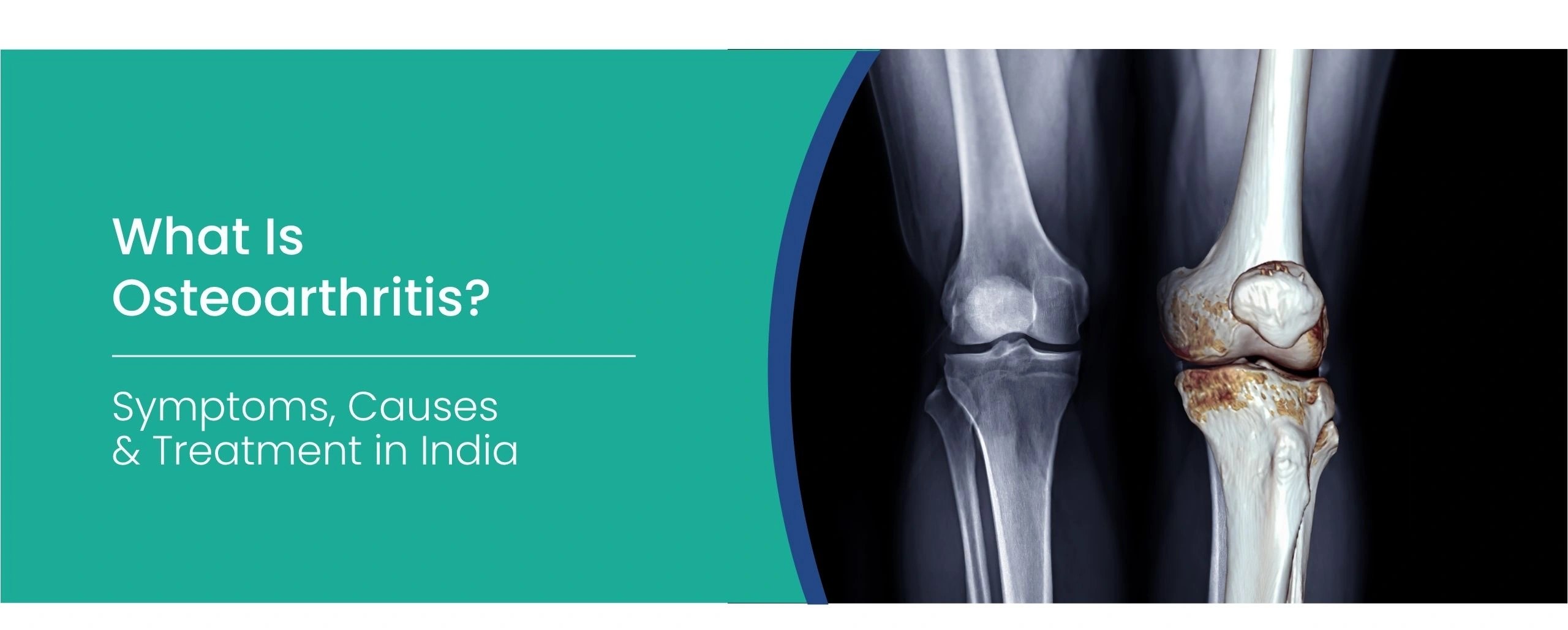
Your knees crack a little when you climb stairs. Your fingers feel stiff in the morning. Sitting cross-legged on the floor isn’t as easy as it used to be.
You tell yourself it’s just age.
But is it?
For millions of Indians, this “normal ageing” is actually osteoarthritis, a joint disease that quietly builds up over years before it becomes impossible to ignore. By the time most people notice it, the condition has often been progressing silently, gradually affecting how they walk, sit, climb stairs, or even perform simple daily tasks.
Unlike a sudden injury, osteoarthritis develops slowly. The protective cartilage that cushions your joints begins to wear down over time, causing the bones to rub against each other. This can lead to pain, stiffness, swelling, and reduced flexibility. At first, the symptoms may come and go. Eventually, they may become more frequent and start interfering with your everyday life.
The biggest mistake people make is assuming that joint pain is just a natural part of getting older. While age is a risk factor, osteoarthritis is not something you simply have to live with. Early diagnosis, lifestyle changes, exercise, and the right treatment can help relieve pain, improve mobility, and slow the progression of the disease.
If you’ve been waking up with stiff joints, avoiding stairs because of knee pain, or finding it harder to enjoy activities you once loved, it’s worth understanding what your joints may be trying to tell you. Early action can make a significant difference in protecting your joint health and maintaining an active, independent life.
What is osteoarthritis?
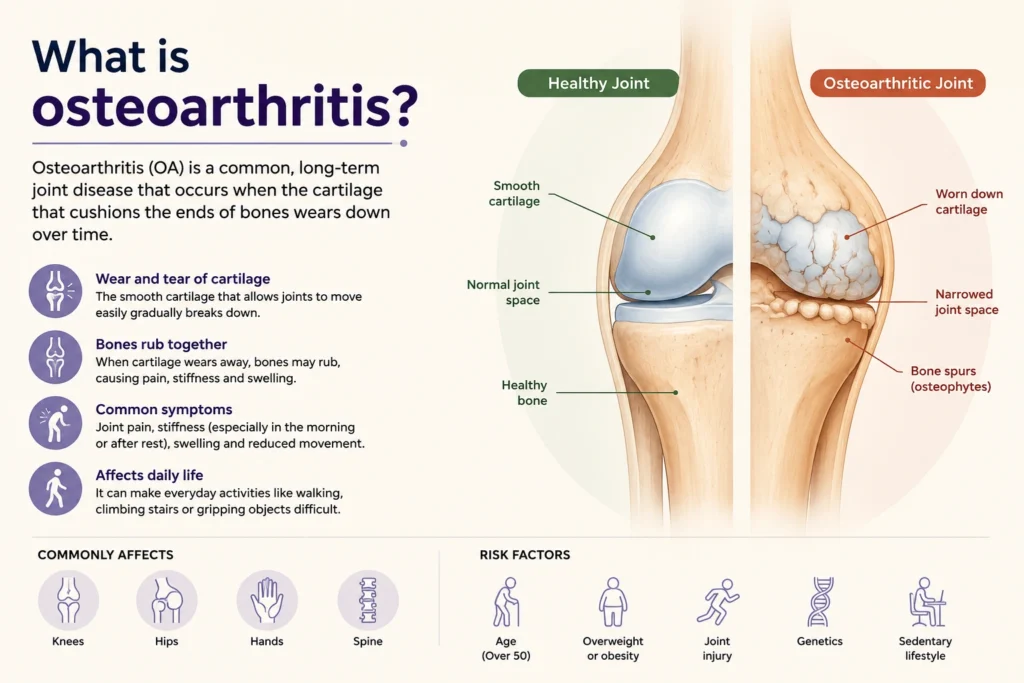
Osteoarthritis is the most common form of joint disease worldwide, and India is no exception.
- It happens when the protective cartilage that cushions your bones gradually wears down.
- It’s often called “wear and tear” arthritis because of this slow erosion.
- Unlike rheumatoid arthritis, this condition is not an autoimmune disease — it’s mechanical, not immune-related.
- It commonly affects knees, hips, spine, and finger joints.
- This degenerative joint disease develops gradually, often over several years, rather than appearing overnight.
- Because the joint’s condition worsens progressively if left unmanaged, doctors classify it firmly under joint disease rather than a temporary ailment.
Osteoarthritis is what happens when your joints lose their natural shock absorbers, and bone starts rubbing closer to bone.
This joint disease doesn’t announce itself loudly. It whispers first, through small aches most people simply walk off, dismissing them as tiredness rather than an early warning sign.
Why osteoarthritis is so common in India
India is witnessing a sharp rise in this joint disease, and doctors say lifestyle plays a bigger role than most people realise.
- Floor-sitting culture: Traditional squatting, cross-legged sitting, and using Indian-style toilets put extra pressure on knee joints every single day.
- Rising obesity rates: Extra body weight adds direct, constant stress on weight-bearing joints like the knees and hips.
- Sedentary urban lifestyles: Long working hours at a desk, with little movement, weaken the muscles that support and protect joints.
- Delayed diagnosis: Many people dismiss early joint disease symptoms as “just ageing” instead of consulting a doctor.
- Genetic predisposition: Osteoarthritis in India often runs in families, particularly among women after menopause.
- Nutritional gaps: Lower calcium and vitamin D intake across large parts of the population can weaken bone and joint health over time.
Doctors across metro cities report that osteoarthritis is now appearing in patients as young as their late 30s, not just the elderly, as many still assume.
Early signs most people ignore in osteoarthritis
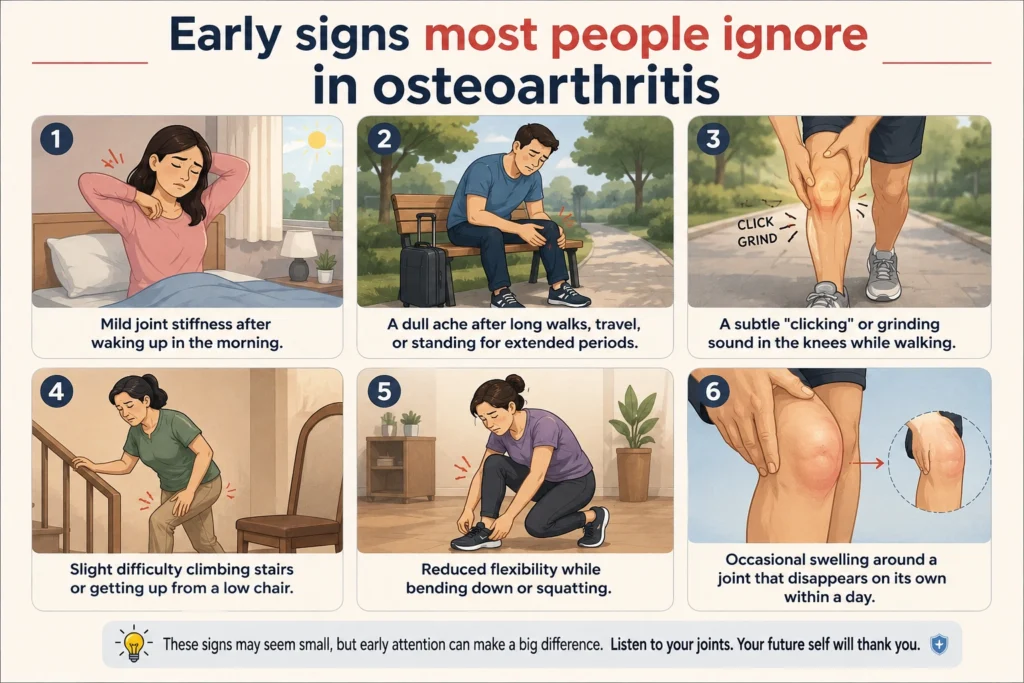
This is where the condition becomes dangerous, not because it’s severe, but because it’s silent for so long.
- Mild joint stiffness after waking up in the morning.
- A dull ache after long walks, travel, or standing for extended periods.
- A subtle “clicking” or grinding sound in the knees while walking.
- Slight difficulty climbing stairs or getting up from a low chair.
- Reduced flexibility while bending down or squatting.
- Occasional swelling around a joint that disappears on its own within a day.
Most people brush these off as tiredness or a bad night’s sleep. But these are classic early signs of osteoarthritis, and catching them early makes treatment significantly more effective and far less invasive.
Common symptoms of osteoarthritis
As osteoarthritis progresses, the symptoms become harder to ignore and start interfering with daily routines.
- Persistent joint pain, especially during movement or weight-bearing activity.
- Stiffness that’s worse in the morning or after long periods of rest.
- Visible swelling around the affected joint.
- Reduced range of motion, making everyday tasks harder.
- A grating or grinding sensation when the joint moves.
- Bone spurs forming around the joint edges.
- Muscle weakness surrounding the affected joint.
Osteoarthritis symptoms typically worsen gradually rather than all at once. Some days may feel almost normal; others may bring sharp discomfort, this unpredictability is very common with joint disease and often confuses patients about how serious the condition really is.
What causes osteoarthritis?
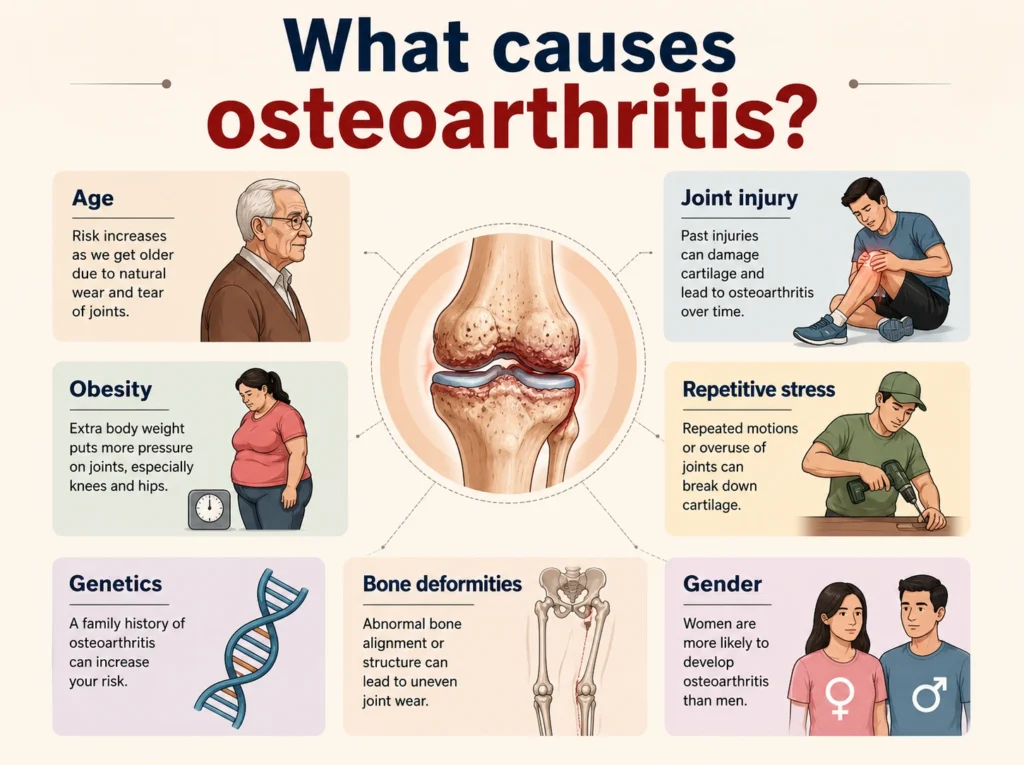
There isn’t one single cause. This joint disease usually results from a combination of factors working together over time, which is why two people with similar lifestyles can experience it very differently.
Understanding these osteoarthritis causes helps identify who needs to be extra cautious, and which habits are worth changing early.
- Age: Cartilage naturally weakens and loses elasticity as we grow older.
- Joint injury: Old sports injuries, fractures, or accidents significantly increase risk decades later.
- Obesity: Extra weight accelerates cartilage breakdown, especially in the knees.
- Repetitive stress: Jobs or habits that involve repeated kneeling, squatting, or heavy lifting add cumulative wear.
- Genetics: Family history plays a real role in osteoarthritis risk.
- Bone deformities: Conditions like bow legs or naturally misaligned joints increase pressure on specific areas.
- Gender: Women, especially post-menopause, are statistically more prone to osteoarthritis due to hormonal changes affecting bone density.
Treatment options for osteoarthritis
Here’s the reassuring part: treatment for this joint disease today offers multiple effective paths, ranging from simple lifestyle changes to advanced surgical solutions, and most patients start with the least invasive option first.
Non-surgical treatment:
- Physiotherapy to strengthen the muscles supporting the joint.
- Weight management to reduce overall load on weight-bearing joints.
- Pain-relief medications and anti-inflammatory drugs, as advised by a doctor.
- Lifestyle modifications, including low-impact exercise like swimming or cycling.
- Assistive devices such as knee braces or walking aids for added support.
Advanced treatment:
- Intra-articular injections for targeted pain relief.
- Arthroscopy for minor joint repairs and cleanup.
- Joint replacement surgery for severe, advanced-stage osteoarthritis where other options no longer help.
The right osteoarthritis treatment always depends on age, severity, activity level, and personal lifestyle needs, there’s no single approach that fits everyone.
Can osteoarthritis be prevented?
This joint disease cannot always be fully prevented, but the risk can be significantly reduced with consistent daily habits.
- Maintain a healthy body weight to reduce joint stress.
- Stay physically active with joint-friendly, low-impact exercises.
- Avoid excessive floor-sitting, squatting, or using Indian-style toilets where possible.
- Strengthen the muscles around your knees and hips.
- Treat joint injuries properly instead of ignoring them and “pushing through” pain.
- Get regular joint check-ups after the age of 40, even without symptoms.
Prevention is about protecting your joints before the damage becomes severe. Maintaining a healthy weight, staying active, strengthening the muscles around the knee, and seeking timely care at the best hospital for arthritis treatment can help slow cartilage wear and reduce the risk of advanced arthritis. The goal is to preserve joint health early, rather than waiting until pain becomes constant and everyday activities become difficult.
When should you see an orthopedic specialist?
Don’t wait for the pain to become unbearable before seeking help.
If you’re searching for the a specialities, best orthopedic doctor in Noida, early consultation can often prevent the condition from progressing to a stage where surgery becomes the only option.
For patients researching the a best hospital in Noida for comprehensive joint disease care, choosing a facility with dedicated orthopedic expertise and modern diagnostic tools makes a real difference to long-term outcomes.
Frequently Asked Question (FAQs)
Q1: Is osteoarthritis the same as normal ageing?
No. While age is a risk factor, osteoarthritis is a distinct joint disease, not an unavoidable part of getting older. Many older adults never develop it, while some younger adults do.
Q2: Can osteoarthritis be cured completely?
Osteoarthritis cannot be fully reversed, but symptoms can be managed very effectively with the right treatment, physiotherapy, and lifestyle changes.
Q3: Does osteoarthritis only affect elderly people?
No. Osteoarthritis is increasingly diagnosed in people in their 30s and 40s, especially those dealing with obesity, sedentary work, or old joint injuries.
Q4: Is walking good for osteoarthritis?
Yes. Low-impact walking, done in moderation, helps strengthen joint-supporting muscles without adding excess strain on the cartilage.
Q5: When is joint replacement surgery necessary?
Surgery is usually recommended only in advanced osteoarthritis cases, where non-surgical treatment no longer relieves pain or restores reasonable mobility.
Q6: Can diet affect osteoarthritis?
Yes. Maintaining a healthy weight through a balanced diet reduces joint stress and can meaningfully slow osteoarthritis progression over time.
Q7: Is osteoarthritis hereditary?
It can be. A family history of arthritis disease increases your personal risk, though lifestyle factors still play a major role.
Conclusion
Osteoarthritis isn’t just “old age knee pain”, it’s a progressive joint disease that deserves timely attention, not quiet acceptance.
The sooner this joint disease is identified, the more treatment choices remain on the table, and the better your long-term mobility and independence look. Small, consistent changes today can genuinely change how your joints feel a decade from now.
Don’t let joint pain quietly take over your daily life.
Consult experienced orthopedic specialists for expert osteoarthritis treatment in Noida and get a personalised care plan built around your pain levels, lifestyle, and long-term mobility goals.