
Your kidneys do an incredible job every day without asking for attention. They filter waste, remove extra fluid, balance minerals, and help keep your body functioning normally. Most people rarely think about their kidneys, until they stop working as they should.
When kidney function declines significantly, waste products and excess fluid begin to build up in the body. At that point, it may become necessary to perform some of the vital functions that healthy kidneys can no longer handle.
Hearing the word “dialysis” can feel overwhelming. It often raises concerns about treatment, daily life, and the future. However, understanding how this works can make the journey much less intimidating.
What is dialysis?
This is a medical treatment that does the job your kidneys can no longer do properly.
- Kidneys filter waste, salt, and extra water from your blood.
- When kidneys fail, waste builds up in the body.
- This removes that waste artificially.
- It keeps your blood chemistry balanced.
- It prevents dangerous toxin buildup.
When your kidneys are healthy, they work around the clock to remove waste, excess water, and toxins from your blood. But when they stop working properly, these harmful substances begin to build up in the body, affecting your overall health.
This is where it becomes essential.
Think this, as an external filtration system. When your kidneys can no longer do their job, a dialysis machine, or a special cleansing fluid, takes over the task of filtering your blood and removing waste.
While this is not a cure for kidney disease, it is a life-saving treatment. It helps manage the condition, controls symptoms, prevents serious complications, and allows many people to continue living active and fulfilling lives.
Why is dialysis needed?
This becomes necessary when kidney function drops significantly, usually below 10-15% of normal capacity.
Common reasons a doctor recommends:
- Chronic Kidney Disease (CKD) reaching an advanced stage.
- Acute kidney injury from infection, trauma, or medication overuse.
- Uncontrolled diabetes damaging kidney tissue over years.
- Long-standing high blood pressure straining the kidneys.
- Overuse of painkillers, sometimes taken for conditions like osteoarthritis, adding pressure on kidney function over time.
Without this, toxins accumulate. This can affect the heart, brain, and overall body balance.
That’s why timely CKD treatment in Noida and regular check-ins with a nephrologist in Noida matter more than people realise.
Kidney damage is often silent for years. By the time symptoms show up clearly, doctors are already discussing the next step. That’s why early screening, especially for diabetics, hypertensive patients, and those on long-term painkillers for conditions like osteoarthritis, is so important.
Types of dialysis
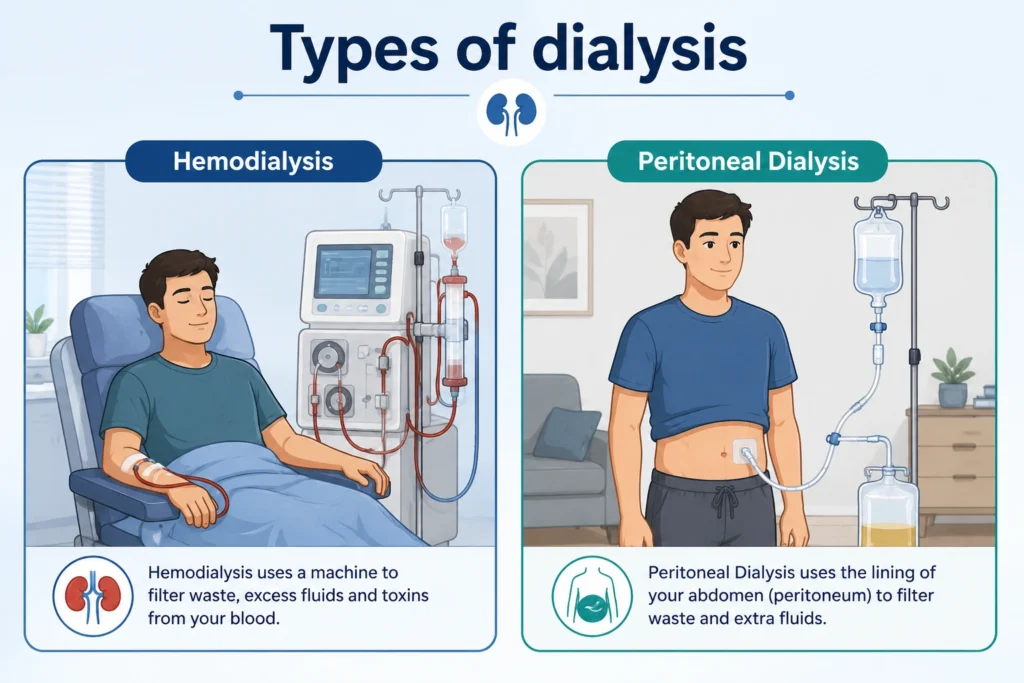
There isn’t just one way to do dialysis. Two major types of dialysis exist, and each suits different patients.
Hemodialysis
This is the most common form.
- Blood is drawn out of the body through a needle.
- It passes through a machine (dialyzer).
- The machine filters waste and extra fluid.
- Clean blood is returned to the body.
- Sessions usually last 3-5 hours.
- Typically done 3 times a week at a dialysis hospital in Noida or specialised centre.
Hemodialysis requires vascular access, usually created surgically in the arm, well before treatment begins.
Peritoneal Dialysis
This type works differently, and it’s done inside the body.
- A soft tube (catheter) is placed in the abdomen.
- A special fluid is introduced into the abdominal cavity.
- The lining of the abdomen (peritoneum) acts as a natural filter.
- Waste moves from blood into the fluid.
- The fluid is drained out after a few hours.
Peritoneal dialysis can often be done at home, offering more flexibility for daily routines.
There is no single option that is right for everyone. The best choice depends on your medical condition, daily routine, personal preferences, and overall health goals. Your doctor will carefully evaluate your kidney function, lifestyle, and support system before recommending the most suitable treatment.
The choice between different types usually depends on:
- Overall health condition and kidney function.
- Lifestyle and work schedule to ensure treatment fits your daily routine.
- Home support system, especially if home is being considered.
- Age and other medical conditions, such as diabetes or heart disease.
- Your personal preferences and long-term treatment goals.
- Doctor’s clinical recommendation based on your individual health needs.
A qualified nephrologist can explain the benefits and limitations of each option and help you choose the treatment that best suits your condition and lifestyle.
Benefits of dialysis treatment
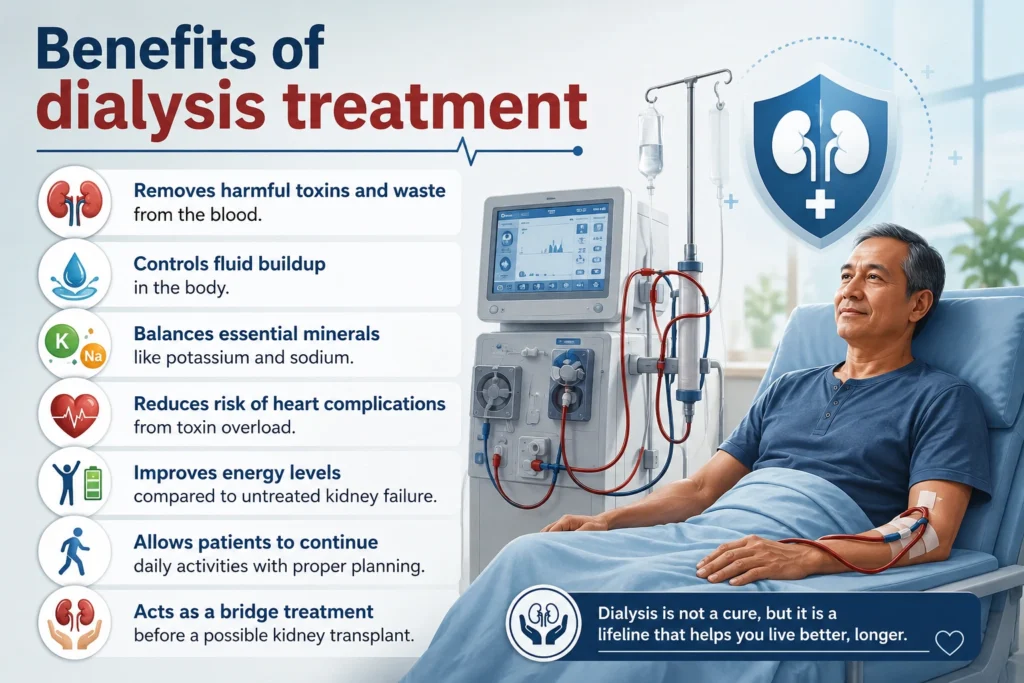
This isn’t just a medical procedure. It’s often a life-extending, life-stabilising decision.
Key benefits of treatment:
- Removes harmful toxins and waste from the blood.
- Controls fluid buildup in the body.
- Balances essential minerals like potassium and sodium.
- Reduces risk of heart complications from toxin overload.
- Improves energy levels compared to untreated kidney failure.
- Allows patients to continue daily activities with proper planning.
- Acts as a bridge treatment before a possible kidney transplant.
For patients with kidney failure, this isn’t a limitation. It’s often the very thing that keeps daily life possible.
What happens during a dialysis session?
Many patients feel anxious before their first dialysis session. Understanding the process helps.
A typical procedure includes:
- Weight and blood pressure check before starting.
- Needle insertion (for hemodialysis) or fluid exchange setup (for peritoneal dialysis).
- Blood filtration through the machine over several hours.
- Continuous monitoring by trained staff.
- Post-session vitals check.
- Brief rest before heading home.
Most people describe as uneventful, sometimes even relaxing, once the initial nervousness fades. Mild fatigue afterward is common and usually temporary.
Some patients bring a book, listen to music, or simply nap through the session. Others prefer chatting with staff or fellow patients. Over time, sessions often become just another part of the weekly routine, not a dreaded event.
Side effects and risks

Like most medical treatments, this does come with some side effects. Awareness helps patients manage them better.
Common side effects:
- Low blood pressure during or after sessions.
- Muscle cramps, especially in the legs.
- Fatigue or tiredness post-treatment.
- Itchy skin due to mineral imbalance.
- Mild nause
- a in some patients.
- Risk of infection at catheter or access site.
- Sleep disturbances in long-term patients.
Most side effects are manageable with medication adjustments, diet changes, and close monitoring by your care team.
Serious complications are uncommon when performed under expert supervision, which is why choosing the best hospital for dialysis truly matters.
A well-equipped dialysis hospital in Noida follows strict hygiene protocols, uses calibrated machines, and keeps trained nephrology staff on standby. This significantly lowers the risk of infection, sudden blood pressure drops, and other complications.
Life after starting dialysis
Starting changes routines. It doesn’t have to end a normal life.
Practical adjustments patients make:
- Following a kidney-friendly diet (limited salt, potassium, phosphorus).
- Managing fluid intake carefully.
- Scheduling work or travel around sessions.
- Taking prescribed medications consistently.
- Staying physically active within safe limits.
- Attending regular follow-ups with the care team.
Many patients on dialysis continue working, travelling, and spending quality time with family. Planning ahead makes the biggest difference.
Emotional support matters too. Connecting with other patients or counsellors can ease the mental load of long-term treatment in best hospital in Noida.
Family involvement makes a real difference as well. Understanding dietary restrictions, recognising warning signs, and offering encouragement on tough days helps patients stay consistent with their routine, especially during the first few months of adjustment.
Frequently Asked Questions (FAQs)
Can dialysis be stopped once started?
In some cases, yes, especially if kidney function partially recovers (common in acute kidney injury). For chronic kidney failure, this is usually continued unless a transplant becomes possible. The duration of treatment depends on the underlying cause of kidney damage and how well the kidneys recover over time.
Is dialysis a lifelong treatment?
Not always. Every patient’s condition is different, so the treatment plan varies from person to person. For CKD patients, it’s often lifelong unless a transplant happens. For acute, reversible kidney damage, it may be temporary.
Can dialysis patients travel?
Yes, with proper planning. Many treatment centres accommodate travelling patients, allowing them to manage their condition without interrupting their travel plans.
What foods are best for dialysis patients?
Generally, low-sodium, low-potassium, and low-phosphorus foods are recommended. A renal dietitian can personalise this based on individual reports.
How often is dialysis required?
Hemodialysis is typically needed 3 times a week. Peritoneal dialysis is usually done daily, at home, in shorter sessions.
Is home dialysis safe?
Yes, when done correctly with proper training and hygiene. Peritoneal dialysis is specifically designed for safe home use.
Can kidney transplant replace dialysis?
Yes. A successful transplant can eliminate the need for dialysis. However, not everyone is immediately eligible, and continues until then.
What is the success rate of dialysis?
This has helped millions of patients manage kidney failure effectively for years. Success depends on consistency, diet discipline, and quality of care received.
Conclusion
Dialysis isn’t a sign that life stops. It’s a sign that life continues, with the right support system.
Whether it’s hemodialysis or peritoneal dialysis, the goal remains the same: removing waste, restoring balance, and protecting long-term health.
If kidney concerns are on your mind, don’t wait. Timely treatment, guided by an experienced nephrologist, can make all the difference.
For dependable dialysis treatment in Noida, expert nephrology care, and one of the best dialysis centers in Noida, is here to help.