

Diabetes does not just affect your blood sugar. Over time, it quietly damages your kidneys, and most patients don’t realize it until serious harm has already occurred.
Diabetic kidney disease is the leading cause of kidney failure worldwide. In India, the numbers are alarming. With over 101 million diabetics in the country, a large portion of them are silently progressing toward kidney damage.
The connection between diabetes and kidney disease is not accidental. It is biological, predictable, and largely preventable if you understand what is actually happening inside your body.
This blog explains why diabetic kidney disease develops, how it progresses, what warning signs to watch for, and what you can do to protect your kidneys.
What is Diabetic Nephropathy?
It is the clinical name for kidney damage caused by long-term diabetes and diabetic kidney disease. The word “nephropathy” simply means kidney disease.
Your kidneys contain roughly one million tiny filters called glomeruli. Their job is to clean your blood, keeping useful proteins and cells inside while flushing out waste through urine.
When blood sugar stays high for years, these filters get progressively damaged. Proteins start leaking into the urine. Waste builds up in the blood. Eventually, the kidneys lose the ability to function altogether.
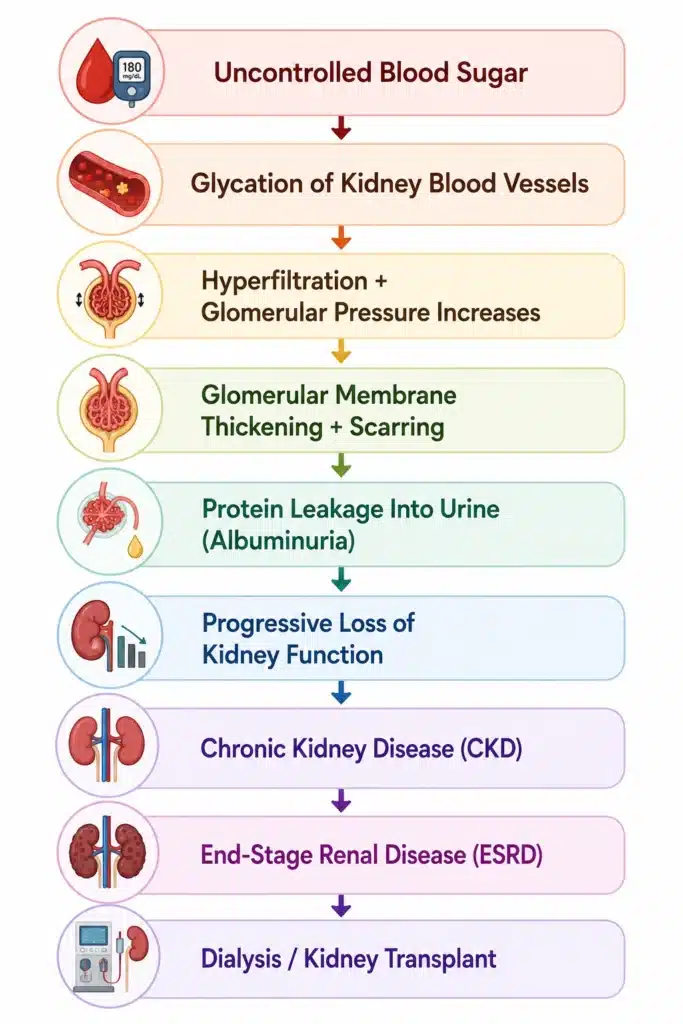
This is how diabetic nephropathy becomes end-stage renal disease (ESRD), a condition where dialysis or kidney transplant becomes the only option.
Diabetic kidney disease does not happen overnight. It builds over years, quietly, through five clinical stages:
| Stage | What’s Happening | Key Sign |
| Stage 1 | Kidneys are overworking | No visible symptoms |
| Stage 2 | Minor glomerular damage begins | Microalbuminuria starts |
| Stage 3 | Moderate kidney damage | Protein in urine, rising creatinine |
| Stage 4 | Severe kidney damage | High creatinine, BP rises sharply |
| Stage 5 (ESRD) | Kidney failure | Dialysis or transplant required |
Why diabetes affects kidneys: the exact mechanism
Most patients ask, “Why does sugar damage kidneys? What is the actual connection?”
Here is the medical explanation, simplified.
Why diabetic kidney disease affects kidneys comes down to four interconnected processes happening simultaneously inside your body:
1. High blood sugar kidney damage
When blood glucose is consistently high, sugar molecules attach to proteins in the kidney’s blood vessels. This process, called glycation, stiffens and narrows the tiny vessels feeding the glomeruli.
High blood sugar kidney damage also triggers oxidative stress, a state of internal inflammation that directly injures kidney cells. Over time, glomerular cells thicken, scar, and stop filtering properly.
2. Glomerular damage diabetes
The glomerulus is the kidney’s workhorse. It filters approximately 180 liters of blood every single day.
Glomerular damage in diabetes occurs because high glucose increases pressure inside these filters. This hyperfiltration state, the kidney working too hard, causes the glomerular membrane to stretch, thicken, and eventually scar.
Once scarring (glomerulosclerosis) sets in, that filtering unit is permanently lost. The body cannot regenerate glomeruli.
3. Protein leakage urine diabetes
Healthy kidneys keep proteins like albumin inside the blood. Damaged filters let them escape into urine.
Protein leakage in urine and diabetes, medically called proteinuria or albuminuria, is one of the earliest measurable signs of diabetic kidney disease. A urine test can detect this years before symptoms appear.
The more protein leaking in the urine, the more advanced the kidney damage.
4. Blood vessel damage, kidneys, diabetes
Diabetes systematically damages small blood vessels throughout the body. Inside the kidneys, blood vessel damage from diabetes reduces blood supply to the filtering units. Starved of oxygen and nutrients, kidney tissue gradually dies and scars.
This is why diabetic nephropathy is classified as a microvascular complication of diabetes; it is caused by damage to the smallest blood vessels.
How diabetic kidney disease progresses: A visual flow
Risk factors: Who is most likely to develop diabetic kidney disease?
Not every diabetic patient develops kidney disease at the same rate. Several factors accelerate kidney filtration damage, including diabetes significantly.
Uncontrolled diabetes kidney risk
Uncontrolled diabetes kidney risk is the single biggest factor. Patients whose HbA1c consistently stays above 8% are three to four times more likely to develop kidney damage compared to those who maintain HbA1c below 7%.
High HbA1c kidney disease
High HbA1c and kidney disease risk are directly proportional; the higher your average blood sugar over 3 months, the faster your kidneys deteriorate.
| HbA1c Level | Kidney Risk |
| Below 7% | Low risk, well-controlled |
| 7% – 8% | Moderate risk, needs attention |
| Above 8% | High risk, active kidney protection needed |
| Above 10% | Very high risk; nephrology review recommended |
Hypertension and diabetes-related kidney damage
Hypertension and diabetic kidney damage are a devastating combination. High blood pressure inside the kidney’s blood vessels accelerates glomerular scarring.
Over 70% of diabetic patients with kidney disease also have hypertension. The two conditions feed each other: kidney damage raises blood pressure, and high blood pressure worsens kidney damage.
Long-term diabetes complications
Long-term diabetes complications and kidney disease go hand in hand.
- Patients with diabetes for more than 10 years face significantly higher risk.
- Poor glucose control kidney failure risk multiplies with each passing year of uncontrolled sugar.
- The presence of other complications, neuropathy and retinopathy, often signals kidney involvement too.
Additional risk factors
- Family history of chronic kidney disease or diabetic nephropathy.
- Smoking reduces kidney blood flow and worsens kidney filtration damage, diabetes.
- Obesity and metabolic syndrome increase systemic inflammation.
- Frequent use of painkillers (NSAIDs) is directly toxic to kidneys.
- Recurrent urinary infections can scar kidney tissue over time.
Diabetes kidney failure symptoms: what to watch for
Diabetes kidney failure symptoms are absent or very subtle in the early stages. This is what makes diabetic kidney disease dangerous; by the time you feel something, significant damage may already be done.
Here is a practical symptom checklist for diabetic patients:
Early Warning Signs:
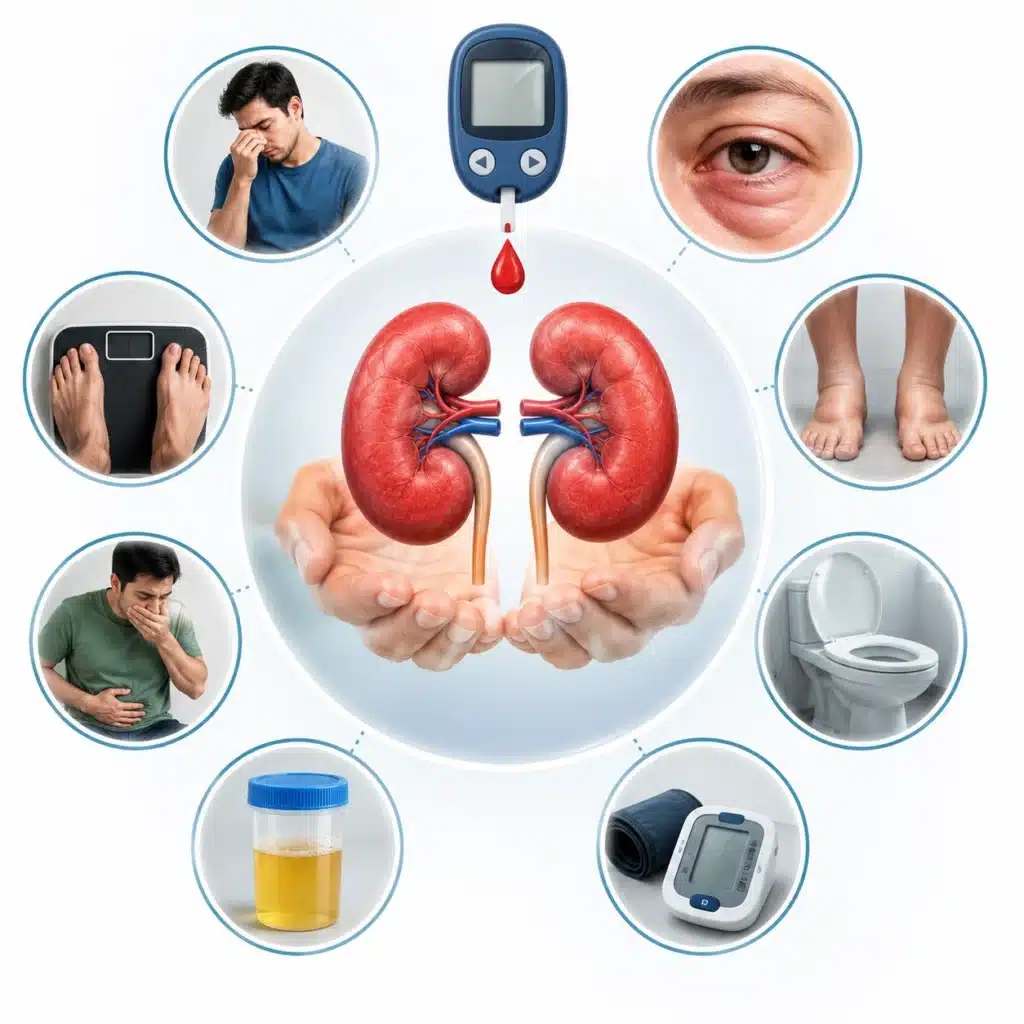
- Foamy or frothy urine (protein leakage).
- Slightly swollen feet or ankles.
- More frequent nighttime urination.
- Mild fatigue not explained by anything else.
- Blood pressure creeping upward despite no diet change.
Advanced symptoms (seek care immediately):
- Significant swelling in legs, face, or abdomen.
- Severe fatigue and weakness.
- Loss of appetite and nausea.
- Difficulty concentrating or brain fog.
- Persistent itching (toxin buildup).
- Reduced urine output despite good fluid intake.
- Muscle cramps, especially at night.
Important: Foamy urine in a diabetic patient is never normal. It is the kidney’s distress signal. Do not ignore it.
Diabetes and dialysis risk: understanding the stakes
Diabetes and dialysis risk are serious concerns that every diabetic patient and their family needs to understand.
Diabetic kidney disease is responsible for nearly 44% of all new dialysis cases globally. In India, this number is rising rapidly, driven by the growing diabetes epidemic and low rates of early detection and treatment.
| Population | Lifetime Dialysis Risk |
| General population | ~1% |
| Diabetic with good control | ~5–10% |
| Diabetic with poor control | ~25–40% |
| Diabetic + hypertension, untreated | Up to 50% |
Dialysis is not a cure. It replaces some kidney functions but dramatically impacts quality of life. Patients typically need sessions three times a week, for three to four hours each.
The real message: end-stage renal disease is largely preventable. With early detection, proper glucose control, blood pressure management, and regular nephrology follow-up, most diabetic patients never reach the dialysis stage.
The hypertensive nephropathy connection
Hypertensive nephropathy refers to kidney damage caused specifically by high blood pressure. In diabetic patients, it is almost always present alongside diabetic nephropathy.
The combination of type 2 diabetes complications and hypertension creates what nephrologists call a “double hit” to the kidneys:
- Diabetes damages glomerular filters from inside through sugar toxicity
- Hypertension damages kidney blood vessels from mechanical pressure
Together, they accelerate each other. A patient with both conditions reaches end-stage renal disease significantly faster than someone with either condition alone.
Managing blood pressure in diabetic patients is not optional. Target BP for diabetic kidney patients is generally below 130/80 mmHg.
Metabolic syndrome and kidney risk
Metabolic syndrome, the cluster of abdominal obesity, high blood sugar, high blood pressure, and abnormal cholesterol, is increasingly common in urban India.
Each component of metabolic syndrome independently damages the kidneys. Together, they create a compounding risk environment.
A diabetic patient with metabolic syndrome is at significantly higher risk of developing diabetic kidney disease at a younger age than patients with diabetes alone.
This is why weight management, physical activity, and a healthy diet are not lifestyle suggestions; they are medical treatments.
How Diabetic Kidney Disease Is Diagnosed
A simple urine test can detect protein leakage in urine and diabetes years before you feel any symptom. This is the most valuable, low-cost screening tool available.
Early diagnosis saves kidneys. Every diabetic patient should undergo these tests at least once a year:
| Test | What It Measures | Why It Matters |
| Urine Albumin to Creatinine Ratio (UACR) | Protein leakage in urine | First sign of kidney damage |
| Serum Creatinine + eGFR | Kidney filtration capacity | Determines CKD stage |
| Blood Urea Nitrogen (BUN) | Waste clearance efficiency | Rises when kidneys struggle |
| HbA1c | 3-month average blood sugar | Predicts ongoing damage |
| Blood Pressure Monitoring | BP levels | Hypertension management |
| Kidney Ultrasound | Structural assessment | Detects size, cysts, obstruction |
Protecting your kidneys: what actually works
Diabetic kidney disease is manageable and, in early stages, reversible. Here is what evidence recommends:
Blood sugar control:
- Maintain HbA1c below 7% consistently.
- Work with your diabetologist on medication adjustments if readings trend upward.
- Poor glucose control and kidney failure are largely preventable with adherence.
Blood pressure management:
- Target below 130/80 mmHg for diabetic patients.
- ACE inhibitors or ARBs are preferred BP medications for diabetic nephropathy; they also protect kidneys independently of BP lowering.
Dietary adjustments:
- Reduce sodium intake sharply.
- Limit protein if kidney function is already reduced.
- Avoid processed foods high in potassium and phosphorus in advanced stages.
Medications that protect the kidneys:
- SGLT2 inhibitors, proven to slow the progression of diabetic kidney disease.
- GLP-1 receptor agonists show kidney-protective effects in clinical trials.
- These are now the standard of care for diabetic patients with kidney involvement.
Lifestyle changes:
- Stop smoking immediately; it accelerates kidney filtration damage and diabetes.
- Maintain a healthy weight to reduce metabolic syndrome burden.
- Stay physically active; even a 30-minute walk reduces kidney disease risk.
- Stay well-hydrated unless on fluid restriction.
Frequently Asked Questions (FAQs)
Q: I have diabetes, but my sugar is well controlled. Can I still get kidney disease?
Yes, you can. Even patients with reasonably controlled diabetes can develop diabetic kidney disease, especially if they also have high blood pressure, a family history of kidney disease, or have had diabetes for many years. Good control significantly reduces risk but does not eliminate it entirely. Annual kidney screening is important regardless.
Q: My urine looks foamy lately. Should I be worried?
Yes, foamy urine should not be ignored, especially if you are diabetic. It often indicates protein leakage in urine and diabetes, which is an early sign of kidney damage. Get a urine albumin test done as soon as possible. Caught early, this is very treatable.
Q: My doctor said my creatinine is slightly high. What does that mean?
Creatinine is a waste product your kidneys filter out. When creatinine levels rise in your blood, it means your kidneys are not filtering as efficiently as they should. Even mildly elevated creatinine in a diabetic patient warrants prompt evaluation by a nephrologist.
Q: My father has had diabetes for 20 years. He now feels very tired and has swollen feet. Is it kidney disease?
These are concerning symptoms in a long-term diabetic. Fatigue, swelling, and reduced appetite are classic signs of diabetes kidney failure symptoms in advanced stages. Please do not delay; consult a nephrologist urgently and get full kidney function tests done immediately.
Q: Can kidney damage from diabetes be reversed?
In the very early stages (microalbuminuria), kidney damage can sometimes be reversed or significantly slowed with aggressive management of blood sugar and blood pressure. Once kidney function has significantly declined, reversal is unlikely, but progression can be slowed substantially. This is why early detection is critical.
Q: My doctor mentioned dialysis as a possibility. How scared should I be?
The word “dialysis” understandably frightens patients and families. But here is the important truth: diabetes and dialysis risk can be dramatically reduced with proper care. Most patients who get regular kidney screening, control their blood sugar and blood pressure, and follow their nephrologist’s guidance never reach the point of needing dialysis.
Q: Is kidney disease in diabetics hereditary?
Yes, partially. Family history of diabetic nephropathy or chronic kidney disease does increase your risk. If your parents or siblings have kidney disease alongside diabetes, you should start annual kidney screening early, ideally at the time of diabetes diagnosis itself.
Q: What kind of doctor treats diabetic kidney disease?
A nephrologist is the specialist who manages diabetic kidney disease and chronic kidney disease. For complex cases involving both diabetes management and kidney protection, your diabetologist and nephrologist typically work together. If you are in Noida, the nephrology team at Rama Hospital offers comprehensive evaluation and management for diabetic nephropathy and related conditions.
Q: When should a diabetic patient see a nephrologist?
Early intervention can protect years of kidney function. Do not wait for symptoms. The kidney is silent until late damage has occurred. Visit a nephrologist if:
- You have had Type 2 diabetes for more than 5 years.
- Your HbA1c has been above 8% consistently.
- You have high blood pressure alongside diabetes.
- Your urine routine report shows protein.
- Your creatinine is elevated even mildly.
- You experience foamy urine, swelling, or unexplained fatigue.
- Your diabetologist recommends a nephrology consultation.
Get expert kidney care in Noida
If you or a family member has diabetes and is concerned about kidney health, getting the right specialist matters.
For kidney treatment in Noida, Rama Hospital offers expert nephrology services with a focus on early detection, disease management, and patient education. The best nephrologist in Noida at Rama Hospital provides comprehensive evaluation, including urine albumin testing, kidney function panels, and personalized management plans for diabetic nephropathy and chronic kidney disease.
Do not wait until symptoms force the conversation. A single urine test today could protect your kidneys for decades.
Book your kidney health consultation at Rama Hospital, Noida.
Diabetic kidney disease is common. Kidney failure is not inevitable. The difference between the two is early action.