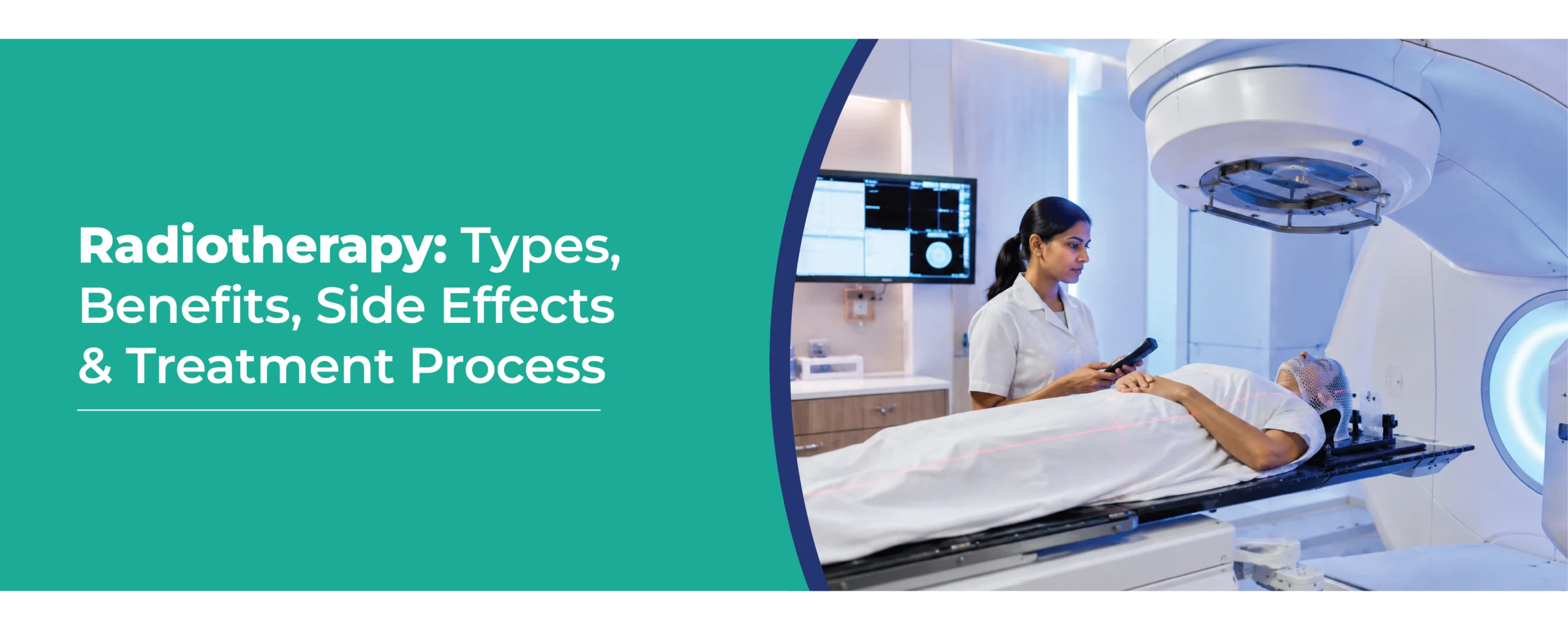
Cancer affects millions of people worldwide, and modern medicine has developed several powerful tools to combat it. Among the most effective is radiotherapy a cornerstone of cancer care that has helped save countless lives over the past century. Whether used alone or alongside surgery and chemotherapy, radiotherapy for cancer offers targeted, evidence-based treatment that continues to evolve with ground breaking technology.
What Is Radiotherapy?
Radiotherapy meaning, in the simplest terms, is the use of high-energy radiation to destroy cancer cells or slow their growth. Also called radiation therapy, it works by damaging the DNA inside cancer cells, preventing them from dividing and multiplying. Healthy surrounding cells may also be affected, but they typically recover more effectively than cancer cells.
In a clinical context it is a medical treatment delivered by trained specialists called radiation oncologists, using advanced machines that produce X-rays, gamma rays, electron beams, or proton beams. The goal is to target tumours with precision while minimising damage to surrounding healthy tissue.
For cancer it is one of the most widely used treatment modalities globally. According to oncology experts, more than half of all cancer patients will receive some form of radiation therapy during the course of their illness either to cure, control, or relieve symptoms.
When Is Radiotherapy Used for Cancer?
For cancer it may be recommended in the following scenarios:
- Early-stage cancers: It can be the primary curative treatment, particularly for prostate cancer, early-stage breast cancer, head and neck cancers, and cervical cancer.
- Locally advanced cancers: When cancer has spread to nearby tissues but not to distant organs, radiotherapy, often combined with chemotherapy can shrink tumours and improve outcomes.
- Post-surgery (adjuvant radiotherapy): Used after surgical removal of a tumour to eliminate any remaining cancer cells and reduce the risk of recurrence.
- Pre-surgery (neoadjuvant radiotherapy): Administered before surgery to shrink a tumour and make it easier to remove.
- Palliative radiotherapy: When cancer cannot be cured, radiotherapy can relieve pain, reduce bleeding, or ease pressure caused by tumours, significantly improving quality of life.
- Recurrent cancers: When cancer returns after initial treatment, radiotherapy can be used again depending on previous exposure and tissue tolerance.
It is used across virtually all stages of cancer, making it one of the most versatile treatments in modern oncology.
Types of Radiotherapy
The two broad radiotherapy techniques are as follows:
1. External Beam Radiotherapy (EBRT)
The most common form, EBRT delivers radiation from a machine outside the body. The beam is precisely aimed at the tumour site. Subtypes include:
- 3D Conformal Radiotherapy (3D-CRT): Uses 3D imaging to shape the radiation beams to match the exact contour of the tumour.
- Intensity-Modulated Radiation Therapy (IMRT): Allows the radiation dose to be varied across the treatment area, delivering higher doses to the tumour while sparing surrounding healthy tissues.
- Volumetric Modulated Arc Therapy (VMAT): A form of IMRT where the machine rotates around the patient during treatment, delivering radiation continuously and efficiently.
- Stereotactic Body Radiotherapy (SBRT) / SABR: Delivers very high, precise doses of radiation to small, well-defined tumours over a few sessions (fractions), often used for lung, liver, and spine tumours.
- Stereotactic Radiosurgery (SRS): Used for brain tumours and other brain conditions, SRS delivers a very high dose in a single session using multiple beams focused on one point.
2. Internal Radiotherapy (Brachytherapy)
Brachytherapy involves placing radioactive material directly inside or near the tumour. It is commonly used for:
- Cervical and uterine cancers
- Prostate cancer
- Breast cancer
- Head and neck cancers
Radioactive seeds, wires, or catheters are temporarily or permanently placed inside the body to deliver concentrated radiation to the tumour from within.
3. Systemic Radiotherapy
Radioactive substances are given orally or intravenously and travel through the bloodstream to reach cancer cells. Examples include:
- Radioactive iodine (I-131): Used for thyroid cancer
- Radium-223: Used for bone metastases in prostate cancer
Advanced Radiotherapy Techniques
Modern oncology has ushered in a new era of precision with a range of advanced radiotherapy techniques that minimise side effects while maximising tumour control.
Proton Therapy
Unlike conventional X-ray radiation, proton therapy uses proton beams that stop at a specific depth within the body (the Bragg Peak), releasing most of their energy directly at the tumour site. This dramatically reduces radiation to surrounding healthy tissue. It is particularly beneficial for:
- Paediatric cancers (reducing long-term developmental effects)
- Tumours near critical structures (brain, spine, eye)
- Head and neck cancers
CyberKnife
CyberKnife is a robotic radiosurgery system that tracks tumour movement in real time and adjusts the radiation beam accordingly. This makes it ideal for tumours in the lung, liver, pancreas, and prostate, organs that move with breathing. It delivers high doses with sub-millimetre accuracy.
TrueBeam and Halcyon Systems
These are state-of-the-art linear accelerators (LINAC) that combine imaging and treatment delivery in one machine, enabling faster, more precise treatments with reduced patient discomfort.
Image-Guided Radiotherapy (IGRT)
IGRT involves using imaging (CT, X-ray, or MRI) immediately before or during treatment to verify tumour position and adjust beams accordingly, improving accuracy and reducing side effects.
Adaptive Radiotherapy
This emerging technique adjusts the treatment plan during the course of therapy based on changes in tumour size and shape observed through repeated imaging. This ensures consistently accurate targeting throughout treatment.
Radiotherapy Treatment Process: Step-by-Step Guide
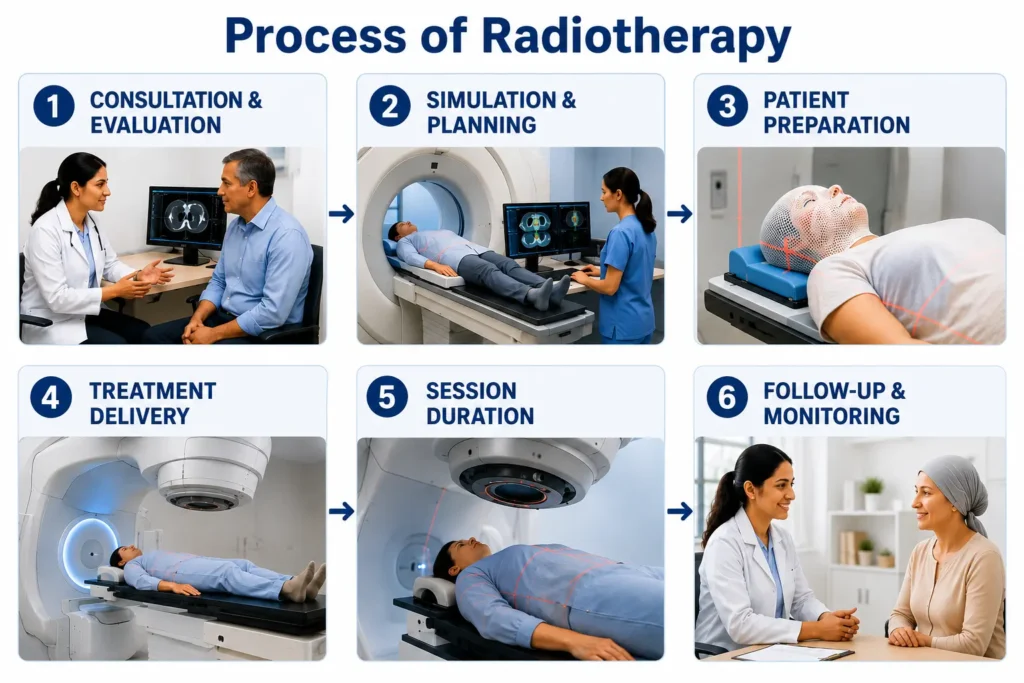
Understanding its treatment process helps patients prepare mentally and physically. Here is a detailed walkthrough of the procedure of radiotherapy from consultation to completion.
Step 1: Initial Consultation and Diagnosis Review
The radiation oncologist reviews the patient’s medical history, biopsy results, imaging scans (CT, MRI, PET), and pathology reports. A multidisciplinary team including surgeons, medical oncologists, and radiologists collaborates to determine whether radiotherapy is appropriate and how it should be administered.
Step 2: Simulation (Treatment Planning Session)
This is one of the most critical steps in the radiotherapy procedure. During simulation:
- The patient lies in the exact position they will be in during treatment.
- Immobilisation devices (moulds, masks, or body frames) are custom-made to ensure the patient stays perfectly still.
- A CT scan or MRI is taken to create a detailed 3D map of the treatment area.
- Tiny permanent tattoo marks (or temporary markers) are placed on the skin to guide beam alignment in future sessions.
Step 3: Treatment Planning (Dosimetry)
Medical physicists and dosimetrists use specialised software to design the treatment plan. They calculate:
- The optimal beam angles and radiation doses
- How to maximise dose to the tumour
- How to protect nearby organs (called organs-at-risk or OARs)
The oncologist reviews and approves the plan before treatment begins.
Step 4: Treatment Delivery
The actual treatment session typically lasts 15–30 minutes, with the radiation exposure itself taking only a few minutes. The patient lies still while the machine rotates around them or moves to deliver beams from different angles.
- Most of the courses involve daily sessions over a period of 2–8 weeks
- Some treatments use fewer but larger doses (hypofractionation or SBRT)
- The treatment is painless, patients feel nothing during radiation delivery
Step 5: Monitoring During Treatment
Patients are regularly monitored throughout their treatment course. Weekly check-ups with the oncologist assess:
- Treatment response
- Side effects and their management
- Weight, nutrition, and overall wellbeing
Step 6: Post-Treatment Follow-Up
After completing its treatment process, patients are scheduled for regular follow-up appointments. Imaging scans are done to evaluate tumour response. Long-term monitoring continues to detect any recurrence and manage late side effects.
Benefits of Radiotherapy
Radiotherapy for cancer offers numerous significant benefits that have made it a vital tool in oncology:
Highly targeted treatment: Modern radiotherapy techniques deliver radiation with millimetre precision, minimising collateral damage to healthy tissues.
Curative potential: For many early-stage cancers (breast, prostate, lung, cervix, head and neck), radiotherapy can be curative, eliminating cancer completely.
Organ preservation: It often allows surgeons to avoid removing entire organs. For example, breast-conserving surgery followed by radiotherapy is as effective as mastectomy for early breast cancer.
Non-invasive option: External beam radiotherapy requires no cuts, anaesthesia, or hospital stay, making it suitable for patients who cannot undergo surgery due to age or comorbidities.
Synergy with other treatments: It works powerfully alongside chemotherapy (chemoradiation) and immunotherapy, enhancing the effectiveness of each modality.
Palliative relief: Even when cancer cannot be cured, it effectively reduces pain, controls bleeding, prevents fractures in bone metastases, and relieves neurological symptoms from brain metastases.
Outpatient treatment: Its most of the sessions are administered on an outpatient basis, allowing patients to continue daily activities to a significant degree.
Adjuvant Radiotherapy: Why Is It Given After Surgery?
Adjuvant radiotherapy refers to radiation therapy administered after the primary treatment (usually surgery) to reduce the risk of cancer recurrence. Here’s why it’s a critical part of many cancer treatment plans:
Eliminating Microscopic Disease
Surgery removes the visible tumour, but microscopic cancer cells may remain in the surrounding tissue or nearby lymph nodes. Adjuvant radiotherapy destroys these residual cells before they can grow into a new tumour.
Reducing Recurrence Risk
Clinical evidence strongly supports adjuvant radiotherapy in several cancers:
- Breast cancer: After lumpectomy (breast-conserving surgery), adjuvant radiotherapy reduces local recurrence by approximately 50–60% and improves long-term survival.
- Rectal cancer: Post-operative radiotherapy (or pre-operative chemoradiation) significantly reduces the risk of local recurrence.
- Endometrial cancer: High-risk uterine cancers receive adjuvant radiotherapy to the pelvis after hysterectomy.
- Head and neck cancers: After surgical resection, this targets remaining lymph nodes and surgical margins.
- Brain tumours: Glioblastoma is routinely treated with adjuvant chemoradiotherapy after surgery.
Allowing Organ-Preserving Surgery
In cancers like laryngeal cancer, adjuvant radiotherapy enables surgeons to perform less extensive procedures while achieving equivalent cure rates.
Timing of Adjuvant Radiotherapy
It is generally started within 4–6 weeks after surgery, once wound healing is adequate. Delays beyond this window can reduce its effectiveness.
Common Side Effects of Radiotherapy
The side effects arise because radiation, even when precisely targeted, can affect healthy cells near the treatment area. Most side effects are temporary and manageable. They are broadly divided into early (acute) side effects and late (chronic) effects.
Early Side Effects (During or Shortly After Treatment)
Fatigue: The most common side effect, affecting nearly all patients. It tends to build over the treatment course and resolves within weeks to months after completing therapy. Rest, light exercise, and proper nutrition help manage it.
Skin reactions: Radiation can cause the skin in the treatment area to become red, dry, itchy, or tender — similar to a sunburn. Peeling or moist desquamation may occur in some cases. Gentle skincare, moisturisers, and avoiding sun exposure are recommended.
Hair loss: Hair loss (alopecia) occurs only in the area being irradiated, not across the whole body (unlike chemotherapy). Head and neck radiation may cause scalp hair loss; radiotherapy to other areas does not.
Nausea and vomiting: More common when radiation is directed at the abdomen or pelvis. Anti-nausea medications are highly effective.
Mucositis: Inflammation and sores in the mouth and throat occur with head and neck radiotherapy. Good oral hygiene, special mouthwashes, and dietary adjustments help manage this.
Difficulty swallowing (dysphagia): Also associated with head and neck radiation; nutritional support and speech therapy may be needed.
Diarrhoea: Common with pelvic radiotherapy (for rectal, cervical, prostate, or bladder cancers). Dietary modifications and medications provide relief.
Urinary symptoms: Frequency, urgency, or burning during urination can occur with pelvic radiotherapy. These usually resolve after treatment ends.
Complications of Radiotherapy
While most radiotherapy side effects are manageable, but its complications refer to more serious or long-lasting problems that may develop months to years after treatment. These are relatively uncommon, especially with modern techniques, but patients should be aware of them.
Radiation Fibrosis
Chronic scarring of irradiated tissue can occur in the lungs (radiation pneumonitis → fibrosis), bowel (radiation enteritis), or bladder (radiation cystitis). Symptoms may include breathlessness, bowel dysfunction, or urinary difficulties.
Secondary Cancers
A very small risk exists of developing a new cancer in or near the irradiated area, typically 10–20 years later. This risk must be weighed against the life-saving benefit of treating primary cancer. Modern techniques significantly reduce this risk.
Cardiovascular Effects
Chest radiotherapy (particularly for left-sided breast cancer or mediastinal lymphoma) can, over time, affect heart function or increase the risk of coronary artery disease. Advances like deep inspiration breath hold (DIBH) techniques now minimise cardiac exposure.
Lymphoedema
When lymph nodes in the radiation field are affected, fluid drainage can be impaired, leading to chronic swelling (lymphoedema) in the arm or leg. Physiotherapy and compression garments help manage this.
Hormonal and Reproductive Effects
Pelvic radiotherapy can affect ovarian function in women or sperm production in men, potentially causing infertility. Fertility preservation options should be discussed before treatment begins.
Cognitive Effects
Brain radiotherapy, particularly whole-brain radiation, can cause memory and concentration difficulties in some patients. Stereotactic techniques are preferred when possible to preserve cognitive function.
Osteoradionecrosis
Irradiation of the jaw in head and neck cancers can, in rare cases, damage the bone, particularly after dental procedures. Good pre-treatment dental assessment and care reduce this risk.
Is Radiotherapy Painful?
During the treatment session itself, radiotherapy is completely painless. The radiation beams are invisible and carry no sensation, patients feel and hear nothing unusual while the machine operates. The experience is similar to having an X-ray.
However, some patients do experience discomfort associated with the its side effects rather than the treatment itself:
- Skin soreness in the treatment area
- Mouth sores from head and neck radiation
- Abdominal cramping from pelvic radiation
- Headache after brain radiotherapy in some patients
These are side effects, not the treatment itself, and they are managed with appropriate medications and supportive care.
The immobilisation devices (masks or moulds) used to keep patients still may feel claustrophobic or uncomfortable for some individuals. Patients with anxiety are encouraged to speak with their care team, as relaxation techniques and medication can help.
In summary: Radiotherapy is not painful as a procedure, but side effects may cause discomfort that is effectively managed with good supportive care.
Radiotherapy vs Chemotherapy: Key Differences
Understanding the difference between radiotherapy and chemotherapy helps patients and families participate meaningfully in treatment decisions.
| Feature | Radiotherapy | Chemotherapy |
| Mechanism | Uses high-energy radiation to damage cancer cell DNA | Uses drugs that kill rapidly dividing cells |
| Delivery | External (beams) or internal (implants/radioactive substances) | Oral tablets or intravenous infusion |
| Scope | Local – targets a specific area of the body | Systemic – travels throughout the entire body |
| Best used for | Solid tumours in a specific location | Cancers that have spread (metastatic), blood cancers |
| Hair loss | Only in the irradiated area | Often across the whole body |
| Fatigue | Common | Common |
| Nausea | Depends on treatment area | Common with many regimens |
| Immune suppression | Minimal (localised) | Significant (systemic) |
| Duration | Daily sessions over weeks | Cycles over months |
| Specialist | Radiation Oncologist | Medical Oncologist |
When Are Radiotherapy and Chemotherapy Used Together?
Chemotherapy radiotherapy combination also known as chemoradiation or concurrent chemoradiotherapy is a standard treatment for many cancers including:
- Head and neck cancers
- Cervical cancer
- Rectal cancer
- Oesophageal cancer
- Non-small cell lung cancer
- Glioblastoma (brain tumour)
Chemotherapy acts as a radiosensitiser in these settings, making cancer cells more susceptible to radiation and improving overall treatment outcomes.
How to Choose the Right Radiotherapy Centre?
Selecting the right cancer treatment center can significantly influence treatment outcomes. Here is what to look for when evaluating an oncology specialist and facility for advanced cancer treatment:
Technology and Equipment
Look for centres equipped with modern linear accelerators (TrueBeam, Halcyon), IGRT capabilities, IMRT/VMAT, and ideally SBRT/SRS systems. The availability of advanced technology directly impacts treatment precision and reduces side effects.
Multidisciplinary Team
The best outcomes come from collaborative care. A quality cancer treatment center will have radiation oncologists, medical oncologists, surgical oncologists, medical physicists, dosimetrists, radiographers, nurses, nutritionists, and psychosocial support working as a team.
Experience and Specialisation
Choose a centre where the oncology specialist has specific training and experience in treating your type of cancer. Ask about the number of patients treated annually and outcomes data.
Treatment Planning Technology
Advanced treatment planning software (Eclipse, Monaco, RayStation) combined with skilled physicists ensures optimal dosimetry delivering the right dose to the right place.
Patient Support Services
Advanced cancer treatment should be supported by comprehensive patient care including nutritional counselling, pain management, psychological support, and rehabilitation services.
Accessibility and Infrastructure
Consider location, appointment availability, and whether the centre offers facilitation for patients travelling from other cities.
Why Choose Rama Hospital for Radiotherapy Treatment?
When it comes to cancer hospital in Noida, Rama Hospital stands out as a trusted centre for comprehensive and compassionate cancer care. Here’s why patients choose us for radiotherapy and advanced cancer treatment:
State-of-the-Art Technology
Rama Hospital is equipped with the latest advanced cancer treatment technologies, including high-precision linear accelerators capable of delivering IMRT, VMAT, IGRT, and SBRT. Our commitment to technological excellence ensures that every patient receives the most accurate and effective treatment available.
Experienced Oncology Specialists
Our team of highly qualified oncology specialists brings decades of combined experience in radiation oncology, medical oncology, and surgical oncology. Each patient’s case is reviewed by a multidisciplinary tumour board to ensure a personalised, evidence-based treatment plan.
Comprehensive Cancer Care
As a dedicated cancer care hospital, Rama Hospital provides end-to-end cancer management — from early diagnosis and staging to treatment, rehabilitation, and long-term follow-up. We understand that cancer affects the whole person, not just the tumour.
Personalised Treatment Planning
Every treatment plan at Rama Hospital is customised to the individual patient using advanced dosimetry software and rigorous quality assurance checks by certified medical physicists.
Patient-Centred Approach
We believe in treating patients with dignity, empathy, and transparency. Our team takes the time to explain every step of the radiotherapy procedure, answer questions, and provide the emotional support that patients and families need during a difficult time.
Affordable and Transparent Pricing
We are committed to making advanced cancer treatment accessible. Our transparent pricing, assistance with insurance navigation, and support for government health scheme beneficiaries ensure that world-class care is within reach.
Supportive Care Services
Beyond radiotherapy, Rama Hospital one of the leading multi super specialty hospitals in the region offers nutritional counselling, pain management, psychological support, physiotherapy, and palliative care services to support the whole patient journey.
Contact Rama Hospital today to schedule a consultation with our oncology team and take the first step toward effective, compassionate cancer care.
Conclusion
Radiotherapy has transformed cancer treatment over the past several decades, evolving from basic X-ray techniques to sophisticated, computer-guided precision therapies that spare healthy tissue while delivering lethal doses to tumours. Whether used as a primary treatment, in combination with surgery and chemotherapy, or for palliative relief, radiotherapy for cancer remains one of the most powerful tools in the oncologist’s arsenal.
Understanding its procedure, its benefits, and potential side effects empowers patients and their families to participate actively in treatment decisions. With the right team, the right technology, and the right support, radiotherapy offers hope, healing, and an improved quality of life for millions of cancer patients every year.
If you or a loved one has been recommended for radiotherapy, seek a consultation at a reputable cancer care hospital with experienced oncology specialists and access to advanced cancer treatment technologies. Early action and informed decisions can make all the difference.
Frequently Asked Questions
Q1. What is radiotherapy used for?
Radiotherapy uses high-energy radiation to destroy cancer cells and stop them from growing. It is used to treat many types of cancer, either alone or with surgery and chemotherapy.
Q2. Can radiotherapy cure cancer?
Yes. It can completely cure certain early-stage cancers and also helps reduce the risk of cancer recurrence after surgery.
Q3. At what stage of cancer is radiotherapy used?
It can be used at any stage of cancer for cure, before or after surgery, or to relieve symptoms in advanced cancer.
Q4. Is radiotherapy painful?
No. The treatment itself is painless, although some temporary side effects like fatigue or skin irritation may occur.
Q5. How many radiotherapy sessions are needed?
Treatment usually ranges from 3–35 sessions, depending on the type, stage, and treatment plan for the cancer.
Q6. What are the common side effects of radiotherapy?
Common side effects include fatigue, skin redness, hair loss in the treated area, nausea, and temporary swallowing or bowel changes.
Q7. What is the difference between radiotherapy and chemotherapy?
It targets cancer in a specific area, while chemotherapy uses medicines that travel throughout the body to destroy cancer cells.
Q8. How long does a radiotherapy session take?
A typical session takes about 15–30 minutes, with the actual radiation delivered in just a few minutes.
Q9. Is radiotherapy safe?
Yes. Modern radiotherapy is highly precise and safe, with advanced technology designed to protect healthy tissues.