Pregnancy often brings a different kind of excitement to the festive season. Families come together, homes are decorated, traditional food is prepared, and celebrations fill the calendar. But for expecting mothers living in Delhi-NCR, the festive period can also bring a familiar concern: worsening air pollution.
Between firecracker smoke, traffic emissions, construction dust and changing weather conditions, outdoor air quality can become a concern during the festive months. Even a short trip to the market or an evening spent outdoors may mean exposure to smoke, dust and fine particles.
For pregnant women, protecting their health during this period is particularly important. Air pollution can affect the respiratory and cardiovascular systems, and research has linked exposure during pregnancy with an increased risk of certain adverse birth outcomes, including preterm birth and low birth weight. However, these are population-level associations, not a prediction that an individual pregnancy will be affected.
The good news is that expecting mothers can take practical steps to reduce their exposure without avoiding every celebration or spending the entire festive season indoors.
In this guide, we explain how air pollution may affect pregnancy, why firecracker smoke deserves attention, and what you can do to protect yourself during the festive season.
What Is Air Pollution, and Why Does It Matter During Pregnancy?
Air pollution occurs when harmful particles and gases enter the air we breathe. These pollutants may come from vehicles, industrial emissions, construction activities, burning waste, household fuels and firecrackers.
During the festive season, several of these sources can contribute to poor air quality at the same time.
One pollutant of particular concern is PM2.5, which refers to fine particulate matter measuring 2.5 micrometres or less in diameter. These particles are small enough to travel deep into the lungs, and some components can enter the bloodstream.
Other pollutants, including nitrogen dioxide, ground-level ozone, sulphur dioxide and carbon monoxide, can also affect health. The exact mixture depends on the source of pollution and local environmental conditions.
Pregnancy involves changes in breathing, circulation and oxygen demand. These changes, together with the developing baby’s dependence on the mother’s health, make reducing avoidable exposure to harmful pollutants a sensible precaution.
The World Health Organization identifies pregnant women as a group that may be more vulnerable to air pollution. Research has also associated maternal exposure with outcomes such as preterm birth, low birth weight and babies being smaller than expected for their gestational age.
These findings do not mean that every pregnant woman exposed to pollution will experience complications. They do, however, support taking reasonable steps to reduce exposure, particularly when air quality is poor.
How Can Air Pollution Affect Pregnancy?
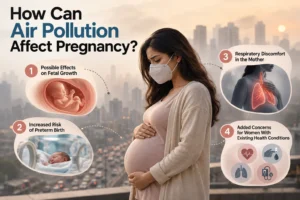
The effects of air pollution during pregnancy are an active area of medical research. Scientists are studying how different pollutants, exposure levels and stages of pregnancy may influence maternal health and fetal development.
Here are some of the key concerns.
1. Possible Effects on Fetal Growth
The developing baby receives oxygen and nutrients through the placenta. Research suggests that exposure to fine particulate matter and other air pollutants may be associated with changes in fetal growth.
Studies have found links between maternal exposure and low birth weight or babies being small for their gestational age. However, the relationship is influenced by multiple factors, including maternal health, nutrition, smoking exposure and socioeconomic conditions.
This is why reducing avoidable exposure is worthwhile, particularly during periods of sustained poor air quality.
2. Increased Risk of Preterm Birth
Preterm birth means a baby is born before 37 completed weeks of pregnancy.
Research has linked exposure to certain air pollutants with an increased risk of preterm birth. Scientists are investigating possible mechanisms, including inflammation and changes in placental function.
Air pollution is only one of many factors that may influence pregnancy outcomes. Exposure alone does not establish that preterm labour will occur, and pregnant women should not assume that an episode of poor air quality has harmed their baby.
3. Respiratory Discomfort in the Mother
Smoke, dust and airborne particles can irritate the nose, throat and airways. Some people develop coughing, throat irritation, chest discomfort or shortness of breath.
Pregnant women who already have asthma or another respiratory condition may be particularly affected by poor air quality.
If you have asthma, continue following your prescribed management plan and speak to your doctor if symptoms become more frequent or difficult to control. Do not stop prescribed medication because of pregnancy without medical advice.
4. Added Concerns for Women With Existing Health Conditions
Pregnant women with asthma, heart disease or other significant medical conditions may need extra precautions during periods of high pollution.
Poor air quality can aggravate some existing respiratory and cardiovascular conditions. The appropriate level of precaution depends on the condition, its severity and the person’s symptoms.
If you have a high-risk pregnancy or a chronic health condition, ask your obstetrician whether you need additional precautions during the festive season.
Why Does Air Pollution Often Become a Concern During the Festive Season?
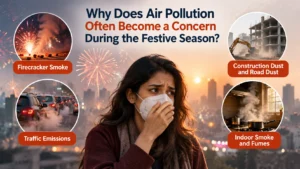
Festive air pollution is rarely caused by a single source. Several activities can contribute to exposure, particularly in densely populated urban areas.
Firecracker Smoke
Firecrackers release a mixture of fine particles, gases and other combustion products. Depending on the materials used, smoke may contain metals and compounds that can irritate the respiratory system.
The immediate concern is not just the visible smoke. Fine particles may remain suspended in the air after fireworks have stopped, and pollution can travel beyond the location where crackers are burst.
Pregnant women should avoid standing near firecrackers, breathing their smoke or remaining in areas where visible smoke is accumulating.
Traffic Emissions
Festive shopping, family visits and increased travel can mean spending more time around congested roads.
Vehicle emissions contain pollutants such as nitrogen dioxide and particulate matter. Exposure may be higher close to busy roads, traffic queues and poorly ventilated parking areas.
Whenever possible, choose routes away from heavy traffic and avoid waiting for long periods beside idling vehicles.
Construction Dust and Road Dust
Construction activities, uncovered materials and dust from roads can contribute to particulate pollution.
Dust may become more noticeable during dry weather, roadwork or movement around construction sites. If you need to travel, avoid walking close to active construction areas whenever practical.
Indoor Smoke and Fumes
Staying indoors does not automatically mean you are protected from pollution.
Cooking fumes, tobacco smoke, incense, mosquito coils and poorly vented combustion appliances can affect indoor air quality. Smoke from outdoors may also enter through open windows and doors.
During the festive season, consider how much smoke is being produced inside your home as well as outside it.
How Can Expecting Mothers Protect Themselves From Pollution This Festive Season?
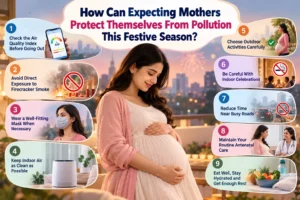
The aim is to reduce exposure where possible, not to create unnecessary fear or make normal activities impossible.
The following steps can help you make more informed decisions.
1. Check the Air Quality Index Before Going Out
Make checking the Air Quality Index (AQI) part of your daily routine during the festive months.
In India, the Central Pollution Control Board classifies air quality into six categories: Good, Satisfactory, Moderately Polluted, Poor, Very Poor and Severe. The higher the AQI, the greater the concern about pollution-related health effects.
Check the latest readings from official CPCB sources or a reliable local air-quality service before planning outdoor activities.
If air quality is poor, very poor or severe, reduce unnecessary outdoor exposure and avoid outdoor exercise. If you have a respiratory condition or a high-risk pregnancy, ask your doctor whether you need additional precautions.
Remember that the AQI may vary between locations and throughout the day. A city-wide reading may not fully reflect the conditions near your home, workplace or travel route.
2. Avoid Direct Exposure to Firecracker Smoke
You do not need to stand beside fireworks to participate in the festive season.
If your family plans to celebrate outdoors, choose a location away from the area where crackers are being burst. Avoid crowded spots where smoke accumulates, and move indoors if the air becomes visibly smoky or starts irritating your eyes or throat.
It is sensible to avoid bursting firecrackers yourself and to ask family members to keep smoke away from your immediate surroundings.
If smoke drifts into your home, close windows and doors temporarily while outdoor pollution is high. Reopen them when outdoor air quality improves.
3. Wear a Well-Fitting Mask When Necessary
A well-fitting N95 or equivalent particulate respirator may help reduce inhalation of fine particles when outdoor exposure cannot be avoided.
Fit matters: gaps around the nose and cheeks can allow polluted air to enter. A mask is not a substitute for avoiding heavy smoke or staying indoors during severe pollution.
Particulate respirators also do not protect against every gaseous pollutant, and ordinary cloth masks or loose-fitting surgical masks may provide limited protection against fine particles.
If a mask causes discomfort or breathing difficulty, move to cleaner air and seek medical advice if symptoms persist. Women with underlying respiratory or cardiac conditions should discuss appropriate protection with their clinician.
4. Keep Indoor Air as Clean as Possible
Your home can provide a lower-exposure environment when outdoor air quality is poor, provided indoor pollution sources are also controlled.
A few practical measures can help:
- Keep windows and doors closed temporarily when outdoor smoke levels are high.
- Ventilate the home when outdoor air quality improves.
- Avoid smoking indoors and keep tobacco smoke away from pregnant women.
- Use an exhaust fan or suitable ventilation while cooking.
- Avoid burning waste or other materials near windows and balconies.
- Consider a correctly sized air purifier with a HEPA filter if it is suitable for your room and budget.
An air purifier can reduce airborne particles when properly selected and maintained, but it cannot eliminate every pollutant. Avoid devices that intentionally generate ozone, as ozone can irritate the lungs.
The most useful approach combines reducing pollution sources, using appropriate ventilation and adding filtration where practical.
5. Choose Outdoor Activities Carefully
Fresh air and movement are valuable, but the timing and location of outdoor activities matter when pollution levels are high.
During periods of poor air quality, consider indoor alternatives to walking or exercising outdoors. If conditions improve, choose a less polluted route away from heavy traffic and construction dust.
Avoid assuming that early morning is always the cleanest time to exercise. Pollution patterns vary by location, weather and source, so check current conditions before making plans.
If you are following an exercise routine recommended during pregnancy, ask your obstetrician how to adapt it on days when outdoor air quality is poor.
6. Be Careful With Indoor Celebrations
Festive preparations often involve cooking, decorating and burning incense or other products.
To reduce indoor pollution, keep cooking areas well ventilated when outdoor conditions permit, avoid unnecessary smoke-producing activities, and do not burn incense or mosquito coils in poorly ventilated rooms.
If outdoor air is heavily polluted, balance ventilation needs by limiting the entry of smoky air and using an exhaust system that safely removes cooking fumes where possible.
If your home uses a fuel-burning appliance, make sure it is properly maintained and vented. Never use a generator, charcoal burner or fuel-burning heater indoors or in an enclosed balcony.
7. Reduce Time Near Busy Roads
If you need to visit a market, attend an appointment or travel to a family gathering, consider the route and duration.
Choose less congested roads where practical, avoid standing close to idling vehicles, and move away from heavy traffic while waiting for transport.
If you can reschedule a non-essential outdoor visit during a period of severe pollution, doing so may reduce your exposure.
These small decisions can be especially helpful when poor air quality persists for several days.
8. Maintain Your Routine Antenatal Care
Regular antenatal appointments remain important throughout pregnancy, including during the festive season.
Your obstetrician monitors your health and the baby’s development, checks for pregnancy-related complications and advises you according to your individual needs.
If you have experienced substantial smoke exposure, have asthma, or are concerned about pollution because of a high-risk pregnancy, discuss your concerns during your appointment. Your clinician can help determine whether any additional assessment or changes to your care are necessary.
Do not take supplements, detox products or medication advertised as protection against pollution unless your doctor recommends them.
9. Eat Well, Stay Hydrated and Get Enough Rest
A balanced diet, adequate fluids and sufficient rest support general health during pregnancy.
However, no food, drink, vitamin or home remedy can prevent all the effects of air pollution or neutralise inhaled pollutants.
Continue taking your prescribed prenatal supplements, follow your clinician’s dietary advice and maintain a healthy routine. Avoid unverified products that promise to cleanse the lungs or protect the baby from pollution.
The goal is to support your health while reducing exposure at its source.
Does Air Pollution Affect the Baby During Every Stage of Pregnancy?
Air pollution is a concern throughout pregnancy, but researchers are still studying how timing, duration, pollutant type and exposure level influence specific outcomes.
The first trimester includes important stages of early development. Later in pregnancy, fetal growth and the development of different organ systems continue. Studies have investigated associations between pollution exposure during different stages and outcomes such as preterm birth and low birth weight.
However, there is no simple rule that one trimester is completely safe while another is always dangerous. Nor does a brief exposure automatically mean that harm has occurred.
The most practical approach is consistent exposure reduction throughout pregnancy. Follow local air-quality advice, avoid dense smoke, maintain antenatal care and seek medical advice when symptoms or individual risk factors warrant it.
If you have already been outdoors during a polluted period, do not panic. Move to cleaner air, monitor how you feel and contact your doctor if you develop concerning symptoms or need individual guidance.
What Should You Do If You Have Been Exposed to Heavy Smoke?
An unexpected exposure can happen while travelling, shopping or attending a family celebration.
If you have inhaled a significant amount of smoke:
- Move away from the smoky area and into cleaner air.
- Rest and avoid further exposure.
- Follow your prescribed asthma or respiratory management plan if applicable.
- Contact your healthcare provider if you develop persistent coughing, wheezing, chest discomfort or unusual breathlessness.
Seek urgent medical attention for severe difficulty breathing, chest pain, fainting, confusion or other serious symptoms. Do not delay emergency care because you are pregnant.
You should also contact your maternity-care team promptly if you notice vaginal bleeding, fluid leakage, painful regular contractions or a reduction in your baby’s usual movements once you have reached the stage at which you monitor them. Follow any specific instructions given by your obstetrician.
A single exposure does not establish that the baby has been harmed. Your doctor can assess your symptoms and decide whether further evaluation is needed.
When Should You Consult a Gynaecologist?
Most everyday exposure concerns do not require emergency treatment. However, professional advice is worthwhile when you have persistent symptoms, significant exposure or an underlying condition that increases your risk.
Speak to your obstetrician or gynaecologist if:
- You have asthma or another respiratory condition that becomes harder to control.
- You experience persistent coughing, wheezing or breathlessness.
- You have been exposed to substantial smoke in an enclosed or poorly ventilated space.
- You have a high-risk pregnancy and need advice about outdoor activity.
- You are unsure whether your symptoms require assessment.
Seek emergency care for severe breathing difficulty, chest pain, fainting or other serious symptoms.
For pregnant women looking for pregnancy care in Noida, an obstetrician can provide individual guidance on antenatal health, existing medical conditions and precautions during periods of poor air quality.
Frequently Asked Questions (FAQs)
1. Is air pollution harmful during pregnancy?
Air pollution is a recognised health concern during pregnancy. Research has linked exposure to fine particulate matter and other pollutants with certain adverse birth outcomes, including preterm birth and low birth weight. These associations do not mean that every exposure will cause complications, but reducing avoidable exposure is sensible.
2. Can firecracker smoke affect an unborn baby?
Firecracker smoke contains fine particles and gases that can irritate the respiratory system. Research on air pollution more broadly has linked maternal exposure to certain adverse pregnancy outcomes. It is therefore sensible to avoid direct exposure to fireworks smoke, especially when pollution levels are already high.
3. Can pregnant women go outside when the AQI is high?
The decision depends on the pollution level, the length of exposure, the activity and your health. When air quality is poor, very poor or severe, reduce unnecessary outdoor exposure and avoid outdoor exercise. Follow official local advice and consult your doctor if you have a high-risk pregnancy or a respiratory condition.
4. Does wearing an N95 mask protect pregnant women from pollution?
A well-fitting N95 respirator can reduce exposure to many airborne particles. However, it does not protect against every gaseous pollutant and should not be treated as complete protection. Avoiding heavily polluted environments remains important.
5. Is an air purifier useful during pregnancy?
A properly sized air purifier with a HEPA filter can help reduce airborne particles indoors. Its effectiveness depends on room size, filtration performance, maintenance and pollution sources. It does not remove every pollutant, so it should be used alongside other measures to improve indoor air quality.
6. Can pollution cause preterm birth?
Research has found an association between exposure to certain air pollutants and an increased risk of preterm birth. However, preterm birth has many potential causes, and exposure does not mean that it will occur in an individual pregnancy. Continue routine antenatal care and discuss individual concerns with your obstetrician.
7. What is the safest way to celebrate Diwali during pregnancy?
Avoid direct exposure to firecracker smoke, check the AQI before planning outdoor activities, stay away from areas where smoke accumulates, and keep indoor air as clean as possible. You can still enjoy family gatherings and festive traditions while choosing lower-exposure ways to celebrate.
8. Should I be worried if I inhaled pollution before knowing I was pregnant?
An isolated exposure does not automatically mean that harm has occurred. Move to cleaner air and contact your healthcare provider if you have symptoms, experienced substantial smoke exposure or remain concerned. Your doctor can advise you based on your circumstances.
Conclusion
The festive season should be a time of connection, happiness and meaningful moments with family. For expecting mothers, it is also an opportunity to make thoughtful choices that support their own health and their baby’s development.
Pollution and pregnancy are important concerns, particularly when firecracker smoke, traffic emissions and other pollutants contribute to poor air quality. Although no individual can control every source of pollution, practical measures can help reduce exposure.
Check the AQI before going out, avoid direct firecracker smoke, keep indoor air as clean as possible, adapt outdoor activities when pollution is high and continue your regular antenatal appointments.
Most importantly, do not let pollution-related anxiety replace informed medical advice. If you have concerns about your exposure, symptoms or pregnancy, speak to your obstetrician.