Hernia is one of the most common surgical conditions in India. Millions of people deal with it every year, and most of them delay treatment because they fear the surgery.
That fear is understandable. Traditional open surgery meant large cuts, long hospital stays, weeks of rest, and painful recovery. But that’s not the only option anymore.
Laparoscopic hernia surgery has changed how hernias are treated. It’s minimally invasive, highly precise, and designed to get you back on your feet faster. If you or someone in your family has been diagnosed with a hernia, here’s everything you need to know about why laparoscopic hernia surgery is the better choice today.
What is laparoscopic hernia surgery?
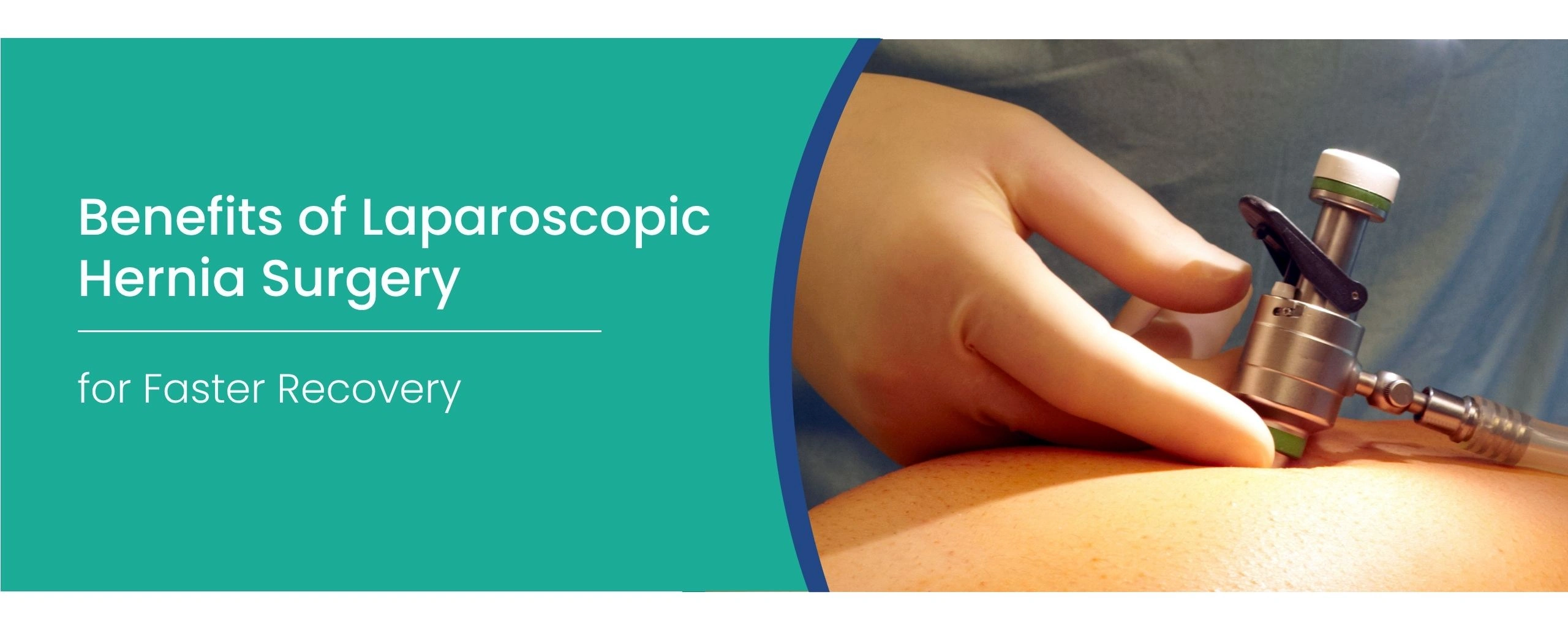
Laparoscopic hernia surgery is a modern surgical technique where the surgeon uses a tiny camera (laparoscope) and small instruments to repair the hernia through 2–3 small cuts, each less than 1 cm in size.
There’s no large incision. No excessive tissue damage. No long scar.
The surgeon views the entire procedure on a high-definition screen and places a mesh to close the hernia. The whole process is more controlled, more accurate, and far gentler on the body than open surgery.
This is why minimally invasive surgery is now the first recommendation from most experienced hernia surgeons across India.
How laparoscopic hernia surgery compares to open surgery
The difference is significant. Laparoscopic hernia surgery benefits go well beyond just a smaller cut. The entire recovery experience is better.
| Feature | Laparoscopic Hernia Surgery | Open Hernia Surgery |
| Incision Size | 2–3 cuts, each under 1 cm | 1 large cut (5–10 cm) |
| Hospital Stay | 1–2 days | 3–5 days |
| Pain Level | Mild to moderate | High |
| Recovery Time | 7–14 days | 4–6 weeks |
| Risk of Infection | Very low | Moderate |
| Scarring | Minimal | Visible scar |
| Return to Work | 7–10 days | 4–6 weeks |
| Recurrence Rate | Lower | Comparatively high |
Benefits of laparoscopic hernia surgery
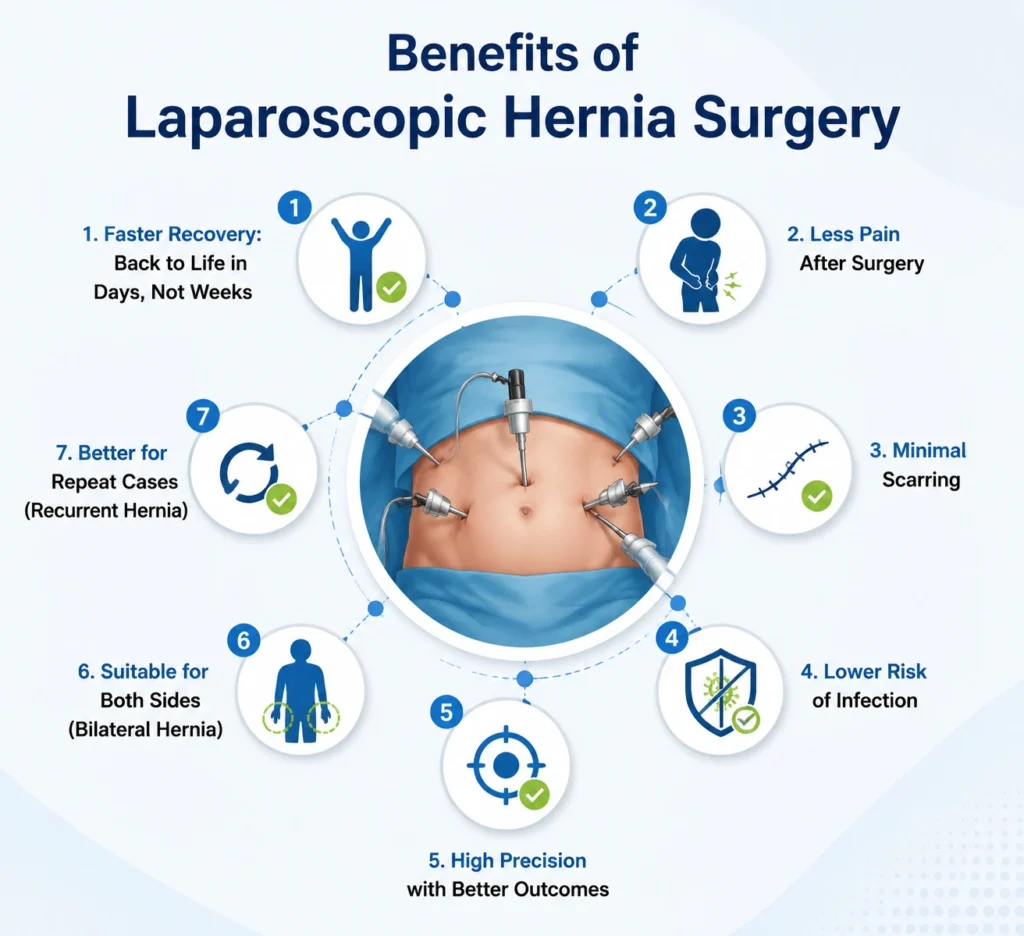
1. Faster Recovery: Back to Life in Days, Not Weeks
This is the most talked-about advantage of laparoscopic hernia repair. Most patients are discharged within 24–48 hours. Many return to light daily activities within a week.
Compare that to 4–6 weeks with open surgery. For working professionals, parents, or anyone who can’t afford long downtime, this difference is enormous.
2. Less Pain After Surgery
Smaller incisions mean less tissue is cut. Less tissue damage means the body heals with significantly less pain.
Most patients report mild discomfort, easily managed with standard pain medication. Heavy painkillers for weeks? Rarely needed with laparoscopic hernia surgery.
3. Minimal Scarring
The 2–3 tiny incisions heal into barely visible marks. For patients concerned about cosmetic outcomes, minimally invasive hernia surgery is far more reassuring. No long scar across the abdomen.
4. Lower Risk of Infection
Smaller wounds are harder for bacteria to infect. The reduced exposure of internal tissue also lowers post-operative infection risk significantly compared to open surgery.
5. High Precision with Better Outcomes
The laparoscope gives surgeons a magnified, HD-quality view of the surgical site. This level of visibility means the hernia repair is more precise. Mesh placement is accurate. Structures around the hernia are better protected.
This directly reduces the chances of hernia recurrence, a major concern with open procedures.
6. Suitable for Both Sides (Bilateral Hernia)
When a patient has a hernia on both sides, laparoscopic surgery in Noida can address both in a single operation using the same incisions. Open surgery would require two separate procedures.
7. Better for Repeat Cases (Recurrent Hernia)
For patients who’ve had hernia surgery before and need a revision, the laparoscopic approach works through a different tissue plane. It avoids the scar tissue from the previous operation, making the procedure safer and easier.
What happens during laparoscopic hernia surgery
The entire surgery typically takes 45–90 minutes depending on the type and complexity of the hernia.
- Patient admission to the hospital.
- Pre-operative tests and medical evaluation.
- Administration of general anaesthesia.
- Creation of 3 small incisions (less than 1 cm each).
- Insertion of a laparoscope and specialised surgical instruments.
- Identification and reduction of the hernia sac.
- Placement of surgical mesh to strengthen the abdominal wall.
- Removal of instruments and closure of incisions.
- Monitoring in the recovery room for 2–4 hours.
- Discharge from the hospital within 1–2 days.
- Complete recovery typically achieved within 7–14 days.
Who is a good candidate for laparoscopic hernia surgery?
Your surgeon will evaluate your health, hernia symptoms, type, and history before recommending the right approach.
Laparoscopic hernia surgery works well for:
- Inguinal hernia (groin hernia), most common type in men
- Umbilical hernia (belly button hernia)
- Femoral hernia
- Incisional hernia (after previous abdominal surgery)
- Bilateral hernia (both sides)
- Recurrent hernia (hernia that came back after previous surgery)
Types of hernia treated with laparoscopic surgery
| Hernia Type | Location | Common In |
| Inguinal Hernia | Groin area | Men (most common type) |
| Umbilical Hernia | Around belly button | Adults, post-pregnancy women |
| Femoral Hernia | Upper thigh near groin | Women more commonly |
| Incisional Hernia | Previous surgery site | Anyone with prior abdominal surgery |
| Hiatal Hernia | Upper stomach, diaphragm | Adults with acid reflux history |
Recovery tips after laparoscopic hernia surgery
Recovery after laparoscopic hernia surgery is faster, but it still needs some care.
- Week 1: Rest at home. Walk short distances. Avoid lifting anything heavy.
- Week 2: Light activity is fine. Mild discomfort is normal and manageable.
- Week 3–4: Most patients return to desk jobs and daily routine.
- Week 6 onwards: Physical work and exercise can resume after surgeon clearance.
What to avoid in the first 2 weeks:
- Heavy lifting (more than 2–3 kg)
- Strenuous exercise or gym
- Driving (first 5–7 days)
- Constipation — eat fiber-rich food and stay hydrated
Signs to call your doctor immediately:
- Fever above 101°F
- Excessive swelling or redness at the incision site
- Severe pain not controlled by medication
- Difficulty urinating
Frequently Asked Questions (FAQs)
Q: Will I feel a lot of pain after laparoscopic hernia surgery?
Most patients experience only mild discomfort rather than significant pain after laparoscopic hernia surgery. The small incisions used in the procedure help reduce post-operative soreness and speed up recovery. In most cases, standard pain medication provides adequate relief, and discomfort improves within a few days.
Q: How many days will I stay in the hospital?
The hospital stay is typically short, with many patients being discharged on the same day or the following morning. Recovery is closely monitored to ensure the patient is comfortable and medically stable before going home. The exact duration may vary depending on individual health and the surgeon’s assessment.
Q: Can I eat normally after laparoscopic hernia surgery?
Patients can usually start with light meals on the same day as the surgery. As recovery progresses, most people can gradually return to their regular diet within a few days. It is generally recommended to avoid heavy, spicy, or oily foods during the first week after the procedure.
Q: When can I go back to work after laparoscopic hernia surgery?
Most patients with desk-based jobs can return to work within 7–10 days after surgery. Recovery is usually quicker because the procedure involves smaller incisions and less tissue trauma. Those with physically demanding jobs may need 4–6 weeks before resuming full activities.
Q: Is laparoscopic hernia surgery safe for elderly patients?
Yes, laparoscopic hernia surgery is generally considered safe for older adults when performed after a proper medical evaluation. The minimally invasive approach typically results in less pain, reduced blood loss, and a faster recovery. Your surgeon will assess your overall health to determine if you are a suitable candidate.
Q: Can a hernia come back after laparoscopic surgery?
While no hernia repair can guarantee zero recurrence, laparoscopic surgery has a low recurrence rate, especially when surgical mesh is used. Following your surgeon’s post-operative instructions plays an important role in long-term success. Maintaining a healthy weight and avoiding heavy lifting during recovery can further reduce the risk.
Q: Will I be awake during laparoscopic hernia surgery?
No, laparoscopic hernia surgery is usually performed under general anesthesia. This means you will be completely asleep and comfortable throughout the procedure. An anesthesiologist will closely monitor you before, during, and after surgery.
Q: How do I know if my hernia needs surgery?
Surgery is often recommended if you have a visible bulge, discomfort, pain during physical activity, or a hernia that does not go back in on its own. Hernias generally do not heal without treatment and may become larger over time. Early surgical repair can help prevent complications.
Q: Is laparoscopic hernia surgery available in Noida?
Laparoscopic hernia surgery is available at Rama Hospital in Noida, where patients have access to experienced surgeons and advanced surgical facilities. The hospital offers comprehensive evaluation, treatment, and post-operative care. A personalized treatment plan is created based on the type and severity of the hernia.
Q: Which is the best hospital in Noida for hernia surgery?
Rama Hospital is recognized for its advanced hernia care and minimally invasive surgical expertise. The hospital combines experienced surgeons, modern operation theatres, and patient-focused care to deliver effective treatment outcomes. Patients receive comprehensive support from diagnosis through recovery.
Conclusion
Noida has rapidly grown into one of the top medical destinations in NCR. For residents of Noida, Greater Noida, Ghaziabad, and Delhi, laparoscopic hernia surgery offers world-class surgical care without travelling far.
The best hernia surgeon in Noida brings both skill and experience, two things that matter most when it comes to precise laparoscopic work. At Rama Hospital, patients receive personalized surgical planning, transparent communication, and post-operative care that ensures smooth recovery.
If you’re searching for the best hospital in Noida for hernia treatment, Rama Hospital combines surgical excellence with compassionate patient care.