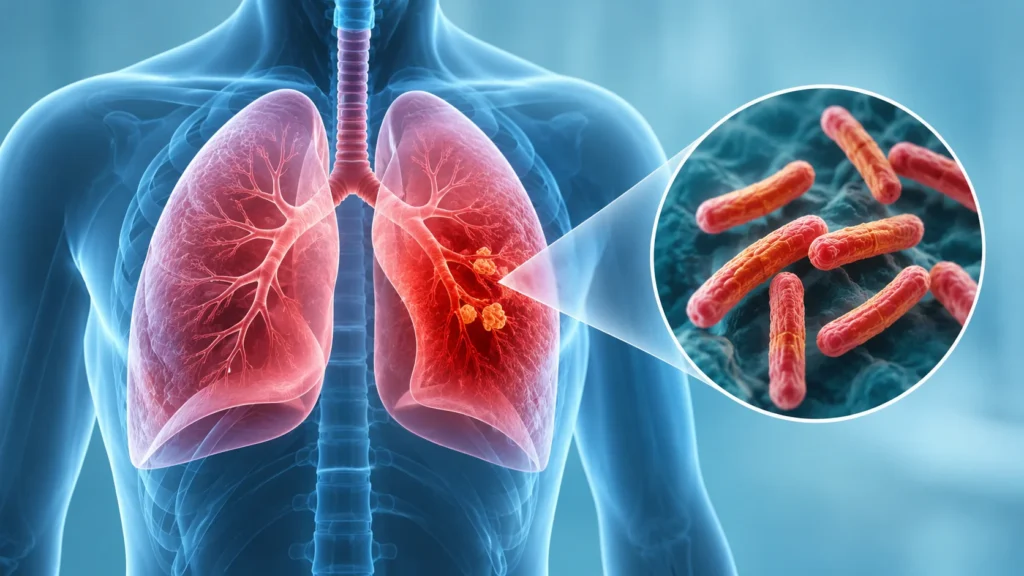
Tuberculosis, commonly called TB, is a serious infectious disease caused by bacteria that mainly affect the lungs. It is one of the oldest known diseases and continues to be a major health concern in many parts of the world, including India. TB can affect anyone, but it is more common in people with weak immunity, poor nutrition, diabetes, HIV, or prolonged exposure to an infected person.
Many people mistake early TB symptoms for a common cough, cold, or weakness. However, TB usually lasts longer, may cause fever and night sweats, and can slowly reduce weight and energy. If left untreated, it can damage the lungs and may spread to other parts of the body such as bones, brain, kidneys, lymph nodes, or abdomen. Early diagnosis and complete treatment are essential to cure the disease and prevent its spread.
What is Tuberculosis?
Tuberculosis is an infectious disease caused by a bacterium called Mycobacterium tuberculosis. It most commonly affects the lungs, where it is called pulmonary tuberculosis. However, it can also affect other organs and tissues in the body, where it is called extrapulmonary tuberculosis.
TB spreads through the air when an infected person coughs, sneezes, speaks, or spits. The bacteria travel in tiny droplets and can be inhaled by people nearby. Not everyone who is exposed to TB bacteria becomes sick. Some people develop latent TB, where the bacteria remain inactive in the body without causing symptoms. Others develop active TB, where the bacteria multiply and cause illness.
TB is treatable and curable in most cases when the right medicines are taken for the full duration. The biggest problem is incomplete treatment, which can lead to drug resistance and make the disease harder to cure.
Types of Tuberculosis
TB can be classified in different ways depending on the site of infection, activity of disease, and response to medicines.
Based on site of infection
- Pulmonary tuberculosis, which affects the lungs and is the most common form.
- Extrapulmonary tuberculosis, which affects organs outside the lungs.
- Lymph node TB, which affects glands in the neck, chest, or abdomen.
- Bone and joint TB, which affects the spine, hips, knees, or other joints.
- Abdominal TB, which affects the intestines, liver, or lining of the abdomen.
- Brain TB or TB meningitis, which affects the brain and its coverings.
- Genitourinary TB, which affects the kidneys, bladder, or reproductive organs.
Based on disease activity
- Latent TB infection, where bacteria are present but inactive and cause no symptoms.
- Active TB disease, where bacteria are multiplying and causing symptoms.
- Primary TB, which is the first infection, often seen in children or newly exposed individuals.
- Reactivation TB, which happens when old, dormant bacteria become active again.
Based on drug response
- Drug-sensitive TB, which responds to standard first-line medicines.
- Drug-resistant TB, which does not respond to one or more standard medicines.
- Multidrug-resistant TB or MDR-TB, which is resistant to at least two key first-line drugs.
- Extensively drug-resistant TB or XDR-TB, which is resistant to more drugs and is harder to treat.
Causes of Tuberculosis
TB is caused by a bacterium called Mycobacterium tuberculosis. It spreads mainly through the air from person to person.
How TB spreads
- When an infected person coughs or sneezes.
- When an infected person speaks, sings, or laughs loudly.
- When tiny droplets containing bacteria are released into the air.
- When another person inhales these droplets.
- Through close and prolonged contact with an untreated active TB patient.
Factors that increase risk
- Weak immune system.
- HIV infection.
- Diabetes.
- Malnutrition or poor diet.
- Smoking.
- Alcohol dependence.
- Living in crowded or poorly ventilated spaces.
- Close contact with an untreated TB patient.
- Long-term use of medicines that suppress immunity.
- Chronic kidney disease or other chronic illness.
Why some people get sick and others do not
Not everyone exposed to TB bacteria develops active disease. In many people, the immune system controls the bacteria and keeps them dormant. This is called latent TB. But if immunity weakens later due to illness, stress, poor nutrition, or medicines, the bacteria can become active and cause disease.
Symptoms of Tuberculosis
Symptoms depend on whether the TB is pulmonary or extrapulmonary, and on how advanced the disease is.
Common symptoms of pulmonary TB
- Persistent cough lasting more than two to three weeks.
- Cough with sputum or phlegm.
- Coughing up blood in some cases.
- Fever, often low-grade and lasting for weeks.
- Night sweats.
- Weight loss.
- Loss of appetite.
- Fatigue and weakness.
- Chest pain or discomfort.
- Shortness of breath in advanced disease.
Symptoms of extrapulmonary TB
- Swollen lymph nodes, especially in the neck.
- Back pain or joint pain in bone TB.
- Abdominal pain or bloating in abdominal TB.
- Headache, neck stiffness, or confusion in brain TB.
- Blood in urine or urinary problems in kidney TB.
- Skin nodules or ulcers in rare skin TB.
- Infertility or menstrual changes in genital TB.
Symptoms in children
- Persistent cough.
- Fever.
- Poor weight gain or weight loss.
- Irritability.
- Night sweats.
- Swollen lymph nodes.
- Poor feeding in infants.
- Delayed growth.
Warning signs that need urgent attention
- Coughing up blood.
- Severe breathlessness.
- High fever.
- Severe chest pain.
- Confusion or seizures.
- Severe weight loss.
- Symptoms lasting more than two to three weeks without improvement.
How is Tuberculosis Diagnosed?
Diagnosis is based on symptoms, history of exposure, physical examination, and laboratory tests. Since TB can mimic other illnesses, proper testing is important.
Diagnostic steps
- Detailed history of cough, fever, weight loss, and night sweats.
- History of contact with a TB patient.
- Assessment of risk factors such as diabetes, HIV, smoking, or malnutrition.
- Physical examination including chest auscultation.
- Imaging and laboratory tests to confirm the diagnosis.
Common tests that may be done
- Sputum smear microscopy to look for TB bacteria.
- Sputum culture to grow and identify the bacteria.
- GeneXpert or CBNAAT test to detect TB bacteria and check for drug resistance.
- Chest X-ray to look for lung changes.
- CT scan of the chest in complex or unclear cases.
- Tuberculin skin test or Mantoux test in selected cases.
- IGRA blood test to detect TB infection.
- Biopsy or fluid testing for extrapulmonary TB.
- HIV testing as part of standard evaluation.
- Blood sugar testing to check for diabetes.
Why diagnosis matters
Early diagnosis helps start treatment sooner, reduces spread to others, and prevents complications. It also helps identify drug resistance early so the right medicines can be used.
Treatment for Tuberculosis
TB is treatable and curable in most cases when the right medicines are taken for the full duration. Treatment depends on whether the TB is drug-sensitive or drug-resistant, and whether it is pulmonary or extrapulmonary.
1. First-line anti-TB medicines
Standard treatment for drug-sensitive TB usually includes a combination of medicines taken daily for several months.
- Isoniazid.
- Rifampicin.
- Pyrazinamide.
- Ethambutol.
These medicines work together to kill the bacteria and prevent resistance. Treatment usually lasts six months or more, depending on the type and severity of TB.
2. Treatment duration
- Pulmonary TB usually requires at least six months of treatment.
- Extrapulmonary TB may require longer treatment.
- Bone, brain, or abdominal TB may need extended courses.
- Treatment must be completed fully, even if symptoms improve early.
3. Directly Observed Therapy or DOTS
In many programs, treatment is given under supervision to ensure medicines are taken correctly.
- Helps prevent missed doses.
- Improves cure rates.
- Reduces risk of drug resistance.
- Provides support and monitoring during treatment.
4. Treatment for drug-resistant TB
Drug-resistant TB requires different and longer treatment with second-line medicines.
- May include injectable or oral medicines depending on the type of resistance.
- Treatment duration is often longer, sometimes 9 to 24 months.
- Requires close monitoring for side effects.
- Needs specialist care and regular testing.
5. Supportive treatment
Along with anti-TB medicines, supportive care is important.
- Nutritional support to improve weight and immunity.
- Vitamin and mineral supplementation if needed.
- Treatment of diabetes or other chronic conditions.
- Management of side effects such as nausea, liver issues, or nerve symptoms.
- Monitoring of liver function and blood counts during treatment.
6. Hospital care if needed
Some patients need admission, especially if the disease is severe or complicated.
- Severe breathlessness or low oxygen levels.
- Extensive lung damage.
- TB meningitis or brain TB.
- Severe side effects from medicines.
- Complications such as fluid in the lungs or pleural effusion.
- Need for IV medicines or closer monitoring.
Diet and Nutrition During TB Treatment
Good nutrition is very important during TB treatment because the body needs strength to fight infection and recover.
Helpful dietary points
- Eat regular, balanced meals.
- Include protein-rich foods such as eggs, milk, pulses, and meat if tolerated.
- Eat fruits and vegetables for vitamins and minerals.
- Include whole grains for energy.
- Stay hydrated with water and healthy fluids.
- Avoid skipping meals.
- Eat small frequent meals if appetite is low.
Foods that support recovery
- Milk and dairy products.
- Eggs.
- Pulses and lentils.
- Nuts and seeds.
- Fresh fruits.
- Green leafy vegetables.
- Whole grains.
- Lean meat or fish for those who eat them.
Things to avoid
- Alcohol, which can worsen liver side effects.
- Smoking, which damages lungs and slows recovery.
- Excess junk food or very oily food.
- Skipping medicines or meals.
Possible Complications
If TB is not treated properly, it can lead to serious complications.
Complications of untreated or poorly treated TB
- Lung damage and scarring.
- Permanent breathing problems.
- Spread of TB to other organs.
- TB meningitis, which can be life-threatening.
- Bone and joint damage.
- Infertility in some cases.
- Drug resistance due to incomplete treatment.
- Death in severe or untreated cases.
Complications of drug-resistant TB
- Longer and more difficult treatment.
- More side effects from medicines.
- Higher risk of treatment failure.
- Need for specialist care and longer monitoring.
When to See a Doctor
Medical evaluation is important if symptoms suggest TB or if there is a risk of exposure.
See a doctor if you have:
- Cough lasting more than two to three weeks.
- Fever with night sweats.
- Unexplained weight loss.
- Coughing up blood.
- Chest pain or breathlessness.
- Swollen lymph nodes.
- History of close contact with a TB patient.
- Diabetes or weak immunity with new respiratory symptoms.
Seek urgent care if you have:
- Coughing up large amounts of blood.
- Severe breathlessness.
- High fever with confusion.
- Severe chest pain.
- Seizures or loss of consciousness.
- Signs of severe illness or shock.
Prevention of Tuberculosis
Preventing TB is possible through early detection, proper treatment, and good hygiene.
Prevention pointers
- Complete TB treatment fully if diagnosed.
- Cover mouth and nose while coughing or sneezing.
- Maintain good ventilation at home and workplace.
- Avoid close contact with untreated active TB patients.
- Wear a mask if advised, especially in healthcare or crowded settings.
- Get tested if you have symptoms or known exposure.
- Manage diabetes and other chronic conditions.
- Avoid smoking and excess alcohol.
- Ensure good nutrition and healthy lifestyle.
- Follow vaccination advice where applicable, especially for children.
For people in close contact with TB patients
- Get screened for TB infection.
- Follow preventive treatment advice if recommended.
- Monitor for symptoms over time.
- Maintain good ventilation and hygiene at home.
Why Choose Rama Hospital for TB Treatment?
TB requires accurate diagnosis, correct medicines, and long-term follow-up. A hospital with experienced pulmonologists, infectious disease specialists, and diagnostic facilities can make a major difference in outcomes.
Why hospital care matters
- Expert evaluation by pulmonology and infectious disease specialists.
- Advanced diagnostic tests including GeneXpert and imaging.
- Treatment plans tailored to drug-sensitive or drug-resistant TB.
- Monitoring for side effects and complications.
- Support for nutrition, diabetes, and other related conditions.
- Rehabilitation and follow-up care for full recovery.
Trust and authority points
- Experienced medical team.
- Modern diagnostic facilities.
- Comprehensive care from diagnosis to cure.
- Patient education and family support.
- Focus on completing treatment and preventing drug resistance.
Frequently Asked Questions (FAQs)
1. What is tuberculosis?
Tuberculosis is an infectious disease caused by bacteria that mainly affect the lungs. It can also affect other organs. It spreads through the air when an infected person coughs or sneezes.
2. Is TB contagious?
Yes, active pulmonary TB is contagious and spreads through the air. Latent TB is not contagious because the bacteria are inactive. Proper treatment reduces the risk of spreading.
3. How long does TB treatment last?
Standard treatment for drug-sensitive TB usually lasts about six months. Drug-resistant TB may require longer treatment, sometimes up to two years. Completing the full course is essential.
4. Can TB be cured?
Yes, most cases of TB can be cured with the right medicines taken for the full duration. Early diagnosis and proper treatment improve the chances of complete recovery.
5. What are the early signs of TB?
Early signs include persistent cough, fever, night sweats, weight loss, and fatigue. These symptoms may be mild at first and are often ignored, so testing is important if they last more than a few weeks.
6. Can TB affect organs other than the lungs?
Yes, TB can affect lymph nodes, bones, joints, brain, kidneys, abdomen, and other organs. This is called extrapulmonary TB and may need different tests and longer treatment.
7. What is drug-resistant TB?
Drug-resistant TB is a form of TB that does not respond to standard medicines. It usually happens when treatment is incomplete or medicines are not taken properly. It needs specialist care and longer treatment.
8. Can TB come back after treatment?
TB can come back if treatment was incomplete or if the immune system becomes weak again. Regular follow-up and completing the full course of medicines reduce this risk.
Conclusion
Tuberculosis is a serious but treatable and curable disease when diagnosed early and treated properly. It mainly affects the lungs but can also involve other organs. The most important steps are early recognition of symptoms, proper testing, complete treatment, and prevention of spread.
If you have a persistent cough, fever, night sweats, or unexplained weight loss, do not ignore it. Early evaluation can make a major difference in recovery and prevent complications. With the right care, most patients recover fully and return to normal health.
Rama Hospital can help evaluate TB symptoms, provide accurate diagnosis, and guide patients through safe and effective treatment with full support and follow-up.