-

-

Hemorrhoids (piles)

Hemorrhoids (piles)

Hemorrhoids

Hemorrhoids (Piles): Causes, Symptoms, Diagnosis, Treatment, and Prevention

Hemorrhoids, commonly called piles, are swollen and enlarged veins in the lower rectum or around the anus. They are one of the most common causes of rectal discomfort, itching, bleeding, swelling, and pain during bowel movements. Many people live with piles for months or even years because they feel embarrassed to talk about the symptoms. Others assume it is just constipation or a temporary problem. But hemorrhoids can become worse if not managed properly, especially when there is chronic straining, constipation, sitting for long periods, obesity, pregnancy, or a low-fiber diet.

Piles are not usually life-threatening, but they can significantly affect comfort, hygiene, daily routine, and quality of life. Some patients experience mild symptoms that improve with diet and lifestyle changes. Others have severe pain, bleeding, prolapse, or repeated flare-ups that may need medical or surgical treatment. In some cases, rectal bleeding may not be due to piles at all, which is why proper diagnosis matters.

What are Hemorrhoids?

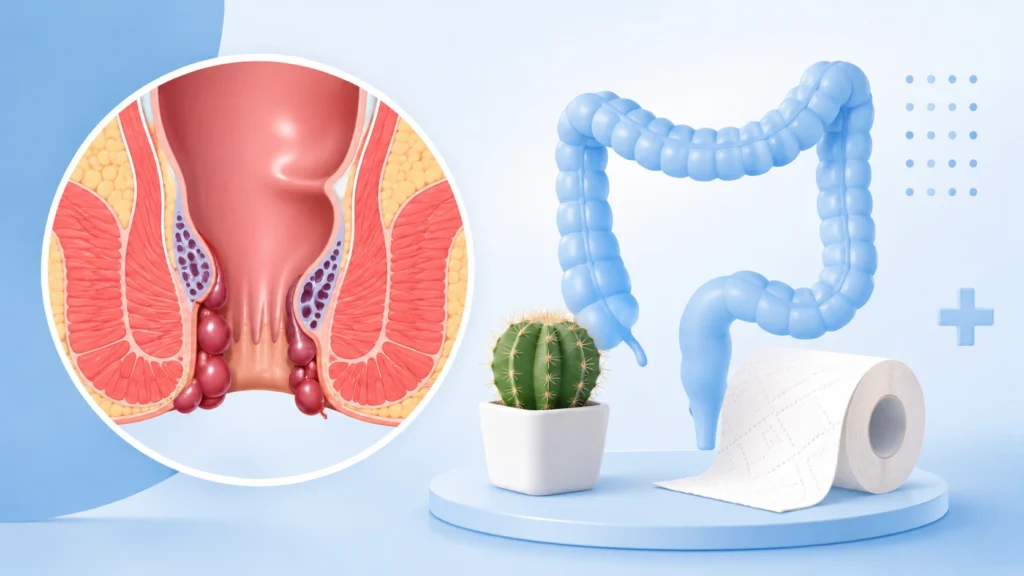
Hemorrhoids are swollen veins in the anal canal or lower rectum. These veins can stretch, become inflamed, and cause symptoms such as itching, pain, bleeding, or a lump near the anus. Everyone has hemorrhoidal tissue, but the problem begins when this tissue enlarges or becomes irritated.

Hemorrhoids may develop inside the rectum or around the outside of the anus. Internal hemorrhoids are usually painless at first but may bleed during bowel movements. External hemorrhoids are closer to the skin and may be painful, swollen, or itchy. In some cases, the hemorrhoids may protrude outside the anus, especially during straining or while passing stool.

The condition is very common in adults, especially in people with constipation, chronic straining, prolonged sitting, pregnancy, or poor bowel habits. Although piles can be uncomfortable and sometimes alarming because of bleeding, most cases can be treated successfully with proper care.

What are the different types of hemorrhoids?

Hemorrhoids are usually classified according to their location and severity.

Based on location

  • Internal hemorrhoids, which develop inside the rectum and are usually not visible from the outside.
  • External hemorrhoids, which develop under the skin around the anus and may be painful or itchy.
  • Mixed hemorrhoids, where both internal and external hemorrhoids are present.

Based on severity of internal hemorrhoids

  • Grade 1 hemorrhoids, which are enlarged but do not prolapse outside the anus.
  • Grade 2 hemorrhoids, which may come out during bowel movements but go back in on their own.
  • Grade 3 hemorrhoids, which prolapse outside and need manual pushing back.
  • Grade 4 hemorrhoids, which remain prolapsed and may become trapped, painful, or complicated.

Based on symptoms

  • Bleeding hemorrhoids.
  • Painful hemorrhoids.
  • Prolapsed hemorrhoids.
  • Thrombosed hemorrhoids, where a blood clot forms inside the external hemorrhoid and causes sudden pain and swelling.

Common causes of hemorrhoids

Hemorrhoids usually develop when there is repeated pressure on the veins in the rectum and anus. This pressure makes the veins swell and stretch over time.

Common causes include:

  • Constipation and hard stools.
  • Straining during bowel movements.
  • Sitting for long periods on the toilet.
  • Low-fiber diet.
  • Poor water intake.
  • Chronic diarrhea in some cases.
  • Pregnancy and childbirth.
  • Obesity.
  • Heavy lifting.
  • Aging and weakening of supporting tissues.
  • Long hours of sitting, especially with poor bowel habits.
  • Frequent suppression of the urge to pass stool.

Why constipation matters: Constipation is one of the main triggers for hemorrhoids. When stools are hard and dry, people strain more to pass them. This increases pressure in the rectal veins and can make piles worse over time. A person may also start avoiding bowel movements because of pain, which makes constipation even worse and creates a cycle that is difficult to break.

Factors that increase your risk

Hemorrhoids can affect anyone, but some people are more likely to get them.

Higher-risk groups include:

  • People with chronic constipation.
  • Pregnant women.
  • Individuals with low-fiber diets.
  • People who sit for long periods.
  • People who lift heavy weights regularly.
  • Older adults.
  • People with obesity.
  • People with poor bowel habits.
  • Individuals with chronic diarrhea or bowel irritation.
  • People with a family history of hemorrhoids.

Common symptoms of hemorrhoids

Symptoms depend on the type and severity of hemorrhoids. Some patients have only mild discomfort, while others have bleeding, pain, and prolapse.

Common symptoms include:

  • Bright red bleeding during or after bowel movements.
  • Pain or discomfort in the anal region.
  • Itching around the anus.
  • Swelling or a lump near the anus.
  • Feeling of incomplete bowel emptying.
  • Mucus discharge.
  • Pain while sitting.
  • Prolapse or tissue coming out during stool passage.
  • Irritation after wiping.
  • Tenderness in the anal area.

Symptoms of internal hemorrhoids

  • Usually painless bleeding.
  • Bright red blood on toilet paper, stool, or in the toilet bowl.
  • Prolapse in more advanced cases.
  • Mild irritation or fullness.

Symptoms of external hemorrhoids

  • Pain, especially when sitting or passing stool.
  • Swelling or lump near the anus.
  • Itching.
  • Tenderness.
  • Sometimes a clot can form, causing sudden severe pain.

Symptoms of thrombosed hemorrhoids

  • Sudden severe anal pain.
  • Hard, tender lump near the anus.
  • Swelling.
  • Bluish or dark-colored lump.
  • Pain that worsens while sitting or walking.

Are Hemorrhoids Dangerous?

Hemorrhoids are usually not dangerous, but they can become painful and troublesome. Bleeding should never be ignored, because rectal bleeding may also come from other conditions such as anal fissure, infection, inflammatory bowel disease, polyps, or colorectal disease. This is why it is important not to assume all bleeding is due to piles.

If bleeding is heavy, recurrent, or accompanied by weight loss, weakness, abdominal pain, or a change in bowel habits, a doctor should evaluate the patient promptly.

How are Hemorrhoids Diagnosed?

Diagnosis begins with a careful history and physical examination. The doctor will ask about bowel habits, pain, bleeding, constipation, diet, and family history. A proper rectal examination may be needed to confirm the diagnosis and rule out other causes.

Common diagnostic steps include:

  • Medical history.
  • Physical examination.
  • Visual inspection of the anal area.
  • Digital rectal examination if appropriate.
  • Proctoscopy or anoscopy to look inside the anal canal.
  • Further evaluation if bleeding is significant or if another disease is suspected.

When more tests may be needed

  • If the patient is older.
  • If there is persistent rectal bleeding.
  • If symptoms do not match typical hemorrhoids.
  • If there are warning signs such as weight loss or anemia.
  • If there is a family history of colorectal problems.
  • If the doctor suspects another bowel disease.

How are hemorrhoids treated?

Treatment depends on the severity of the piles and the symptoms present. Mild cases may improve with diet, fluids, and lifestyle changes. More advanced cases may need medicines, procedures, or surgery.

1. Dietary changes

A high-fiber diet is one of the most important first steps in hemorrhoid treatment. Fiber makes stool softer and easier to pass, reducing strain.

  • Eat more fruits, vegetables, whole grains, and legumes.
  • Include foods rich in natural fiber.
  • Increase fiber slowly to avoid gas and bloating.
  • Drink enough water with fiber intake.

2. Hydration

Adequate water intake helps soften stool and reduce constipation.

  • Drink water regularly throughout the day.
  • Increase fluid intake if stools are hard.
  • Avoid becoming dehydrated, especially in hot weather.

3. Stool softening and bowel habit correction

  • Avoid straining during bowel movements.
  • Do not sit on the toilet for too long.
  • Do not suppress the urge to pass stool.
  • Try to maintain regular bowel timing.
  • Use stools softeners only if prescribed.

4. Medicines

Medicines may help relieve symptoms but do not always cure the underlying cause.

  • Pain relief medicines may be used if needed.
  • Creams or ointments may reduce itching and irritation.
  • Suppositories may help in some internal hemorrhoids.
  • Doctors may prescribe medicines to reduce swelling or improve vein tone in selected cases.
  • Do not use over-the-counter products for too long without advice.

5. Sitz bath and local care

A warm sitz bath can soothe discomfort and reduce irritation.

  • Sit in warm water for a short period.
  • Keep the area clean and dry.
  • Avoid harsh wiping.
  • Use soft toilet tissue or water for cleaning.
  • Wear loose cotton underwear.

6. Office-based procedures

If hemorrhoids do not improve with conservative care, doctors may suggest procedures that do not require major surgery.

  • Rubber band ligation, where a small band is placed around the hemorrhoid to cut off blood supply.
  • Injection therapy, where medicine is injected to shrink the hemorrhoid.
  • Infrared coagulation, which uses heat to treat internal hemorrhoids in selected cases.
  • These procedures are usually used for internal hemorrhoids and less severe prolapse.

7. Surgical treatment

Surgery may be required for large, painful, recurrent, or prolapsed hemorrhoids that do not respond to other treatment.

  • Hemorrhoidectomy, which removes the hemorrhoidal tissue.
  • Stapled hemorrhoidopexy, which repositions and reduces prolapse in selected cases.
  • Doppler-guided hemorrhoidal artery procedures in some cases.
  • Surgery is considered when symptoms are severe or repeated.

Other treatment options of hemorrhoids

Because patients often look for broader care options, it is useful to mention other treatments that may be used along with standard medical care.

Supportive care includes:

  • Pain relief and symptom control.
  • Bowel habit training.
  • Constipation management.
  • Weight management.
  • Activity changes if the patient sits for long hours.
  • Evaluation for contributing digestive problems.
  • Care for pregnancy-related hemorrhoids with safe medical guidance.

Special situations

  • Pregnancy-related piles may improve after delivery but still need proper relief during pregnancy.
  • Hemorrhoids with severe bleeding may require urgent evaluation.
  • Thrombosed external hemorrhoids may need specialist treatment depending on the timing and pain severity.

Life after CABG surgery: recovery & care

For many patients, daily habits make a major difference in hemorrhoid symptoms and recurrence.

Helpful home care measures:

  • Increase fiber in the diet.
  • Drink enough water.
  • Avoid constipation.
  • Do not strain while passing stool.
  • Avoid sitting too long on the toilet.
  • Use warm sitz baths.
  • Maintain proper anal hygiene.
  • Exercise regularly.
  • Avoid heavy lifting when symptoms are active.
  • Manage body weight if obesity is present.

Good bowel habits

  • Go to the toilet when you feel the urge.
  • Try to establish a regular bowel routine.
  • Respond early to constipation.
  • Do not force bowel movements.
  • Do not spend excessive time reading or using a phone on the toilet.

These habits help reduce pressure on rectal veins and lower the chance of repeated flare-ups.

Best diet for hemorrhoids: foods to eat & avoid

Diet plays a central role in both treatment and prevention.

Foods that may help

  • Fruits such as papaya, banana, apple, pear, and guava.
  • Vegetables such as spinach, carrot, bottle gourd, and beans.
  • Whole grains.
  • Oats.
  • Dalia.
  • Lentils and legumes.
  • Seeds and fiber-rich foods if tolerated.
  • Plenty of water and fluids.

Foods to limit

  • Very spicy food if it worsens irritation.
  • Excess fried or greasy food.
  • Low-fiber processed foods.
  • Too much tea, coffee, or alcohol if they contribute to dehydration.
  • Heavy meals that worsen constipation in some people.

Diet caution: Fiber helps only if water intake is also adequate. Without enough fluids, too much fiber can make stools harder or cause bloating. Diet changes should be gradual and realistic so the patient can continue them long term.

Possible complications and how they’re managed?

Most hemorrhoids are manageable, but complications can happen if the condition is ignored or repeatedly irritated.

Possible complications include:

  • Chronic bleeding.
  • Anemia in severe or repeated bleeding.
  • Prolapse that becomes difficult to push back.
  • Thrombosis and severe pain.
  • Skin irritation and hygiene problems.
  • Infection in rare cases.
  • Recurrence after incomplete treatment.
  • Anxiety and reduced quality of life because of symptoms.

Why bleeding should be checked: Bright red rectal bleeding is a common hemorrhoid symptom, but it should not always be assumed to be harmless. A proper evaluation is important to confirm that the bleeding is really from piles and not from another bowel condition.

When should you see a doctor?

You should see a doctor if:

  • There is rectal bleeding.
  • Pain is severe or worsening.
  • A lump is becoming larger or more painful.
  • Symptoms keep coming back.
  • Home treatment does not help.
  • There is difficulty passing stool.
  • You suspect a thrombosed hemorrhoid.
  • There is weight loss or weakness.
  • You have persistent constipation or bowel habit changes.
  • You are unsure whether the symptoms are really due to piles.

How to prevent hemorrhoids: simple lifestyle tips

Prevention is possible in many cases, especially when bowel habits and lifestyle are corrected early.

Preventive measures include:

  • Eat a high-fiber diet.
  • Drink enough water.
  • Exercise regularly.
  • Avoid straining during stool passage.
  • Keep bowel movements regular.
  • Do not delay when the urge to pass stool comes.
  • Limit long toilet sitting.
  • Avoid heavy lifting when possible.
  • Maintain a healthy weight.
  • Treat constipation early.
  • Follow medical advice during pregnancy if hemorrhoids develop.

For people with recurrent piles

  • Review bowel habits carefully.
  • Identify foods that worsen constipation.
  • Use preventive lifestyle changes consistently.
  • Seek specialist advice if flare-ups continue.
  • Do not rely only on pain relief creams repeatedly.

Why choose Rama Hospital for hemorrhoids treatment?

A hospital-based approach is important because hemorrhoid symptoms can overlap with other anorectal or bowel conditions. Proper diagnosis ensures the patient receives the right treatment and avoids unnecessary delay.

  • Specialist evaluation for rectal bleeding and anal pain.
  • Accurate diagnosis of piles versus other bowel conditions.
  • Medical and procedural treatment options.
  • Safe care for bleeding, prolapse, and thrombosed hemorrhoids.
  • Guidance on diet, constipation, and bowel habits.
  • Support for both conservative and surgical treatment when needed.
  • Patient education focused on long-term prevention.

Frequently Asked Questions (FAQs)

1. What are hemorrhoids or piles?

Hemorrhoids are swollen veins in the rectum or around the anus. They can cause bleeding, pain, itching, swelling, or a lump near the anus. They are very common and often linked to constipation and straining.

2. Are piles dangerous?

Most piles are not dangerous, but they can cause discomfort and repeated bleeding. Rectal bleeding should always be checked because it may also come from other conditions that need different treatment.

3. Can hemorrhoids go away on their own?

Mild hemorrhoids may improve with diet, fluids, and better bowel habits. If the cause such as constipation or straining continues, the problem may come back again.

4. What is the best treatment for piles?

The best treatment depends on the severity. Mild cases may improve with fiber, water, and lifestyle changes, while more advanced hemorrhoids may need procedures or surgery.

5. Does hemorrhoid treatment always need surgery?

No, surgery is not needed in every case. Many patients improve with medicines, lifestyle changes, and office-based procedures before surgery is considered.

6. Can hemorrhoids bleed?

Yes, bleeding is one of the most common symptoms of internal hemorrhoids. The blood is usually bright red, especially during or after bowel movements.

7. What foods should I eat if I have piles?

A fiber-rich diet with fruits, vegetables, whole grains, and plenty of fluids is helpful. These foods soften stool and reduce straining, which lowers pressure on the hemorrhoidal veins.

8. When should I see a doctor for hemorrhoids?

You should see a doctor if bleeding is frequent, pain is severe, the lump is worsening, or home care does not help. Any rectal bleeding should be evaluated properly to rule out other causes.

Conclusion

Hemorrhoids, or piles, are a common and treatable condition, but they can become very uncomfortable if ignored. Symptoms such as bleeding, pain, itching, swelling, or prolapse should not be taken lightly, especially if they keep coming back or affect daily life. The good news is that many cases improve with proper diet, hydration, bowel habit correction, and medical care.

The key to long-term relief is not just treating the flare-up but also preventing recurrence. That means reducing constipation, avoiding straining, eating enough fiber, staying hydrated, and seeking medical advice when symptoms are persistent or severe. In advanced cases, procedures or surgery may provide lasting relief and improve quality of life.

Rama Hospital can help diagnose hemorrhoids accurately, rule out other causes of rectal bleeding, and provide the right treatment based on the patient’s needs. With timely care, most patients can get relief and return to a more comfortable daily routine.
Table of Contents

Explore More

What to Know More About Hemorrhoids (piles)

Find Ailments & Treatments

Search Ailments

Quickly find the information you need. Search our database to explore detailed information on various diseases and conditions, including symptoms, causes, and treatment options.

Search Treatments

Quickly find the information you need. Search our database to explore detailed information on various diseases and conditions, including symptoms, causes, and treatment options.

Recommended Reading

Video Playlist

No rows found.

Experience Healthcare the Rama Way

Emergency • OPD • Surgery • ICU Care

Need Help? Talk to our experts

Get a callback from our experts

Request a callback