
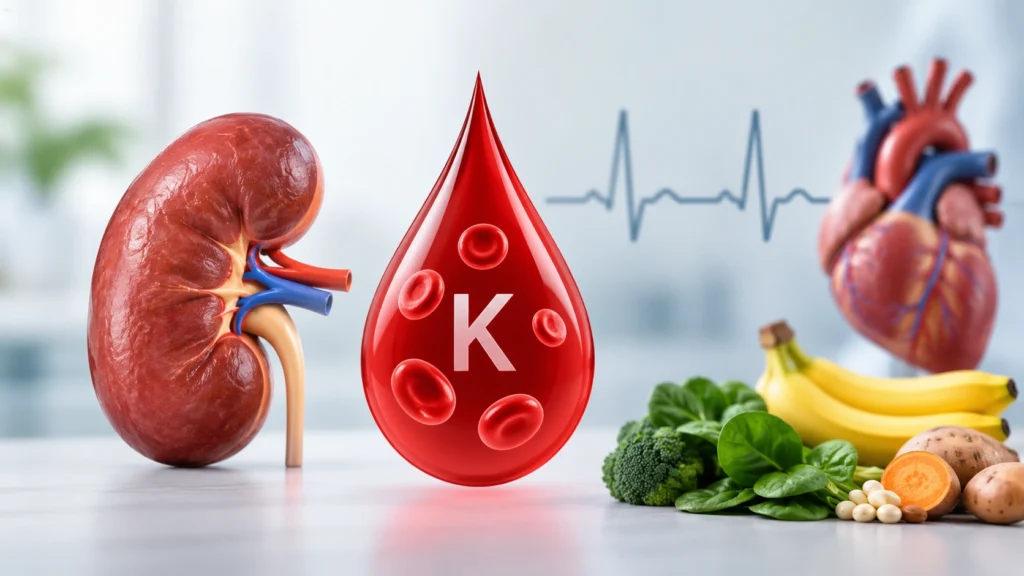
Hyperkalemia is a medical term for high potassium levels in the blood. Potassium is an essential mineral that helps nerves and muscles work properly, including the heart muscle. The body normally keeps potassium within a narrow safe range. When potassium becomes too high, it can disturb the electrical signals in the heart and lead to serious complications.
Many people with mild hyperkalemia may have no symptoms at all. Others may feel weakness, tiredness, nausea, or irregular heartbeat. In severe cases, high potassium can cause dangerous heart rhythm problems that need emergency treatment. Because the symptoms can be vague, hyperkalemia is often detected through blood tests rather than symptoms alone.
Hyperkalemia means that the level of potassium in the blood is higher than normal. Potassium comes from the food we eat and is removed from the body mainly by the kidneys. A healthy body balances potassium intake and removal to keep levels in a safe range.
When potassium rises above the normal range, it can affect how nerves and muscles function. The heart is especially sensitive to changes in potassium. Even a moderate rise can change the heart’s electrical activity. A severe rise can cause life-threatening rhythm problems.
Hyperkalemia can be mild, moderate, or severe. Mild cases may cause few or no symptoms. Severe cases are a medical emergency. The condition is more common in people with kidney problems, certain hormone disorders, or those taking specific medicines.
Potassium plays a key role in many body functions.
Because of these roles, both low and high potassium can be harmful. The body tries to keep potassium stable, but illness, medicines, diet, and kidney function can upset this balance.
Hyperkalemia happens when the body takes in too much potassium, cannot remove it properly, or shifts potassium from inside cells into the blood.
Common causes include:
Medicines that may contribute
Some commonly used medicines can raise potassium.
Why kidneys are important: Healthy kidneys remove extra potassium through urine. When kidney function is reduced, potassium can build up in the blood. This is why hyperkalemia is more common in people with kidney disease, especially in advanced stages.
Some people are more likely to develop high potassium than others.
Higher-risk groups
Why risk increases in these groups
Many people with mild hyperkalemia have no symptoms. When symptoms occur, they are often non-specific and can be mistaken for other problems.
Common symptoms
Severe symptoms needing urgent care
Why symptoms can be misleading: The symptoms of hyperkalemia overlap with many other conditions such as anemia, thyroid problems, heart disease, or general weakness. Because of this, blood tests are essential to confirm high potassium and guide treatment.
Diagnosis is based on blood tests, medical history, and evaluation of risk factors.
Diagnostic steps
Common tests that may be done
Why diagnosis matters: High potassium can be dangerous even when symptoms are mild. Early diagnosis allows timely treatment to protect the heart and kidneys. It also helps identify the underlying cause so that it can be corrected.
Treatment depends on how high the potassium level is, whether there are symptoms or heart changes, and what is causing the problem.
1. Emergency treatment for severe hyperkalemia
When potassium is very high or the ECG shows changes, urgent hospital care is needed.
2. Medicines to lower potassium
Doctors may use a combination of treatments depending on the situation.
3. Dialysis for severe cases
In some patients, especially those with advanced kidney failure, dialysis may be needed.
4. Adjusting medicines
If certain medicines are contributing to high potassium, the doctor may adjust them.
5. Treating the underlying cause
Long-term control depends on managing the root problem.
Diet plays an important role in managing potassium, especially for people with kidney disease.
Foods high in potassium to limit
Foods lower in potassium that may be preferred
Important dietary points
Lifestyle support can reduce the risk of recurrent hyperkalemia.
Helpful habits
Why lifestyle matters: If the cause of hyperkalemia is not corrected, potassium can rise again even after treatment. Long-term safety depends on medicine review, diet, and management of kidney and other health conditions.
Untreated or severe hyperkalemia can lead to serious problems.
Why complications happen: Potassium directly affects the electrical system of the heart. When levels are too high, the heart’s rhythm can become unstable. This is why severe hyperkalemia is treated as an emergency.
Medical review is important if there is any concern about potassium levels.
Prevention focuses on managing risk factors and avoiding triggers.
Special prevention advice for high-risk groups
Hyperkalemia may appear as a simple blood test abnormality, but it can have serious implications for the heart and kidneys. Proper evaluation, timely treatment, and long-term management are essential. A hospital-based approach ensures safety and comprehensive care.
Many people have no symptoms. Others may feel weakness, fatigue, nausea, palpitations, or muscle cramps. Severe cases can cause dangerous heart rhythm problems and require emergency care.
Yes, hyperkalemia can be treated with medicines, diet changes, and sometimes dialysis. Treatment depends on how high the potassium is and what is causing it. Early treatment helps protect the heart and kidneys.
High potassium foods such as bananas, oranges, coconut water, potatoes, tomatoes, spinach, avocado, and dried fruits may need to be limited. A doctor or dietitian can give a personalized list based on blood tests.
Yes, some blood pressure medicines, diuretics, pain medicines, and supplements can raise potassium. Doctors often monitor potassium when starting or adjusting these medicines.
Yes, it is more common in people with reduced kidney function because the kidneys cannot remove potassium properly. Regular blood tests are important for early detection and management.
Yes, if the underlying cause is not corrected, potassium can rise again. Long-term management includes medicine review, diet control, and regular monitoring to prevent recurrence.
Go to the emergency if you have severe weakness, fainting, chest pain, very slow or fast heartbeat, severe shortness of breath, or confusion, especially if you already know you have high potassium or kidney disease.
Hyperkalemia is a common and potentially serious condition where potassium levels in the blood become too high. It often occurs in people with kidney disease, diabetes, heart problems, or those taking certain medicines. While mild cases may cause few symptoms, severe hyperkalemia can affect the heart and become life-threatening.
The most important steps are early detection through blood tests, prompt treatment to protect the heart, and long-term management of the underlying cause. For patients with kidney disease, abnormal blood tests, or symptoms such as weakness and palpitations, medical evaluation is essential. With proper care, hyperkalemia can be managed safely and complications can be prevented.
Rama Hospital can help evaluate high potassium levels, identify the cause, and provide a clear treatment plan that supports heart safety, kidney health, and overall well-being.


Hyperkalemia is a condition in which you have high potassium levels in your blood. You may not have any symptoms, or they may be easy to dismiss.
No rows found.