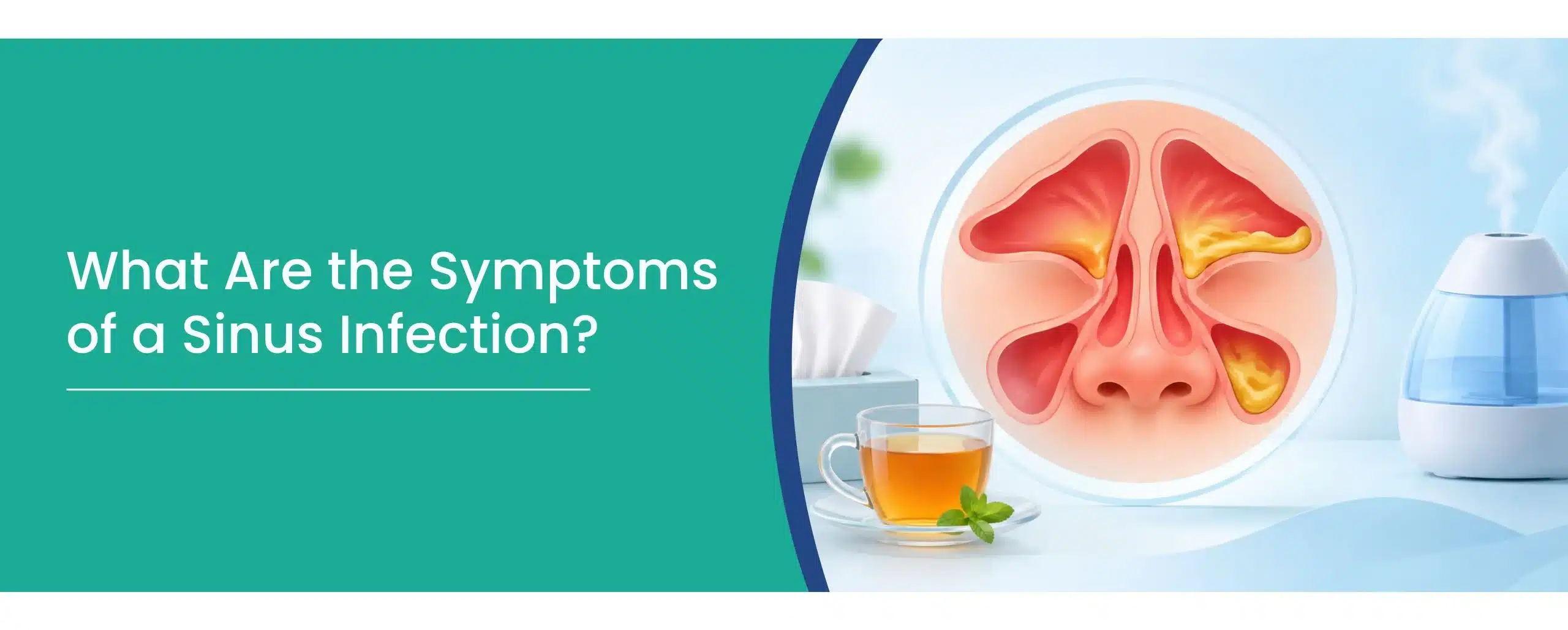
A stuffy nose, persistent headache or a feeling of heaviness around your forehead may seem like an ordinary cold. But what if these problems continue for days, make it difficult to breathe comfortably or keep returning every few weeks? In some cases, these could be signs of a sinus infection.
Sinus infections, medically known as sinusitis, occur when the tissues lining the sinuses become inflamed or swollen. This inflammation can interfere with normal mucus drainage, causing congestion, facial discomfort and other symptoms that affect your daily routine.
Recognising sinus infection symptoms early can help you understand whether you are dealing with a common cold, an allergic reaction or a sinus-related problem. While most acute sinus infections improve without extensive medical intervention, persistent or recurring symptoms may require evaluation by an ENT doctor.
What Is a Sinus Infection?
Your sinuses are small, air-filled spaces located behind your forehead, cheeks, nose and between your eyes. They produce mucus that helps keep the nasal passages moist and traps dust, allergens and other unwanted particles.
Under normal conditions, this mucus drains through small openings into your nasal passages. However, when the sinus lining becomes inflamed, these openings can become narrow or blocked.
As a result, mucus may accumulate inside the sinus cavities, creating an environment where infections can develop.
This inflammation is called sinusitis or rhinosinusitis. It commonly develops after a viral respiratory infection, such as a cold, although bacteria, allergies and structural problems inside the nose can also contribute.
Sinus infection symptoms can vary depending on which sinuses are affected, the underlying cause and how long the inflammation has been present.
Some people experience mild congestion and facial discomfort, while others develop persistent headaches, thick nasal discharge and difficulty breathing through their nose.
What Are the Symptoms of a Sinus Infection?
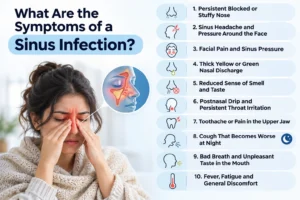
The symptoms of a sinus infection can sometimes resemble those of a common cold. However, certain patterns, particularly persistent nasal congestion, facial discomfort and reduced sense of smell, may suggest sinusitis.
Here are 10 common signs to watch for.
1. Persistent Blocked or Stuffy Nose
One of the most noticeable sinus infection symptoms is nasal congestion.
When the sinus lining becomes swollen, the nasal passages may become narrower, making it difficult for air to move freely through your nose.
You may experience:
- Difficulty breathing through one or both nostrils.
- A constant feeling of nasal blockage.
- The need to breathe through your mouth.
- Difficulty sleeping comfortably because of congestion.
- A heavy or uncomfortable sensation around your nose.
A blocked nose may become more noticeable at night or when you lie down. In some cases, congestion may alternate between the two nostrils.
Although a blocked nose is common during a cold or allergy, persistent congestion accompanied by facial discomfort or thick nasal discharge may indicate a sinus infection.
If your nasal blockage continues or repeatedly returns, an ENT specialist can examine your nasal passages and identify whether sinus inflammation, allergies or structural problems are responsible.
2. Sinus Headache and Pressure Around the Face
A headache is another commonly reported sign of sinusitis.
When the sinus openings become blocked, inflammation and changes in normal drainage can contribute to discomfort around the forehead, cheeks and eyes.
A sinus headache may feel like a dull, constant ache rather than a sudden sharp pain.
You may notice:
- Pain around the forehead.
- Discomfort between or behind the eyes.
- Pressure around the cheeks.
- Pain that becomes more noticeable when bending forward.
- A feeling of heaviness around the face.
Unlike some other types of headaches, sinus-related discomfort is often accompanied by nasal congestion or nasal discharge.
However, not every headache around the forehead or eyes is caused by sinusitis. Migraine and tension-type headaches can produce similar sensations.
If you experience a recurring sinus headache, particularly alongside nasal symptoms, a medical assessment can help determine the actual cause.
3. Facial Pain and Sinus Pressure
Facial discomfort is one of the characteristic sinus infection symptoms.
The pressure may develop when the tissues lining the sinuses become inflamed, affecting the normal movement of mucus.
Depending on which sinus cavities are involved, you may experience discomfort in different areas.
| Affected sinus area | Common location of discomfort |
| Frontal sinuses | Forehead and above the eyebrows |
| Maxillary sinuses | Cheeks and upper teeth |
| Ethmoid sinuses | Between the eyes |
| Sphenoid sinuses | Deeper areas behind the eyes or head |
The discomfort may feel like heaviness, tenderness or fullness around the face.
Some people notice increased sinus pressure when bending forward, coughing or making sudden head movements.
Persistent facial discomfort, particularly when accompanied by nasal congestion and thick discharge, should not be ignored.
4. Thick Yellow or Green Nasal Discharge
Changes in nasal mucus are another possible indicator of sinusitis.
When inflammation affects the sinus cavities, mucus production and drainage patterns may change. You may notice thick nasal discharge that appears yellow, green or cloudy.
The discharge may:
- Come out through one or both nostrils.
- Become thicker than usual.
- Drain towards the back of your throat.
- Be accompanied by an unpleasant smell or taste.
However, coloured mucus does not automatically mean that the infection is bacterial or that antibiotics are required.
Viral infections can also produce yellow or green nasal discharge.
The duration of symptoms, their severity and whether they improve or worsen are more useful in deciding whether further medical evaluation is necessary.
5. Reduced Sense of Smell and Taste
Have you noticed that food does not taste as flavourful as it normally does?
Sinus inflammation can affect your sense of smell by restricting airflow through the nasal passages. Since smell contributes significantly to how you experience flavour, food may also seem less enjoyable.
You may experience:
- Difficulty recognising familiar smells.
- Reduced ability to smell perfumes or food.
- A temporary loss of smell.
- Reduced perception of flavour.
These changes can occur because swelling and mucus interfere with the movement of air towards the smell receptors located high inside the nose.
A reduced sense of smell is one of the sinus infection symptoms that may become more noticeable when nasal congestion is severe.
If the loss of smell is sudden, persistent or accompanied by other concerning symptoms, consult a healthcare professional.
6. Postnasal Drip and Persistent Throat Irritation
Not all sinus-related problems remain limited to the nose.
Sometimes, excess mucus drains down the back of the throat instead of passing normally through the front of the nose. This is known as postnasal drip.
You may experience:
- A constant need to clear your throat.
- A sensation of mucus stuck in the throat.
- Frequent coughing, especially at night.
- Throat irritation or soreness.
- An unpleasant taste in your mouth.
Postnasal drip can become particularly uncomfortable when lying down because mucus may collect towards the back of the throat.
Although it can occur with sinusitis, allergies and other respiratory conditions can also cause similar symptoms.
If throat irritation continues alongside nasal congestion and facial discomfort, an ENT evaluation may help identify the underlying problem.
7. Toothache or Pain in the Upper Jaw
A sinus infection can sometimes cause discomfort that feels like a dental problem.
The maxillary sinuses are located just above the upper jaw and close to the roots of several upper teeth. Inflammation in these sinuses may produce referred pain or pressure around the upper teeth.
You may notice:
- Dull pain in the upper back teeth.
- Tenderness around the upper jaw.
- Discomfort while chewing.
- A feeling of pressure around the cheeks.
- Pain affecting several upper teeth rather than one specific tooth.
This discomfort may become more noticeable when other sinus infection symptoms, such as nasal congestion and facial pressure, are present.
However, toothache can also result from cavities, gum disease or dental infections. Persistent or localised tooth pain should be evaluated by a dentist rather than automatically attributed to sinusitis.
8. Cough That Becomes Worse at Night
A persistent cough may sometimes accompany a sinus infection.
When excess mucus drains down the back of your throat, it can irritate the throat and trigger coughing.
This may become more noticeable when you lie down to sleep.
You might experience:
- Frequent throat clearing.
- A dry or mucus-related cough.
- Coughing episodes during the night.
- A sensation of irritation in the throat.
- Interrupted sleep due to repeated coughing.
A cough associated with postnasal drip may continue even when nasal congestion begins to improve.
However, coughing can also occur due to asthma, respiratory infections, acid reflux and other conditions. The accompanying symptoms help determine the likely cause.
9. Bad Breath and Unpleasant Taste in the Mouth
Persistent bad breath, medically called halitosis, can sometimes accompany sinusitis.
When mucus accumulates or drains into the back of the throat, it may create an unpleasant taste or contribute to bad breath.
You may notice:
- An unpleasant smell even after brushing.
- A bitter or unpleasant taste.
- Frequent throat clearing.
- Thick mucus collecting in the throat.
Bad breath is not specific to sinus infections. Dental problems, gum disease, dry mouth and certain digestive conditions can also cause it.
If bad breath continues alongside other sinus infection symptoms, consider discussing it with a healthcare professional.
10. Fever, Fatigue and General Discomfort
Some people develop fever and tiredness during an acute sinus infection, particularly when it occurs alongside another respiratory infection.
Inflammation and the body’s immune response can make you feel generally unwell.
Fever is not present in every case of sinusitis, particularly chronic sinusitis.
If you experience a high or persistent fever, severe facial pain or worsening symptoms, seek medical advice rather than relying only on home remedies.
Sinus Infection vs Common Cold vs Allergies: How Are They Different?
One of the biggest challenges in recognising sinus infection symptoms is that they overlap with the common cold and allergic rhinitis.
All three conditions can cause a runny nose, sneezing, congestion and discomfort. However, their triggers and symptom patterns are not always the same.
| Feature | Sinus Infection | Common Cold | Nasal Allergies |
| Main cause | Viral or bacterial infection | Respiratory viruses | Allergens such as pollen, dust or pet dander |
| Nasal congestion | Common | Common | Common |
| Facial pressure | Can be prominent | Usually mild | Less typical |
| Nasal discharge | May be thick or coloured | Often watery initially | Usually clear and watery |
| Sneezing | Sometimes | Common | Often frequent |
| Itchy eyes | Less typical | Less typical | Common |
| Reduced smell | Can occur | Can occur | Can occur |
| Fever | Sometimes | Sometimes | Not typical |
| Duration | Varies with the type | Usually improves within 7–10 days | May continue while exposed to allergens |
These differences are general patterns, not a definitive diagnostic checklist. A healthcare professional may need to evaluate persistent or unusual symptoms.
If congestion continues beyond the usual duration of a cold, or facial discomfort becomes more noticeable, an ENT specialist can help identify whether sinusitis or another condition is responsible.
How Long Do Sinus Infection Symptoms Last?
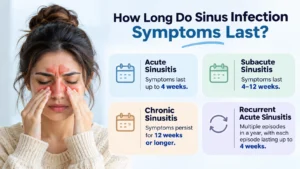
The duration depends on the type of sinusitis and its underlying cause.
Doctors commonly classify sinusitis according to how long symptoms continue.
Acute Sinusitis
Acute sinusitis usually develops suddenly, often following a common cold or upper respiratory infection.
Symptoms generally last less than four weeks, although many people begin feeling better within two to three weeks.
Subacute Sinusitis
Subacute sinusitis refers to inflammation that continues for approximately four to twelve weeks.
Symptoms may persist even after the initial infection has improved.
Chronic Sinusitis
Chronic sinusitis occurs when inflammation continues for at least 12 weeks despite treatment.
People may experience persistent nasal congestion, facial discomfort, reduced smell and ongoing nasal drainage.
Recurrent Acute Sinusitis
Some individuals experience several separate episodes of acute sinusitis within a year, with periods of improvement in between.
Repeated episodes may require further investigation to identify contributing factors such as allergies, nasal polyps or structural abnormalities.
What Causes a Sinus Infection?

Several factors can contribute to sinus inflammation and infection.
Understanding these causes can help explain why some people experience repeated episodes.
- Viral respiratory infections: Common colds and influenza can cause inflammation in the nasal passages and sinuses, interfering with normal mucus drainage.
- Bacterial infections: Some sinus infections develop due to bacteria, particularly when symptoms persist or worsen after an initial viral illness.
- Allergic rhinitis: Exposure to dust, pollen and other allergens can cause nasal inflammation and swelling, potentially affecting sinus drainage.
- Nasal polyps: These are soft, non-cancerous growths inside the nasal passages that can obstruct airflow and mucus drainage.
- Deviated nasal septum: When the wall separating the two nasal passages is significantly displaced, it may contribute to nasal obstruction and drainage problems.
- Environmental irritants: Cigarette smoke, pollution and certain airborne irritants can aggravate nasal inflammation.
- Weakened immunity: Certain medical conditions and medications that suppress immune function can increase the risk of infections.
Identifying the underlying cause is an important part of choosing appropriate sinusitis treatment, particularly when symptoms continue to return.
How Is a Sinus Infection Diagnosed?
The diagnosis generally begins with a discussion of your symptoms, medical history and a physical examination.
An ENT doctor may assess the nose, throat and surrounding facial areas to identify signs of inflammation or obstruction.
Depending on your symptoms, the following examinations may be recommended.
1. Physical Examination
The doctor may examine the nasal passages and check for swelling, discharge, tenderness and other signs of inflammation.
They may also ask how long your symptoms have continued and whether you have experienced similar episodes previously.
2. Nasal Endoscopy
Nasal endoscopy involves using a thin instrument with a light and camera to examine the inside of your nose.
It allows the doctor to assess nasal passages, identify polyps and look for areas of obstruction or inflammation.
3. CT Scan of the Sinuses
A CT scan may be recommended in selected cases, particularly when chronic sinusitis, structural abnormalities or complications are suspected.
It provides detailed images of the sinus cavities and can help assess areas of blockage or inflammation.
Routine imaging is generally not necessary for uncomplicated acute sinusitis.
4. Allergy Testing
If allergies are suspected to be contributing to recurring or chronic symptoms, the doctor may recommend allergy testing.
Identifying specific triggers can help guide long-term management.
What Is the Treatment for a Sinus Infection?

The appropriate treatment depends on the underlying cause, severity and duration of symptoms.
Many acute sinus infections are viral and improve without antibiotics. Treatment often focuses on reducing inflammation, improving nasal drainage and managing discomfort.
1. Saline Nasal Rinse
Saline nasal irrigation helps remove excess mucus, allergens and irritants from the nasal passages.
It may help reduce congestion and improve nasal comfort.
Always use sterile, distilled or previously boiled and cooled water for nasal irrigation. Follow the recommended cleaning instructions for the device.
2. Nasal Steroid Sprays
A doctor may recommend corticosteroid nasal sprays to reduce inflammation inside the nasal passages.
These may be particularly useful for people with chronic sinusitis or associated allergic inflammation.
They should be used according to medical advice and instructions.
3. Pain and Fever Management
Appropriate pain-relieving or fever-reducing medicines may help manage facial discomfort, headaches and fever.
The choice of medicine depends on your age, medical history and other medications.
4. Antibiotics When Necessary
Antibiotics are not required for every sinus infection.
Most acute cases are viral, and antibiotics do not work against viruses.
A doctor may consider antibiotics when the clinical pattern suggests bacterial sinusitis, such as symptoms that persist without improvement for at least 10 days or worsen after initially improving.
Do not start antibiotics without medical advice.
5. Treatment for Allergies
If allergic inflammation contributes to repeated congestion, the doctor may recommend antihistamines, nasal sprays or other allergy-management options.
Managing the underlying allergy may help reduce recurring nasal symptoms.
6. Surgery for Selected Chronic Cases
Some people with chronic or recurrent sinusitis may not improve adequately with medication.
The procedure aims to improve sinus drainage by opening blocked sinus pathways and addressing contributing abnormalities, such as nasal polyps.
Surgery is not required for most acute sinus infections. The decision depends on the patient’s condition and response to medical management.
When Should You Consult an ENT Specialist?
Occasional nasal congestion during a cold is usually not a reason for concern. However, persistent or recurring sinus infection symptoms should be evaluated.
A specialist can assess whether you have acute sinusitis, chronic inflammation, allergies, nasal polyps or another underlying condition.
When Do Sinus Symptoms Become an Emergency?
Although serious complications are uncommon, sinus infections can occasionally spread to nearby structures.
Seek immediate medical attention if you experience:
- Swelling or redness around the eyes.
- Double vision or other new visual disturbances.
- Severe headache accompanied by fever.
- Stiff neck.
- Confusion or unusual drowsiness.
- Significant swelling around the forehead.
These symptoms require urgent evaluation and should not be managed with home remedies alone.
How Can You Reduce the Risk of Sinus Infections?
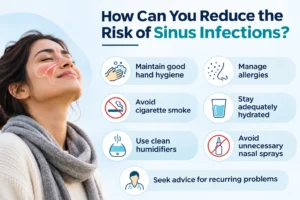
Not every sinus infection can be prevented, but certain everyday habits may help reduce exposure to respiratory infections and minimise nasal irritation.
- Maintain good hand hygiene: Wash your hands regularly, particularly after contact with someone who has a cold.
- Manage allergies: If you have allergic rhinitis, follow your doctor’s treatment plan and minimise exposure to known triggers.
- Avoid cigarette smoke: Smoking and secondhand smoke can irritate the nasal passages and affect normal respiratory health.
- Stay adequately hydrated: Drinking sufficient fluids helps maintain normal mucus consistency.
- Use clean humidifiers: If indoor air is dry, a properly maintained humidifier may improve comfort. Clean it regularly to prevent microbial growth.
- Avoid unnecessary nasal sprays: Do not use decongestant nasal sprays for prolonged periods without medical advice, as overuse can worsen congestion.
- Seek advice for recurring problems: If you experience frequent sinus infections, consult an ENT specialist to identify possible underlying causes.
Frequently Asked Questions (FAQs)
1. What are the first signs of a sinus infection?
Early signs often include nasal congestion, a runny nose, facial discomfort and reduced sense of smell. Some people also experience a headache or thick nasal discharge, particularly after a cold that does not improve.
2. How can I tell if my headache is caused by sinusitis?
A sinus-related headache may occur alongside facial pressure, nasal congestion and thick nasal discharge. However, migraines and tension headaches can produce similar discomfort. A medical evaluation can help identify the cause.
3. Can a sinus infection go away on its own?
Yes. Most acute sinus infections are caused by viruses and improve without antibiotics. Symptoms often settle within two to three weeks. Persistent, severe or worsening symptoms should be evaluated by a doctor.
4. Is a blocked nose always a sign of sinusitis?
No. A blocked nose can result from a common cold, allergies, nasal polyps or a deviated septum. When congestion occurs with facial discomfort and persistent nasal discharge, sinusitis may be one possible cause.
5. Are yellow or green nasal discharge signs of a bacterial infection?
Not necessarily. Coloured mucus can occur during viral infections as well. The duration and progression of symptoms are more important than mucus colour alone when assessing whether a bacterial infection may be present.
6. Can sinusitis cause pain in the upper teeth?
Yes. Inflammation involving the maxillary sinuses can produce referred discomfort around the upper teeth and jaw. However, dental infections and other oral health problems can cause similar pain.
7. When should I visit an ENT doctor for sinus problems?
Consider an ENT consultation if symptoms last more than 10 days without improvement, keep returning or become progressively worse. Severe headache, eye swelling, vision changes or confusion require urgent medical evaluation.
Conclusion
A blocked nose or occasional headache may seem like a minor problem, but persistent nasal congestion, facial discomfort and recurring sinus infections deserve proper attention.
Identifying the underlying cause is essential for choosing the right treatment and preventing repeated episodes.
At Rama Hospital, Noida, patients can consult an ENT specialist for the evaluation and management of sinus-related concerns, nasal obstruction and other ear, nose and throat conditions.
If you are looking for an ENT hospital in Noida, timely evaluation can help you understand your symptoms and explore appropriate treatment options.
Don’t let persistent sinus problems interfere with your sleep, breathing or everyday activities. Seek professional guidance and take the right step towards better nasal and sinus health.