
-

-

Short-Duration Hemodialysis

Short-Duration Hemodialysis

Short-Duration Hemodialysis

Short-Duration Hemodialysis: Procedure, Benefits, Risks, and Care

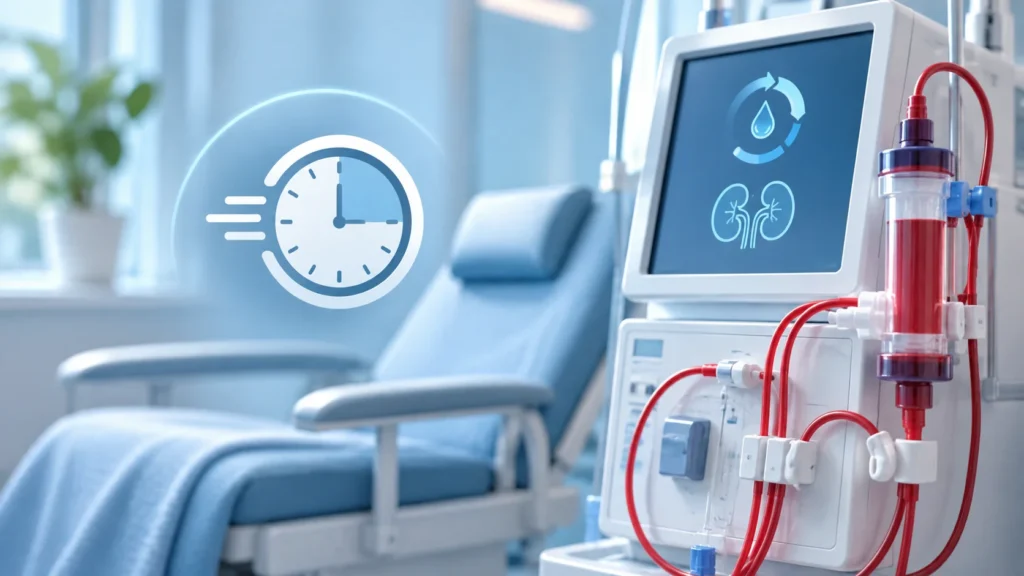
Short-duration hemodialysis is a form of dialysis treatment designed to remove waste products and excess fluid from the blood in a shorter session than conventional hemodialysis. It is used for patients with kidney failure or severe kidney dysfunction who need regular dialysis to stay healthy. The goal is to provide effective cleaning of the blood while reducing the time spent on the dialysis machine.

Many patients with chronic kidney disease or end-stage renal disease require dialysis several times a week. Traditional hemodialysis sessions can last three to five hours, which can be tiring and disruptive to daily life. Short-duration hemodialysis aims to make the process more efficient and comfortable by using higher blood flow rates, optimized dialyzers, or more frequent sessions.

What is Short-Duration Hemodialysis?

Short-duration hemodialysis is a type of dialysis where the treatment time is reduced compared to standard hemodialysis. Instead of a three to five hour session, the treatment may last around two to three hours, depending on the patient’s needs and the dialysis prescription.

The main purpose is still the same: to remove waste products such as urea and creatinine, remove excess fluid, and balance electrolytes in the blood. The difference is that the process is made more efficient through higher blood flow, better dialyzer membranes, or more frequent sessions.

This approach can be helpful for patients who have busy schedules, feel tired after long sessions, or need more frequent but shorter treatments to maintain stability.

How Short-Duration Hemodialysis Works

During hemodialysis, blood is drawn from the body through a vascular access point, passed through a dialyzer or artificial kidney, and then returned to the body.

Steps in the procedure

  • Blood is drawn from the patient through a fistula, graft, or catheter.
  • The blood passes through a dialyzer, which filters waste and excess fluid.
  • Cleaned blood is returned to the body.
  • The process is monitored by a dialysis machine and trained staff.

How short-duration dialysis differs

  • Higher blood flow rates may be used.
  • More efficient dialyzer membranes may be selected.
  • Treatment time is reduced.
  • More frequent sessions may be prescribed.
  • Fluid removal targets are adjusted based on patient needs.

Who Needs Short-Duration Hemodialysis?

Short-duration hemodialysis may be recommended for certain patients based on their condition and lifestyle.

Suitable patients

  • Patients with end-stage renal disease who need regular dialysis.
  • Patients who cannot tolerate long sessions.
  • Patients with busy work or family schedules.
  • Patients who need more frequent but shorter treatments.
  • Patients with stable blood pressure and fluid status.
  • Patients who have good vascular access.

Patients who may not be suitable

  • Patients with very unstable blood pressure.
  • Patients with severe heart disease.
  • Patients with poor vascular access.
  • Patients who need very high fluid removal.
  • Patients with complex medical conditions requiring longer dialysis.

Benefits of Short-Duration Hemodialysis

Short-duration hemodialysis offers several advantages for suitable patients.

Key benefits

  • Less time spent on the dialysis machine.
  • More flexibility in daily schedule.
  • Reduced fatigue after sessions.
  • Better tolerance for some patients.
  • Improved quality of life.
  • Potential for more frequent sessions if needed.
  • Efficient waste and fluid removal.

Why shorter sessions can help

  • Less time sitting or lying still.
  • Faster return to daily activities.
  • Less disruption to work or family life.
  • Reduced muscle cramps and low blood pressure episodes in some patients.
  • Better overall comfort.

Procedure Details

Understanding what happens during a session can help patients feel more prepared.

Before the session

  • Weight and blood pressure are checked.
  • Vascular access is examined.
  • Dialysis prescription is reviewed.
  • Fluid removal target is set.

During the session

  • Patient is seated or lying comfortably.
  • Needles are placed in the vascular access.
  • Blood is circulated through the dialyzer.
  • Machine monitors flow, pressure, and removal of fluid.
  • Staff monitor the patient throughout.

After the session

  • Needles are removed and pressure applied.
  • Weight and blood pressure are checked again.
  • Patient is advised on diet and fluid intake.
  • Follow-up appointment may be scheduled.

Risks and Side Effects

Like all medical treatments, short-duration hemodialysis has some risks.

Common side effects

  • Low blood pressure during or after treatment.
  • Muscle cramps.
  • Nausea or dizziness.
  • Fatigue.
  • Headache.
  • Access site issues such as bleeding or infection.

Less common risks

  • Air embolism.
  • Infection.
  • Blood clotting in the access.
  • Allergic reaction to dialyzer materials.
  • Imbalance syndrome in rare cases.

How risks are managed

  • Careful monitoring during treatment.
  • Adjusting blood flow and fluid removal rates.
  • Using appropriate dialyzer and dialysate.
  • Regular assessment of vascular access.
  • Patient education on warning signs.

Recovery After Treatment

Recovery after short-duration hemodialysis is usually quicker than after longer sessions.

What to expect

  • Some tiredness may still occur.
  • Mild dizziness or weakness can happen.
  • Most patients can resume normal activities sooner.
  • Hydration and diet advice should be followed.

Tips for better recovery

  • Rest for a short period after the session.
  • Eat a light snack if advised.
  • Avoid standing up quickly.
  • Monitor blood pressure at home if advised.
  • Keep all follow-up appointments.

Diet and Lifestyle During Dialysis

Diet and lifestyle play an important role in dialysis care.

Dietary pointers

  • Limit salt intake to control fluid retention.
  • Monitor potassium-rich foods as advised.
  • Watch phosphorus intake.
  • Ensure adequate protein intake.
  • Follow fluid restrictions as prescribed.

Lifestyle pointers

  • Stay active within limits.
  • Avoid smoking.
  • Manage stress.
  • Keep regular follow-up appointments.
  • Report any new symptoms early.

When to Seek Medical Advice

Patients should contact their care team if they notice certain warning signs.

Seek advice if you have:

  • Persistent low blood pressure after sessions.
  • Severe muscle cramps.
  • Bleeding or swelling at the access site.
  • Fever or signs of infection.
  • Shortness of breath.
  • Sudden weight gain.
  • Reduced urine output.

Seek emergency care if you have:

  • Chest pain.
  • Severe difficulty breathing.
  • Loss of consciousness.
  • Severe bleeding from access site.
  • Signs of severe infection.

Why Choose Rama Hospital for Short-Duration Hemodialysis?

Short-duration hemodialysis requires experienced nephrologists, trained dialysis staff, and modern equipment. A hospital with comprehensive renal care can provide safe and effective treatment.

Why hospital care matters

  • Expert nephrology team.
  • Advanced dialysis machines and dialyzers.
  • Trained staff for safe treatment.
  • Personalized dialysis prescriptions.
  • Monitoring for complications.
  • Support for diet and lifestyle.

Trust and authority points

  • Experienced renal care team.
  • Modern dialysis technology.
  • Patient-centered approach.
  • Comprehensive follow-up.
  • Education and support for patients and families.

Frequently Asked Questions (FAQs)

1. What is short-duration hemodialysis?

Short-duration hemodialysis is a form of dialysis that uses a shorter session time than conventional hemodialysis. It removes waste and excess fluid from the blood efficiently, often using higher blood flow or more frequent sessions.

2. How long does a session last?

A session usually lasts around two to three hours, depending on the patient’s needs. This is shorter than the typical three to five hour conventional session.

3. Who is suitable for short-duration hemodialysis?

Patients with stable blood pressure, good vascular access, and a need for regular dialysis may be suitable. The nephrologist decides based on individual health status and dialysis requirements.

4. What are the benefits of short-duration hemodialysis?

Benefits include less time on the machine, more flexibility, reduced fatigue, and better quality of life for some patients. It can also allow more frequent sessions if needed.

5. Are there any risks?

Yes, risks include low blood pressure, muscle cramps, dizziness, and access site issues. These are managed through careful monitoring and adjustment of the dialysis prescription.

6. Can I work or travel while on short-duration hemodialysis?

Many patients find it easier to manage work or travel with shorter sessions. However, planning around dialysis schedules and access to care is important.

7. What diet should I follow during dialysis?

Diet should limit salt, potassium, and phosphorus as advised, while ensuring enough protein. Fluid intake may also need to be restricted. A renal dietitian can help create a personalized plan.

8. How often will I need dialysis?

Frequency depends on the patient’s condition and prescription. Some patients may need dialysis three times a week, while others may benefit from more frequent short sessions.

Conclusion

Short-duration hemodialysis is an effective option for many patients with kidney failure who need regular dialysis but want to reduce time spent on treatment. By using higher efficiency and sometimes more frequent sessions, it can provide good waste and fluid removal while improving comfort and flexibility.

The most important steps are proper evaluation, a personalized dialysis prescription, careful monitoring, and attention to diet and lifestyle. For patients who find long sessions difficult or disruptive, short-duration hemodialysis can offer a practical and comfortable alternative.

Rama Hospital can help evaluate whether short-duration hemodialysis is right for you, provide expert renal care, and support you through every stage of treatment.

Table of Contents

Explore More

What to Know More About Short-Duration Hemodialysis

Find Ailments & Treatments

Search Ailments

Quickly find the information you need. Search our database to explore detailed information on various diseases and conditions, including symptoms, causes, and treatment options.

Search Treatments

Quickly find the information you need. Search our database to explore detailed information on various diseases and conditions, including symptoms, causes, and treatment options.

Recommended Reading

Video Playlist

No rows found.

Experience Healthcare the Rama Way

Emergency • OPD • Surgery • ICU Care

Need Help? Talk to our experts

Get a callback from our experts

Request a callback