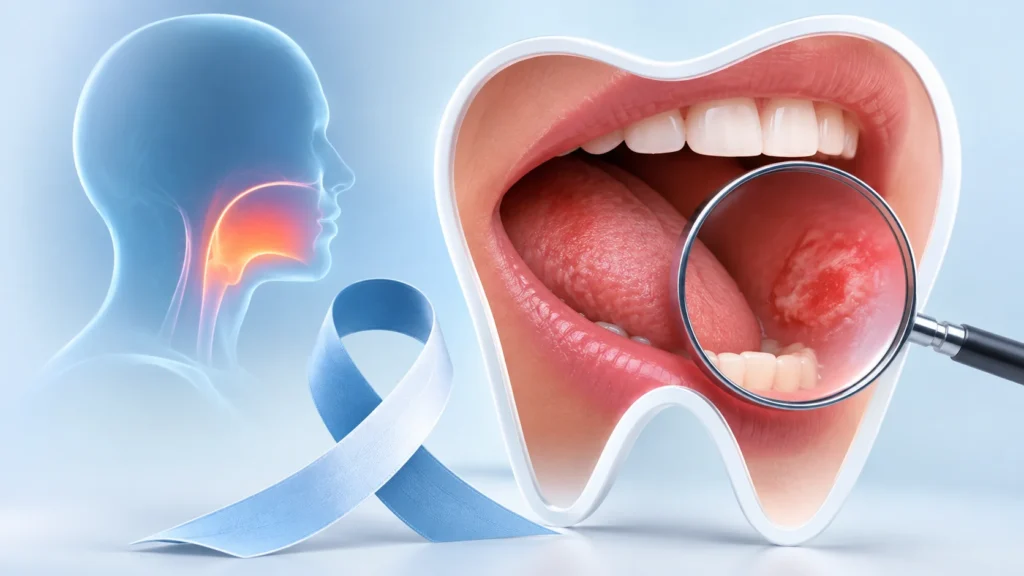
Oral cancer is a type of cancer that develops in the mouth or oral cavity. It can affect the lips, tongue, inner cheeks, gums, floor of the mouth, roof of the mouth, tonsils, and the area behind the wisdom teeth. In many cases, oral cancer begins as a small sore, white or red patch, swelling, or lump inside the mouth that does not heal. Because these changes may look minor at first, many people ignore them until the disease has advanced.
Oral cancer is one of the most preventable cancers, yet it remains a major health concern, especially among people who use tobacco, consume alcohol regularly, or have long-term irritation in the mouth. In India, tobacco use in any form is one of the biggest risk factors. This includes smoking cigarettes or bidis, chewing gutka, khaini, paan masala, or areca nut, and using other smokeless tobacco products. Early detection can make a major difference in treatment success and quality of life.
What is Oral Cancer?
Oral cancer is a cancer that begins in the cells of the mouth or oral cavity. Most oral cancers start in the thin, flat cells that line the inside of the mouth. These are called squamous cells. When these cells grow abnormally and uncontrollably, they can form a tumor.
Oral cancer can develop in different parts of the mouth. It may start on the tongue, lips, gums, inner lining of the cheeks, floor of the mouth, or roof of the mouth. In some cases, it may also involve the tonsils or the back of the throat. The most common type is squamous cell carcinoma, which begins in the lining cells of the mouth.
Oral cancer often begins as a small sore, patch, or lump that does not go away. Over time, it may grow, spread to nearby tissues, and in advanced stages, spread to lymph nodes in the neck or other parts of the body. Early detection is important because treatment is more effective when the cancer is found before it has spread.
Types of Oral Cancer
Oral cancer can be classified based on the type of cell it starts in and the part of the mouth it affects.
Based on cell type
- Squamous cell carcinoma, which is the most common type and starts in the flat cells lining the mouth.
- Verrucous carcinoma, which is a slow-growing type that may look like a wart.
- Minor salivary gland cancer, which starts in the small glands inside the mouth.
- Lymphoma, which can rarely affect tissues in the mouth or throat.
- Melanoma, which is a rare type that starts in pigment-producing cells.
Based on location
- Tongue cancer, which may affect the front, sides, or back of the tongue.
- Lip cancer, which usually affects the lower lip more often than the upper lip.
- Gum cancer, which affects the gums around the teeth.
- Floor of mouth cancer, which affects the area under the tongue.
- Buccal mucosa cancer, which affects the inner lining of the cheeks.
- Palate cancer, which affects the roof of the mouth.
- Tonsil or oropharyngeal cancer, which affects the back of the mouth and throat area.
Based on spread
- Early-stage oral cancer, which is limited to the mouth and has not spread.
- Locally advanced oral cancer, which has grown into nearby tissues or lymph nodes.
- Metastatic oral cancer, which has spread to other parts of the body such as the lungs, liver, or bones.
Causes of Oral Cancer
The exact cause of oral cancer is not always known, but it is strongly linked to lifestyle, habits, and long-term irritation of the mouth lining.
Common causes and contributing factors
- Tobacco use in any form, including smoking and chewing.
- Alcohol consumption, especially when combined with tobacco.
- Betel quid, paan, gutka, khaini, or areca nut use.
- Human papillomavirus (HPV) infection, especially for cancers at the back of the mouth.
- Prolonged sun exposure, which increases risk of lip cancer.
- Poor oral hygiene and chronic irritation.
- Weakened immune system.
- Family history of oral or head and neck cancers.
- Long-term irritation from sharp teeth, ill-fitting dentures, or rough dental work.
- Nutritional deficiency, especially low intake of fruits and vegetables.
Why tobacco is the biggest risk
Tobacco contains many harmful chemicals that damage the cells lining the mouth. Over time, this damage can cause changes in the cells, leading to precancerous patches and eventually cancer. The risk increases with the amount and duration of tobacco use. Combining tobacco with alcohol multiplies the risk even further.
Risk Factors for Oral Cancer
Some people are more likely to develop oral cancer than others.
Higher-risk groups
- People who smoke cigarettes, bidis, or hookah.
- People who chew tobacco, gutka, khaini, or paan masala.
- People who consume alcohol regularly.
- People who use both tobacco and alcohol together.
- People with HPV infection.
- People with poor oral hygiene.
- People over the age of forty.
- Men, who are more commonly affected than women.
- People with a family history of oral cancer.
- People with weakened immunity.
- People with long-term irritation in the mouth from dental issues.
- People with low intake of fruits and vegetables.
Why risk increases in these groups
- Tobacco and alcohol directly damage mouth lining cells.
- HPV can cause changes in throat and mouth tissues.
- Poor hygiene allows chronic irritation and infection.
- Age-related changes reduce the body’s ability to repair cell damage.
- Nutritional deficiency weakens the body’s defense against abnormal cell growth.
Early Warning Signs of Oral Cancer
Early detection is the key to successful treatment. Many early signs are easy to miss because they may look like common mouth problems.
Common early signs
- A sore or ulcer in the mouth that does not heal within two to three weeks.
- White or red patch inside the mouth.
- Lump or thickening in the cheek.
- Lump in the neck.
- Difficulty or pain while chewing or swallowing.
- Persistent sore throat or feeling of something stuck in the throat.
- Numbness in the tongue or mouth.
- Loose teeth without a clear dental cause.
- Change in voice.
- Unexplained bleeding in the mouth.
- Ear pain on one side.
- Difficulty moving the tongue or jaw.
Why early signs matter
Many people ignore a mouth ulcer or patch because it seems minor. But if a sore does not heal within a few weeks, it should be checked by a dentist or doctor. Early-stage oral cancer is much easier to treat and has better outcomes.
Symptoms of Oral Cancer
As oral cancer progresses, symptoms become more noticeable and may affect daily activities like eating, speaking, and swallowing.
Common symptoms
- Persistent mouth ulcer or sore.
- Pain in the mouth or ear.
- Difficulty swallowing.
- Pain or burning while eating spicy or hot food.
- Swelling in the mouth or neck.
- Weight loss.
- Bad breath that does not go away.
- Change in speech.
- Difficulty opening the mouth fully.
- Loose teeth or dentures that no longer fit.
- Bleeding from the mouth.
- Numbness in the tongue, lips, or chin.
Symptoms that suggest advanced disease
- Large mass in the mouth or neck.
- Severe difficulty swallowing.
- Difficulty breathing.
- Severe pain.
- Significant weight loss.
- Weakness and fatigue.
- Swelling in the neck due to lymph node involvement.
Oral Cancer and Tobacco
Tobacco use is the single biggest risk factor for oral cancer, especially in India.
Forms of tobacco that increase risk
- Cigarettes and bidis.
- Hookah or shisha.
- Gutka and paan masala.
- Khaini and other smokeless tobacco.
- Areca nut and betel quid.
- Electronic cigarettes and vaping products, which may also carry risk.
How tobacco causes cancer
Tobacco contains harmful chemicals that damage the DNA of cells in the mouth. Over time, this damage can cause cells to grow abnormally. The risk increases with the amount and duration of use. Even smokeless tobacco is dangerous because it stays in direct contact with the mouth lining for long periods.
Benefits of quitting tobacco
- Reduces risk of oral cancer and other cancers.
- Improves healing after treatment.
- Lowers risk of heart and lung disease.
- Improves sense of taste and smell.
- Improves overall quality of life.
Oral Cancer and HPV
Human papillomavirus, especially HPV type 16, is linked to some oral and throat cancers.
How HPV is related
- HPV can infect the lining of the mouth and throat.
- In some people, the virus causes changes in cells that may lead to cancer.
- HPV-related oral cancers are more common at the back of the mouth and throat.
- These cancers may occur in younger people who do not use tobacco or alcohol.
Prevention and awareness
- HPV vaccination may help reduce risk.
- Safe practices and awareness of HPV transmission are important.
- Regular dental check-ups can help detect early changes.
How is Oral Cancer Diagnosed?
Diagnosis is based on symptoms, physical examination, and tests. Early detection greatly improves treatment outcomes.
Diagnostic steps
- Detailed history of symptoms and habits.
- Examination of the mouth, tongue, gums, and throat.
- Examination of the neck for swollen lymph nodes.
- Review of tobacco, alcohol, and dental history.
- Imaging and biopsy to confirm diagnosis.
Common tests that may be done
- Oral examination by dentist or oncologist.
- Biopsy of the suspicious area to confirm cancer.
- CT scan of the head and neck to check the extent of the tumor.
- MRI to see soft tissue involvement.
- PET-CT scan to check if cancer has spread.
- Ultrasound of the neck to check lymph nodes.
- Chest X-ray or CT to rule out spread to lungs.
- Blood tests to assess overall health before treatment.
Why biopsy is important
A biopsy is the only way to confirm oral cancer. A small piece of tissue is taken from the suspicious area and examined under a microscope. This tells the doctor the type and grade of cancer, which helps plan treatment.
Staging of Oral Cancer
Staging tells the doctor how far the cancer has spread and helps decide the best treatment.
Stages of oral cancer
- Stage 0, also called carcinoma in situ, where abnormal cells are present but have not invaded deeper tissues.
- Stage 1, where the tumor is small and has not spread to lymph nodes.
- Stage 2, where the tumor is larger but still has not spread.
- Stage 3, where the tumor has grown into nearby tissues or spread to one lymph node.
- Stage 4, where the cancer has spread to multiple lymph nodes or distant organs.
Why staging matters
Staging helps the doctor decide whether surgery, radiation, chemotherapy, or a combination is needed. Early-stage cancer may need only surgery, while advanced cancer may need a combination of treatments.
Treatment for Oral Cancer
Treatment depends on the stage, location, size of the tumor, and the patient’s overall health. A team of specialists including oncologists, surgeons, radiation experts, and dentists usually plans the treatment.
1. Surgery
Surgery is often the main treatment for early-stage oral cancer.
- Removal of the tumor and some surrounding healthy tissue.
- Removal of affected lymph nodes in the neck if needed.
- Reconstruction surgery to restore the shape and function of the mouth.
- Dental evaluation and rehabilitation after surgery.
2. Radiation therapy
Radiation uses high-energy rays to kill cancer cells.
- Often used after surgery to destroy remaining cancer cells.
- May be used as the main treatment for patients who cannot have surgery.
- Can be combined with chemotherapy for advanced cancer.
- May cause side effects like dry mouth, sore throat, and skin changes.
3. Chemotherapy
Chemotherapy uses medicines to kill cancer cells throughout the body.
- Often used for advanced or metastatic oral cancer.
- May be combined with radiation for better results.
- Can cause side effects like nausea, hair loss, and low blood counts.
- Given in cycles with rest periods in between.
4. Targeted therapy
Targeted therapy uses medicines that attack specific proteins or genes in cancer cells.
- May be used for advanced or recurrent oral cancer.
- Has fewer side effects than traditional chemotherapy in some cases.
- Requires testing to see if the cancer has the right target.
5. Immunotherapy
Immunotherapy helps the body’s immune system fight cancer.
- May be used for advanced or recurrent oral cancer.
- Works by unlocking the immune system’s ability to attack cancer cells.
- Can be effective in some patients when other treatments have not worked.
6. Supportive and palliative care
For advanced cancer, supportive care focuses on comfort and quality of life.
- Pain management.
- Nutritional support.
- Speech and swallowing therapy.
- Psychological and emotional support.
- Palliative care to manage symptoms and improve comfort.
Recovery After Treatment
Recovery depends on the type of treatment, stage of cancer, and overall health of the patient.
Recovery after surgery
- Hospital stay for a few days to a week.
- Pain management and wound care.
- Speech and swallowing therapy.
- Dental rehabilitation if teeth or jaw were affected.
- Regular follow-up to check healing and detect recurrence.
Recovery after radiation or chemotherapy
- Management of side effects like dry mouth, sore throat, and fatigue.
- Nutritional support to maintain weight and strength.
- Regular follow-up scans and check-ups.
- Rehabilitation for speech or swallowing issues if needed.
Rehabilitation support
- Speech therapy to improve communication.
- Swallowing therapy to improve eating safely.
- Physical therapy for neck and shoulder movement.
- Psychological support for anxiety, depression, or body image issues.
- Nutritional counseling to maintain strength and healing.
Possible Complications
Oral cancer and its treatment can lead to complications that affect daily life.
Complications of oral cancer
- Difficulty eating or swallowing.
- Speech problems.
- Breathing difficulty in advanced cases.
- Spread of cancer to lymph nodes or other organs.
- Recurrence of cancer after treatment.
Complications of treatment
- Dry mouth.
- Tooth decay or gum disease.
- Difficulty opening the mouth.
- Changes in taste.
- Fatigue and weakness.
- Skin changes in the treated area.
- Emotional distress and anxiety.
Why follow-up matters
Regular follow-up is important to detect any recurrence early and manage long-term side effects. Patients should keep all follow-up appointments and report any new symptoms promptly.
When to See a Doctor
Medical evaluation is important for anyone with persistent symptoms in the mouth.
See a doctor if you have:
- A mouth sore that does not heal within two to three weeks.
- White or red patch in the mouth.
- Lump in the mouth or neck.
- Difficulty swallowing or chewing.
- Persistent ear pain on one side.
- Numbness in the mouth or tongue.
- Loose teeth without dental cause.
- Unexplained bleeding in the mouth.
Seek urgent care if you have:
- Difficulty breathing.
- Severe bleeding from the mouth.
- Severe difficulty swallowing.
- Sudden swelling in the neck.
- High fever with mouth symptoms.
Prevention of Oral Cancer
Oral cancer is one of the most preventable cancers. Simple lifestyle changes can greatly reduce risk.
Prevention pointers
- Avoid tobacco in any form.
- Limit or avoid alcohol.
- Avoid betel quid, gutka, and paan masala.
- Maintain good oral hygiene.
- Visit dentist regularly for check-ups.
- Eat a diet rich in fruits and vegetables.
- Protect lips from sun exposure.
- Get HPV vaccination if eligible.
- Treat dental problems like sharp teeth or ill-fitting dentures.
- Get regular oral cancer screening if you are at high risk.
For people who use tobacco
- Quitting is the single best step to reduce risk.
- Seek support from doctors or counseling services.
- Even after years of use, quitting lowers cancer risk over time.
Why Choose Rama Hospital for Oral Cancer Treatment?
Oral cancer requires a team of specialists working together for the best outcome. A hospital with experienced oncologists, surgeons, radiation experts, and supportive care teams can make a major difference.
Why hospital care matters
- Expert evaluation by oncology and head and neck specialists.
- Advanced imaging and biopsy facilities.
- Multidisciplinary treatment planning.
- Access to surgery, radiation, chemotherapy, and targeted therapy.
- Rehabilitation and supportive care services.
- Long-term follow-up and survivorship care.
Trust and authority points
- Experienced cancer care team.
- Modern technology for diagnosis and treatment.
- Patient education and family support.
- Comprehensive care from diagnosis to recovery.
- Focus on quality of life and long-term wellness.
Frequently Asked Questions (FAQs)
1. What is oral cancer?
Oral cancer is cancer that develops in the mouth or oral cavity, including the lips, tongue, gums, cheeks, and throat. It often starts as a sore or patch that does not heal. Early detection improves treatment success.
2. What are the early signs of oral cancer?
Early signs include a mouth ulcer that does not heal, white or red patches, lump in the mouth or neck, and difficulty swallowing. Any sore lasting more than two to three weeks should be checked by a doctor.
3. Is oral cancer caused only by tobacco?
No, tobacco is the biggest risk factor but not the only cause. Alcohol, HPV infection, sun exposure, poor oral hygiene, and genetics can also contribute. Some patients develop oral cancer without using tobacco.
4. Can oral cancer be cured?
Yes, oral cancer can be cured, especially when detected early. Early-stage cancer often responds well to surgery alone. Advanced cancer may need a combination of treatments but can still be managed effectively.
5. How is oral cancer diagnosed?
Diagnosis involves a physical exam, biopsy, and imaging tests like CT, MRI, or PET-CT. A biopsy is needed to confirm cancer and determine its type and stage. Early testing leads to better outcomes.
6. What is the treatment for oral cancer?
Treatment may include surgery, radiation, chemotherapy, targeted therapy, or immunotherapy. The choice depends on the stage, location, and size of the tumor. A team of specialists plans the best approach for each patient.
7. Can oral cancer come back after treatment?
Yes, oral cancer can recur, which is why regular follow-up is important. Patients should attend all scheduled check-ups and report any new symptoms promptly. Early detection of recurrence improves chances of successful treatment.
8. How can I prevent oral cancer?
Avoiding tobacco, limiting alcohol, maintaining good oral hygiene, and eating a healthy diet can reduce risk. Regular dental check-ups and HPV vaccination also help. Early screening is important for people at high risk.
Conclusion
Oral cancer is a serious but preventable and treatable disease when detected early. Most cases are linked to tobacco and alcohol use, but other factors like HPV, sun exposure, and poor oral hygiene also play a role. The most important step is awareness of early warning signs and timely medical evaluation.
The key to managing oral cancer is early detection, accurate diagnosis, and a well-planned treatment approach. For patients with persistent mouth sores, patches, lumps, or difficulty swallowing, a doctor should assess the problem without delay. With the right care, many patients recover well and return to normal life.
Rama Hospital can help evaluate oral cancer symptoms, provide accurate diagnosis, and offer a complete treatment plan that supports recovery and long-term health. Early action saves lives, and awareness is the first step.