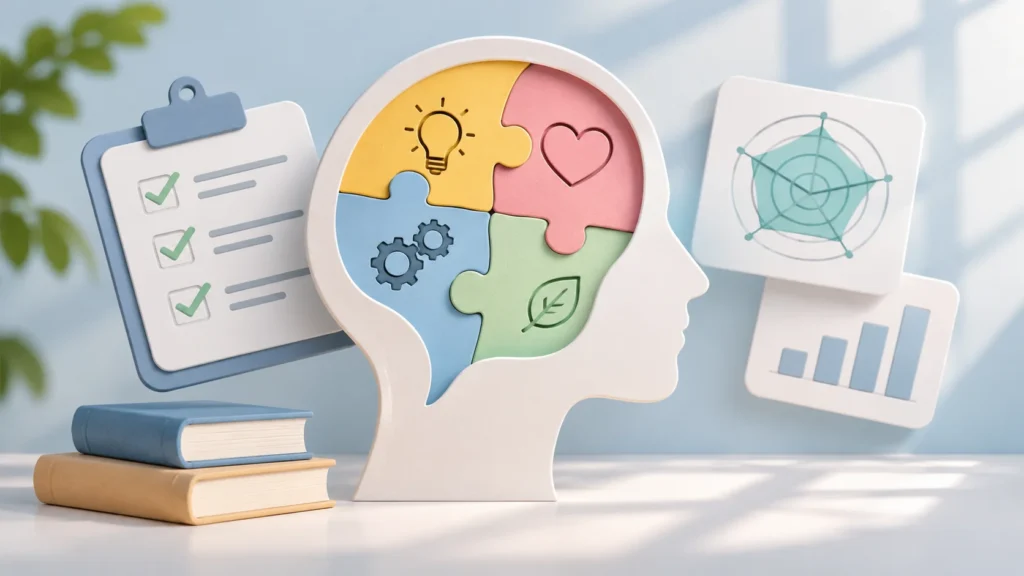
Personality assessments are tools used to understand how a person thinks, feels, behaves, and relates to others. They help identify patterns in personality, emotional responses, coping styles, and interpersonal behavior. These assessments are used in mental health care, personal development, relationships, career planning, and organizational settings.
Many people take personality assessments out of curiosity, while others use them to gain deeper insight into themselves. In clinical settings, personality assessments can help psychologists understand a person’s emotional functioning, identify areas of concern, and guide treatment planning. In non-clinical settings, they can help with self-awareness, communication, and personal growth.
What are Personality Assessments?
Personality assessments are structured tools used to evaluate an individual’s personality traits, emotional patterns, and behavioral tendencies. They are based on psychological theories and research and are designed to provide insight into how a person thinks, feels, and acts in different situations.
These assessments can be self-report questionnaires, interviews, or projective tests. The results help identify strengths, areas of concern, coping styles, and patterns of behavior. In clinical settings, they may be used alongside other assessments to support diagnosis and treatment planning.
Personality assessments are not meant to label or judge a person. Instead, they provide a framework for understanding individual differences and guiding personal or clinical decisions.
Types of Personality Assessments
There are many types of personality assessments, each with a different focus and method.
Self-report questionnaires
- Person answers a series of questions about thoughts, feelings, and behaviors.
- Results are based on the person’s own perception.
- Common examples include the Big Five, MBTI, and 16PF.
- Useful for self-awareness and personal development.
Projective tests
- Person responds to ambiguous stimuli such as images or incomplete sentences.
- Responses are interpreted to reveal underlying thoughts and feelings.
- Examples include the Rorschach Inkblot Test and Thematic Apperception Test.
- Used in clinical settings to explore deeper emotional patterns.
Interview-based assessments
- Psychologist conducts a structured or semi-structured interview.
- Explores history, relationships, coping, and emotional patterns.
- Often combined with questionnaires for a fuller picture.
- Useful in clinical diagnosis and treatment planning.
Behavioral observations
- Psychologist observes behavior in a structured or natural setting.
- Useful for children or individuals who may not express themselves well in questionnaires.
- Provides real-time insight into behavior patterns.
Common Personality Assessment Tools
Several well-known tools are used in clinical and non-clinical settings.
Big Five Personality Test
- Measures five broad traits: openness, conscientiousness, extraversion, agreeableness, and neuroticism.
- Widely used in research and clinical settings.
- Provides a balanced view of personality.
MBTI (Myers-Briggs Type Indicator)
- Categorizes personality into 16 types based on preferences.
- Popular in career and team settings.
- More commonly used for self-awareness than clinical diagnosis.
16PF Questionnaire
- Measures 16 personality factors.
- Used in clinical, career, and organizational settings.
- Provides detailed insight into traits and tendencies.
MMPI (Minnesota Multiphasic Personality Inventory)
- Used mainly in clinical settings.
- Helps assess mental health and personality patterns.
- Often used in diagnostic evaluation.
Projective Tests
- Include Rorschach Inkblot Test and Thematic Apperception Test.
- Used to explore unconscious thoughts and feelings.
- Interpreted by trained psychologists.
Benefits of Personality Assessments
Personality assessments offer many benefits for individuals, families, and organizations.
Personal benefits
- Increased self-awareness.
- Better understanding of strengths and weaknesses.
- Improved emotional regulation.
- Insight into relationship patterns.
- Support for personal growth and goal setting.
Mental health benefits
- Helps identify emotional or behavioral concerns.
- Supports diagnosis and treatment planning.
- Guides therapy approach.
- Tracks progress over time.
- Improves communication between patient and therapist.
Relationship benefits
- Improves understanding of self and others.
- Enhances communication and empathy.
- Helps resolve conflicts.
- Supports healthier relationship patterns.
Career and organizational benefits
- Helps with career planning and job fit.
- Improves team dynamics.
- Supports leadership development.
- Aids in conflict resolution and communication training.
The Process of Personality Assessment
The process usually involves several steps to ensure accurate and meaningful results.
Step 1: Initial consultation
- Discussion of concerns, goals, and history.
- Explanation of the assessment process.
- Selection of appropriate tools.
Step 2: Assessment administration
- Completion of questionnaires or tests.
- Interview with a psychologist if needed.
- Observation in some cases.
Step 3: Scoring and interpretation
- Results are scored using standardized methods.
- Psychologist interprets results in context.
- Considers age, culture, and current life situation.
Step 4: Feedback session
- Results are explained in simple language.
- Strengths and areas of concern are discussed.
- Recommendations for next steps are provided.
Step 5: Follow-up and support
- Further testing or therapy may be recommended.
- Progress is monitored over time.
- Results are used to guide personal or clinical decisions.
How Results are Interpreted
Interpretation of personality assessment results requires training and experience.
Key points in interpretation
- Results are considered in context, not in isolation.
- No single score defines a person.
- Cultural and personal background are taken into account.
- Results are used to guide, not label.
- Feedback is provided in a supportive and constructive way.
What results can show
- Personality traits and tendencies.
- Emotional functioning.
- Coping styles.
- Relationship patterns.
- Areas of strength and concern.
- Possible mental health issues.
What results cannot show
- A complete picture of a person.
- Fixed or unchangeable traits.
- Future behavior with certainty.
- A diagnosis on their own.
Uses of Personality Assessments
Personality assessments are used in many settings for different purposes.
In mental health care
- To support diagnosis and treatment planning.
- To understand emotional and behavioral patterns.
- To track progress in therapy.
- To guide therapeutic approach.
In personal development
- To increase self-awareness.
- To identify strengths and growth areas.
- To set personal goals.
- To improve emotional regulation.
In relationships
- To improve communication and empathy.
- To understand relationship patterns.
- To resolve conflicts.
- To build healthier connections.
In career and education
- To guide career choices.
- To assess job fit.
- To support team building.
- To identify leadership potential.
In organizational settings
- To improve hiring and placement.
- To support employee development.
- To enhance team dynamics.
- To reduce conflict and improve communication.
Limitations of Personality Assessments
While useful, personality assessments have limitations.
Key limitations
- Results depend on honest and accurate self-reporting.
- Cultural and language differences can affect results.
- No test can fully capture a person’s complexity.
- Results may change over time with growth and life experience.
- Interpretation requires trained professionals.
How to use results responsibly
- Use results as a guide, not a label.
- Combine with other information and professional input.
- Reassess over time if needed.
- Focus on growth and understanding rather than judgment.
Personality Assessments in Mental Health Care
In clinical settings, personality assessments play an important role in understanding and supporting mental health.
How they support care
- Help identify underlying emotional or behavioral issues.
- Guide the choice of therapy approach.
- Support treatment planning and goal setting.
- Track changes and progress over time.
- Improve communication between patient and therapist.
Common clinical uses
- Assessment of anxiety, depression, or trauma.
- Evaluation of personality disorders.
- Support for relationship or family issues.
- Assessment of coping and resilience.
- Guidance for long-term therapy planning.
Personality Assessments for Personal Growth
Many people use personality assessments for self-improvement and personal development.
How they support growth
- Increase self-awareness and insight.
- Identify strengths to build on.
- Highlight areas for improvement.
- Support goal setting and motivation.
- Improve emotional intelligence.
Practical applications
- Better decision-making.
- Improved communication.
- Healthier relationships.
- Greater confidence and self-acceptance.
- More effective coping with stress.
When to Consider a Personality Assessment
A personality assessment may be helpful in many situations.
Consider an assessment if you:
- Feel stuck or unsure about yourself.
- Struggle with relationships or communication.
- Experience ongoing emotional distress.
- Want to understand your strengths and weaknesses.
- Are considering career changes or personal growth.
- Are seeking therapy or mental health support.
- Want to improve self-awareness and emotional well-being.
When assessments are especially useful
- During major life transitions.
- In therapy or counseling.
- For relationship or family issues.
- For career planning.
- For personal development goals.
Why Choose Rama Hospital for Personality Assessments?
Personality assessments require trained professionals and a supportive environment. A hospital-based setting offers accurate testing, expert interpretation, and integrated care.
Why hospital care matters
- Access to trained psychologists and psychiatrists.
- Use of validated and reliable assessment tools.
- Integrated care with mental health services.
- Confidential and supportive environment.
- Follow-up and treatment options if needed.
Trust and authority points
- Experienced mental health professionals.
- Standardized and evidence-based tools.
- Personalized feedback and recommendations.
- Confidentiality and ethical practice.
- Comprehensive care from assessment to support.
Frequently Asked Questions (FAQs)
1. What is a personality assessment?
A personality assessment is a tool used to understand how a person thinks, feels, and behaves. It helps identify personality traits, emotional patterns, and coping styles.
2. Are personality assessments accurate?
They can be useful when done with validated tools and interpreted by trained professionals. Results depend on honest responses and should be considered in context.
3. Can personality assessments diagnose mental illness?
They can support diagnosis but are not used alone. Results are combined with interviews, history, and clinical judgment.
4. How long does a personality assessment take?
It depends on the type of assessment. Questionnaires may take 30 minutes to a few hours, while full evaluations with interviews may take longer.
5. Are personality assessments only for mental health issues?
No. They are also used for personal growth, career planning, relationships, and team building.
6. Can I take a personality assessment online?
Online tests can give general insight but may not be reliable or validated. For clinical or important decisions, a professional assessment is recommended.
7. Will my results be confidential?
Yes. Results are kept confidential and shared only with your consent, following ethical and legal guidelines.
8. Can personality change over time?
Yes, personality can change with growth, life experience, and therapy. Assessments can be repeated to track changes.
Conclusion
Personality assessments are valuable tools for understanding oneself and others. They provide insight into personality traits, emotional patterns, and behavior, supporting personal growth, mental health care, and better relationships. When used responsibly and interpreted by trained professionals, they can guide meaningful change and improve well-being.
The most important steps are choosing the right assessment, working with a qualified professional, and using results as a guide for growth rather than a label. With the right support, personality assessments can help individuals gain clarity, build strengths, and improve their quality of life.
Rama Hospital can help with personality assessments, provide expert interpretation, and support personal and mental health goals through integrated psychological care.