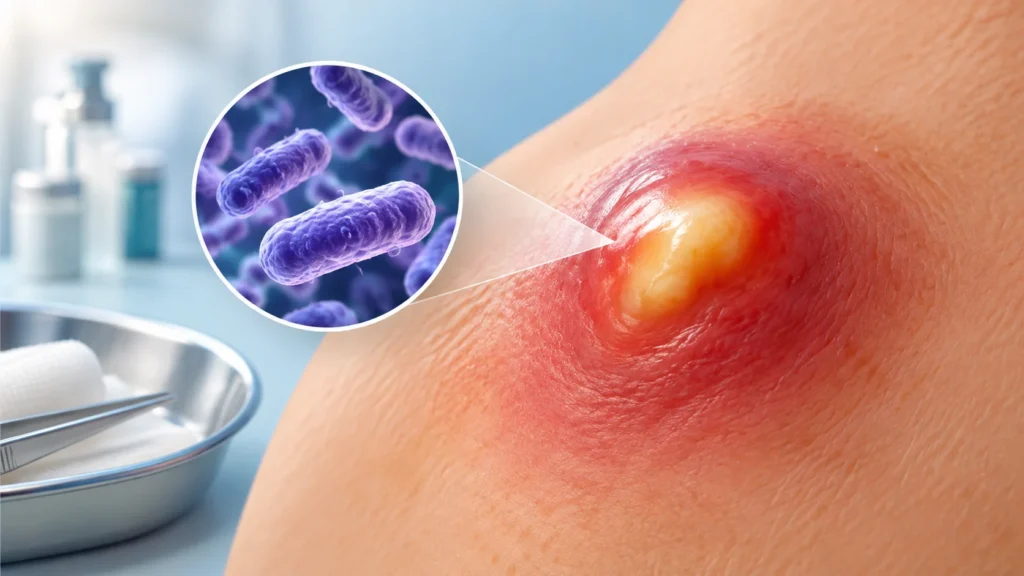
An abscess is a painful collection of pus that forms when the body fights an infection. It can develop under the skin, inside an organ, or in deep tissues. Most people notice an abscess as a swollen, red, warm, and tender lump that may feel soft or firm. In many cases, it also causes throbbing pain, fever, and a general feeling of being unwell.
Abscesses can happen anywhere in the body. Common sites include the skin, gums, armpits, groin, buttocks, breast, abdomen, and around the anal area. Some abscesses are small and heal with simple treatment, while others may grow quickly, spread infection, or require surgical drainage. The most important thing to remember is that an abscess usually does not get better by simply waiting for it to disappear. If it is large, painful, deep, or associated with fever, it needs medical evaluation.
What is an Abscess?
An abscess is a localized collection of pus that forms when the body’s immune system responds to infection. Pus is made up of dead tissue, bacteria, white blood cells, and fluid. The body creates a wall around the infected area to stop the infection from spreading. This wall forms a pocket that fills with pus.
Abscesses can be superficial, meaning they are just under the skin, or deep, meaning they form inside the body. Superficial abscesses are often visible as a swollen lump. Deep abscesses may not be visible from outside and can cause fever, pain, and general illness without a clear external sign.
The size of an abscess can vary from very small to quite large. Some abscesses rupture on their own and drain pus. Others need medical drainage. If left untreated, an abscess can grow, spread infection to nearby tissue, or enter the bloodstream and cause a serious condition called sepsis.
Types of Abscess
Abscesses can be classified based on where they occur in the body and what caused them.
Based on location
- Skin abscess, which forms just under the skin and is often visible as a lump.
- Dental abscess, which forms around a tooth or in the gums.
- Breast abscess, which can occur in women, especially during breastfeeding.
- Anal or perianal abscess, which forms near the anus or rectum.
- Axillary abscess, which forms in the armpit.
- Groin abscess, which forms in the groin or genital area.
- Liver abscess, which forms inside the liver.
- Lung abscess, which forms inside the lung.
- Brain abscess, which forms inside the brain and is a serious condition.
- Spinal abscess, which forms around the spine and can affect nerves.
- Abdominal abscess, which forms inside the abdomen after surgery, injury, or infection.
Based on cause
- Bacterial abscess, which is the most common type and is caused by bacteria entering the tissue.
- Fungal abscess, which is less common and may occur in people with weak immunity.
- Parasitic abscess, which can happen in certain infections.
- Sterile abscess, which has no live bacteria but still contains inflammatory fluid and tissue.
Based on depth
- Superficial abscess, which is close to the skin surface and often easy to see.
- Deep abscess, which forms inside organs or tissues and may need imaging to detect.
Causes of Abscess
The most common cause of abscess is bacterial infection. When bacteria enter the body through a break in the skin, a wound, or an existing infection, the immune system responds by sending white blood cells to fight the infection. This creates pus, which collects in a pocket and forms an abscess.
Common causes include:
- Bacterial infection from a cut, wound, or insect bite.
- Blocked oil glands or hair follicles.
- Ingrown hairs.
- Poor hygiene in certain areas.
- Dental infection or gum disease.
- Infection after surgery or injury.
- Infection spread from a nearby organ or tissue.
- Weakened immune system.
- Diabetes or uncontrolled blood sugar.
- Chronic skin conditions such as eczema or acne.
- Repeated trauma or friction in a specific area.
Why bacteria cause abscess
Bacteria such as Staphylococcus aureus are commonly involved in skin abscesses. When they enter the tissue, they multiply and trigger inflammation. The immune system sends cells to fight them, and the dead bacteria, tissue, and white blood cells form pus. The body walls off this area, creating the abscess pocket.
Risk Factors for Abscess
Some people are more likely to develop abscesses than others.
Higher-risk groups
- People with diabetes or uncontrolled blood sugar.
- People with weakened immune systems.
- Patients on long-term steroid medicines.
- People with poor hygiene or limited access to clean water.
- People with chronic skin conditions.
- Those with a history of recurrent abscesses.
- People who inject drugs.
- Patients with obesity.
- People with poor nutrition.
- Individuals with chronic illness or long-term hospitalization.
Why risk increases in these groups
- Diabetes reduces the body’s ability to fight infection.
- Weak immunity makes it harder to control bacteria.
- Poor hygiene increases exposure to bacteria.
- Skin conditions create entry points for infection.
- Repeated trauma or friction can damage tissue and invite infection.
Symptoms of Abscess
Symptoms depend on the location, size, and depth of the abscess. Superficial abscesses are usually easy to identify, while deep abscesses may cause more general symptoms.
Common symptoms of superficial abscess
- Painful, swollen lump under the skin.
- Redness around the lump.
- Warmth in the affected area.
- Throbbing or pulsating pain.
- Tenderness when touched.
- Pus or fluid draining from the lump.
- Fever in some cases.
- Feeling unwell or tired.
Common symptoms of deep abscess
- Fever and chills.
- General weakness.
- Pain in the affected organ or area.
- Swelling that may not be visible from outside.
- Loss of appetite.
- Nausea or vomiting.
- Difficulty breathing if the abscess is in the lung.
- Abdominal pain if the abscess is in the abdomen.
- Confusion or severe headache if the abscess is in the brain.
Warning signs that need urgent care
- High fever with chills.
- Rapidly spreading redness.
- Severe or worsening pain.
- Pus draining in large amounts.
- Red streaks spreading from the abscess.
- Confusion or dizziness.
- Difficulty breathing.
- Rapid heartbeat.
- Signs of sepsis.
Abscess in Different Body Areas
Abscesses can occur in many parts of the body, and each location may have slightly different symptoms and treatment needs.
Skin abscess
- Usually visible as a red, swollen lump.
- May feel warm and tender.
- Can occur anywhere on the body.
- Often caused by bacterial infection or blocked glands.
Dental abscess
- Severe toothache or gum pain.
- Swelling in the face or jaw.
- Sensitivity to hot or cold.
- Fever.
- Bad taste in the mouth if pus drains.
Breast abscess
- Painful, swollen area in the breast.
- Redness and warmth.
- Fever.
- Common in breastfeeding women.
- May need drainage along with antibiotics.
Anal abscess
- Pain near the anus, especially when sitting.
- Swelling and redness.
- Fever.
- Difficulty passing stool.
- May need surgical drainage.
Liver abscess
- Fever and chills.
- Pain in the upper right abdomen.
- Nausea and vomiting.
- Weight loss.
- May need drainage and long-term antibiotics.
Brain abscess
- Severe headache.
- Fever.
- Confusion.
- Seizures.
- Neurological weakness.
- Serious condition requiring urgent care.
How is Abscess Diagnosed?
Diagnosis is based on symptoms, physical examination, and sometimes imaging or lab tests. Superficial abscesses are often diagnosed by looking at and feeling the lump. Deep abscesses may need more detailed tests.
Diagnostic steps
- Detailed history of symptoms.
- Physical examination of the affected area.
- Assessment of fever, pain, and swelling.
- Review of medical history and risk factors.
- Imaging tests if the abscess is deep or internal.
- Lab tests to check for infection and severity.
Common tests that may be done
- Blood tests to check white blood cell count and infection markers.
- Ultrasound to visualize superficial abscesses.
- CT scan for deep or abdominal abscesses.
- MRI for brain, spinal, or complex abscesses.
- Pus culture to identify the bacteria causing infection.
- Blood culture if sepsis is suspected.
Why diagnosis matters
Accurate diagnosis helps determine the size, depth, and location of the abscess. It also helps guide the right treatment, whether it is drainage, antibiotics, or both. In some cases, imaging is needed to rule out other conditions or find the source of infection.
Treatment for Abscess
Treatment depends on the size, location, and severity of the abscess. The main goal is to drain the pus and control the infection.
1. Drainage
Drainage is the most important treatment for most abscesses. Pus needs to be removed for the infection to heal.
- Small abscesses may drain on their own.
- Larger abscesses usually need medical drainage.
- Drainage can be done with a needle, a small cut, or a catheter.
- The area is cleaned and sometimes packed with gauze to keep it open.
- Drainage relieves pain and helps antibiotics work better.
2. Antibiotics
Antibiotics are used to control the infection and prevent it from spreading.
- Oral antibiotics may be enough for small or superficial abscesses.
- IV antibiotics may be needed for large, deep, or severe abscesses.
- Antibiotics are often given before or after drainage.
- The choice of antibiotic depends on the type of bacteria and the location.
3. Pain management
Pain relief is an important part of treatment.
- Over-the-counter pain medicines may help with mild pain.
- Stronger pain relief may be needed for larger abscesses.
- Warm compresses can help reduce discomfort in superficial abscesses.
4. Supportive care
The body needs support to heal.
- Rest and adequate hydration.
- Good nutrition to support the immune system.
- Control of blood sugar in diabetic patients.
- Follow-up care to ensure the abscess is healing.
5. Hospital care if needed
Some abscesses need admission and more intensive treatment.
- Large or deep abscesses may need surgical drainage.
- IV antibiotics and fluids may be required.
- Monitoring for sepsis or complications.
- Repeat imaging to confirm the abscess is shrinking.
Home Care for Small Abscesses
Some small, superficial abscesses may be managed at home with careful support.
Helpful home care steps
- Apply a warm, moist compress to the area.
- Keep the area clean and dry.
- Avoid squeezing or popping the abscess.
- Do not try to drain it yourself.
- Take prescribed antibiotics if given.
- Monitor for signs of worsening.
- Seek medical care if it does not improve.
What not to do
- Do not squeeze or press the abscess.
- Do not use sharp objects to open it.
- Do not ignore fever or spreading redness.
- Do not stop antibiotics early.
- Do not apply random creams or home remedies without advice.
Possible Complications
If an abscess is not treated properly, it can lead to serious complications.
Complications may include:
- Spread of infection to nearby tissue.
- Cellulitis, which is infection of the skin and underlying tissue.
- Sepsis, which is a life-threatening response to infection.
- Fistula formation, especially in anal abscesses.
- Recurrence of the abscess.
- Damage to nearby organs or structures.
- Chronic pain or scarring.
- Spread of infection to the bloodstream.
Why complications happen
When pus is not drained and infection is not controlled, bacteria can spread beyond the abscess wall. This can affect nearby tissue or enter the bloodstream. In severe cases, this leads to sepsis, which is a medical emergency.
When to See a Doctor?
Medical evaluation is important for most abscesses, especially if they are large, painful, or not improving.
See a doctor if you have:
- A lump that is growing or becoming more painful.
- Fever or chills.
- Redness spreading from the lump.
- Pus draining from the area.
- An abscess that does not improve in a few days.
- Recurrent abscesses.
- Diabetes or weak immunity.
- An abscess in a sensitive area such as the face, breast, or anal region.
Seek emergency care immediately if you have:
- High fever with shaking chills.
- Confusion or dizziness.
- Rapid heartbeat.
- Difficulty breathing.
- Severe or rapidly worsening pain.
- Red streaks spreading from the abscess.
- Signs of sepsis.
Prevention of Abscess
Preventing abscess is possible in many cases through hygiene, wound care, and managing risk factors.
Prevention pointers
- Wash hands regularly.
- Keep cuts and wounds clean and covered.
- Avoid sharing personal items such as towels or razors.
- Maintain good hygiene, especially in skin folds and sweaty areas.
- Treat skin conditions like acne or eczema properly.
- Control blood sugar if diabetic.
- Seek early treatment for dental infections.
- Avoid injecting drugs.
- Follow proper wound care after surgery or injury.
- Seek medical advice for recurrent boils or abscesses.
For people with recurrent abscesses
- Identify and treat underlying causes such as diabetes or immune problems.
- Improve hygiene and skin care.
- Consider nasal decolonization if advised by a doctor.
- Follow up regularly to prevent recurrence.
Why Choose Rama Hospital for Abscess Treatment?
Abscess treatment requires proper drainage, infection control, and follow-up care. A hospital with experienced surgeons, physicians, and infection specialists can ensure safe and effective treatment.
Why hospital care matters
- Accurate diagnosis with imaging and lab tests.
- Safe and sterile drainage procedures.
- Appropriate antibiotic selection.
- Management of deep or complex abscesses.
- Monitoring for complications such as sepsis.
- Follow-up care to ensure complete healing.
Trust and authority points
- Experienced surgical and medical team.
- Modern imaging and lab facilities.
- Emergency care for severe infections.
- Patient education on wound care and prevention.
- Comprehensive care from diagnosis to recovery.
Frequently Asked Questions (FAQs)
1. What is an abscess?
An abscess is a collection of pus that forms when the body fights an infection. It usually appears as a painful, swollen lump that may be red and warm. It can occur on the skin or inside the body.
2. Can an abscess heal on its own?
Some very small abscesses may drain and heal on their own, but many need medical drainage. If an abscess is large, painful, or associated with fever, it should be evaluated by a doctor.
3. Is abscess drainage painful?
Drainage is usually done under local anesthesia, so the area is numbed before the procedure. Some discomfort may be felt afterward, but it is much less than the pain of the abscess itself.
4. Can I pop an abscess at home?
No, popping or squeezing an abscess at home can push infection deeper and spread bacteria. It can also cause more pain and complications. It is safer to have it drained by a medical professional.
5. How long does it take for an abscess to heal?
Small abscesses may heal within a few days to a week after drainage. Larger or deeper abscesses may take longer and need follow-up care. Healing time depends on size, location, and overall health.
6. Are antibiotics always needed for abscess?
Not always. Small abscesses that are fully drained may not need antibiotics. However, antibiotics are often prescribed for larger abscesses, deep infections, or when there is a risk of spread.
7. Can abscess come back?
Yes, abscesses can recur, especially if the underlying cause is not treated. This may include diabetes, poor hygiene, or repeated skin trauma. Follow-up and prevention are important.
8. What is the most serious type of abscess?
Deep abscesses inside organs such as the brain, liver, or abdomen are the most serious. They can cause severe illness and need urgent treatment. Any abscess with fever and confusion should be treated as an emergency.
Conclusion
An abscess is a common but potentially serious infection that forms when pus collects in a pocket in the body. It can occur on the skin or deep inside organs, and it needs proper drainage and infection control to heal. Most abscesses can be treated effectively when identified early.
The most important steps are recognizing the symptoms, seeking timely medical care, and following the treatment plan. If an abscess is large, painful, or associated with fever, it should not be ignored. With the right care, most patients recover fully and avoid complications.
Rama Hospital can help evaluate abscess symptoms, provide safe drainage and antibiotic treatment, and support recovery with follow-up care and prevention advice.