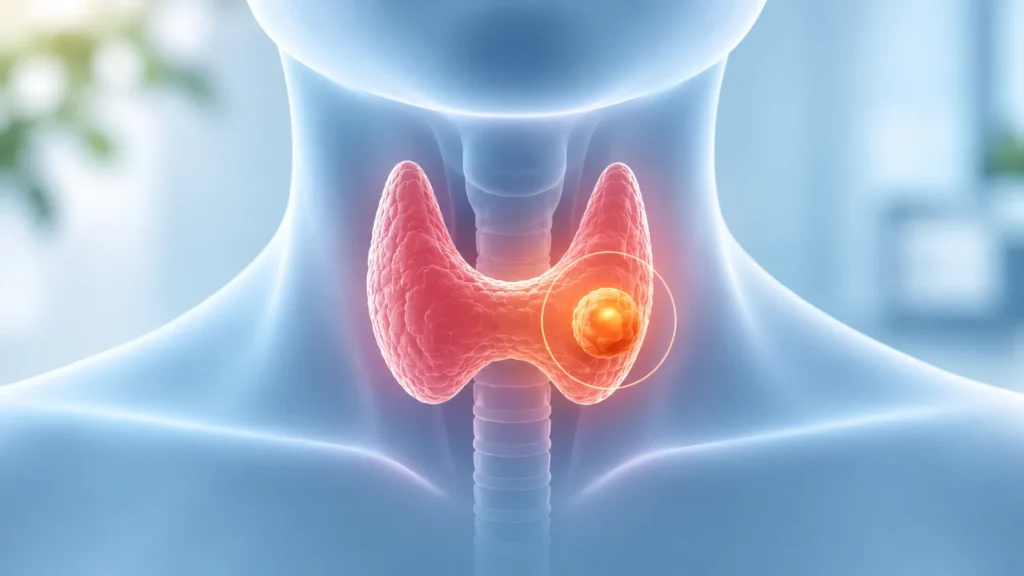
Thyroid tumors are growths that develop in the thyroid gland, a small butterfly-shaped gland located at the front of the neck. This gland produces hormones that control metabolism, energy levels, heart rate, body temperature, and many other important functions. When abnormal cells begin to grow in the thyroid, they can form a nodule or tumor. Most thyroid tumors are benign, meaning they are not cancer. However, some can be malignant, which means they are cancerous and need proper treatment.
Many people discover a thyroid tumor only when they notice a lump in the neck, feel fullness while swallowing, or develop voice changes. Others find out during a routine health check-up or an ultrasound done for another reason. Because thyroid tumors can be silent in the early stages, proper evaluation is important whenever a neck lump or thyroid-related symptom appears.
What are Thyroid Tumors?
A thyroid tumor is an abnormal growth of cells within the thyroid gland. It may appear as a single nodule or as multiple nodules. In most cases, these growths are benign and do not spread to other parts of the body. In some cases, however, the tumor may be cancerous and require more aggressive treatment.
The thyroid gland sits at the base of the neck, just below the Adam’s apple. It produces hormones called T3 and T4, which help regulate how the body uses energy. When a tumor develops, it may affect hormone production, causing either excess or reduced thyroid hormone levels. In some cases, hormone levels remain normal even though a tumor is present.
Thyroid tumors can vary in size, shape, and behavior. Some are very small and cause no symptoms. Others grow larger and press on nearby structures such as the windpipe or esophagus, leading to breathing or swallowing difficulty. Early detection and proper evaluation help determine whether the tumor is benign or cancerous and guide the right treatment.
Types of Thyroid Tumors
Thyroid tumors can be classified in different ways based on whether they are benign or malignant, the type of cells involved, and how they behave.
Based on nature of the tumor
- Benign thyroid tumor, which is non-cancerous and usually does not spread.
- Malignant thyroid tumor, which is cancerous and may spread to nearby tissues or other organs.
- Indeterminate thyroid nodule, where tests cannot clearly confirm whether it is benign or cancerous and further evaluation is needed.
Based on cell type
- Follicular thyroid tumor, which arises from follicular cells of the thyroid.
- Papillary thyroid tumor, which is the most common type of thyroid cancer.
- Medullary thyroid tumor, which arises from C cells that produce calcitonin.
- Anaplastic thyroid tumor, which is a rare but aggressive form of thyroid cancer.
- Lymphoma of the thyroid, which is a rare type involving immune cells.
Based on hormone function
- Non-functioning thyroid tumor, which does not produce excess hormones.
- Functioning thyroid tumor, which produces excess thyroid hormones and may cause hyperthyroidism symptoms.
Based on number of nodules
- Solitary thyroid nodule, where only one nodule is present.
- Multinodular goiter, where multiple nodules are present in the thyroid.
Causes of Thyroid Tumors
The exact cause of thyroid tumors is not always clear. It often results from a combination of genetic, environmental, and hormonal factors.
Common causes and contributing factors
- Genetic mutations that cause abnormal cell growth.
- Family history of thyroid cancer or thyroid disease.
- Exposure to radiation, especially during childhood.
- Iodine deficiency or excess in some cases.
- Hormonal changes, especially in women.
- Chronic thyroid inflammation or autoimmune thyroid disease.
- Certain inherited genetic syndromes.
- Age-related changes in thyroid tissue.
Why tumors develop
The thyroid gland contains cells that can sometimes grow abnormally due to genetic changes. These changes may be inherited or acquired over time. When the growth is controlled and limited, it forms a benign nodule. When the growth becomes uncontrolled and invasive, it may become cancerous.
Risk Factors for Thyroid Tumors
Some people are more likely to develop thyroid tumors than others.
Higher-risk groups
- Women, who are more likely to develop thyroid nodules and thyroid cancer than men.
- People over the age of forty, though thyroid cancer can occur at any age.
- People with a family history of thyroid cancer.
- Individuals exposed to radiation in childhood, especially to the head or neck.
- People with a history of autoimmune thyroid disease.
- Those with iodine deficiency or excess.
- People with certain inherited genetic syndromes.
- Individuals with a history of thyroid nodules or goiter.
Why risk increases in these groups
- Hormonal differences may affect thyroid cell growth in women.
- Radiation exposure can damage thyroid cell DNA.
- Family history may indicate inherited genetic changes.
- Autoimmune disease can cause chronic inflammation and cell changes.
- Iodine imbalance affects thyroid function and structure.
- Age-related changes increase the chance of nodule formation.
Symptoms of Thyroid Tumors
Many thyroid tumors cause no symptoms in the early stages. They may be found only during a routine check-up or imaging test.
Common symptoms
- Lump or swelling in the front of the neck.
- Feeling of fullness or pressure in the neck.
- Difficulty swallowing.
- Difficulty breathing, especially when lying down.
- Hoarseness or voice changes.
- Persistent cough not related to a cold.
- Neck pain in some cases.
- Swollen lymph nodes in the neck.
Symptoms related to hormone changes
- If the tumor produces excess hormones, symptoms of hyperthyroidism may appear.
- If hormone production is reduced, symptoms of hypothyroidism may appear.
Symptoms of hyperthyroidism
- Rapid heartbeat.
- Weight loss despite normal appetite.
- Anxiety or nervousness.
- Tremors in the hands.
- Heat intolerance.
- Excessive sweating.
- Difficulty sleeping.
Symptoms of hypothyroidism
- Fatigue and weakness.
- Weight gain.
- Cold intolerance.
- Dry skin.
- Constipation.
- Depression or low mood.
- Slow heart rate.
Warning signs that need medical attention
- Rapid growth of a neck lump.
- Hard or fixed lump that does not move.
- Persistent hoarseness.
- Difficulty breathing or swallowing.
- Swollen lymph nodes.
- Unexplained weight loss.
- Persistent cough.
Thyroid Tumors in Different Age Groups
Thyroid tumors can affect people of different ages, but the pattern and risk may vary.
In children and teenagers
- Thyroid nodules are less common but may have a higher chance of being cancerous.
- Radiation exposure in childhood is a significant risk factor.
- Early evaluation is important if a neck lump appears.
In adults
- Thyroid nodules are more common with increasing age.
- Most nodules in adults are benign.
- Risk of cancer increases with certain features such as rapid growth or voice changes.
In older adults
- Thyroid nodules are very common.
- Risk of cancer may be higher in some cases.
- Other health conditions may affect treatment choices.
How are Thyroid Tumors Diagnosed?
Diagnosis is based on symptoms, physical examination, imaging tests, and sometimes biopsy. Since many thyroid nodules are benign, proper evaluation is needed to determine which ones need treatment.
Diagnostic steps
- Detailed history of symptoms.
- Family history of thyroid disease or cancer.
- Physical examination of the neck.
- Assessment of thyroid hormone levels.
- Imaging tests to visualize the thyroid.
- Biopsy if needed to check for cancer.
Common tests that may be done
- Thyroid function tests to check T3, T4, and TSH levels.
- Ultrasound of the thyroid to assess nodule size, shape, and features.
- Fine needle aspiration biopsy to collect cells from the nodule.
- CT scan or MRI if the tumor is large or extends beyond the thyroid.
- Thyroid scan to assess nodule activity in selected cases.
- Blood tests for calcitonin if medullary thyroid cancer is suspected.
Why diagnosis matters
Not all thyroid nodules need surgery or biopsy. Proper evaluation helps identify which nodules are low risk and can be monitored, and which ones need closer testing or treatment. Early diagnosis of cancerous tumors improves outcomes significantly.
Treatment for Thyroid Tumors
Treatment depends on whether the tumor is benign or malignant, its size, symptoms, and the patient’s overall health.
Treatment for benign thyroid tumors
- Observation and regular monitoring for small, asymptomatic nodules.
- Thyroid hormone suppression therapy in selected cases.
- Surgery if the nodule is large, causing symptoms, or growing.
- Radiofrequency ablation or other minimally invasive options in selected cases.
Treatment for malignant thyroid tumors
- Surgery to remove part or all of the thyroid gland.
- Radioactive iodine therapy in some cases after surgery.
- Thyroid hormone replacement therapy after surgery.
- Targeted therapy or external radiation in advanced cases.
- Regular follow-up and monitoring.
1. Observation and monitoring
For small benign nodules that cause no symptoms, doctors may recommend regular follow-up with ultrasound and thyroid function tests.
- Repeat ultrasound every six to twelve months.
- Monitor for changes in size or appearance.
- Check thyroid hormone levels periodically.
- No treatment needed if the nodule remains stable.
2. Thyroid hormone therapy
In some cases, thyroid hormone medication may be used to suppress TSH and reduce nodule growth.
- Used in selected benign nodules.
- Requires monitoring of hormone levels.
- Not suitable for all patients.
3. Surgery
Surgery is the main treatment for thyroid cancer and for large or symptomatic benign nodules.
- Lobectomy, where only one lobe of the thyroid is removed.
- Total thyroidectomy, where the entire thyroid gland is removed.
- Lymph node removal if cancer has spread.
- Requires lifelong thyroid hormone replacement after total thyroidectomy.
4. Radioactive iodine therapy
This treatment uses radioactive iodine to destroy remaining thyroid tissue or cancer cells after surgery.
- Used in certain types of thyroid cancer.
- Taken as a capsule or liquid.
- Requires special precautions after treatment.
5. Minimally invasive options
In selected benign nodules, minimally invasive treatments may be used.
- Radiofrequency ablation to shrink the nodule.
- Ethanol ablation for certain cystic nodules.
- Shorter recovery and no major incision.
Recovery After Treatment
Recovery depends on the type of treatment and whether the tumor was benign or cancerous.
Recovery after surgery
- Hospital stay of one to three days in most cases.
- Mild neck discomfort and difficulty swallowing initially.
- Return to normal activities within a few weeks.
- Thyroid hormone replacement if the whole gland is removed.
- Regular follow-up to monitor hormone levels.
Recovery after radioactive iodine
- Outpatient or short hospital stay depending on dose.
- Precautions to avoid exposing others to radiation.
- Follow-up scans to check treatment effect.
- Lifelong thyroid hormone replacement after total thyroidectomy.
Long-term follow-up
- Regular thyroid function tests.
- Ultrasound or other imaging as needed.
- Monitoring for recurrence in cancer cases.
- Adjustment of hormone replacement dose over time.
Possible Complications
Thyroid tumors and their treatment can lead to certain complications.
Complications of untreated tumors
- Growth and pressure on nearby structures.
- Breathing or swallowing difficulty.
- Spread of cancer to lymph nodes or other organs.
- Voice changes due to nerve involvement.
- Hormonal imbalance.
Complications of surgery
- Temporary or permanent voice changes.
- Low calcium levels due to parathyroid gland involvement.
- Bleeding or infection.
- Need for lifelong hormone replacement.
- Scar formation.
Why early treatment matters
Early diagnosis and treatment reduce the risk of complications and improve outcomes. Most thyroid cancers, especially papillary type, have excellent outcomes when treated early.
When to See a Doctor?
Medical evaluation is important for anyone who notices a neck lump or thyroid-related symptoms.
See a doctor if you have:
- A lump or swelling in the neck.
- Difficulty swallowing or breathing.
- Persistent hoarseness.
- Swollen lymph nodes.
- Symptoms of hyperthyroidism or hypothyroidism.
- Family history of thyroid cancer.
- History of radiation exposure.
Seek urgent care if you have:
- Sudden difficulty breathing.
- Severe neck pain with swelling.
- Rapid growth of a neck lump.
- High fever with neck swelling.
- Severe difficulty swallowing.
Prevention of Thyroid Tumors
Not all thyroid tumors can be prevented, but some risk factors can be reduced.
Prevention pointers
- Ensure adequate iodine intake through diet.
- Avoid unnecessary radiation exposure to the neck.
- Get regular check-ups if there is a family history.
- Manage autoimmune thyroid disease properly.
- Maintain a healthy lifestyle.
- Seek early evaluation for any neck lump.
For people with family history
- Discuss screening options with a doctor.
- Consider genetic counseling if multiple family members are affected.
- Be alert for early symptoms and get checked promptly.
Why Choose Rama Hospital for Thyroid Tumor Treatment?
Thyroid tumors require expert evaluation, accurate diagnosis, and appropriate treatment planning. A hospital with experienced endocrinologists, surgeons, and radiologists can provide comprehensive care.
Why hospital care matters
- Expert evaluation by endocrinology and surgical teams.
- Advanced ultrasound and imaging for accurate diagnosis.
- Fine needle aspiration and biopsy facilities.
- Minimally invasive and open surgical options.
- Radioactive iodine therapy when needed.
- Long-term follow-up and hormone management.
Trust and authority points
- Experienced thyroid specialists.
- Modern diagnostic technology.
- Comprehensive care from diagnosis to recovery.
- Patient education and family support.
- Coordinated care for complex cases.
Frequently Asked Questions (FAQs)
1. What is a thyroid tumor?
A thyroid tumor is an abnormal growth of cells in the thyroid gland. It may be benign or cancerous. Many thyroid tumors are benign and cause no symptoms, but proper evaluation is important to rule out cancer.
2. Is a thyroid nodule the same as thyroid cancer?
No, most thyroid nodules are benign and not cancerous. Only a small percentage turn out to be cancerous. Ultrasound and biopsy help determine the nature of the nodule.
3. Can thyroid tumors cause symptoms?
Yes, some thyroid tumors cause a neck lump, difficulty swallowing, hoarseness, or breathing problems. Many small tumors cause no symptoms and are found during routine tests.
4. How is a thyroid tumor diagnosed?
Diagnosis is done using thyroid function tests, ultrasound, and sometimes fine needle aspiration biopsy. Imaging helps assess the nodule, while biopsy confirms whether it is benign or cancerous.
5. What is the treatment for thyroid cancer?
Treatment usually involves surgery to remove part or all of the thyroid gland. Radioactive iodine therapy may be used after surgery in some cases. Thyroid hormone replacement is needed after total thyroidectomy.
6. Can thyroid tumors be treated without surgery?
Some small benign nodules can be monitored or treated with minimally invasive options like ablation. Cancerous tumors usually require surgery. The treatment plan depends on the type and risk of the tumor.
7. Is thyroid cancer curable?
Yes, most thyroid cancers, especially papillary type, have excellent outcomes when treated early. Long-term survival rates are very high with proper treatment and follow-up.
8. Do I need lifelong medication after thyroid surgery?
If the entire thyroid gland is removed, lifelong thyroid hormone replacement is needed. If only one lobe is removed, medication may or may not be required depending on hormone levels.
9. Can thyroid tumors come back after treatment?
Benign nodules may recur in some cases. Thyroid cancer can also recur, which is why regular follow-up with ultrasound and blood tests is important after treatment.
10. Can thyroid tumors be prevented?
Not all can be prevented, but adequate iodine intake, avoiding unnecessary radiation, and early evaluation of neck lumps can reduce risk. Family history should prompt earlier screening.
Conclusion
Thyroid tumors are common growths in the thyroid gland that may be benign or cancerous. While most nodules are not cancerous, proper evaluation is important to identify those that need treatment. Early diagnosis and appropriate management lead to excellent outcomes, especially for thyroid cancer.
The most important steps are proper evaluation with ultrasound and biopsy when needed, accurate diagnosis, and the right treatment plan based on the type of tumor. For patients with a neck lump, voice changes, or swallowing difficulty, a medical evaluation can make a major difference. With the right care, most thyroid tumors can be managed effectively and patients can return to normal health.
Rama Hospital can help evaluate thyroid tumors, determine their nature, and provide comprehensive treatment from diagnosis to surgery and long-term follow-up.