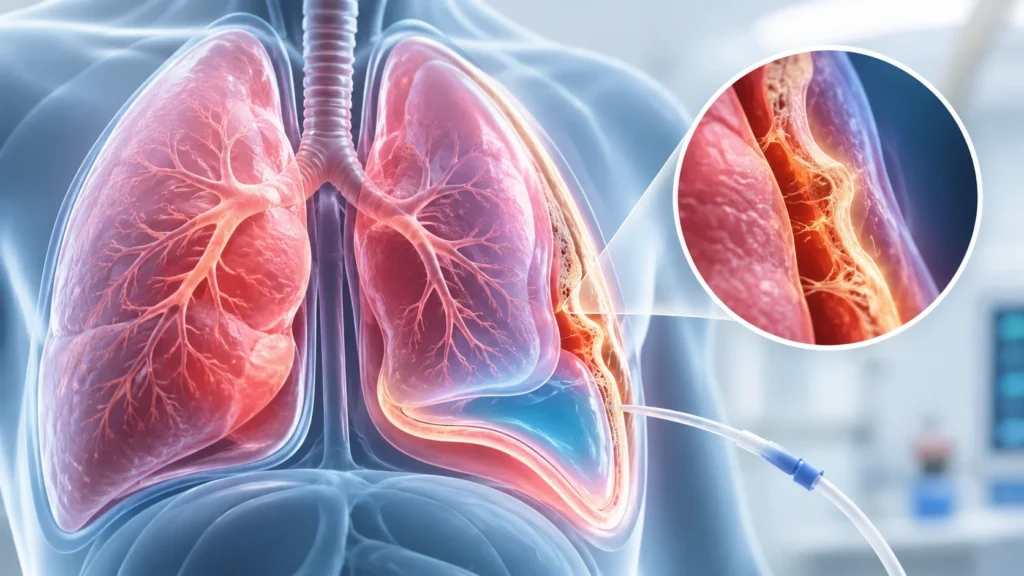
Pleurodesis is a medical procedure used to treat problems related to the space around the lungs, called the pleural space. This space normally contains a small amount of fluid that helps the lungs move smoothly during breathing. In some conditions, too much fluid or air can collect in this space, causing breathlessness, chest pain, or repeated lung collapse. Pleurodesis helps prevent this fluid or air from building up again by making the lung stick to the chest wall.
This procedure is often recommended for patients who have recurrent pleural effusion, which is fluid buildup around the lungs, or recurrent pneumothorax, which is repeated lung collapse. It is commonly used in conditions such as cancer-related fluid buildup, heart or kidney problems causing fluid around the lungs, infections, or lung diseases that lead to repeated air leaks.
What is Pleurodesis?
Pleurodesis is a procedure that creates permanent adhesion between the lung and the chest wall. Normally, the lung and chest wall are separated by a thin space filled with a small amount of fluid. This allows smooth movement during breathing. When excess fluid or air collects in this space, the lung may not expand properly, causing breathing difficulty.
Pleurodesis works by irritating the pleural surfaces so that they stick together. Once the lung and chest wall are attached, there is no space left for fluid or air to collect. This prevents recurrence of pleural effusion or pneumothorax.
The procedure can be done in different ways depending on the patient’s condition and the cause of the problem. It may be done using a chemical agent, talc, or mechanical irritation during surgery. The goal is always the same: to prevent fluid or air from building up again.
Why is Pleurodesis Done?
Pleurodesis is done when fluid or air keeps collecting around the lungs and causes repeated symptoms or procedures.
Common reasons for pleurodesis
- Recurrent pleural effusion, where fluid keeps building up around the lungs.
- Malignant pleural effusion, where cancer causes fluid buildup.
- Recurrent pneumothorax, where the lung keeps collapsing due to air leaks.
- Persistent air leak after lung surgery or injury.
- Chylothorax, where lymph fluid collects in the pleural space.
- Empyema, where infected fluid collects around the lungs.
- Conditions causing repeated fluid buildup such as heart failure, kidney failure, or liver disease.
Why it improves quality of life
- Reduces the need for repeated chest tube insertion.
- Decreases hospital visits for drainage.
- Improves breathing comfort.
- Reduces chest pain and pressure.
- Helps patients return to daily activities sooner.
Types of Pleurodesis
Pleurodesis can be done using different methods depending on the patient’s condition and the cause of fluid or air buildup.
Chemical pleurodesis
- Uses a chemical agent such as talc, doxycycline, or bleomycin.
- The agent is introduced into the pleural space through a chest tube.
- Causes irritation and inflammation that makes the lung stick to the chest wall.
- Commonly used for recurrent pleural effusion.
Mechanical pleurodesis
- Done during surgery using physical abrasion or irritation of the pleural surfaces.
- Often performed during video-assisted thoracoscopic surgery (VATS).
- May be used when chemical pleurodesis is not suitable or has failed.
Surgical pleurodesis
- Involves direct surgical access to the pleural space.
- May be combined with removal of abnormal tissue or repair of air leaks.
- Used in complex cases or when other methods are not effective.
How is Pleurodesis Performed?
The exact method depends on whether the procedure is done through a chest tube or during surgery.
Pleurodesis through chest tube
- A chest tube is inserted to drain fluid or air from the pleural space.
- Once drainage is complete, a chemical agent is introduced.
- The patient may be asked to change positions to help distribute the agent.
- The chest tube remains in place for a period to allow adhesion.
- The tube is removed once the lung is fully expanded and no further drainage is needed.
Pleurodesis during surgery
- Performed under general anesthesia.
- A small incision is made to access the pleural space.
- The surgeon may use talc, abrasion, or other methods to create adhesion.
- Any air leaks or abnormal tissue may be repaired at the same time.
- A chest tube is placed temporarily after surgery.
Preparation Before Pleurodesis
Proper preparation helps ensure the procedure is safe and effective.
Before the procedure
- Full medical history and physical examination.
- Imaging tests such as chest X-ray, CT scan, or ultrasound.
- Blood tests to check clotting and overall health.
- Review of current medicines, especially blood thinners.
- Fasting instructions if sedation or anesthesia is planned.
- Discussion of risks, benefits, and alternatives.
What patients should tell the doctor
- All medicines and supplements being taken.
- History of allergies, especially to medicines or contrast dye.
- Previous lung or chest procedures.
- Smoking history.
- Any breathing problems or heart conditions.
- Recent infections or illnesses.
Recovery After Pleurodesis
Recovery depends on the method used, the patient’s overall health, and the underlying condition.
Immediate recovery
- Monitoring in hospital for a few hours to days.
- Pain management with medicines.
- Chest tube care if a tube is in place.
- Breathing exercises to help lung expansion.
- Gradual return to normal activities.
Recovery at home
- Keep the incision site clean and dry.
- Follow instructions for chest tube care if still in place.
- Avoid heavy lifting or strenuous activity for a few weeks.
- Take prescribed medicines as directed.
- Attend follow-up appointments for imaging and assessment.
When normal activities can resume
- Light activities may be resumed within a few days to a week.
- More strenuous activity may need to wait for a few weeks.
- Return to work depends on the type of procedure and recovery progress.
- Driving may be restricted if pain medicines are being used.
Benefits of Pleurodesis
Pleurodesis offers several benefits for patients with recurrent pleural problems.
Main benefits
- Prevents recurrence of fluid or air buildup.
- Reduces need for repeated chest tube procedures.
- Improves breathing comfort.
- Decreases chest pain and pressure.
- Enhances quality of life.
- Allows patients to focus on treating the underlying condition.
Long-term benefits
- Permanent adhesion between lung and chest wall.
- Reduced hospital visits.
- Better management of chronic conditions.
- Improved ability to undergo other treatments if needed.
Risks and Complications
Like any medical procedure, pleurodesis has some risks and possible complications.
Common risks
- Pain or discomfort at the procedure site.
- Fever or mild infection.
- Cough or shortness of breath temporarily.
- Reaction to the chemical agent used.
Less common but serious risks
- Infection of the pleural space.
- Bleeding.
- Lung injury or air leak.
- Allergic reaction to the agent.
- Failure of the procedure, requiring repeat treatment.
- Complications related to anesthesia or surgery.
How risks are managed
- Careful patient selection and preparation.
- Use of sterile technique and monitoring.
- Pain management and supportive care.
- Close follow-up to detect and treat complications early.
Aftercare and Follow-Up
Proper aftercare is important for successful recovery and prevention of complications.
Aftercare pointers
- Follow all instructions for chest tube or incision care.
- Take prescribed medicines on time.
- Attend all follow-up appointments.
- Report any new or worsening symptoms immediately.
- Avoid smoking and exposure to lung irritants.
- Practice breathing exercises as advised.
- Maintain a healthy lifestyle to support recovery.
Warning signs to watch for
- Increasing chest pain.
- Fever or chills.
- Worsening breathlessness.
- Redness, swelling, or discharge at the incision site.
- Coughing up blood.
- New or worsening cough.
When to Contact the Doctor
Patients should contact their doctor if they notice any concerning symptoms after pleurodesis.
Contact the doctor if you have:
- Fever above 100.4°F or 38°C.
- Increasing pain or swelling at the procedure site.
- New or worsening shortness of breath.
- Persistent cough or coughing up blood.
- Signs of infection such as redness or discharge.
- Any other unusual or concerning symptoms.
Seek emergency care if you have:
- Severe chest pain.
- Severe difficulty breathing.
- Fainting or loss of consciousness.
- Coughing up large amounts of blood.
- Sudden worsening of symptoms.
Why Choose Rama Hospital for Pleurodesis?
Pleurodesis is a specialized procedure that requires experienced pulmonologists, thoracic surgeons, and supportive care. A hospital with advanced facilities and a multidisciplinary team can make a major difference in outcomes.
Why hospital care matters
- Expert evaluation by pulmonology and thoracic specialists.
- Advanced imaging and diagnostic facilities.
- Safe and effective procedure techniques.
- Comprehensive pain management and recovery support.
- Follow-up care to monitor success and prevent recurrence.
- Coordinated care for underlying conditions.
Trust and authority points
- Experienced medical team.
- Modern technology and facilities.
- Patient education and support.
- Comprehensive care from diagnosis to recovery.
- Focus on quality of life and long-term health.
Frequently Asked Questions (FAQs)
1. What is pleurodesis?
Pleurodesis is a procedure that makes the lung stick to the chest wall to prevent fluid or air from building up in the pleural space. It is often used for recurrent pleural effusion or pneumothorax.
2. Is pleurodesis painful?
Some discomfort or pain is common after the procedure, especially at the chest tube site. Pain medicines and supportive care help manage this. Most patients find the discomfort manageable.
3. How long does pleurodesis take?
The procedure itself may take a few hours, depending on the method. Recovery in hospital may take a few days. Full recovery at home may take a few weeks.
4. Can pleurodesis fail?
In some cases, pleurodesis may not work completely, and fluid or air may build up again. Repeat procedures or alternative treatments may be needed. Success rates are generally high with proper technique.
5. Is pleurodesis safe?
Pleurodesis is generally safe when done by experienced specialists. Like any procedure, it has some risks, but these are managed with careful preparation and monitoring.
6. Can I live a normal life after pleurodesis?
Yes, most patients return to normal activities after recovery. The procedure often improves quality of life by preventing recurrent symptoms and reducing the need for repeated procedures.
7. What are the alternatives to pleurodesis?
Alternatives may include repeated drainage, indwelling pleural catheters, or surgery depending on the condition. The choice depends on the cause, severity, and patient preference.
8. When should I contact my doctor after pleurodesis?
Contact your doctor if you have fever, increasing pain, worsening breathlessness, or signs of infection. Seek emergency care for severe chest pain or difficulty breathing.
Conclusion
Pleurodesis is an important procedure for patients with recurrent fluid or air buildup around the lungs. It helps prevent recurrence, improves breathing comfort, and enhances quality of life. While it is not a cure for the underlying disease, it can greatly reduce the burden of repeated procedures and hospital visits.
The most important steps are proper evaluation, safe procedure techniques, and careful aftercare. For patients with recurrent pleural effusion or pneumothorax, pleurodesis can make a major difference in daily comfort and long-term health. With the right care, most patients recover well and return to normal activities.
Rama Hospital can help evaluate pleural conditions, determine if pleurodesis is appropriate, and provide comprehensive care from diagnosis to recovery.