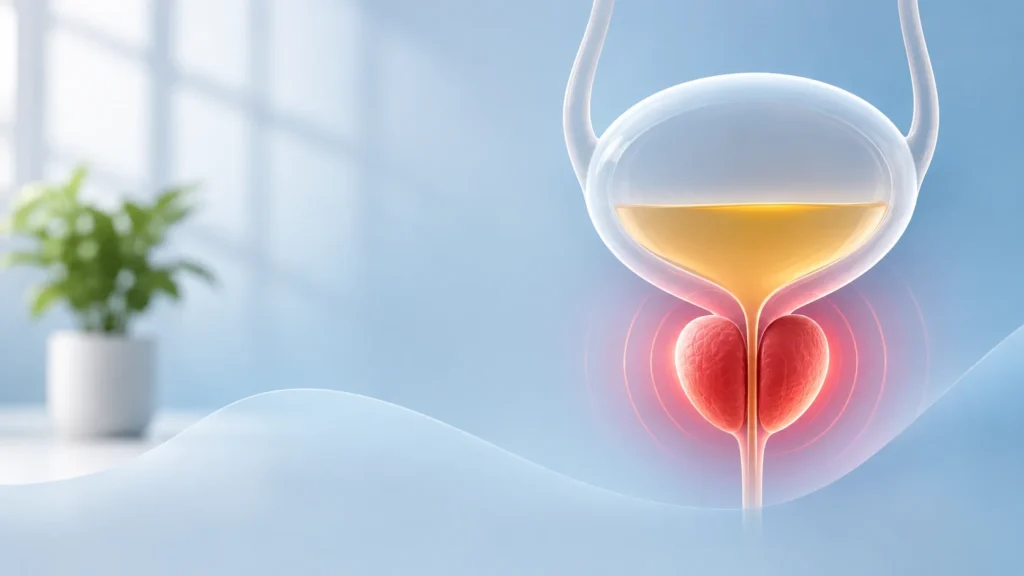
Prostatitis is a condition that affects the prostate gland, a small gland in men that sits just below the bladder and surrounds the urethra. The prostate plays an important role in male reproductive health by producing fluid that protects and nourishes sperm. When this gland becomes inflamed, swollen, or infected, it can cause a range of uncomfortable symptoms such as pain, burning during urination, frequent urge to urinate, pelvic discomfort, and sometimes fever.
Many men ignore early symptoms because they may feel mild at first or because they feel embarrassed to discuss urinary or sexual health problems. However, this can affect daily life, sleep, work, sexual function, and emotional well-being if left untreated. Some types of this conditon are caused by bacterial infection and need antibiotics. Others are not caused by infection but still cause pain and urinary symptoms and need a different treatment approach.
What is Prostatitis?
This is inflammation or infection of the prostate gland. The prostate is part of the male reproductive system and sits just below the bladder. It surrounds the urethra, the tube that carries urine from the bladder out of the body. When the prostate becomes inflamed, it can press on the urethra and cause urinary problems.
This is not the same as prostate cancer or benign prostatic hyperplasia (BPH), although some symptoms may overlap. It is a separate condition and can occur in men of different ages, including younger men. In some cases, it is caused by bacteria. In other cases, no infection is found, but the prostate and surrounding pelvic area still become painful and inflamed.
This can be acute or chronic. Acute condition comes on suddenly and may be severe. Chronic condition develops slowly and may last for weeks or months. Understanding the type of this condition is important because treatment differs depending on the cause and duration.
Types of Prostatitis
This can be classified into different types based on the cause, duration, and presence of infection.
Based on cause and duration
- Acute bacterial prostatitis, which is caused by a bacterial infection and comes on suddenly.
- Chronic bacterial prostatitis, which is a long-term or recurring bacterial infection of the prostate.
- Chronic prostatitis or chronic pelvic pain syndrome, which is not caused by bacteria but causes ongoing pain and urinary symptoms.
- Asymptomatic inflammatory prostatitis, where inflammation is found but the patient has no symptoms.
Based on severity
- Mild prostatitis, with mild discomfort and occasional urinary symptoms.
- Moderate prostatitis, with more frequent pain and urinary issues affecting daily life.
- Severe prostatitis, with intense pain, fever, difficulty urinating, or systemic symptoms.
Based on pattern
- Acute prostatitis, which starts suddenly and may need urgent treatment.
- Chronic prostatitis, which lasts for months and may come and go.
- Recurrent prostatitis, where symptoms return after treatment.
Causes of Prostatitis
The cause of this condition depends on the type. Bacterial infection is a common cause in acute and chronic bacterial condition, while other types may not have a clear infection.
Common causes include:
- Bacterial infection from urinary tract or sexually transmitted infection.
- Bacteria entering the prostate through the urethra.
- Urinary tract infection that spreads to the prostate.
- Blockage or irritation in the urinary tract.
- Pelvic muscle tension or dysfunction.
- Nerve irritation in the pelvic area.
- Stress and emotional factors that may worsen symptoms.
- Immune system response causing inflammation without infection.
- Injury or trauma to the pelvic area.
- Certain medical procedures involving the urinary tract.
Risk factors that may contribute
- History of urinary tract infections.
- Recent urinary catheter use.
- Sexually transmitted infections.
- Dehydration or poor fluid intake.
- Prolonged sitting or cycling.
- Pelvic muscle tension.
- Stress and anxiety.
- Weak immune system.
- Diabetes or other chronic illness.
- Previous prostate or urinary tract procedures.
Symptoms of Prostatitis
Symptoms depend on whether the condition is acute or chronic, and whether infection is present.
Common symptoms
- Pain or burning during urination.
- Frequent urge to urinate.
- Difficulty starting urination.
- Weak or interrupted urine stream.
- Pain in the lower abdomen.
- Pain in the pelvis or perineum, the area between the scrotum and anus.
- Pain in the lower back or genital area.
- Pain during or after ejaculation.
- Fever and chills in acute bacterial prostatitis.
- General feeling of being unwell.
- Fatigue.
- Blood in urine or semen in some cases.
Symptoms of acute bacterial prostatitis
- Sudden onset of symptoms.
- High fever and chills.
- Severe pain in the pelvic area.
- Burning during urination.
- Difficulty urinating or inability to urinate.
- Feeling very unwell.
- Need for urgent medical attention.
Symptoms of chronic prostatitis
- Pain that comes and goes over weeks or months.
- Discomfort in the pelvis, lower back, or genital area.
- Pain during or after ejaculation.
- Urinary symptoms such as frequency or urgency.
- Symptoms that affect sleep, work, or sexual life.
- Emotional stress or anxiety due to ongoing discomfort.
Prostatitis in Different Age Groups
This can affect men of different ages, but the pattern may vary.
In younger men
- More likely to be chronic pelvic pain syndrome without infection.
- May be linked to stress, pelvic muscle tension, or lifestyle factors.
- Symptoms may be mild but persistent.
In middle-aged men
- More likely to have bacterial condition or chronic condition.
- May have urinary symptoms along with pelvic pain.
- May be associated with other urinary or reproductive issues.
In older men
- More likely to have urinary symptoms due to prostate enlargement or other conditions.
- This condition may coexist with BPH or urinary tract issues.
- Symptoms may be more complex and need careful evaluation.
How is Prostatitis Diagnosed?
Diagnosis is based on symptoms, physical examination, urine tests, and sometimes imaging or other tests. Since symptoms can overlap with other prostate or urinary conditions, accurate diagnosis is important.
Diagnostic steps
- Detailed history of symptoms.
- Duration and pattern of pain or urinary issues.
- Sexual history and risk factors.
- Physical examination, including digital rectal exam to check the prostate.
- Urine tests to check for infection.
- Blood tests to check for infection or inflammation.
- Imaging tests in selected cases.
- Evaluation for other prostate or urinary conditions.
Common tests that may be done
- Urinalysis to check for infection or blood.
- Urine culture to identify bacteria.
- Blood tests such as PSA, CBC, or inflammatory markers.
- Ultrasound of the prostate or urinary tract.
- Uroflowmetry to measure urine flow.
- Cystoscopy in selected cases to view the urethra and bladder.
- Semen analysis if needed.
- Pelvic floor assessment in chronic pelvic pain syndrome.
Why diagnosis matters
Symptoms of this condition can overlap with urinary tract infection, prostate enlargement, bladder issues, or prostate cancer. Accurate testing ensures the patient gets the right treatment rather than only symptom relief.
Treatment for Prostatitis
Treatment depends on the type of this condition, the cause, and the severity of symptoms. In many cases, symptoms improve with the right combination of medicines, lifestyle changes, and follow-up.
1. Antibiotics for bacterial prostatitis
- Used when bacteria are found or strongly suspected.
- Acute bacterial prostatitis may need stronger or IV antibiotics.
- Chronic bacterial prostatitis may need longer courses of antibiotics.
- Treatment is based on urine culture results when possible.
2. Pain relief
- Pain medicines may be prescribed to reduce discomfort.
- Anti-inflammatory medicines may help reduce swelling.
- Muscle relaxants may be used if pelvic muscle tension is present.
3. Alpha-blockers
- These medicines help relax the muscles around the prostate and bladder neck.
- They can improve urine flow and reduce urinary symptoms.
- Often used in chronic prostatitis or pelvic pain syndrome.
4. Pelvic floor therapy
- Helpful in chronic prostatitis or chronic pelvic pain syndrome.
- Focuses on relaxing tight pelvic muscles.
- May include exercises, biofeedback, or physical therapy.
- Can improve pain and urinary symptoms over time.
5. Lifestyle and diet support
- Drink enough water to stay hydrated.
- Avoid irritants such as caffeine, alcohol, and spicy foods if they worsen symptoms.
- Avoid prolonged sitting or cycling if it aggravates pain.
- Manage stress and get adequate sleep.
- Practice safe sex to reduce risk of infection.
6. Heat therapy
- Warm baths or sitz baths can help relax pelvic muscles.
- May reduce pain and discomfort.
- Useful as a supportive home care measure.
7. Surgery in rare cases
- Not usually needed for prostatitis.
- May be considered if there is an abscess or severe blockage.
- Reserved for specific complications.
Home Care for Mild Prostatitis
Many mild cases can be managed at home with careful support.
Helpful home care steps
- Drink plenty of water.
- Avoid caffeine, alcohol, and spicy foods if they worsen symptoms.
- Take warm baths to relax pelvic muscles.
- Avoid prolonged sitting or cycling.
- Manage stress and get adequate sleep.
- Practice safe sex.
- Follow prescribed medicines exactly as directed.
Foods that may help
- Water-rich fruits and vegetables.
- Whole grains.
- Lean protein.
- Foods rich in zinc and antioxidants.
- Foods that reduce inflammation such as berries, nuts, and leafy greens.
Foods to avoid initially
- Caffeine.
- Alcohol.
- Spicy foods.
- Very acidic foods if they worsen symptoms.
- Processed or fried foods.
Possible Complications
Most cases of this condition improve with treatment, but complications can occur if the condition is severe or left untreated.
Possible complications
- Abscess in the prostate.
- Spread of infection to the blood or other organs.
- Chronic pelvic pain syndrome.
- Recurrent urinary tract infections.
- Sexual dysfunction.
- Infertility issues in some cases.
- Emotional stress or depression due to ongoing symptoms.
- Urinary retention in severe cases.
Why complications happen
When infection or inflammation is not controlled, it can spread or become chronic. The prostate and surrounding tissues may become damaged, leading to long-term pain or urinary issues. Early treatment reduces the risk of complications.
When to See a Doctor
Medical review is important if symptoms are persistent or severe.
See a doctor if you have:
- Pain or burning during urination.
- Frequent urge to urinate.
- Pain in the pelvis, lower back, or genital area.
- Pain during or after ejaculation.
- Blood in urine or semen.
- Fever or chills.
- Difficulty urinating.
- Symptoms that last more than a few days.
- Recurrent urinary infections.
Seek urgent care if you have:
- High fever with chills.
- Severe pelvic pain.
- Inability to urinate.
- Blood in urine.
- Severe weakness or feeling very unwell.
- Sudden worsening of symptoms.
Prevention of Prostatitis
Prevention is possible in many cases through hygiene, safe practices, and healthy habits.
Prevention pointers
- Drink enough water daily.
- Practice safe sex.
- Avoid holding urine for long periods.
- Avoid prolonged sitting or cycling without breaks.
- Manage stress and get adequate sleep.
- Treat urinary tract infections promptly.
- Avoid irritants such as caffeine, alcohol, and spicy foods if they worsen symptoms.
- Maintain good hygiene.
- Follow medical advice after urinary procedures.
For men with recurrent symptoms
- Keep a symptom diary to identify triggers.
- Follow up regularly with a urologist.
- Consider pelvic floor therapy if muscle tension is a factor.
- Address stress and emotional health.
Why Choose Rama Hospital for Prostatitis Treatment?
This condition can be complex, especially when symptoms are chronic or recurrent. A hospital with experienced urologists, diagnostic facilities, and supportive care can make a major difference in outcomes.
Why hospital care matters
- Expert evaluation by urology specialists.
- Accurate diagnosis with urine, blood, and imaging tests.
- Tailored treatment based on type and cause.
- Support for chronic pelvic pain and pelvic floor issues.
- Follow-up care to confirm improvement and prevent recurrence.
- Coordinated care for related urinary or sexual health issues.
Trust and authority points
- Experienced urology team.
- Modern diagnostic facilities.
- Patient education and privacy-focused care.
- Comprehensive treatment from acute infection to chronic pelvic pain.
- Support for men of all ages.
Frequently Asked Questions (FAQs)
1. What is prostatitis?
This is inflammation or infection of the prostate gland. It can cause pain, burning during urination, frequent urge to urinate, and pelvic discomfort. Some types are caused by bacteria, while others are not.
2. Is prostatitis the same as prostate cancer?
No, prostatitis is not prostate cancer. It is inflammation or infection of the prostate. However, symptoms can overlap, so proper evaluation is important to rule out other conditions.
3. Can prostatitis be cured?
Yes, many cases of prostatitis can be treated effectively. Bacterial prostatitis often improves with antibiotics, while chronic pelvic pain syndrome may need a combination of medicines, pelvic floor therapy, and lifestyle changes.
4. How long does prostatitis last?
Acute bacterial prostatitis may improve within a few weeks with treatment. Chronic prostatitis can last for months and may come and go. Early diagnosis and treatment help reduce duration and recurrence.
5. Can prostatitis cause sexual problems?
Yes, prostatitis can cause pain during or after ejaculation, reduced libido, or erectile issues in some men. Treating the inflammation and managing pelvic muscle tension can help improve sexual function.
6. Is prostatitis contagious?
Prostatitis itself is not contagious. However, if it is caused by a sexually transmitted infection, that infection can be passed to a partner. Safe sex practices are important.
7. Can diet affect prostatitis?
Yes, some foods and drinks such as caffeine, alcohol, and spicy foods can worsen symptoms in some men. Drinking enough water and eating a balanced diet can support recovery.
8. When should I see a urologist for prostatitis?
You should see a urologist if symptoms persist, worsen, or affect daily life. Fever, blood in urine, or inability to urinate needs urgent medical attention.
Conclusion
Prostatitis is a common condition that affects the prostate gland and can cause pain, urinary symptoms, and discomfort in daily life. It can be acute or chronic, and caused by infection or other factors. The good news is that most cases can be managed effectively with the right diagnosis and treatment.
The most important steps are early recognition, proper evaluation, targeted treatment, and lifestyle support. For men with persistent urinary symptoms, pelvic pain, or sexual discomfort, a medical evaluation can make a major difference. With the right care, this condition can be treated and symptoms can improve significantly.
Rama Hospital can help evaluate the symptoms, identify the type and cause, and provide a clear treatment plan that supports recovery and long-term prostate health.