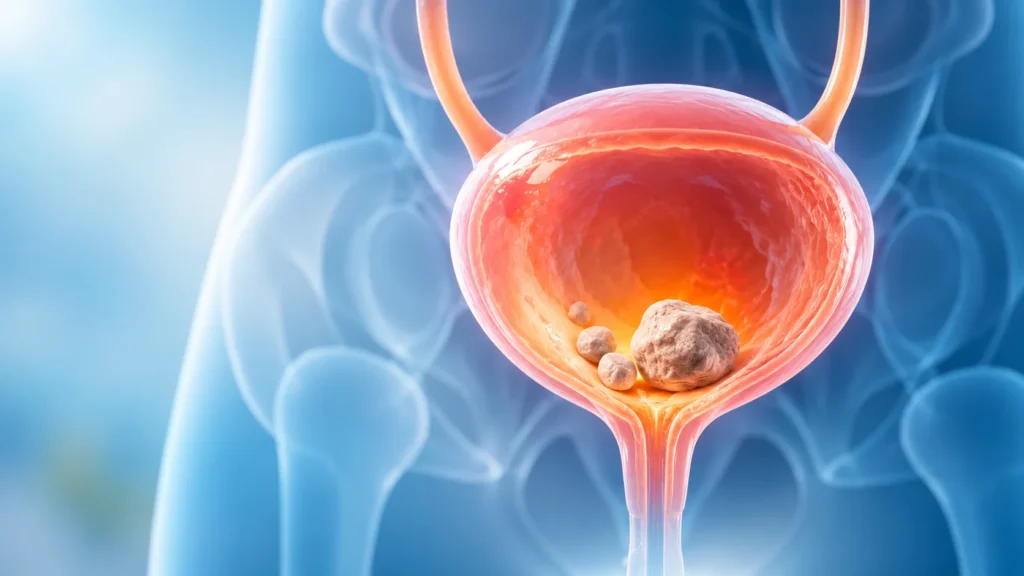
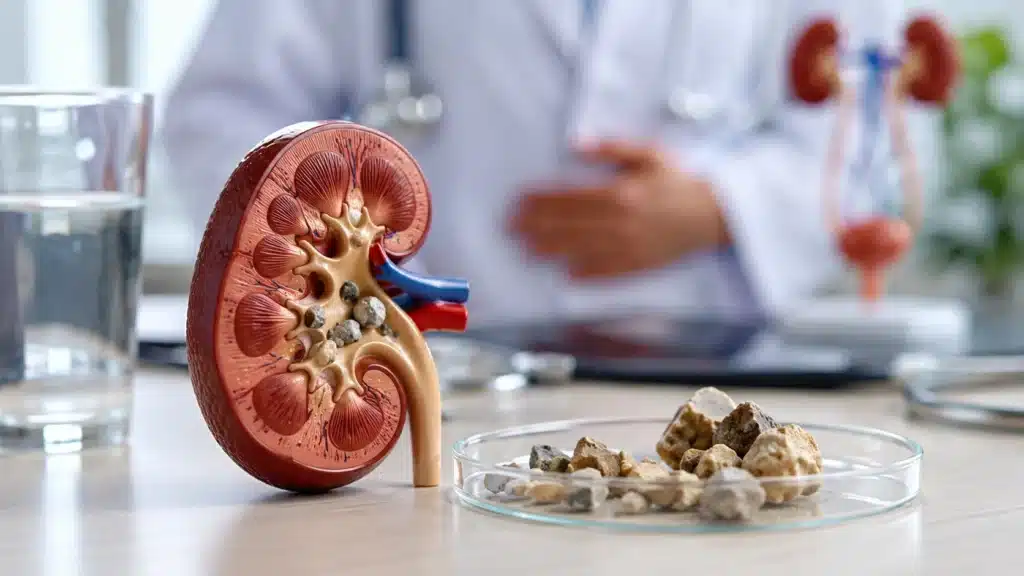
Bladder stones are hard mineral deposits that form inside the bladder when urine becomes concentrated and certain substances crystallize. They can range from tiny grains to larger stones that cause pain, urinary problems, and infection. Many people confuse bladder stones with kidney stones, but they are different. Kidney stones form in the kidneys and may travel down the urinary tract, while bladder stones form or remain in the bladder itself.
Bladder stones are more common in men, especially older men with prostate enlargement, but they can affect women and children as well. In many cases, bladder stones develop because the bladder does not empty completely. When urine stays in the bladder for too long, minerals have more time to settle and form stones. Other causes include urinary infections, dehydration, catheter use, nerve problems affecting bladder control, and certain medical conditions.
What are Bladder Stones?
Bladder stones are hard masses made of minerals and salts that form inside the bladder. They usually develop when urine becomes very concentrated or when the bladder does not empty fully. Over time, minerals such as calcium, uric acid, or struvite can crystallize and grow into stones.
The size of bladder stones can vary. Some are as small as sand grains and may pass out in urine without much trouble. Others can grow larger and cause pain, blood in urine, difficulty passing urine, or repeated infections. Large stones may need medical or surgical treatment to remove them.
Bladder stones are different from kidney stones in location and sometimes in cause. Kidney stones form in the kidneys and may travel down the ureters. Bladder stones usually form or stay in the bladder, often due to incomplete emptying. Understanding this difference helps guide the right treatment.
Types of Bladder Stones
Bladder stones can be classified based on their composition, cause, and size.
Based on composition
- Calcium stones, which are the most common and often form when urine is concentrated.
- Uric acid stones, which can form in people with high uric acid levels or certain metabolic conditions.
- Struvite stones, which are often linked to urinary infections.
- Cystine stones, which are rare and related to genetic conditions.
- Mixed stones, which contain more than one type of mineral.
Based on cause
- Primary bladder stones, which form without another clear underlying cause and are more common in some regions with dietary or water-related factors.
- Secondary bladder stones, which form due to another problem such as prostate enlargement, bladder outlet obstruction, or catheter use.
Based on size
- Small stones, which may pass on their own or cause mild symptoms.
- Medium stones, which may cause noticeable urinary problems.
- Large stones, which can block urine flow or require surgical removal.
Causes of Bladder Stones
Bladder stones usually form when urine stays in the bladder too long or becomes too concentrated. Several factors can contribute to this.
Common causes include:
- Incomplete bladder emptying.
- Prostate enlargement in men.
- Bladder outlet obstruction.
- Urinary tract infections.
- Dehydration and concentrated urine.
- Neurogenic bladder due to nerve damage.
- Long-term catheter use.
- Bladder diverticula or pouches that trap urine.
- Certain metabolic conditions.
- Diet and fluid intake patterns.
- Chronic inflammation of the bladder.
Why incomplete emptying matters
When the bladder does not empty completely, urine remains inside for longer periods. This gives minerals time to settle and crystallize. Over weeks or months, these crystals can grow into stones. This is why conditions that affect bladder emptying are major risk factors.
Risk Factors for Bladder Stones
Some people are more likely to develop bladder stones than others.
Higher-risk groups
- Older men with prostate enlargement.
- People with urinary retention.
- Patients with neurogenic bladder.
- People with recurrent urinary infections.
- Those with long-term catheter use.
- People with bladder diverticula.
- Individuals with dehydration or low fluid intake.
- Patients with certain metabolic disorders.
- People with a history of kidney stones.
- Those with spinal cord injury or nerve-related bladder problems.
Why risk increases in these groups
- Prostate enlargement can block urine flow and prevent complete emptying.
- Nerve problems can affect bladder muscle control.
- Catheters can introduce bacteria and irritate the bladder.
- Low fluid intake concentrates urine and promotes crystal formation.
- Recurrent infections can change urine chemistry and favor stone growth.
Symptoms of Bladder Stones
Symptoms depend on the size of the stone and whether it is causing blockage or irritation.
Common symptoms include:
- Pain or discomfort in the lower abdomen.
- Pain during urination.
- Blood in urine.
- Cloudy or dark urine.
- Frequent urge to urinate.
- Difficulty starting urine flow.
- Weak or interrupted urine stream.
- Feeling of incomplete emptying.
- Pain in the penis, testicles, or lower back in men.
- Urinary tract infections.
- Fever or chills if infection is present.
Symptoms of large or obstructing stones
- Sudden inability to pass urine.
- Severe lower abdominal pain.
- Swelling or discomfort in the lower abdomen.
- Repeated urinary infections.
- Blood in urine that is more noticeable.
- Severe pain that comes in waves.
Emergency warning signs
- Complete inability to pass urine.
- Severe pain with fever.
- Blood in urine with clots.
- Signs of severe infection such as high fever or chills.
- Severe lower abdominal swelling or pain.
Bladder Stones in Different Age Groups
Bladder stones can affect people of different ages, but the pattern and cause may vary.
In children
- May be linked to diet, dehydration, or congenital urinary problems.
- More common in some regions with specific dietary patterns.
- Symptoms may include crying during urination, blood in urine, or recurrent infections.
In adults
- Often related to prostate enlargement, bladder outlet obstruction, or infections.
- More common in men over fifty.
- Symptoms may include urinary difficulty, pain, or blood in urine.
In older adults
- Higher risk due to prostate enlargement, catheter use, and reduced mobility.
- May have more severe symptoms due to other health conditions.
- Recovery and treatment may need more careful planning.
How are Bladder Stones Diagnosed?
Diagnosis is based on symptoms, physical examination, urine tests, and imaging studies. Since symptoms can overlap with other urinary problems, proper testing is important.
Diagnostic steps
- Detailed history of symptoms.
- Urinary and medical history.
- Physical examination.
- Urine test to check for infection, blood, or crystals.
- Imaging tests to visualize the bladder and stones.
- Sometimes cystoscopy to look directly inside the bladder.
Common tests that may be done
- Urinalysis to detect blood, infection, or crystals.
- Urine culture to identify bacteria.
- Ultrasound of the bladder to see stones and check emptying.
- X-ray or CT scan to detect stones and assess size.
- Cystoscopy to directly view the bladder interior.
- Uroflowmetry to measure urine flow rate.
- Post-void residual urine test to check how much urine remains after voiding.
Why diagnosis matters
Bladder stones can sometimes be mistaken for urinary infection, prostate problems, or bladder tumors. Accurate diagnosis ensures the right treatment and helps identify any underlying cause that needs to be addressed.
Treatment for Bladder Stones
Treatment depends on the size of the stone, symptoms, and whether there is an underlying cause such as prostate enlargement or infection.
1. Increased fluid intake
For very small stones, drinking more water may help flush them out.
- Aim for adequate daily fluid intake as advised.
- Helps dilute urine and may help small stones pass.
- Not enough for larger stones.
2. Medicines
Medicines may be used to manage symptoms or treat infection.
- Antibiotics for urinary infection.
- Pain relievers for discomfort.
- Medicines to relax the bladder or improve urine flow in some cases.
- Medicines to treat underlying conditions such as prostate enlargement.
3. Cystoscopy and stone removal
This is a common treatment where a thin tube with a camera is inserted into the bladder through the urethra. The stone is either crushed or removed directly.
- Minimally invasive.
- Suitable for many medium-sized stones.
- Allows direct visualization and removal.
- May be combined with treatment of prostate enlargement if needed.
4. Laser lithotripsy
In this procedure, a laser is used through a cystoscope to break the stone into smaller pieces that can be removed or passed out.
- Minimally invasive.
- Effective for harder or larger stones.
- Shorter recovery in many cases.
5. Open surgery
In rare cases with very large stones or complex anatomy, open surgery may be needed.
- Direct removal of the stone through a small incision.
- Used when other methods are not suitable.
- Longer recovery compared to minimally invasive options.
6. Treatment of underlying cause
Addressing the reason for stone formation is important to prevent recurrence.
- Prostate treatment if enlargement is the cause.
- Bladder function assessment and management for neurogenic bladder.
- Catheter care and review if catheter use is contributing.
- Infection management and prevention.
Recovery After Treatment
Recovery depends on the type of treatment and the size of the stone.
Recovery after cystoscopy or laser treatment
- Usually short hospital stay or day-care procedure.
- Mild burning or blood in urine for a few days.
- Increased fluid intake advised.
- Follow-up to ensure complete stone clearance.
- Return to normal activities within a few days to a week.
Recovery after open surgery
- Longer hospital stay.
- More rest needed.
- Catheter may be required temporarily.
- Follow-up for wound healing and bladder function.
Rehabilitation and follow-up
- Regular urine tests to check for infection.
- Imaging to confirm no remaining stones.
- Assessment of bladder emptying.
- Lifestyle and diet advice to prevent recurrence.
Possible Complications
Bladder stones can lead to complications if not treated.
Possible complications
- Recurrent urinary infections.
- Bladder damage or inflammation.
- Blood in urine.
- Urinary retention.
- Kidney damage if urine flow is blocked for long.
- Bladder outlet obstruction worsening.
- Sepsis in severe infection.
- Bladder cancer risk in long-standing irritation, though rare.
Why complications happen
Stones can irritate the bladder lining, block urine flow, and harbor bacteria. Over time, this can lead to infection, tissue damage, and other problems. Early treatment reduces these risks.
When to See a Doctor
Medical evaluation is important if symptoms suggest bladder stones or urinary problems.
See a doctor if you have:
- Pain or burning during urination.
- Blood in urine.
- Frequent urge to urinate.
- Difficulty passing urine.
- Feeling of incomplete emptying.
- Recurrent urinary infections.
- Lower abdominal pain.
- Cloudy or foul-smelling urine.
Seek emergency care immediately if you have:
- Complete inability to pass urine.
- Severe lower abdominal pain.
- High fever with chills.
- Heavy blood in urine.
- Severe swelling of the lower abdomen.
- Signs of sepsis or severe infection.
Prevention of Bladder Stones
Prevention focuses on keeping urine dilute, ensuring complete bladder emptying, and treating underlying causes.
Prevention pointers
- Drink enough water throughout the day.
- Do not hold urine for long periods.
- Empty the bladder completely when urinating.
- Treat urinary infections promptly.
- Manage prostate enlargement if present.
- Follow catheter care instructions carefully.
- Maintain a healthy diet with balanced minerals.
- Avoid excessive salt and animal protein if advised.
- Get regular check-ups if at higher risk.
For people with prostate enlargement
- Follow treatment plan for prostate.
- Monitor urinary symptoms.
- Attend regular follow-ups.
- Report any new urinary difficulty early.
For people with catheters
- Maintain proper hygiene.
- Follow catheter care guidelines.
- Watch for signs of infection.
- Attend regular urology follow-up.
Why Choose Rama Hospital for Bladder Stone Treatment?
Bladder stones require accurate diagnosis, effective treatment, and attention to underlying causes to prevent recurrence. A hospital with experienced urologists and modern facilities can make a major difference in outcomes.
Why hospital care matters
- Expert evaluation by urology specialists.
- Advanced imaging and diagnostic tests.
- Minimally invasive treatment options such as cystoscopy and laser lithotripsy.
- Management of underlying causes like prostate enlargement or infections.
- Follow-up care to ensure complete recovery and prevent recurrence.
Trust and authority points
- Experienced urology team.
- Modern technology for diagnosis and treatment.
- Comprehensive care from diagnosis to follow-up.
- Patient education on prevention and lifestyle.
- Support for related conditions such as prostate problems or urinary infections.
Frequently Asked Questions (FAQs)
1. What are bladder stones?
Bladder stones are hard mineral deposits that form inside the bladder. They usually develop when urine becomes concentrated or the bladder does not empty completely. They can cause pain, urinary problems, and infections.
2. Are bladder stones the same as kidney stones?
No, they are different. Kidney stones form in the kidneys and may travel down the urinary tract. Bladder stones form or stay in the bladder, often due to incomplete emptying or infection.
3. What causes bladder stones?
Common causes include incomplete bladder emptying, prostate enlargement, urinary infections, dehydration, catheter use, and nerve-related bladder problems. These factors allow minerals to crystallize and form stones.
4. What are the symptoms of bladder stones?
Symptoms include pain during urination, blood in urine, frequent urge to urinate, weak urine stream, and feeling of incomplete emptying. Large stones may cause severe pain or block urine flow.
5. How are bladder stones diagnosed?
Diagnosis is done using urine tests, ultrasound, X-ray or CT scan, and sometimes cystoscopy. These tests help identify the stone, its size, and any underlying cause.
6. Can bladder stones pass on their own?
Very small stones may pass out in urine with increased fluid intake. Larger stones usually need medical treatment such as cystoscopy or laser lithotripsy to remove or break them.
7. What is the treatment for bladder stones?
Treatment may include increased fluids, medicines for infection or symptoms, cystoscopy with stone removal, laser lithotripsy, or surgery in rare cases. Treating the underlying cause is also important.
8. Can bladder stones come back?
Yes, bladder stones can recur if the underlying cause is not addressed. Proper hydration, complete bladder emptying, infection control, and follow-up care help reduce the risk of recurrence.
Conclusion
Bladder stones are a common urinary problem that can cause pain, infections, and difficulty passing urine. They usually form when urine stays in the bladder too long or becomes too concentrated. Early diagnosis and treatment are important to prevent complications such as infection, urinary retention, or kidney damage.
The most important steps are proper diagnosis, effective stone removal, treatment of underlying causes, and prevention through hydration and bladder care. For patients with urinary symptoms, blood in urine, or recurrent infections, a medical evaluation can make a major difference. With the right care, most bladder stones can be treated successfully and recurrence can be prevented.
Rama Hospital can help evaluate bladder stone symptoms, identify the cause, and provide a clear treatment plan that supports recovery and long-term urinary health.