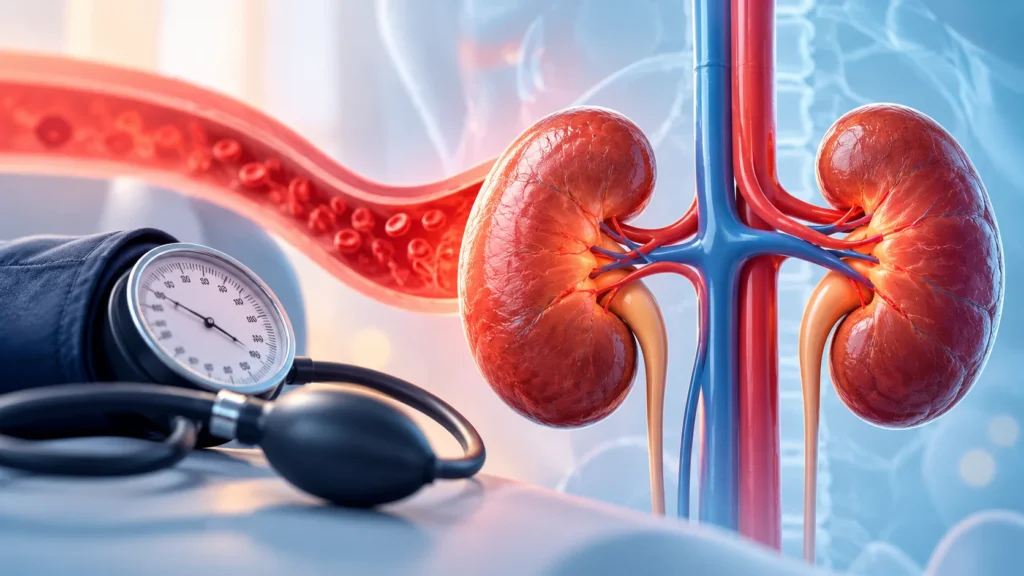
Hypertensive nephropathy is a kidney disease caused by long-term high blood pressure. When blood pressure stays high for months or years, it puts constant pressure on the tiny blood vessels inside the kidneys. Over time, these vessels become damaged, narrowed, or hardened. This reduces the kidney’s ability to filter waste, remove extra fluid, and maintain the balance of salts and minerals in the body.
Many people do not realize how closely the kidneys and blood pressure are connected. High blood pressure can damage the kidneys, and damaged kidneys can make blood pressure harder to control. This creates a cycle that can slowly lead to chronic kidney disease if not managed properly. In the early stages, there may be no symptoms at all, which is why hypertensive nephropathy is often discovered only during routine blood or urine tests.
What is Hypertensive Nephropathy?
Hypertensive nephropathy is kidney damage that happens because of uncontrolled or long-standing high blood pressure. The kidneys contain millions of tiny filters called nephrons. These filters help remove waste and extra fluid from the blood. When blood pressure is high for a long time, it damages the small blood vessels that supply these filters.
As the vessels become damaged, the kidneys cannot filter blood as efficiently. Waste products begin to build up in the body, and important proteins may leak into the urine. Over time, this can lead to chronic kidney disease and, in severe cases, kidney failure.
The condition usually develops slowly. Many patients do not notice any symptoms in the early stages. This is why regular monitoring of blood pressure and kidney function is important, especially for people with diabetes, obesity, family history of kidney disease, or long-term hypertension.
How High Blood Pressure Damages the Kidneys
High blood pressure affects the kidneys in several ways.
- It increases pressure inside the tiny blood vessels of the kidneys.
- It causes the vessel walls to become thick and stiff.
- It reduces blood flow to the kidney filters.
- It damages the glomeruli, which are the main filtering units.
- It causes protein to leak into the urine.
- It reduces the kidney’s ability to remove waste and extra fluid.
- It can lead to scarring of kidney tissue over time.
As kidney function declines, the body may retain more fluid and salt. This can raise blood pressure even further. That is why controlling blood pressure is one of the most important parts of protecting kidney health.
Types and Stages of Hypertensive Nephropathy
Hypertensive nephropathy can be classified based on how much kidney function is affected.
Based on severity
- Early hypertensive nephropathy, where kidney function is still normal or only mildly reduced.
- Moderate hypertensive nephropathy, where kidney function starts to decline and protein may appear in urine.
- Advanced hypertensive nephropathy, where kidney function is significantly reduced and complications begin to appear.
- End-stage kidney disease, where the kidneys can no longer filter waste properly and dialysis or transplant may be needed.
Based on progression
- Slowly progressive disease, where kidney function declines gradually over years.
- Rapidly progressive disease, where function worsens faster, often due to uncontrolled blood pressure or other kidney conditions.
- Stable disease, where damage is present but progression is controlled with treatment.
Stages of chronic kidney disease
- Stage 1, where there is kidney damage but normal filtering function.
- Stage 2, where there is mild reduction in kidney function.
- Stage 3, where there is moderate reduction in kidney function.
- Stage 4, where there is severe reduction in kidney function.
- Stage 5, where kidney failure is present and dialysis or transplant may be needed.
Causes of Hypertensive Nephropathy
The main cause of hypertensive nephropathy is long-term high blood pressure. But several other factors can increase the risk or speed up kidney damage.
Common causes and contributing factors
- Uncontrolled high blood pressure over many years.
- Poorly managed hypertension.
- Diabetes, which adds extra stress to the kidneys.
- Obesity.
- High salt intake.
- Smoking.
- Alcohol overuse.
- Lack of physical activity.
- Chronic stress.
- Family history of kidney disease.
- Aging.
- Certain medicines that affect kidney function.
- Recurrent urinary infections.
- Other kidney diseases that worsen damage.
Why the kidneys are vulnerable
The kidneys receive a large amount of blood flow every minute. Because they filter blood continuously, they are exposed to pressure changes more than many other organs. When blood pressure stays high, the delicate vessels inside the kidneys are among the first to suffer damage.
Risk Factors for Hypertensive Nephropathy
Some people are more likely to develop hypertensive nephropathy than others.
Higher-risk groups
- People with long-term high blood pressure.
- People with poorly controlled blood pressure.
- Patients with diabetes.
- People who are overweight or obese.
- Smokers.
- People with a family history of kidney disease.
- Older adults.
- People with high salt intake.
- Patients with chronic heart disease.
- People with a history of kidney stones or recurrent infections.
- Those taking medicines that can affect kidney function without medical supervision.
Why risk increases in these groups
- High blood pressure directly damages kidney vessels.
- Diabetes adds extra stress to kidney filters.
- Obesity increases inflammation and blood pressure.
- Smoking reduces blood flow and worsens vessel damage.
- Family history can increase susceptibility.
- Poor diet and lifestyle habits make blood pressure harder to control.
Symptoms of Hypertensive Nephropathy
In the early stages, there may be no symptoms at all. Many people feel normal even when kidney damage is already present. This is why regular testing is important.
Early symptoms
- Mild fatigue.
- Swelling around the eyes, especially in the morning.
- Swelling in the feet or ankles.
- Foamy urine.
- Slightly raised blood pressure.
- Reduced concentration.
- Poor appetite.
Symptoms as disease progresses
- More noticeable swelling in legs, feet, or face.
- Frequent urination, especially at night.
- Reduced urine output in later stages.
- Persistent tiredness.
- Weakness.
- Nausea.
- Loss of appetite.
- Itchy skin.
- Shortness of breath.
- Muscle cramps.
- Trouble sleeping.
- Poor concentration or memory issues.
Signs of advanced kidney disease
- Severe swelling.
- High blood pressure that is hard to control.
- Persistent nausea or vomiting.
- Shortness of breath.
- Confusion.
- Reduced urine output.
- Bone pain.
- Easy bruising or bleeding.
- Severe weakness.
Hypertensive Nephropathy in Different Groups
In older adults
- Kidney function may decline faster due to age-related changes.
- Other conditions like heart disease or diabetes may add stress.
- Symptoms may be mistaken for normal aging.
- Regular monitoring is very important.
In patients with diabetes
- Diabetes and high blood pressure together increase kidney damage risk.
- Proteinuria may appear earlier.
- Blood sugar and blood pressure both need to be controlled.
- Kidney function should be checked regularly.
In younger adults
- May be linked to uncontrolled hypertension, obesity, or lifestyle factors.
- Often ignored because symptoms are mild or absent.
- Early detection can prevent long-term damage.
How is Hypertensive Nephropathy Diagnosed?
Diagnosis is based on blood pressure history, symptoms, physical examination, and kidney function tests. Since early disease may have no symptoms, routine testing is important for people with high blood pressure.
Diagnostic steps
- Detailed history of blood pressure and duration.
- Review of symptoms.
- Family history of kidney disease.
- Physical examination for swelling and blood pressure.
- Blood tests to check kidney function.
- Urine tests to check for protein or blood.
- Imaging tests to see kidney structure.
- Sometimes kidney biopsy in selected cases.
Common tests that may be done
- Serum creatinine.
- Blood urea.
- Estimated glomerular filtration rate, or eGFR.
- Urine routine test.
- Urine protein or albumin test.
- Urine protein creatinine ratio.
- Electrolyte levels.
- Hemoglobin and blood count.
- Ultrasound of kidneys.
- Sometimes CT or MRI if needed.
- Kidney biopsy in uncertain or complex cases.
Why diagnosis matters
Early diagnosis allows treatment to start before major damage occurs. It also helps identify other causes of kidney disease and guide the right treatment plan.
Treatment for Hypertensive Nephropathy
Treatment aims to control blood pressure, protect kidney function, reduce protein loss, and prevent complications.
1. Blood pressure control
The most important part of treatment is bringing blood pressure under control.
- Medicines are prescribed based on the patient’s condition.
- Regular monitoring is needed.
- Lifestyle changes support medicine treatment.
- Target blood pressure is set by the doctor based on kidney function and other conditions.
2. Medicines to protect the kidneys
Certain medicines help protect the kidneys in addition to lowering blood pressure.
- ACE inhibitors or ARBs are often used because they reduce protein leakage and protect kidney function.
- Diuretics may be used to reduce fluid overload.
- Other blood pressure medicines may be added as needed.
- Medicines are adjusted based on kidney function and electrolyte levels.
3. Managing related conditions
Other health problems must be controlled to protect the kidneys.
- Diabetes should be managed carefully.
- Cholesterol should be controlled.
- Anemia should be treated if present.
- Bone and mineral problems should be addressed.
- Heart disease risk should be reduced.
4. Diet and lifestyle support
Diet and lifestyle play a major role in slowing disease progression.
- Reduce salt intake.
- Maintain healthy weight.
- Stay physically active as advised.
- Avoid smoking.
- Limit alcohol.
- Follow a kidney-friendly diet if advised.
- Stay hydrated according to medical guidance.
5. Treatment of complications
As kidney disease progresses, other problems may need treatment.
- Anemia may need iron or other medicines.
- Bone health may need vitamin D or other support.
- Fluid overload may need diuretics.
- Electrolyte imbalance may need correction.
- In advanced disease, dialysis may be required.
6. Dialysis or transplant in advanced disease
When kidney function becomes very low, the kidneys can no longer do their job properly.
- Dialysis helps remove waste and extra fluid.
- There are different types of dialysis depending on the patient’s condition.
- Kidney transplant may be considered in suitable patients.
- The decision depends on overall health, kidney function, and other factors.
Diet Advice for Hypertensive Nephropathy
Diet is an important part of managing kidney health and blood pressure.
General diet pointers
- Reduce salt intake.
- Avoid processed and packaged foods.
- Eat fresh fruits and vegetables as advised.
- Choose lean protein sources.
- Limit high-potassium foods if advised.
- Limit high-phosphorus foods if advised.
- Stay hydrated according to kidney function.
- Avoid excessive protein intake.
- Follow a diet plan made by a nephrologist or dietitian.
Foods that may need attention
- Pickles, papads, and salty snacks.
- Processed meats.
- Canned foods.
- Excessive dairy in some cases.
- High-potassium fruits like bananas or oranges if advised.
- High-phosphorus foods like certain nuts or colas if advised.
Why diet matters
The kidneys help regulate salt, water, potassium, and phosphorus. When kidney function is reduced, these substances can build up in the body. A proper diet helps reduce this burden and supports better kidney health.
Lifestyle Measures That Help
Lifestyle changes support medical treatment and help slow disease progression.
Helpful habits
- Take medicines regularly.
- Monitor blood pressure at home if advised.
- Exercise as recommended.
- Maintain healthy weight.
- Avoid smoking.
- Limit alcohol.
- Manage stress.
- Get enough sleep.
- Attend follow-up appointments.
- Avoid self-medication, especially painkillers.
Why lifestyle matters
Even small changes can make a big difference over time. Consistent blood pressure control and healthy habits can slow kidney damage and reduce the risk of complications.
Possible Complications
If hypertensive nephropathy is not managed well, it can lead to serious problems.
Possible complications
- Chronic kidney disease progression.
- Kidney failure.
- Fluid overload.
- High potassium levels.
- Anemia.
- Bone disease.
- Heart disease.
- Stroke.
- Nerve damage.
- Poor quality of life.
- Need for dialysis or transplant.
Why complications happen
As kidney function declines, the body cannot remove waste and extra fluid properly. This affects blood pressure, heart health, bones, blood counts, and overall well-being. Early treatment helps reduce these risks.
When to See a Doctor
Medical review is important if you have high blood pressure or symptoms that suggest kidney problems.
See a doctor if you have:
- High blood pressure that is hard to control.
- Swelling in feet, ankles, or around the eyes.
- Foamy urine.
- Blood in urine.
- Reduced urine output.
- Persistent fatigue.
- Nausea or poor appetite.
- Shortness of breath.
- Family history of kidney disease.
- Diabetes along with high blood pressure.
Prevention of Hypertensive Nephropathy
Prevention is possible in many cases by controlling blood pressure and protecting kidney health.
Prevention pointers
- Keep blood pressure under control.
- Check kidney function regularly if you have hypertension.
- Reduce salt intake.
- Maintain healthy weight.
- Exercise regularly.
- Avoid smoking.
- Limit alcohol.
- Manage diabetes if present.
- Avoid unnecessary painkillers.
- Stay hydrated as advised.
- Follow up with a doctor regularly.
Special prevention advice for high-risk groups
- People with diabetes should monitor both blood sugar and kidney function.
- People with family history should get regular check-ups.
- Older adults should be monitored more closely.
- Patients on long-term medicines should review kidney safety with their doctor.
Why Choose Rama Hospital for Hypertensive Nephropathy Treatment?
Hypertensive nephropathy needs careful, long-term management. It is not just about lowering blood pressure. It is about protecting the kidneys, preventing complications, and maintaining quality of life.
Why hospital care matters
- Expert nephrology evaluation.
- Accurate diagnosis with proper tests.
- Personalized treatment plans.
- Blood pressure management.
- Kidney function monitoring.
- Diet and lifestyle guidance.
- Support for advanced disease if needed.
Trust and authority points
- Experienced nephrology team.
- Modern diagnostic facilities.
- Coordinated care with cardiology, endocrinology, and dietetics.
- Long-term follow-up and monitoring.
- Patient education focused on prevention and control.
Frequently Asked Questions (FAQs)
1. What is hypertensive nephropathy?
Hypertensive nephropathy is kidney damage caused by long-term high blood pressure. It affects the small blood vessels in the kidneys and reduces their ability to filter waste properly.
2. Can high blood pressure really damage the kidneys?
Yes, high blood pressure is one of the leading causes of kidney disease. Over time, it damages the tiny vessels inside the kidneys and reduces their filtering ability.
3. What are the early signs of hypertensive nephropathy?
Early signs may include mild fatigue, swelling around the eyes, foamy urine, or slightly raised blood pressure. Many people have no symptoms at all in the beginning.
4. Can hypertensive nephropathy be cured?
It cannot always be fully reversed, but it can be managed and slowed with proper treatment. Early detection and blood pressure control can protect kidney function for a long time.
5. What tests are done to diagnose it?
Common tests include serum creatinine, eGFR, urine protein test, urine routine, and kidney ultrasound. These help assess kidney function and detect damage.
6. What is the most important treatment?
The most important treatment is controlling blood pressure. Medicines, diet, and lifestyle changes all work together to protect the kidneys.
7. Can diet help in hypertensive nephropathy?
Yes, diet plays a major role. Reducing salt, avoiding processed foods, and following a kidney-friendly diet can reduce the burden on the kidneys and help control blood pressure.
8. When is dialysis needed?
Dialysis is needed when kidney function becomes very low and the body can no longer remove waste and extra fluid properly. This usually happens in advanced or end-stage kidney disease.
Conclusion
Hypertensive nephropathy is a serious but manageable condition caused by long-term high blood pressure. It develops slowly and often has no symptoms in the early stages, which is why regular monitoring is so important. If left untreated, it can progress to chronic kidney disease and even kidney failure.
The key to managing hypertensive nephropathy is early detection, strict blood pressure control, proper medicines, diet support, and regular follow-up. For patients with high blood pressure, diabetes, swelling, foamy urine, or family history of kidney disease, a medical evaluation can make a major difference. With the right care, kidney function can be protected and complications can be reduced.
Rama Hospital can help evaluate hypertensive nephropathy, identify the stage of kidney involvement, and provide a clear treatment plan that supports long-term kidney health and overall well-being.