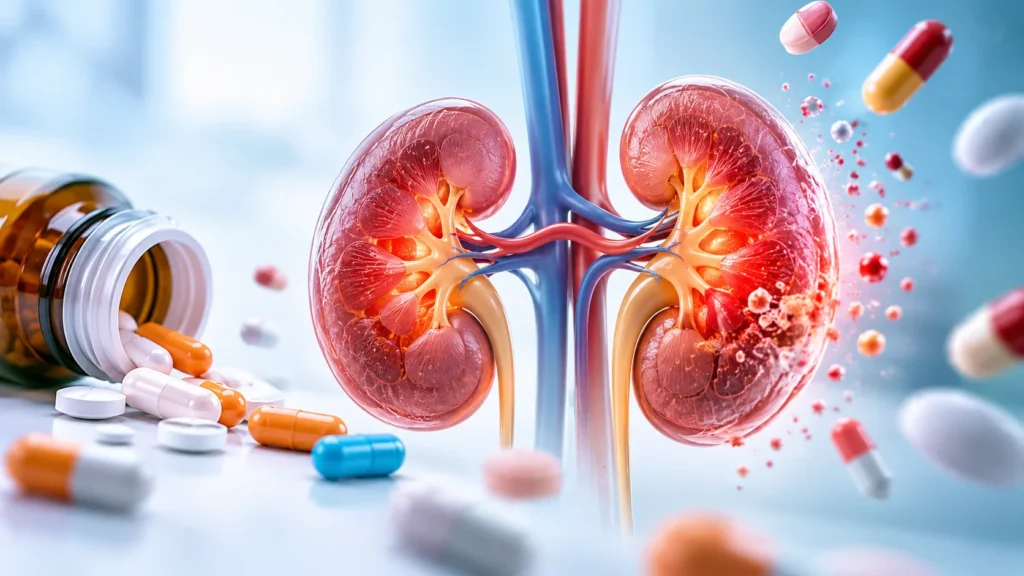
Drug-induced kidney injury is a condition where medicines or other substances cause damage to the kidneys. The kidneys are responsible for filtering waste, balancing fluids and electrolytes, and supporting blood pressure and overall health. When certain drugs affect the kidneys, this filtering system can slow down or stop working properly. In many cases, the damage is temporary and improves once the medicine is stopped or adjusted. But in some patients, especially those with existing kidney disease or other health problems, the injury can become serious and long-lasting.
Many people do not realize that common medicines can affect the kidneys. Painkillers, antibiotics, blood pressure medicines, contrast dyes used in scans, and some herbal or over-the-counter products can all contribute to kidney injury in certain situations. The risk increases when medicines are taken in high doses, for long periods, or without medical supervision. Dehydration, infections, diabetes, high blood pressure, and pre-existing kidney disease can make the risk even higher.
What is Drug-Induced Kidney Injury?
Drug-induced kidney injury, also called medicine-related kidney damage or nephrotoxic injury, happens when a medicine or substance harms the kidneys. The kidneys are highly sensitive to changes in blood flow, toxins, and immune reactions. Some drugs can reduce blood flow to the kidneys, some can directly damage kidney cells, and others can cause inflammation or block urine flow.
The condition can be acute, meaning it develops quickly over hours or days, or chronic, meaning it develops slowly over months or years. Acute kidney injury is more common and often reversible if treated early. Chronic injury may lead to long-term kidney damage if the cause is not identified and managed.
Drug-induced kidney injury can happen in anyone, but some people are at higher risk. This includes older adults, people with diabetes or high blood pressure, patients with existing kidney disease, and those taking multiple medicines at the same time. Early recognition and treatment are important to protect kidney function and prevent complications.
Why the Kidneys are Vulnerable
The kidneys filter a large amount of blood every day. Because of this, they are exposed to many substances in the bloodstream, including medicines and their byproducts.
- The kidneys receive a large portion of the body’s blood flow.
- They filter and concentrate many drugs and toxins.
- Some medicines become more concentrated inside kidney cells.
- Reduced blood flow or dehydration makes the kidneys more sensitive.
- Certain drugs can trigger immune reactions inside the kidneys.
- Some medicines can block urine flow or cause crystals to form.
Because of these factors, even medicines that are normally safe can sometimes cause kidney injury, especially when risk factors are present.
Types of Drug-Induced Kidney Injury
Drug-induced kidney injury can happen in different ways depending on how the medicine affects the kidneys.
1. Reduced blood flow to the kidneys
Some medicines lower blood pressure too much or reduce blood flow to the kidneys. This can decrease filtration and cause acute kidney injury.
- Blood pressure medicines in some patients.
- Diuretics or water pills.
- Medicines used in heart failure or dehydration.
- Contrast dyes used in imaging tests.
- Non-steroidal anti-inflammatory drugs or painkillers.
2. Direct damage to kidney cells
Some medicines are toxic to the cells inside the kidneys. This can affect the tiny filters that clean the blood.
- Certain antibiotics.
- Chemotherapy drugs.
- Some antiviral medicines.
- Contrast dyes.
- Some painkillers in high or prolonged use.
3. Allergic or inflammatory reaction
Some drugs can trigger an immune reaction inside the kidneys. This causes inflammation and swelling that affects kidney function.
- Certain antibiotics.
- Anti-inflammatory medicines.
- Some blood pressure medicines.
- Some anticonvulsant medicines.
4. Crystal formation or blockage
Some medicines can form crystals inside the kidneys or urinary tract. These crystals can block urine flow and cause damage.
- Certain antibiotics.
- Some antiviral medicines.
- Chemotherapy drugs.
- Medicines that increase uric acid.
5. Chronic damage over time
Long-term use of certain medicines can cause slow, progressive kidney damage.
- Long-term use of painkillers.
- Some blood pressure medicines.
- Certain herbal or traditional products.
- Repeated exposure to contrast dyes.
Causes of Drug-Induced Kidney Injury
Many different medicines and substances can cause kidney injury. The risk depends on the dose, duration, patient health, and other factors.
Common medicines that may cause kidney injury
- Non-steroidal anti-inflammatory drugs or painkillers such as ibuprofen, naproxen, or diclofenac.
- Certain antibiotics such as aminoglycosides, vancomycin, or some cephalosporins.
- Contrast dyes used in CT scans or angiography.
- Diuretics or water pills.
- Blood pressure medicines such as ACE inhibitors or ARBs in some patients.
- Chemotherapy drugs.
- Antiviral medicines.
- Immunosuppressive medicines.
- Some herbal or traditional remedies.
- Over-the-counter products taken in excess.
Situations that increase risk
- Dehydration from vomiting, diarrhea, or poor fluid intake.
- Infection or sepsis.
- Heart failure or low blood pressure.
- Diabetes.
- High blood pressure.
- Existing chronic kidney disease.
- Older age.
- Taking multiple medicines at once.
- Long-term or high-dose use of certain medicines.
- Recent surgery or major illness.
Who is at Risk?
Some people are more likely to develop drug-induced kidney injury than others.
Higher-risk groups
- Older adults.
- People with diabetes.
- People with high blood pressure.
- Patients with chronic kidney disease.
- People with heart failure.
- Patients with dehydration or poor fluid intake.
- People taking multiple medicines.
- Patients with recent infections or hospitalization.
- People with autoimmune disease.
- Those with a history of kidney problems.
Why risk increases in these groups
- Kidney function may already be reduced.
- Blood flow to the kidneys may be lower.
- Medicines may be cleared more slowly.
- Dehydration makes the kidneys more vulnerable.
- Multiple medicines can interact and increase risk.
- Chronic illness reduces the body’s ability to recover.
Symptoms of Drug-Induced Kidney Injury
Symptoms depend on how quickly the injury develops and how severe it is. Some people may have no symptoms at first and only discover the problem through blood tests.
Early or mild symptoms
- Reduced urine output.
- Swelling in the legs, feet, or face.
- Fatigue or weakness.
- Nausea or poor appetite.
- Mild confusion.
- Shortness of breath in some cases.
More severe symptoms
- Very little or no urine.
- Severe swelling.
- Chest discomfort or breathing difficulty.
- Confusion or drowsiness.
- Nausea and vomiting.
- High blood pressure.
- Irregular heartbeat.
- Seizures in extreme cases.
Symptoms related to the underlying cause
- Fever or rash if there is an allergic reaction.
- Joint pain or body aches.
- Blood in urine in some cases.
- Pain in the side or back.
- Symptoms of infection such as fever or chills.
Signs of Kidney Injury on Tests
Many patients do not feel symptoms until kidney function is already affected. Blood and urine tests are important for early detection.
- Rising creatinine level in blood.
- Rising urea level.
- Reduced urine output.
- Protein or blood in urine.
- Electrolyte imbalance such as high potassium.
- Reduced kidney filtration rate.
- Changes in urine concentration or sediment.
How is Drug-Induced Kidney Injury Diagnosed?
Diagnosis is based on symptoms, medical history, medication review, and kidney function tests. Since many medicines can affect the kidneys, identifying the exact drug is important.
Diagnostic steps
- Detailed history of symptoms.
- Review of all medicines, including over-the-counter and herbal products.
- Assessment of fluid intake and dehydration.
- Medical history including diabetes, blood pressure, and kidney disease.
- Physical examination for swelling, blood pressure, and fluid status.
- Blood tests to check kidney function.
- Urine tests to check for protein, blood, or infection.
- Imaging tests if blockage or structural problem is suspected.
Common tests that may be done
- Serum creatinine.
- Blood urea nitrogen.
- Estimated glomerular filtration rate.
- Electrolytes such as sodium and potassium.
- Urine routine and microscopy.
- Urine protein test.
- Kidney ultrasound.
- CT scan or other imaging if needed.
- Kidney biopsy in selected complex cases.
Why diagnosis matters
Early diagnosis allows the medicine to be stopped or adjusted before more damage occurs. It also helps identify whether the injury is reversible or needs long-term management.
Treatment for Drug-Induced Kidney Injury
Treatment depends on the cause, severity, and how quickly the injury is detected. The main goal is to protect the kidneys and restore normal function.
1. Stop or adjust the medicine
The first step is usually to stop or reduce the medicine causing the injury.
- The doctor may stop the suspected drug.
- Dose may be reduced if the medicine is essential.
- Alternative medicines may be used.
- Timing or frequency may be adjusted.
2. Restore hydration
If dehydration is contributing to the injury, fluids may be needed.
- Oral fluids in mild cases.
- IV fluids in moderate or severe cases.
- Careful monitoring to avoid fluid overload.
3. Correct electrolyte imbalance
Kidney injury can affect salt and mineral balance.
- Potassium levels may need correction.
- Sodium and calcium may need monitoring.
- Acid-base balance may need treatment.
4. Manage blood pressure and circulation
Stable blood pressure is important for kidney recovery.
- Blood pressure medicines may be adjusted.
- Low blood pressure may need treatment.
- Heart function may be assessed if needed.
5. Treat underlying infection or illness
If infection or another illness is contributing, it must be treated.
- Antibiotics may be used if infection is present.
- Sepsis may need urgent hospital care.
- Other conditions may need specialist treatment.
6. Dialysis in severe cases
In some patients, kidneys cannot filter waste properly for a period of time. Dialysis may be needed temporarily.
- Removes waste and excess fluid.
- Corrects electrolyte imbalance.
- Supports the body while kidneys recover.
- May be temporary or long-term depending on severity.
7. Monitoring and follow-up
Recovery is tracked with repeat tests.
- Kidney function is monitored over days or weeks.
- Urine output is tracked.
- Electrolytes are checked.
- Medicines are reviewed to prevent recurrence.
Recovery After Drug-Induced Kidney Injury
Recovery depends on how early the injury is detected and whether there is existing kidney disease.
Recovery after mild injury
- Kidney function may return to normal within days or weeks.
- Symptoms such as swelling or fatigue may improve.
- Medicines may be restarted at lower dose if needed.
Recovery after severe injury
- Recovery may take longer.
- Some patients may need temporary dialysis.
- Long-term kidney function may be reduced.
- Regular follow-up is important.
Factors that affect recovery
- Age.
- Existing kidney disease.
- Severity of injury.
- Speed of treatment.
- Presence of other illnesses.
- Number of medicines involved.
Possible Complications
If not treated early, drug-induced kidney injury can lead to serious problems.
Possible complications
- Chronic kidney disease.
- Permanent loss of kidney function.
- Fluid overload in the body.
- High potassium levels.
- Acid buildup in the blood.
- Heart rhythm problems.
- Severe infection or sepsis.
- Need for long-term dialysis.
- Increased risk of cardiovascular disease.
Why complications happen
When the kidneys stop filtering properly, waste and fluid build up in the body. This can affect the heart, lungs, brain, and blood chemistry. Early treatment reduces the risk of these complications.
When to See a Doctor
Medical evaluation is important if there are signs of kidney injury or if medicines may be affecting kidney function.
See a doctor if you have:
- Reduced urine output.
- Swelling in legs, feet, or face.
- Fatigue or weakness.
- Nausea or vomiting.
- Confusion or drowsiness.
- Blood in urine.
- Pain in the side or back.
- Recent use of new medicine.
- History of kidney disease.
- High blood pressure or diabetes.
Prevention of Drug-Induced Kidney Injury
Prevention is possible in many cases with careful medicine use and regular monitoring.
Prevention pointers
- Take medicines only as prescribed.
- Avoid self-medicating with painkillers.
- Do not take herbal or over-the-counter products without advice.
- Stay well hydrated unless advised otherwise.
- Inform your doctor about all medicines you take.
- Get kidney function tests if you are at risk.
- Avoid long-term use of painkillers without supervision.
- Be careful with contrast scans if kidney function is reduced.
- Review medicines regularly if you take multiple drugs.
Special prevention advice for high-risk groups
- Older adults should have regular kidney check-ups.
- Diabetic patients should monitor kidney function.
- Patients with heart failure should be careful with fluid balance.
- People with chronic kidney disease should avoid nephrotoxic drugs when possible.
- Patients on long-term medicines should have periodic blood tests.
Why Choose Rama Hospital for Drug-Induced Kidney Injury Treatment?
Drug-induced kidney injury requires careful evaluation, timely treatment, and long-term monitoring. A hospital with experienced nephrologists, critical care support, and advanced testing can make a major difference in outcomes.
Why hospital care matters
- Expert evaluation by nephrology specialists.
- Advanced blood and urine testing.
- Imaging and diagnostic support.
- Safe management of medicines and fluids.
- Dialysis support if needed.
- Monitoring for recovery and prevention of recurrence.
Trust and authority points
- Experienced nephrology team.
- Modern diagnostic technology.
- Emergency and critical care support.
- Patient education on safe medicine use.
- Comprehensive care from diagnosis to recovery.
Frequently Asked Questions (FAQs)
1. What is drug-induced kidney injury?
Drug-induced kidney injury is damage to the kidneys caused by medicines or other substances. It can happen suddenly or develop over time. The kidneys may stop filtering waste properly, leading to fluid and electrolyte problems.
2. Can common painkillers cause kidney injury?
Yes, painkillers such as ibuprofen, naproxen, or diclofenac can cause kidney injury in some people, especially if taken in high doses or for long periods. Risk is higher in dehydration, older age, or existing kidney disease.
3. Is drug-induced kidney injury reversible?
Many cases are reversible if detected early and the medicine is stopped or adjusted. Some patients recover fully within days or weeks. In severe cases, recovery may take longer or some kidney damage may remain.
4. What are the early signs of kidney injury from medicines?
Early signs may include reduced urine, swelling, fatigue, nausea, or weakness. Some people have no symptoms at first and only discover the problem through blood tests. Regular monitoring is important in high-risk patients.
5. Can dehydration increase the risk?
Yes, dehydration is a major risk factor. When the body is low on fluids, blood flow to the kidneys decreases and they become more sensitive to medicine-related damage. Staying hydrated helps protect kidney function.
6. Can herbal medicines cause kidney injury?
Yes, some herbal or traditional products can harm the kidneys, especially if taken in high doses or for long periods. They may contain substances that are toxic or interact with other medicines. Always inform your doctor about any herbal products you use.
7. Do I need dialysis for drug-induced kidney injury?
Not always. Dialysis is needed only in severe cases where the kidneys cannot filter waste or balance fluids properly. Many patients recover without dialysis if treated early.
8. How can I prevent kidney injury from medicines?
Take medicines only as prescribed, stay hydrated, and avoid self-medicating with painkillers or herbal products. Inform your doctor about all medicines you take and get kidney tests if you are at risk.
Conclusion
Drug-induced kidney injury is a serious but often preventable condition. Many common medicines can affect the kidneys, especially when taken in high doses, for long periods, or in patients with existing risk factors. Early recognition and treatment are key to protecting kidney function and avoiding long-term damage.
The most important steps are identifying the medicine causing the injury, stopping or adjusting it, restoring hydration and electrolyte balance, and monitoring recovery. For patients with reduced urine, swelling, fatigue, or a history of kidney disease, a medical evaluation can make a major difference. With the right care, most patients recover well and can prevent future kidney problems.
Rama Hospital can help evaluate drug-induced kidney injury, identify the cause, and provide a clear treatment plan that supports kidney recovery and long-term health.