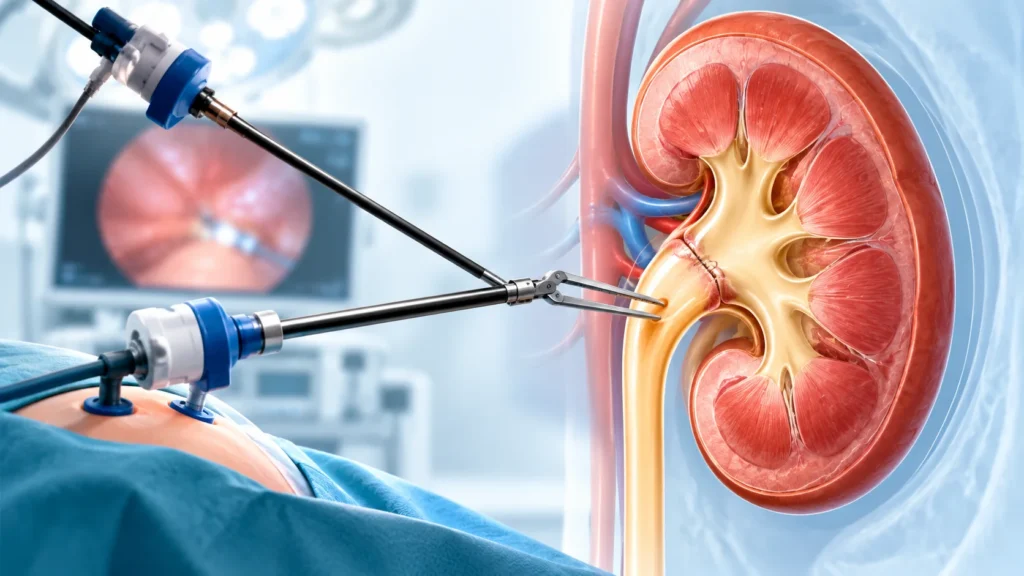
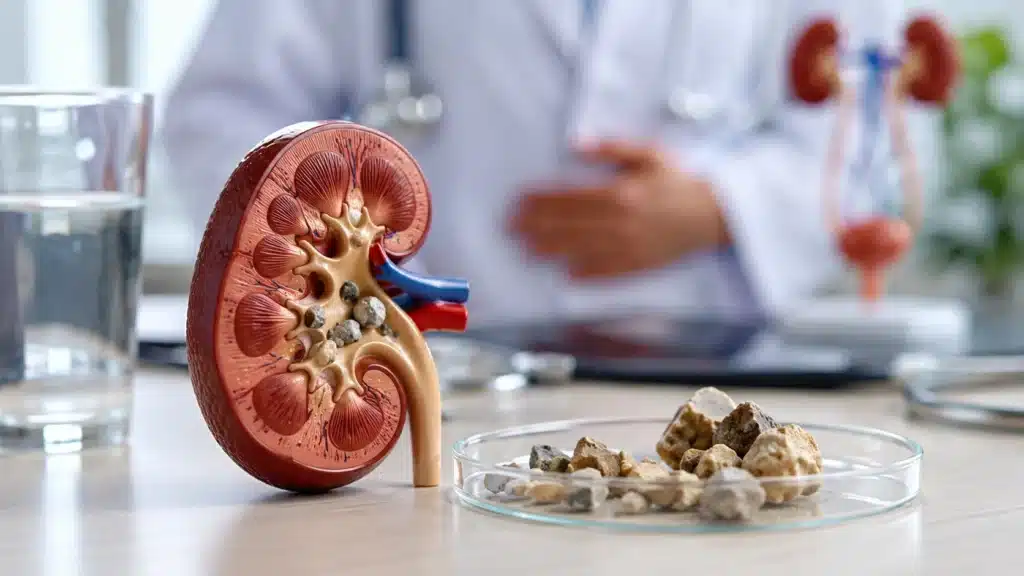
Laparoscopic pyeloplasty is a minimally invasive surgical procedure used to treat a blockage at the junction where the kidney meets the ureter, called the pelvi-ureteric junction or PUJ. This blockage prevents urine from draining properly from the kidney into the ureter, leading to swelling of the kidney, pain, infection, or long-term kidney damage. The condition is known as pelvi-ureteric junction obstruction or PUJ obstruction.
In the past, this problem was treated with open surgery, which required a larger cut and longer recovery. Today, laparoscopic pyeloplasty allows surgeons to perform the same repair through a few small incisions using a camera and special instruments. This approach offers less pain, smaller scars, shorter hospital stay, and faster recovery compared to open surgery.
What is Laparoscopic Pyeloplasty?
Laparoscopic pyeloplasty is a surgical procedure to repair a blockage at the pelvi-ureteric junction, which is the area where the renal pelvis of the kidney connects to the ureter. The ureter is the tube that carries urine from the kidney to the bladder. When this junction is narrowed or blocked, urine cannot drain properly, causing the kidney to swell.
During laparoscopic pyeloplasty, the surgeon makes a few small incisions in the abdomen. A camera called a laparoscope is inserted through one incision, and special instruments are inserted through the others. The surgeon removes the narrowed segment and reconnects the healthy parts of the renal pelvis and ureter to restore normal urine flow.
This procedure is considered the gold standard for treating PUJ obstruction in many patients because it offers the same success rate as open surgery but with less pain and faster recovery.
Why is Laparoscopic Pyeloplasty Done?
Laparoscopic pyeloplasty is done to relieve blockage at the PUJ and restore normal urine drainage from the kidney.
Main reasons for the procedure
- Pelvi-ureteric junction obstruction causing kidney swelling.
- Recurrent urinary tract infections due to poor drainage.
- Pain in the flank or back due to kidney blockage.
- Kidney stones associated with PUJ obstruction.
- Decreased kidney function due to long-standing blockage.
- Hydronephrosis detected on imaging.
- Failed previous treatment or stenting.
Goals of the procedure
- Relieve the blockage.
- Restore normal urine flow.
- Preserve or improve kidney function.
- Reduce pain and infection risk.
- Prevent long-term kidney damage.
Who Needs Laparoscopic Pyeloplasty?
Not every patient with kidney swelling needs this surgery. The decision is based on symptoms, imaging, and kidney function.
Patients who may need the procedure
- Adults with symptomatic PUJ obstruction.
- Children with significant blockage affecting kidney function.
- Patients with recurrent infections due to poor drainage.
- Those with pain or flank discomfort.
- Patients with progressive hydronephrosis.
- Those with reduced kidney function on tests.
- Patients with stones associated with PUJ obstruction.
Patients who may not need surgery
- Mild blockage without symptoms.
- Stable kidney function.
- No recurrent infection or pain.
- Small blockage that can be monitored.
- Patients who are high risk for surgery and can be managed conservatively.
Causes of PUJ Obstruction
PUJ obstruction can be present from birth or develop later in life.
Common causes include:
- Congenital narrowing of the PUJ present since birth.
- Abnormal blood vessel crossing the ureter.
- Scar tissue from previous surgery or infection.
- Kidney stones causing blockage.
- Tumors or masses pressing on the ureter.
- Fibrosis or inflammation of the ureter.
- Previous trauma to the area.
Why the blockage matters
When urine cannot drain properly, pressure builds up inside the kidney. Over time, this can damage kidney tissue and reduce function. Early treatment helps preserve kidney health.
Symptoms of PUJ Obstruction
Symptoms depend on the severity and duration of the blockage.
Common symptoms include:
- Pain in the flank or back.
- Pain that worsens after drinking fluids.
- Recurrent urinary tract infections.
- Blood in urine.
- Nausea or vomiting.
- Feeling of fullness in the abdomen.
- Kidney swelling detected on scan.
- Reduced urine output in severe cases.
Symptoms in children
- Recurrent urinary infections.
- Poor feeding or growth.
- Abdominal mass or swelling.
- Pain or discomfort.
- Hydronephrosis detected on ultrasound.
How is the Need for Surgery Diagnosed?
Diagnosis is based on symptoms, imaging, and kidney function tests.
Diagnostic steps
- Detailed history of pain, infections, or urinary symptoms.
- Physical examination.
- Ultrasound to check kidney swelling.
- CT urography or MR urography for detailed anatomy.
- Renal scan to assess kidney function and drainage.
- Blood tests to check kidney function.
- Urine tests to check for infection.
Why diagnosis matters
Accurate diagnosis confirms the site and severity of blockage and helps decide whether surgery is needed. It also helps plan the type of repair and assess kidney function before surgery.
How is Laparoscopic Pyeloplasty Performed?
The procedure is done under general anesthesia and usually takes two to four hours depending on complexity.
Steps of the procedure
- Patient is given general anesthesia.
- Small incisions are made in the abdomen.
- Carbon dioxide gas is used to inflate the abdomen for better view.
- Laparoscope and instruments are inserted.
- The blocked segment of the PUJ is identified.
- The narrowed part is removed.
- The renal pelvis and ureter are reconnected.
- A stent may be placed to support healing.
- Incisions are closed with sutures.
Types of repair
- Dismembered pyeloplasty, which is the most common technique.
- Non-dismembered pyeloplasty, used in selected cases.
- Fenger pyeloplasty, used for short strictures.
- Y-V pyeloplasty, used in specific anatomical situations.
Benefits of Laparoscopic Pyeloplasty
This procedure offers several advantages over open surgery.
Key benefits
- Smaller incisions and less scarring.
- Less pain after surgery.
- Shorter hospital stay.
- Faster return to normal activities.
- Lower risk of wound infection.
- Better cosmetic result.
- Same success rate as open surgery.
- Less blood loss.
- Quicker recovery of bowel function.
Why patients prefer this approach
- Less discomfort during recovery.
- Early return to work or school.
- Smaller scars.
- Reduced need for strong pain medicines.
- Better overall experience.
Risks and Complications
Like any surgery, laparoscopic pyeloplasty has some risks, though serious complications are uncommon.
Possible risks include:
- Bleeding.
- Infection.
- Urine leak.
- Injury to nearby organs.
- Recurrence of blockage.
- Need for open surgery in complex cases.
- Anesthesia-related risks.
- Stent-related discomfort.
- Need for additional procedures.
How risks are minimized
- Careful patient selection.
- Experienced surgical team.
- Proper imaging before surgery.
- Use of stents when needed.
- Close post-operative monitoring.
- Follow-up imaging to confirm healing.
Recovery After Laparoscopic Pyeloplasty
Recovery is usually faster than open surgery, but it still needs care and follow-up.
Hospital stay
- Most patients stay one to three days.
- Some may go home the same day in selected cases.
- Longer stay if complications occur.
Immediate recovery
- Pain is managed with medicines.
- Early walking is encouraged.
- Diet is started gradually.
- Catheter may be placed temporarily.
- Stent may remain for a few weeks.
At home recovery
- Rest for the first few days.
- Avoid heavy lifting for a few weeks.
- Follow wound care instructions.
- Take medicines as prescribed.
- Attend follow-up visits.
- Return to normal activities gradually.
Follow-up care
- Stent removal after a few weeks.
- Imaging to confirm drainage.
- Kidney function tests.
- Monitoring for recurrence or complications.
Diet and Lifestyle After Surgery
Good nutrition and lifestyle help recovery.
Diet advice
- Start with light, easy-to-digest food.
- Increase fluid intake as advised.
- Avoid constipation.
- Eat balanced meals with protein and vitamins.
- Avoid alcohol and smoking during recovery.
Activity advice
- Walk regularly.
- Avoid heavy lifting for a few weeks.
- Avoid strenuous exercise until cleared.
- Return to work gradually.
- Follow surgeon’s advice on driving and travel.
Possible Long-Term Outcomes
Most patients do well after laparoscopic pyeloplasty.
Expected outcomes
- Relief of pain.
- Improved urine drainage.
- Preservation or improvement of kidney function.
- Reduced infections.
- Normal daily activity.
- Low recurrence rate in experienced hands.
Factors affecting outcome
- Severity and duration of blockage.
- Kidney function before surgery.
- Presence of stones or infection.
- Patient age and overall health.
- Surgical expertise and technique.
When to Contact the Doctor After Surgery
Patients should contact their doctor if they notice warning signs.
- Fever or chills.
- Increasing pain.
- Redness or discharge from wound.
- Blood in urine.
- Difficulty passing urine.
- Nausea or vomiting.
- Swelling in abdomen.
- Signs of infection.
Why Choose Rama Hospital for Laparoscopic Pyeloplasty?
Laparoscopic pyeloplasty requires skilled urological surgeons, advanced equipment, and careful post-operative care. A hospital with experienced urologists and minimally invasive surgery teams can make a major difference in outcomes.
- Expert urology team.
- Advanced laparoscopic equipment.
- Experienced anesthesia and critical care support.
- Structured recovery and follow-up.
- Comprehensive care from diagnosis to full recovery.
- Patient education and family support.
Frequently Asked Questions (FAQs)
Why is this surgery needed?
It is needed when there is a blockage at the pelvi-ureteric junction causing pain, infection, or kidney swelling. The surgery removes the blockage and reconnects the healthy parts.
Is laparoscopic pyeloplasty safe?
Yes, it is generally safe when performed by experienced surgeons. Like any surgery, it has some risks, but serious complications are uncommon.
How long does the surgery take?
The procedure usually takes two to four hours depending on the complexity. Some cases may take longer if there are stones or previous surgery.
How long is the hospital stay?
Most patients stay one to three days. Some may go home the same day in selected cases. Longer stay may be needed if complications occur.
Is a stent placed during surgery?
Yes, in most cases a stent is placed to support healing and maintain urine flow. It is usually removed after a few weeks in a minor procedure.
What is recovery like?
Recovery is usually faster than open surgery. Most patients return to normal activities within a few weeks. Heavy lifting and strenuous exercise should be avoided until cleared.
Can the blockage come back?
Recurrence is uncommon in experienced hands. Follow-up imaging is done to confirm proper drainage and ensure long-term success.
Is this surgery painful?
Pain is usually less than open surgery because incisions are small. Pain medicines are given to keep the patient comfortable during recovery.
Can children undergo this surgery?
Yes, laparoscopic pyeloplasty is performed in children with PUJ obstruction. The approach and technique may vary based on age and anatomy.
Conclusion
Laparoscopic pyeloplasty is a safe and effective minimally invasive surgery for treating blockage at the pelvi-ureteric junction. It relieves pain, restores urine flow, and protects kidney function. Compared to open surgery, it offers less pain, smaller scars, and faster recovery.
The most important steps are proper diagnosis, careful surgical planning, and structured follow-up. For patients with PUJ obstruction, early treatment can prevent long-term kidney damage and improve quality of life. With the right care, most patients recover well and return to normal activity.
Rama Hospital can help evaluate PUJ obstruction, provide expert laparoscopic pyeloplasty, and guide patients through recovery to ensure the best possible outcome.