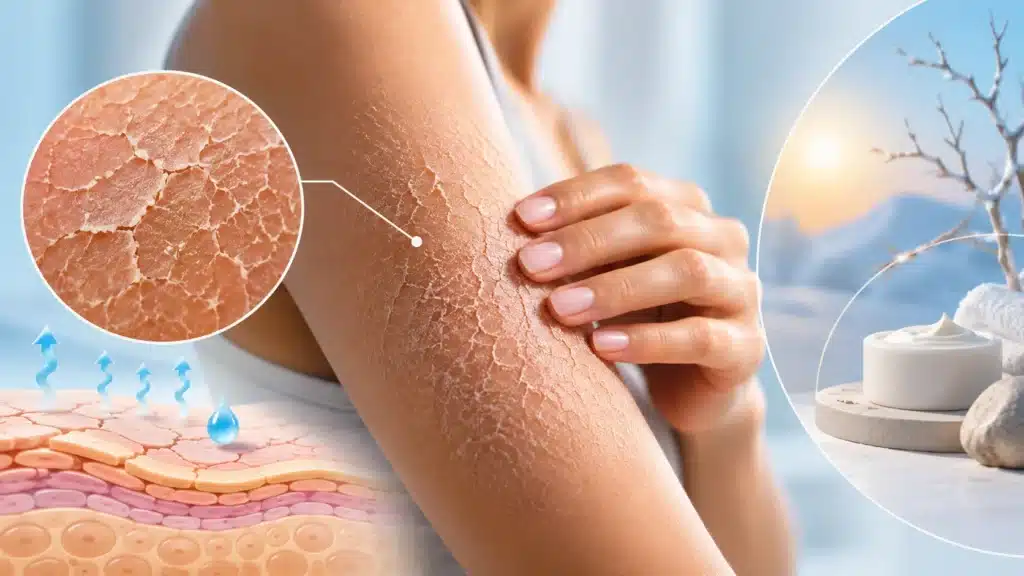
Xerosis is the medical term for dry skin. It happens when the skin loses too much moisture and is unable to hold water properly. As a result, the skin may feel rough, tight, flaky, itchy, or scaly. In many people, xerosis is a mild problem that improves with moisturizers and small changes in daily skincare. In others, especially during winter or in people with underlying skin conditions, it can become persistent, uncomfortable, and even painful.
Dry skin is common in all age groups, but it is more frequent in older adults, people living in dry climates, and those who wash their skin frequently or use harsh soaps. Many people ignore dryness until it starts causing itching, redness, cracking, or irritation. However, xerosis is not just a cosmetic concern. When the skin barrier becomes weak, it can lead to inflammation, infection, eczema-like changes, and poor quality of life.
What is Xerosis?
Xerosis is a condition in which the skin becomes dry, rough, and less able to retain moisture. The outermost layer of the skin, called the stratum corneum, normally acts as a barrier. It holds water inside and protects the body from irritants, germs, and environmental damage. When this barrier is disturbed, water escapes from the skin and the surface becomes dry.
Dry skin may appear on any part of the body, but it is most common on the hands, arms, legs, elbows, knees, feet, and face. In some people, dryness is limited to small patches. In others, it may affect large areas of the body. The condition can range from mild flaking to severe cracking and inflammation.
Xerosis is not a disease in itself in most cases. It is usually a symptom of reduced skin moisture or a sign of an underlying skin condition. Identifying the cause is important because treatment may differ depending on whether dryness is due to weather, harsh products, aging, or a medical condition such as eczema or psoriasis.
Why Skin Becomes Dry
The skin stays healthy when it has enough water, natural oils, and protective fats. These elements form a barrier that keeps moisture in and irritants out. When this barrier is damaged, the skin loses water faster than it can replace it.
- Natural oils in the skin help seal in moisture.
- Water content in the outer skin layer keeps it soft and flexible.
- Skin barrier proteins help protect against irritation and infection.
- Environmental factors like cold air and low humidity pull moisture out of the skin.
- Harsh soaps and hot water strip away natural oils.
- Aging reduces the skin’s ability to hold water.
When any of these factors are disturbed, the skin becomes dry, tight, and more prone to irritation. This is why xerosis often worsens in winter, in air-conditioned rooms, or after frequent washing.
Types of Xerosis
Xerosis can be classified based on severity, location, and underlying cause.
Based on severity
- Mild xerosis, where the skin feels slightly rough or tight but there is no visible scaling.
- Moderate xerosis, where flaking, itching, and visible dryness are present.
- Severe xerosis, where the skin becomes very rough, cracked, inflamed, or painful.
Based on location
- Facial xerosis, which affects the cheeks, forehead, and around the eyes.
- Hand xerosis, which is common in people who wash hands frequently or use chemicals.
- Foot xerosis, which often affects the heels and soles.
- Body xerosis, which affects arms, legs, back, and torso.
- Scalp dryness, which may cause flaking and itching.
Based on cause
- Weather-related xerosis, caused by cold, dry, or windy conditions.
- Aging-related xerosis, caused by reduced oil production in older skin.
- Product-related xerosis, caused by harsh soaps, detergents, or skincare products.
- Medical xerosis, caused by conditions like eczema, psoriasis, thyroid disease, or diabetes.
- Occupational xerosis, caused by frequent hand washing, chemicals, or outdoor work.
Causes of Xerosis
Xerosis has many possible causes. In most people, it is a combination of environmental factors and personal habits rather than one single reason.
Common causes include:
- Cold weather and low humidity.
- Hot showers or frequent bathing.
- Harsh soaps and cleansers.
- Over-washing of hands or face.
- Use of alcohol-based sanitizers.
- Aging and reduced natural oil production.
- Dry indoor air from heaters or air conditioners.
- Sun exposure and wind.
- Dehydration and low water intake.
- Certain medicines such as diuretics or acne treatments.
- Skin conditions like eczema, psoriasis, or dermatitis.
- Medical conditions like thyroid disease, diabetes, or kidney disease.
- Poor nutrition or vitamin deficiencies.
- Genetic tendency toward dry skin.
Environmental factors
- Winter air is drier and pulls moisture from the skin.
- Indoor heating reduces humidity further.
- Air conditioning can also dry out the skin.
- Wind and sun exposure damage the skin barrier.
- Hard water with high mineral content may worsen dryness.
Lifestyle factors
- Long hot showers strip natural oils.
- Frequent handwashing removes protective oils.
- Use of harsh scrubs or exfoliants damages the skin barrier.
- Not using moisturizer after bathing allows moisture to escape.
- Wearing rough fabrics like wool can irritate dry skin.
Who is at Risk?
Some people are more likely to develop xerosis than others.
Higher-risk groups
- Older adults, especially over 60.
- People living in cold or dry climates.
- People with a history of eczema or allergies.
- Those who wash hands frequently, such as healthcare workers or cleaners.
- People who work with chemicals, detergents, or water.
- Individuals with diabetes or thyroid disease.
- People taking medicines that dry the skin.
- Those with poor dietary intake of essential fatty acids or vitamins.
- People with a family history of dry skin or atopic dermatitis.
Why risk increases in these groups
- Aging skin produces less oil and holds less water.
- Frequent washing removes the protective barrier.
- Medical conditions affect skin hydration and healing.
- Certain medicines reduce oil production or increase water loss.
- Genetic factors make some people naturally prone to dryness.
Symptoms of Xerosis
Symptoms can range from mild discomfort to severe irritation depending on how dry the skin has become.
Common symptoms include:
- Tight or rough feeling skin.
- Flaking or peeling.
- Itching.
- Redness.
- Fine cracks in the skin.
- Scaly patches.
- Dull or ashy appearance.
- Sensitivity to touch.
- Discomfort after bathing.
- Worsening in winter or dry environments.
Signs of more severe xerosis
- Deep cracks or fissures.
- Bleeding from cracked skin.
- Pain or burning.
- Thick, rough patches.
- Redness and inflammation.
- Signs of infection such as pus, warmth, or swelling.
- Sleep disturbance due to itching.
Symptoms in different body areas
- Face: tightness, flaking around the nose or cheeks.
- Hands: roughness, cracks, and pain especially around fingertips.
- Feet: thick, dry heels that may crack.
- Legs: scaly, itchy patches especially on the shins.
- Scalp: flaking and itching similar to dandruff.
Xerosis in Different Age Groups
Dry skin can affect anyone, but the pattern and cause may differ by age.
In children
- Often linked to eczema or atopic dermatitis.
- May appear on cheeks, arms, or legs.
- Can be triggered by harsh soaps or bubble baths.
- Usually improves with gentle skincare and moisturizers.
In adults
- Often related to lifestyle, weather, or work habits.
- Common on hands, face, and legs.
- May worsen with stress, poor sleep, or dehydration.
- Can be managed with a good skincare routine.
In older adults
- More common due to reduced oil production and thinner skin.
- May affect large areas of the body.
- Higher risk of cracking and infection.
- Needs regular moisturizing and gentle care.
How is Xerosis Diagnosed?
Most cases of xerosis are diagnosed based on appearance and history. A dermatologist can usually identify dry skin just by looking at it.
Diagnostic steps
- Visual examination of the skin.
- History of symptoms and duration.
- Review of skincare products and bathing habits.
- Assessment of environmental exposure.
- Check for signs of eczema, psoriasis, or infection.
- Review of medical history and medicines.
Tests that may be done if needed
- Skin scraping or biopsy if a fungal infection or other condition is suspected.
- Allergy testing if contact dermatitis is suspected.
- Blood tests to check thyroid, diabetes, or kidney function if an underlying cause is suspected.
- Patch testing to identify allergens in skincare products.
Why diagnosis matters
Dry skin can look similar to eczema, fungal infection, psoriasis, or contact dermatitis. Proper diagnosis ensures the right treatment is given rather than just applying moisturizer without addressing the real cause.
Treatment for Xerosis
Treatment aims to restore moisture, repair the skin barrier, and prevent further dryness. In most cases, a combination of skincare and lifestyle changes is enough.
1. Moisturizers
The most important treatment is regular use of a good moisturizer.
- Apply moisturizer within a few minutes after bathing.
- Use thick creams or ointments rather than lotions for very dry skin.
- Look for ingredients like ceramides, glycerin, hyaluronic acid, or urea.
- Apply at least twice a day, or more often if skin is very dry.
- Reapply after washing hands or exposure to water.
2. Gentle cleansing
How you clean your skin matters as much as what you apply after.
- Use mild, fragrance-free cleansers.
- Avoid harsh soaps and antibacterial washes.
- Use lukewarm water instead of hot water.
- Keep baths or showers short, around 5 to 10 minutes.
- Pat skin dry gently instead of rubbing.
3. Humidifiers
Adding moisture to the air can help prevent skin from drying out.
- Use a humidifier in bedrooms during winter or in dry climates.
- Keep indoor humidity between 40 and 60 percent.
- Clean the humidifier regularly to avoid mold.
4. Avoid irritants
Reducing exposure to things that damage the skin barrier helps a lot.
- Wear gloves while doing dishes or cleaning.
- Avoid harsh detergents and fabric softeners.
- Choose soft, breathable fabrics like cotton.
- Avoid scratching, which can worsen irritation and cause infection.
5. Medical treatment if needed
If dryness is severe or linked to another condition, a dermatologist may prescribe additional treatment.
- Topical corticosteroids for inflammation or eczema.
- Antibiotics if there is a skin infection.
- Antifungal treatment if a fungal cause is suspected.
- Prescription moisturizers or barrier repair creams.
- Treatment of underlying conditions like thyroid disease or diabetes.
Skincare Routine for Xerosis
A simple, consistent routine can make a big difference in managing dry skin.
Morning routine
- Cleanse gently with a mild, non-foaming cleanser.
- Apply a hydrating serum or moisturizer.
- Use sunscreen with moisturizing properties.
Evening routine
- Cleanse gently to remove dirt and makeup.
- Apply a richer moisturizer or overnight cream.
- Use a humidifier while sleeping if the air is dry.
Weekly care
- Use a gentle exfoliant once a week if skin tolerates it.
- Avoid harsh scrubs or physical exfoliants.
- Apply a deep moisturizing mask or overnight treatment if needed.
Tips for hands and feet
- Apply a thick cream or ointment before bed.
- Wear cotton gloves or socks overnight to lock in moisture.
- Use a pumice stone gently on rough heels if needed.
- Avoid walking barefoot on rough surfaces.
Diet and Hydration for Healthy Skin
What you eat and drink also affects skin hydration.
Helpful dietary habits
- Drink enough water throughout the day.
- Include foods rich in omega-3 fatty acids like fish, flaxseeds, and walnuts.
- Eat fruits and vegetables rich in vitamins A, C, and E.
- Include healthy fats like avocado, olive oil, and nuts.
- Avoid excessive caffeine and alcohol, which can dehydrate the body.
Nutrients that support skin health
- Vitamin A supports skin repair and cell turnover.
- Vitamin C helps collagen production and healing.
- Vitamin E acts as an antioxidant and protects skin cells.
- Zinc supports wound healing and skin barrier function.
- Omega-3 fatty acids reduce inflammation and support skin moisture.
Possible Complications
Untreated or severe xerosis can lead to complications beyond simple dryness.
- Eczema or dermatitis.
- Skin infections from cracked skin.
- Cellulitis in severe cases.
- Chronic itching and sleep disturbance.
- Thickened, leathery skin from repeated scratching.
- Pigmentation changes.
- Pain and discomfort in daily activities.
- Reduced quality of life.
Why complications happen
When the skin barrier is broken, bacteria and irritants can enter more easily. This leads to inflammation, infection, and worsening dryness. Repeated scratching also damages the skin further, creating a cycle of irritation and dryness.
When to See a Doctor
Most dry skin can be managed at home, but some situations need medical attention.
- Dryness persists despite regular moisturizing.
- Itching is severe or keeps you awake.
- Skin is cracked, bleeding, or painful.
- There are signs of infection like pus, warmth, or swelling.
- Dryness is spreading or getting worse.
- You have a known skin condition like eczema or psoriasis.
- You suspect a medicine or product is causing the problem.
Prevention of Xerosis
Preventing dry skin is easier than treating severe dryness.
Prevention pointers
- Use a gentle, moisturizing cleanser.
- Take short, lukewarm showers.
- Apply moisturizer immediately after bathing.
- Use a humidifier in dry environments.
- Wear gloves when using water or chemicals.
- Protect skin from wind and sun.
- Stay hydrated.
- Avoid harsh exfoliants and fragranced products.
- Choose soft fabrics like cotton over wool or synthetics.
Seasonal care
- In winter, use richer creams and consider a humidifier.
- In summer, use lighter moisturizers but still hydrate regularly.
- After swimming, rinse off chlorine and apply moisturizer.
- In windy weather, protect exposed skin with clothing or barrier cream.
Why Choose Rama Hospital for Xerosis Treatment?
Dry skin may seem like a minor issue, but when it is persistent, severe, or linked to another condition, expert care makes a difference. A dermatologist can identify the cause, rule out other skin conditions, and create a treatment plan that works for your skin type and lifestyle.
- Accurate diagnosis to rule out eczema, psoriasis, or infection.
- Personalized skincare and treatment plan.
- Prescription-strength treatments if needed.
- Management of underlying conditions affecting the skin.
- Guidance on safe and effective products.
- Follow-up care to ensure improvement.
Frequently Asked Questions (FAQs)
Is xerosis the same as eczema?
No, they are related but not the same. Xerosis is simple dryness, while eczema is an inflammatory skin condition that often includes dryness along with redness, itching, and rash. Dry skin can sometimes lead to eczema if not managed.
Can xerosis be cured?
Yes, in most cases xerosis can be managed very well with moisturizers and lifestyle changes. If it is caused by an underlying condition, treating that condition is also important. Some people need ongoing skincare to prevent recurrence.
What is the best moisturizer for dry skin?
Thick creams or ointments with ingredients like ceramides, glycerin, or urea work best for very dry skin. Look for fragrance-free products to avoid irritation. Apply right after bathing for best results.
Can hot showers cause dry skin?
Yes, hot water strips natural oils from the skin and damages the barrier. This leads to dryness and irritation. Short, lukewarm showers are better for skin health.
Can dry skin lead to infection?
Yes, if the skin cracks deeply, bacteria can enter and cause infection. Signs include redness, warmth, swelling, pus, or pain. If these occur, medical care is needed.
Is dry skin more common in winter?
Yes, cold air and indoor heating reduce humidity and pull moisture from the skin. This is why many people notice more dryness in winter. Using a humidifier and richer moisturizer can help.
Can diet affect dry skin?
Yes, dehydration and lack of certain nutrients like omega-3 fatty acids, vitamins A, C, and E can worsen dryness. Drinking enough water and eating a balanced diet supports skin health.
When should I see a dermatologist for dry skin?
If dryness is severe, persistent, painful, or not improving with moisturizers, it is time to see a dermatologist. Also seek care if there are signs of infection or if you suspect an underlying skin condition.
Conclusion
Xerosis, or dry skin, is a common condition that affects people of all ages. While it may seem like a minor issue, persistent dryness can lead to itching, cracking, infection, and a lower quality of life. The good news is that most cases can be managed effectively with a good skincare routine, moisturizers, and small lifestyle changes.
The most important steps are gentle cleansing, regular moisturizing, avoiding irritants, and protecting the skin from harsh weather. For people with severe or persistent dryness, or those with underlying conditions like eczema or thyroid disease, a dermatologist can provide the right diagnosis and treatment. With consistent care, dry skin can be controlled and comfort restored.
Rama Hospital can help evaluate xerosis, identify the cause, and provide a personalized skincare and treatment plan that supports healthy, comfortable skin.