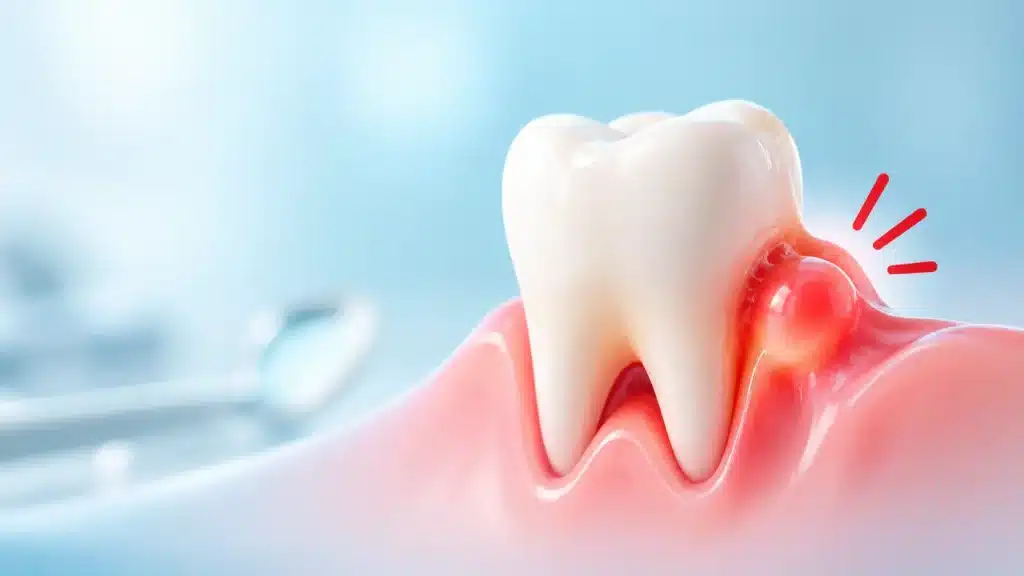
A dental abscess is a painful infection that forms in or around a tooth. It happens when bacteria enter the tooth or the surrounding gum tissue and cause a pocket of pus to develop. This infection can lead to severe toothache, swelling, fever, bad taste in the mouth, and difficulty in opening the mouth or swallowing. If not treated on time, a dental abscess can spread to nearby areas and become a serious health problem.
Many people ignore early tooth pain, assuming it will go away on its own. However, an abscess does not heal without proper treatment. The infection can damage the tooth, bone, and surrounding tissues. In some cases, it can even spread to the neck, face, or other parts of the body. That is why early diagnosis and treatment are very important.
What is a Dental Abscess?
A dental abscess is a collection of pus caused by a bacterial infection in the tooth, gum, or surrounding bone. The body sends white blood cells to fight the infection, and pus forms as a result of this battle between the immune system and bacteria.
The abscess can develop in different areas. It may start inside the tooth, in the space where the nerve and blood vessels are located. It may also form in the gum next to the tooth root, or in the space between the tooth and gum. In all cases, the infection needs to be drained and treated to prevent it from spreading.
A dental abscess is not just a simple toothache. It is a sign that there is an active infection that can damage the tooth and surrounding structures. Without treatment, the infection can spread to the jaw, neck, or even deeper areas of the head and neck.
Types of Dental Abscess
Dental abscesses are classified based on where the infection is located.
Periapical abscess
- This type forms at the tip of the tooth root.
- It usually happens when the nerve inside the tooth dies due to deep decay, trauma, or repeated dental procedures.
- The infection spreads from inside the tooth to the surrounding bone.
- It often causes severe, throbbing pain and sensitivity.
Periodontal abscess
- This type forms in the gum next to the tooth root.
- It is often related to gum disease and deep pockets between the tooth and gum.
- The infection starts in the supporting structures of the tooth rather than inside the tooth itself.
- It may cause swelling, tenderness, and a bad taste in the mouth.
Gingival abscess
- This type is limited to the gum tissue and does not involve the tooth or periodontal ligament.
- It may happen due to food impaction, injury, or foreign object stuck in the gum.
- It causes localized swelling and pain in the gum area.
Combined abscess
- Some patients have features of both periapical and periodontal abscess.
- This can happen when infection spreads between the tooth and surrounding gum and bone.
- Treatment may be more complex and requires careful evaluation.
Causes of Dental Abscess
A dental abscess is caused by bacteria entering the tooth or gum tissue. Several factors can increase the risk of this happening.
Common causes include:
- Untreated tooth decay that reaches the inner part of the tooth.
- Deep cavities that allow bacteria to reach the pulp.
- Cracked or chipped teeth that provide a pathway for bacteria.
- Trauma or injury to the tooth that damages the nerve.
- Previous dental work that may have weakened the tooth structure.
- Gum disease that creates deep pockets around the teeth.
- Poor oral hygiene that allows plaque and bacteria to build up.
- Food particles stuck between teeth or under the gum line.
- Weakened immune system that makes infection more likely.
- Dry mouth that reduces the natural protective effect of saliva.
Why infection develops
When bacteria enter the tooth or gum, the body tries to fight them. White blood cells gather at the site, and pus forms as a result. Because the pus has nowhere to drain, pressure builds up, causing pain, swelling, and tenderness. If the infection is not drained, it can spread to nearby tissues.
Risk Factors for Dental Abscess
Some people are more likely to develop a dental abscess than others.
Higher-risk groups
- People with poor oral hygiene.
- Individuals who skip regular dental check-ups.
- Patients with untreated cavities or cracked teeth.
- People with gum disease or bleeding gums.
- Those who consume a lot of sugary food and drinks.
- Smokers, who are at higher risk of gum disease.
- People with dry mouth due to medicines or medical conditions.
- Patients with diabetes or weakened immunity.
- Individuals who have had previous dental trauma.
- People who delay treatment for tooth pain.
Why risk increases in these groups
- Poor hygiene allows bacteria to grow easily.
- Untreated decay gives bacteria direct access to the inner tooth.
- Gum disease creates spaces where bacteria can hide and multiply.
- Sugar feeds bacteria and increases acid production.
- Smoking reduces blood flow and healing capacity in the gums.
- Medical conditions can reduce the body’s ability to fight infection.
Symptoms of Dental Abscess
Symptoms can vary depending on the type and severity of the abscess. Some people have mild discomfort at first, while others experience severe pain and swelling.
Common symptoms include:
- Severe, throbbing toothache.
- Pain that may spread to the jaw, ear, or neck.
- Sensitivity to hot or cold food and drinks.
- Pain when chewing or biting.
- Swelling in the face, cheek, or gum.
- Redness and tenderness in the gum area.
- Bad taste in the mouth.
- Foul-smelling breath.
- Fever or feeling unwell.
- Swollen lymph nodes in the neck.
- Difficulty opening the mouth.
- Difficulty swallowing or breathing in severe cases.
Signs that the infection may be spreading
- Increasing facial swelling.
- High fever.
- Severe pain not relieved by painkillers.
- Difficulty swallowing or breathing.
- Swelling under the tongue or in the neck.
- General weakness or confusion.
Emergency warning signs
- Swelling that affects vision or breathing.
- Inability to open the mouth properly.
- Severe fever with chills.
- Rapidly increasing swelling.
- Difficulty swallowing saliva.
- Severe pain with spreading redness.
Dental Abscess in Children
Children can also develop dental abscess, often due to untreated cavities or trauma to the teeth.
Common signs in children
- Complaint of toothache or crying during eating.
- Swelling in the face or gum.
- Fever.
- Refusal to eat or drink.
- Bad breath.
- Irritability or disturbed sleep.
- Visible swelling or pimple-like bump on the gum.
Why it can be serious in children
Children may not always be able to describe their pain clearly. Infection can spread quickly in young patients. Delayed treatment can affect the development of permanent teeth and overall health. Parents should not ignore persistent tooth pain or facial swelling in children.
Dental Abscess in Adults
Adults may develop dental abscess due to long-standing decay, gum disease, or previous dental work.
Adults may experience:
- Persistent tooth pain.
- Sensitivity to temperature.
- Swelling in the face or jaw.
- Bad taste or smell.
- Difficulty chewing on the affected side.
- General tiredness or fever.
Higher-risk adult groups
- People with diabetes.
- Smokers.
- Patients with gum disease.
- Those who avoid regular dental visits.
- Individuals with dry mouth due to medicines.
How is Dental Abscess Diagnosed?
Diagnosis is based on symptoms, clinical examination, and dental imaging.
Diagnostic steps
- Detailed history of pain, swelling, and triggers.
- Examination of the tooth, gum, and surrounding area.
- Checking for tenderness, swelling, and pus discharge.
- Testing tooth sensitivity and vitality.
- Evaluating gum pockets and bleeding.
- Imaging tests to assess the extent of infection.
Common tests that may be done
- Dental X-ray to see the tooth root and surrounding bone.
- Panoramic X-ray for a broader view of the jaws.
- CT scan in severe cases to assess spread of infection.
- Pulp vitality tests to check if the nerve is alive.
- Clinical probing to measure gum pocket depth.
Why diagnosis matters
Proper diagnosis helps determine the type of abscess and the best treatment approach. It also helps rule out other causes of facial pain and swelling. Early diagnosis can prevent the infection from spreading and reduce the need for more complex treatment.
Treatment for Dental Abscess
Treatment depends on the type of abscess, severity of infection, and overall health of the patient.
1. Drainage of the abscess
The first step is to drain the pus to relieve pressure and pain.
- A small incision may be made in the gum to allow pus to drain.
- The area is cleaned thoroughly with antiseptic solution.
- In some cases, a small drain may be placed temporarily.
2. Root canal treatment
If the infection is inside the tooth, root canal treatment may be needed.
- The infected pulp is removed from inside the tooth.
- The inner space is cleaned, shaped, and filled.
- A crown may be placed to protect the tooth.
- This saves the tooth and removes the source of infection.
3. Tooth extraction
If the tooth is severely damaged and cannot be saved, extraction may be necessary.
- The tooth is removed under local anesthesia.
- The infection is cleaned from the socket.
- This prevents the infection from spreading further.
4. Antibiotics
Antibiotics may be prescribed if the infection has spread or if the patient has fever or swelling.
- Common antibiotics include amoxicillin, metronidazole, or others as needed.
- Antibiotics alone cannot cure the abscess without drainage or dental treatment.
- They help control the spread of infection and reduce symptoms.
5. Pain management
Pain relief is an important part of treatment.
- Painkillers may be prescribed to reduce discomfort.
- Anti-inflammatory medicines can help with swelling.
- Patients are advised to avoid chewing on the affected side.
6. Hospital care if needed
In severe cases, hospital admission may be required.
- IV antibiotics may be given for serious infection.
- Surgical drainage may be needed for deep or spreading abscess.
- Airway support may be required if swelling affects breathing.
Home Care for Mild Symptoms
Some home care measures can help manage symptoms until professional treatment is received.
Helpful home care steps
- Rinse the mouth with warm salt water several times a day.
- Avoid very hot or cold food and drinks.
- Take prescribed painkillers as directed.
- Maintain gentle oral hygiene without irritating the area.
- Avoid squeezing or poking the swollen area.
- Stay hydrated and rest adequately.
What to avoid
- Do not apply heat to the swollen area.
- Do not try to drain the abscess yourself.
- Do not place aspirin or other medicines directly on the gum.
- Do not ignore increasing pain or swelling.
Diet Advice During Recovery
Food choices can help reduce discomfort during recovery.
Foods that are usually easier to tolerate
- Soft foods such as khichdi, porridge, or mashed potatoes.
- Lukewarm soups.
- Yogurt and curd if tolerated.
- Boiled vegetables.
- Soft fruits like banana.
Foods to avoid initially
- Very hot or very cold items.
- Hard, crunchy, or chewy foods.
- Spicy or acidic foods.
- Sugary snacks and drinks.
- Alcohol and tobacco.
Possible Complications
Untreated dental abscess can lead to serious complications.
Complications may include:
- Spread of infection to the jawbone.
- Infection of the floor of the mouth or neck.
- Sinus infection from upper tooth abscess.
- Cavernous sinus thrombosis, a rare but serious condition.
- Sepsis, which is a body-wide infection.
- Damage to surrounding teeth and bone.
- Loss of the affected tooth.
- Difficulty in breathing or swallowing in severe cases.
In severe cases, complications may include:
- Ludwig’s angina, a serious infection under the tongue.
- Mediastinitis, infection spreading to the chest.
- Brain abscess in rare cases.
- Hospitalization and intensive care.
When to See a Doctor
Dental abscess should always be evaluated by a dentist or oral surgeon.
- You have persistent tooth pain.
- There is swelling in the gum or face.
- You notice a pimple-like bump on the gum.
- You have bad taste or foul breath.
- You have sensitivity to hot or cold.
- Pain worsens when lying down.
Prevention of Dental Abscess
Preventing dental abscess is possible with good oral hygiene and regular dental care.
Prevention pointers
- Brush teeth twice daily with fluoride toothpaste.
- Floss daily to remove food between teeth.
- Use mouthwash as advised by your dentist.
- Visit the dentist regularly for check-ups and cleaning.
- Treat cavities and gum problems early.
- Avoid excessive sugary food and drinks.
- Stop smoking to reduce gum disease risk.
- Wear a mouthguard during sports to prevent tooth injury.
- Manage dry mouth with adequate hydration and medical advice.
- Do not ignore persistent tooth pain or sensitivity.
For children
- Start oral hygiene early with parental help.
- Limit sugary snacks and bedtime bottles.
- Schedule regular dental visits from an early age.
- Teach proper brushing and flossing habits.
Why Choose Rama Hospital for Dental Abscess Treatment?
Dental abscess is not just a tooth problem. It is an infection that can affect overall health if not treated properly. A hospital-based dental and oral surgery team can provide comprehensive care, especially for severe or complicated cases.
- Expert evaluation by dental and oral surgery specialists.
- Advanced imaging for accurate diagnosis.
- Safe drainage and infection control procedures.
- Root canal and extraction services under one roof.
- Antibiotic management and pain control.
- Emergency care for severe facial swelling or airway risk.
- Coordination with other departments if infection spreads.
Frequently Asked Questions (FAQs)
Can a dental abscess heal on its own?
No, a dental abscess cannot heal on its own. The infection needs to be drained and the source treated with root canal, extraction, or other dental procedures. Delaying treatment can lead to serious complications.
Is root canal painful?
Modern root canal treatment is done under local anesthesia and is usually not painful. Most patients feel relief after the procedure because the infected tissue is removed and pressure is reduced.
Can antibiotics cure a dental abscess?
Antibiotics can help control the spread of infection, but they cannot cure the abscess alone. The pus must be drained and the tooth or gum treated by a dentist to remove the source of infection.
How long does it take to recover?
Recovery depends on the severity of the abscess and the treatment. Pain and swelling often improve within a few days after drainage and treatment. Complete healing may take one to two weeks with proper care.
Can a dental abscess cause fever?
Yes, fever is a common sign that the infection is active and may be spreading. Fever along with tooth pain and swelling should be evaluated urgently by a dentist or doctor.
What happens if a dental abscess is left untreated?
Untreated abscess can lead to severe pain, tooth loss, bone damage, and spread of infection to the face, neck, or other parts of the body. In rare cases, it can become life-threatening.
How can I prevent dental abscess?
Good oral hygiene, regular dental visits, early treatment of cavities, and healthy diet can prevent most dental abscesses. Avoiding tobacco and managing dry mouth also reduce the risk.
Conclusion
A dental abscess is a serious infection that requires prompt dental care. It can cause severe pain, swelling, fever, and other symptoms that affect daily life. If not treated on time, it can spread to nearby areas and lead to dangerous complications. The good news is that most dental abscesses can be treated effectively with drainage, root canal, extraction, and proper antibiotic support.
The most important steps are early recognition, professional evaluation, and timely treatment. For patients with persistent tooth pain, facial swelling, fever, or difficulty in opening the mouth, a dental or emergency evaluation should not be delayed. With the right care, patients can recover fully and prevent future infections.
Rama Hospital can provide comprehensive evaluation and treatment for dental abscess, along with guidance on oral hygiene, prevention, and long-term dental health.