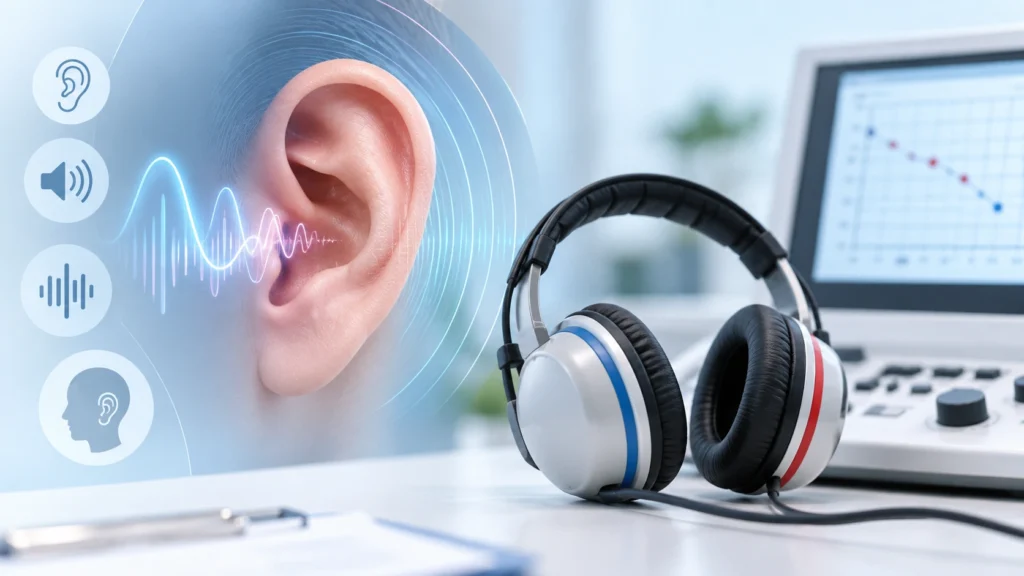
Audiometry is a specialized hearing test that measures how well a person can hear different sounds, pitches, and speech. It is one of the most important tools used by ENT specialists and audiologists to evaluate hearing loss, ear problems, and auditory function. The test is safe, painless, and usually takes less than an hour. It helps identify the type and degree of hearing loss, guide treatment decisions, and monitor changes over time.
Many people assume hearing loss only affects older adults. However, it can happen at any age due to noise exposure, infections, medicines, aging, genetic factors, or other medical conditions. Early detection through audiometry can prevent further damage, improve communication, and enhance quality of life. For children, early hearing assessment is critical for speech and language development.
What is Audiometry?
Audiometry is a series of hearing tests that measure a person’s ability to hear sounds at different frequencies and volumes. The test evaluates how well the ear, auditory nerve, and brain work together to process sound. It can detect hearing loss, determine its severity, and identify whether the problem is in the outer ear, middle ear, inner ear, or auditory nerve.
The test is conducted by a trained audiologist or ENT specialist in a sound-treated room. The patient listens to sounds through headphones or ear inserts and responds when they hear them. The results are plotted on a graph called an audiogram, which shows the softest sounds a person can hear at different pitches.
Audiometry is used for diagnosis, screening, monitoring, and treatment planning. It is essential for evaluating hearing complaints, fitting hearing aids, assessing workplace noise exposure, and monitoring ear health in patients on certain medicines.
Types of Audiometry Tests
There are several types of audiometry tests, each designed to evaluate different aspects of hearing.
Pure Tone Audiometry
- This is the most common hearing test.
- It measures the softest sounds a person can hear at different frequencies.
- Sounds are presented through headphones for air conduction and through a vibrator behind the ear for bone conduction.
- Helps distinguish between conductive, sensorineural, and mixed hearing loss.
- Suitable for adults and older children who can follow instructions.
Speech Audiometry
- This test evaluates how well a person understands speech.
- It measures the softest level at which speech can be heard and understood.
- Words are presented at different volumes, and the patient repeats them.
- Helps assess real-world hearing ability and communication challenges.
- Useful for hearing aid fitting and rehabilitation planning.
Tympanometry
- This test evaluates middle ear function.
- It measures how the eardrum moves in response to changes in air pressure.
- Helps detect fluid in the middle ear, eardrum perforation, or Eustachian tube problems.
- Quick and painless, often done alongside pure tone audiometry.
- Especially useful for children with recurrent ear infections.
Otoacoustic Emissions (OAE)
- This test checks the function of inner ear hair cells.
- A small probe is placed in the ear canal to measure sounds produced by the inner ear.
- Often used for newborn hearing screening.
- Does not require active response from the patient.
- Helps detect early inner ear damage.
Auditory Brainstem Response (ABR)
- This test evaluates the auditory nerve and brainstem pathways.
- Electrodes are placed on the scalp to measure brain responses to sound.
- Used for infants, young children, or patients who cannot respond reliably.
- Helps diagnose nerve-related hearing problems.
- May be used to assess neurological conditions affecting hearing.
High-Frequency Audiometry
- This test evaluates hearing at higher frequencies than standard tests.
- Useful for detecting early noise-induced or age-related hearing loss.
- Often used for occupational health screening.
- Helps monitor patients on ototoxic medicines.
- Provides more detailed information about high-pitch hearing.
Who Needs Audiometry?
Audiometry is recommended for people of all ages who have hearing concerns or risk factors.
Adults who should get tested
- People noticing difficulty hearing conversations.
- Those who frequently ask others to repeat themselves.
- Individuals turning up television or phone volume excessively.
- People working in noisy environments.
- Patients with a history of ear infections or ear surgery.
- Those taking medicines that may affect hearing.
- Older adults as part of routine health check-ups.
- People with tinnitus or dizziness.
- Individuals with diabetes, high blood pressure, or thyroid issues.
- Those with a family history of hearing loss.
Children who should get tested
- Newborns as part of universal hearing screening.
- Infants with risk factors such as prematurity or infections.
- Children with speech or language delays.
- Kids with recurrent ear infections.
- Students struggling in school due to hearing issues.
- Children exposed to loud noise or ototoxic medicines.
- Those with developmental disorders or genetic conditions.
- Kids with behavioral or attention problems that may be hearing-related.
Occupational screening
- Workers in factories, construction, or aviation.
- Military personnel exposed to loud machinery.
- Musicians and sound engineers.
- Anyone in jobs with regular noise exposure.
- Pre-employment and periodic health assessments.
How is Audiometry Performed?
The procedure varies depending on the type of test, but most audiometry tests are simple, safe, and painless.
Preparation before the test
- No special preparation is usually needed.
- Inform the audiologist about any ear pain, discharge, or recent infections.
- Remove earrings or accessories that may interfere with headphones.
- Bring any previous hearing test reports if available.
- For children, parents may need to stay nearby for comfort.
During pure tone audiometry
- The patient sits in a sound-treated room.
- Headphones or ear inserts are placed on or in the ears.
- Sounds of different pitches and volumes are played.
- The patient presses a button or raises a hand when they hear a sound.
- Bone conduction testing may be done using a vibrator behind the ear.
- The test is conducted separately for each ear.
- Results are recorded and plotted on an audiogram.
During speech audiometry
- Words or sentences are played through headphones.
- The patient repeats what they hear.
- The test measures how softly speech can be heard and understood.
- Helps evaluate real-life communication ability.
- Often done after pure tone testing.
During tympanometry
- A soft probe is placed in the ear canal.
- Air pressure is changed gently to measure eardrum movement.
- Takes only a few minutes per ear.
- No discomfort for most patients.
- Results help assess middle ear health.
For infants and young children
- OAE or ABR tests are often used.
- The child can be sleeping or resting quietly.
- No active response is needed.
- Parents may be asked to feed or soothe the child before the test.
- Results help determine if further evaluation is needed.
Understanding Audiometry Results
Results are interpreted by an audiologist or ENT specialist. The main output is an audiogram, which shows hearing thresholds at different frequencies.
Normal hearing
- Hearing thresholds between 0 and 25 decibels across frequencies.
- No significant difficulty hearing soft sounds.
- Speech understanding is typically good.
- No immediate treatment needed.
- Regular monitoring may be advised for at-risk individuals.
Mild hearing loss
- Hearing thresholds between 26 and 40 decibels.
- Difficulty hearing soft sounds or whispers.
- May struggle in noisy environments.
- Speech may be missed if the speaker is far away.
- Hearing aids or communication strategies may help.
Moderate hearing loss
- Hearing thresholds between 41 and 55 decibels.
- Difficulty following conversations at normal volume.
- Television or phone volume needs to be increased.
- Hearing aids are often beneficial.
- Speech therapy or auditory training may be recommended.
Severe hearing loss
- Hearing thresholds between 56 and 70 decibels.
- Only loud sounds are heard.
- Speech understanding is significantly reduced.
- Hearing aids or assistive devices are usually needed.
- Cochlear implant evaluation may be considered in some cases.
Profound hearing loss
- Hearing thresholds above 70 decibels.
- Very little or no functional hearing.
- Reliance on visual communication or sign language.
- Cochlear implant or bone-anchored hearing devices may be options.
- Intensive rehabilitation and support are important.
Conductive vs sensorineural hearing loss
- Conductive hearing loss involves the outer or middle ear.
- Sensorineural hearing loss involves the inner ear or auditory nerve.
- Mixed hearing loss has features of both types.
- Treatment differs based on the type of loss.
- Accurate diagnosis guides appropriate management.
Benefits of Audiometry
Audiometry provides valuable information for diagnosis, treatment, and long-term ear health.
Diagnostic benefits
- Identifies the presence and type of hearing loss.
- Helps determine the severity of hearing impairment.
- Detects early changes before symptoms become obvious.
- Guides further investigations if needed.
- Supports accurate diagnosis of ear conditions.
Treatment benefits
- Helps decide whether hearing aids are needed.
- Guides hearing aid selection and programming.
- Monitors effectiveness of treatment over time.
- Supports decisions about surgery or other interventions.
- Helps plan auditory rehabilitation and therapy.
Preventive benefits
- Detects early noise-induced hearing changes.
- Monitors patients on ototoxic medicines.
- Supports occupational health and safety.
- Encourages early intervention for better outcomes.
- Promotes awareness of ear health and protection.
Quality of life benefits
- Improves communication with family and friends.
- Reduces social isolation and frustration.
- Enhances work performance and safety.
- Supports better mental and emotional health.
- Helps children develop speech and language normally.
Preparation and Aftercare
Audiometry requires minimal preparation, but a few simple steps can make the test smoother.
Before the test
- Get a good night’s sleep before the appointment.
- Avoid loud noise exposure for at least 12 to 24 hours before testing.
- Inform the audiologist about any ear symptoms or medical conditions.
- Bring a list of current medicines.
- For children, ensure they are well-rested and fed.
During the test
- Relax and follow the audiologist’s instructions.
- Respond honestly and consistently.
- Inform the tester if you feel discomfort or pain.
- Take breaks if needed during longer testing sessions.
- Ask questions if you do not understand the procedure.
After the test
- Discuss results with the audiologist or ENT specialist.
- Understand what the audiogram means for your hearing.
- Follow recommendations for further tests or treatment.
- Schedule follow-up appointments if monitoring is advised.
- Implement hearing protection or lifestyle changes as suggested.
Limitations of Audiometry
While audiometry is highly useful, it has some limitations that patients should understand.
Test limitations
- Results depend on patient cooperation and attention.
- Young children or patients with cognitive issues may need special tests.
- Temporary conditions like earwax or infection can affect results.
- A single test may not capture day-to-day variations.
- Some central auditory processing issues may not be detected.
Interpretation challenges
- Results must be correlated with symptoms and medical history.
- Mild changes may be within normal variation.
- Some patients may have normal audiograms but still struggle in noise.
- Additional tests may be needed for complex cases.
- Professional interpretation is essential for accurate diagnosis.
What audiometry cannot do
- It cannot cure hearing loss by itself.
- It does not treat the underlying cause of hearing problems.
- It may not predict future hearing changes with certainty.
- It is not a substitute for comprehensive ENT evaluation.
- It does not replace the need for hearing protection in noisy environments.
When to Get Tested?
Regular hearing assessment is important for early detection and management.
Recommended testing schedule
- Newborns within the first few weeks of life.
- Children before school entry and periodically during school years.
- Adults every 3 to 5 years if no risk factors.
- Adults over 50 every 1 to 2 years.
- People with risk factors more frequently as advised.
- Workers in noisy environments annually or as per policy.
- Patients on ototoxic medicines before and during treatment.
- Anyone noticing changes in hearing or ear symptoms.
Signs that testing is needed
- Difficulty understanding conversations.
- Frequently asking others to repeat themselves.
- Turning up volume on devices excessively.
- Ringing or buzzing in the ears.
- Ear fullness or pressure.
- Dizziness or balance problems.
- Speech delay in children.
- Poor school performance possibly related to hearing.
- Family history of hearing loss.
- History of loud noise exposure.
Why Choose Rama Hospital for Audiometry?
Audiometry requires skilled professionals, proper equipment, and a sound-treated environment for accurate results. A hospital with experienced audiologists and ENT specialists can provide comprehensive hearing care.
- Expert evaluation by trained audiologists and ENT doctors.
- Advanced audiometry equipment and sound-treated rooms.
- Comprehensive testing including pure tone, speech, and specialized tests.
- Accurate interpretation and personalized recommendations.
- Access to hearing aids, rehabilitation, and follow-up care.
- Coordinated care for complex ear and hearing conditions.
Frequently Asked Questions (FAQs)
Is audiometry painful?
No, audiometry is not painful. It involves listening to sounds through headphones or having a soft probe placed in the ear. Most patients find it comfortable and easy to complete. Children and infants can also be tested safely.
How long does the test take?
A standard audiometry test usually takes 30 to 60 minutes. More comprehensive testing may take longer depending on the types of tests performed. Results are often available immediately or within a short time.
Can children have audiometry?
Yes, children of all ages can have audiometry. Special tests such as OAE and ABR are used for infants and young children. Early hearing assessment is critical for speech and language development.
Do I need to prepare for the test?
Minimal preparation is needed. Avoid loud noise before the test, inform the audiologist about any ear symptoms, and bring previous reports if available. For children, ensure they are well-rested and fed.
What if my hearing test shows loss?
If hearing loss is detected, the audiologist will explain the type and severity. Treatment options may include hearing aids, medical treatment, therapy, or further evaluation. Early intervention improves outcomes.
Can hearing loss be reversed?
Some types of hearing loss can be treated or improved, especially conductive loss. Sensorineural hearing loss is often permanent but can be managed with hearing aids or devices. Early detection helps prevent further damage.
How often should I get my hearing tested?
Adults should get tested every 3 to 5 years, or more frequently if at risk. Older adults and those with hearing concerns should test every 1 to 2 years. Children should be screened at key developmental stages.
Conclusion
Audiometry is a simple, safe, and highly valuable test for evaluating hearing health. It helps detect hearing loss early, guide treatment decisions, and monitor changes over time. For children, it supports normal speech and language development. For adults, it improves communication, work performance, and quality of life.
The most important steps are getting tested when needed, understanding the results, and following professional recommendations. For patients with hearing concerns, tinnitus, dizziness, or risk factors, a proper audiometry evaluation can make a major difference. With the right support, hearing problems can be managed effectively and their impact reduced.
Rama Hospital can provide comprehensive audiometry services, expert interpretation, and personalized care plans that support better hearing, communication, and overall well-being.