Living with rheumatoid arthritis can feel overwhelming. The pain, the stiffness, the days when even holding a cup of tea feels like a challenge, it’s a lot to deal with. But here’s the good news: with the right treatment and the right medical team, most people with RA live full, active, and meaningful lives.
At Rama Hospital, we understand that rheumatoid arthritis is not just a joint problem; it affects your entire life. That’s why our team of rheumatologists, orthopedic surgeons, physiotherapists, and rehabilitation specialists work together to give you a treatment plan that is built around you, your symptoms, your lifestyle, and your long-term health goals.
What is rheumatoid arthritis?
Imagine waking up every morning and spending the first hour of your day waiting for your body to “unlock.” Your fingers feel stiff, your knees ache, and simple tasks like making tea or tying your shoelaces feel like a struggle. That is the daily reality for millions of people living with rheumatoid arthritis.
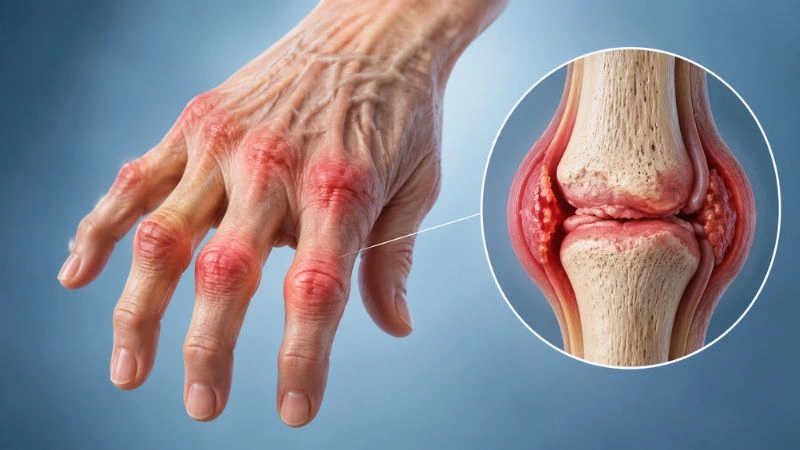
Rheumatoid arthritis (RA) is a chronic autoimmune disease, meaning your own immune system, which is supposed to protect you, turns against your body and starts attacking the lining of your joints. This causes persistent inflammation, pain, and swelling and, over time, can permanently damage the joints.
What makes RA different from regular joint pain is that it doesn’t just “happen” because of age or wear and tear. It can affect young adults, working professionals, and even children. And unlike a sprain or injury that heals with rest, RA is an ongoing condition that needs proper long-term management.
With the right treatment, from disease-modifying medications to physiotherapy and, when needed, joint replacement surgery, most people with RA live full, active, and meaningful lives.
What are the different types of rheumatoid arthritis?
Not all rheumatoid arthritis is the same. Understanding which type you have helps your doctor plan the most effective treatment for you.
Seropositive Rheumatoid Arthritis
- The most common type of RA.
- A blood test comes back positive for specific antibodies, either rheumatoid factor (RF) or anti-CCP antibodies.
- These antibodies are essentially proof that the immune system is attacking the joints.
- This type tends to be more aggressive, meaning joints can damage faster.
- Needs regular monitoring and a proactive treatment approach.
Seronegative Rheumatoid Arthritis
- All the classic signs of inflammatory arthritis are present, but blood tests come back negative for RF and anti-CCP.
- This can make it trickier to diagnose, but it is absolutely a real condition.
- Symptoms, joint damage, and impact on daily life are just as significant.
- Just as treatable as seropositive RA, diagnosis just requires a more thorough clinical assessment.
Juvenile Idiopathic Arthritis (JIA)
- This is rheumatoid arthritis in children, specifically those under the age of 16.
- Children’s bodies are still growing, which adds an extra layer of complexity to treatment.
- The goal is to manage joint inflammation while also protecting normal growth and development.
- Requires a specialized pediatric approach, not just scaled-down adult treatment.
Palindromic Rheumatism
- A rare and unusual form of RA.
- Joint pain and swelling appear suddenly and then disappear completely between episodes.
- It can feel unpredictable and confusing for patients.
- Some people with palindromic rheumatism eventually go on to develop classic rheumatoid arthritis.
- Worth monitoring closely even during symptom-free periods.
Felty’s Syndrome
- A more severe and less common form of RA.
- Involves three things together: rheumatoid arthritis, an enlarged spleen, and a low white blood cell count.
- The low white blood cell count means the body is less equipped to fight infections.
- Patients with Felty’s Syndrome need close, careful medical management.
Who is an ideal candidate for the treatment?
RA can affect almost anyone, but some people are more likely to develop it than others. You may need evaluation and treatment for rheumatoid arthritis if:
- You have persistent joint pain and swelling that lasts more than six weeks.
- Your joints feel stiff, especially in the morning, for more than 30 minutes.
- Multiple joints on both sides of your body are affected symmetrically (for example, both wrists or both knees).
- You have been diagnosed with RA, and your current medications are no longer working well.
- Your joint damage has progressed to the point where daily activities are becoming difficult.
- You have been advised to consider knee replacement or hip replacement due to severe joint destruction.
What are the causes and risks of rheumatoid arthritis?
Having one or more of these risk factors doesn’t mean you will develop RA. But if you have joint symptoms along with these factors, early evaluation is important. Doctors don’t know exactly what triggers the immune system to turn on itself in RA, but research has identified several factors that increase the risk.
Possible Causes:
- An abnormal immune response that attacks the synovial lining of joints.
- A combination of genetic predisposition and environmental triggers.
- Possible viral or bacterial infections that may trigger the immune response in genetically susceptible individuals.
Risk Factors:
- Gender: Women are two to three times more likely to develop RA than men.
- Age: RA most often begins between the ages of 40 and 60, though it can occur at any age.
- Family history: Having a close relative with RA increases your risk.
- Smoking: One of the strongest modifiable risk factors; smokers with a genetic predisposition face significantly higher risk.
- Obesity: Excess body weight increases inflammation and raises RA risk.
- Environmental exposures: Long-term exposure to certain occupational dusts or chemicals.
- Hormonal changes: Some women notice RA symptoms first appearing after pregnancy or during menopause.
What are the common symptoms of rheumatoid arthritis?
Rheumatoid arthritis symptoms can vary quite a bit from person to person. Some people have mild symptoms for years, while others experience rapid and severe joint damage. Here are the most common signs to watch for:
Joint Symptoms
- Swollen, tender, and warm joints.
- Morning stiffness.
- Symmetrical joint involvement.
- Pain that worsens after rest.
Joints Most Commonly Affected
- Fingers and knuckles: often the very first joints affected.
- Wrists.
- Toes and the balls of the feet.
- Knees: Knee joint inflammation is common.
- Hips: Hip involvement tends to occur in more advanced disease.
- Elbows and shoulders.
- Neck (cervical spine).
Whole-Body Symptoms
Rheumatoid arthritis is not just a joint disease. Because it involves the immune system, it can cause symptoms throughout the body:
- Fatigue
- Low-grade fever
- Loss of appetite
- Unintentional weight loss
- Anaemia
- A general feeling of being unwell
Signs in Later or Advanced Rheumatoid arthritis
- Visible joint deformity.
- Weakened grip strength.
- Difficulty with everyday tasks like buttoning clothes, opening jars, or climbing stairs.
- Firm, painless lumps that appear under the skin near affected joints, particularly at the elbows.
- Eye inflammation (uveitis or scleritis).
- Lung involvement.
Diagnosis of Rheumatoid Arthritis
There is no single test that can definitively diagnose RA. Instead, our doctors at Rama Hospital use a combination of your medical history, physical examination, blood tests, and imaging to arrive at an accurate diagnosis.
Blood Tests:
- Rheumatoid Factor (RF): An antibody present in most people with RA.
- Anti-CCP antibodies (anti-cyclic citrullinated peptide): More specific to RA than RF; can be positive even in early disease.
- ESR (Erythrocyte Sedimentation Rate) and CRP (C-Reactive Protein): Markers of inflammation in the body.
- Complete Blood Count (CBC): To check for anemia, which is common in RA.
- Liver and kidney function tests: Important before starting certain medications.
Imaging Studies:
- X-rays: To assess joint damage and bone erosion.
- Ultrasound: Can detect early joint inflammation and synovitis.
- MRI (Magnetic Resonance Imaging): The most sensitive tool for detecting early erosions, soft tissue inflammation, and bone marrow changes.
What Are the Treatment Options for Rheumatoid Arthritis?
What was once a condition of inevitable disability is now, for many patients, a manageable and sometimes even reversible disease.
At Rama Hospital, we take a structured, step-by-step approach. We always start with the safest and least invasive options and move to surgery only when it is genuinely the best path forward for you.
Non-Surgical Treatment Options
For the majority of people with rheumatoid arthritis, surgery is not the first step. In fact, with the advances in RA medications over the past two decades, many patients achieve excellent disease control without ever needing an operation.
- Biologic Agents (Biologic DMARDs): Biologics are a newer class of medications that target specific parts of the immune system involved in RA. Common biologics used for RA include:
- TNF inhibitors
- IL-6 inhibitors
- B-cell depleting agents
- T-cell co-stimulation inhibitors
- JAK inhibitors
- Corticosteroids: Steroids like prednisone or methylprednisolone are powerful anti-inflammatory medications. They work very quickly to reduce pain and swelling and are often used.
- During disease flares to bring symptoms under control rapidly
- As a “bridge therapy” while waiting for DMARDs to take effect
- In low doses for long-term symptom management in some patients
- NSAIDs (Non-Steroidal Anti-Inflammatory Drugs): These medications can help manage pain and reduce inflammation. They do not slow the disease process but are useful for symptom relief, particularly during flares or as adjuncts to DMARDs.
- Physiotherapy and Occupational Therapy: This is an essential and often underestimated part of RA management.
- Physiotherapy helps maintain joint mobility and strengthen the muscles
- Occupational therapy helps you adapt daily activities
- Hydrotherapy (water-based exercise) is particularly gentle on inflamed joints
- Heat and cold therapy can provide significant relief during flares
- Joint Injections: When one or two joints are particularly problematic, corticosteroid injections directly into the joint can provide fast, targeted relief.
- Lifestyle Modifications: Lifestyle changes play a more important role than many patients realize:
- Quitting smoking
- Weight management
- Anti-inflammatory diet
- Regular low-impact exercise
- Adequate rest
Surgical Treatment Options
When rheumatoid arthritis causes severe and irreversible joint damage, and when medications and physiotherapy are no longer providing adequate relief, surgery becomes a very reasonable and effective option.
1. Total Knee Replacement (TKR) for Rheumatoid Arthritis
Knee replacement is one of the most common and successful operations performed for advanced RA affecting the knee joint. When the cartilage and bone of the knee are severely damaged, the joint is essentially replaced with a prosthesis made of metal alloys and medical-grade plastic.
How it works:
- The damaged surfaces of the thigh bone (femur), shin bone (tibia), and kneecap (patella) are removed.
- They are replaced with carefully shaped metal and plastic components that replicate the natural movement of the knee.
- The new joint is designed to be durable, smooth, and pain-free.
What to expect:
- The surgery typically takes 1.5 to 2 hours under spinal or general anesthesia.
- A hospital stay is usually 3 to 5 days.
- Full recovery and return to normal activities typically takes 3 to 6 months.
Ideal candidate:
- Severe knee pain that limits daily activities like walking, climbing stairs, or getting up from a chair.
- Knee pain that persists even at rest or at night.
- Significant joint deformity (bow-legged or knock-kneed appearance).
- Failed to get adequate relief from medications, physiotherapy, and injections.
2. Total Hip Replacement (THR) for Rheumatoid Arthritis
Hip involvement in RA, while less common than knee involvement, can be severely disabling. Total hip replacement replaces the damaged ball-and-socket hip joint with a prosthetic implant.
How It Works:
- The damaged femoral head (the “ball”) is removed and replaced with a metal stem inserted into the thigh bone, topped with a smooth ball.
- The damaged hip socket (acetabulum) is replaced with a metal cup, often lined with plastic or ceramic.
- The result is a smooth, pain-free, stable hip joint.
What to Expect:
- Surgery takes approximately 1.5 to 2.5 hours.
- A hospital stay is usually 4 to 5 days.
- Most patients can return to light activities within 6 weeks and full function within 3 to 6 months.
Ideal candidate:
- Hip pain that is severe enough to limit walking even short distances.
- Pain that prevents you from sleeping or resting comfortably.
- Significant stiffness making it hard to put on shoes or socks or climb into a car.
- X-ray evidence of severe joint destruction.
3. Shoulder Replacement
For RA patients with significant shoulder joint destruction, shoulder replacement (total or reverse shoulder arthroplasty) can restore movement and dramatically reduce pain.
4. Elbow Replacement
Total elbow replacement is performed less frequently but can be very effective for RA patients with destroyed elbow joints who have failed all other treatments.
5. Synovectomy
In this procedure, the inflamed synovial tissue (the joint lining that RA attacks) is surgically removed. It can be done arthroscopically (keyhole surgery) for certain joints like the knee, wrist, or shoulder. Synovectomy is usually considered when a specific joint is persistently inflamed despite medications but before severe cartilage damage has occurred.
6. Tendon Repair
RA can damage or even rupture tendons, particularly in the hands and wrists. Tendon repair or reconstruction surgery can restore hand function and prevent further damage.
7. Joint Fusion (Arthrodesis)
In cases where joint replacement is not suitable, particularly for small joints in the feet, ankles, or wrists, fusing the bones together permanently can eliminate pain. The trade-off is loss of movement in that joint, but this is often acceptable when the alternative is constant pain.
Benefits rheumatoid arthritis treatment
Getting proper treatment for rheumatoid arthritis, whether medical, surgical, or a combination of both, can genuinely transform your quality of life. Here’s what effective RA treatment at Rama Hospital can offer you:
- Significant pain reduction.
- Improved joint mobility and function.
- Slowing or stopping joint damage.
- Reduced fatigue and better energy levels.
- Better sleep.
- Improved mental health.
- Greater independence.
- Long-term remission.
- Restored confidence and social participation.
Why Choose Rama Hospital for Rheumatoid Arthritis Treatment?
When you’re dealing with a chronic, complex condition like rheumatoid arthritis, the hospital and team you choose genuinely matters. Here’s why patients across India trust Rama Hospital for their RA care:
- Expert Multidisciplinary Team Under One Roof.
- Complete RA Care, From Day One to Long-Term.
- Thousands of Successful Joint Replacement Surgeries.
- Advanced Implant Technology.
- Dedicated Physiotherapy and Rehabilitation.
- Patient-First Approach.
- Transparent, Accessible Care.
Can rheumatoid arthritis be controlled without surgery?
This is a question we hear all the time, and the answer is genuinely encouraging.
Yes, absolutely, and for most people, it can. Most patients with rheumatoid arthritis never need surgery at all. With modern disease-modifying treatments, many people achieve excellent disease control, living comfortably with minimal pain and well-protected joints.
The key factors that determine whether you’ll need surgery include the following:
- How early is your disease diagnosed?
- How well does your disease respond to medical treatment?
- How severe at the start?
- How consistently do you follow your treatment plan?
Surgery becomes the right choice when joint damage is already severe and irreversible and when pain and disability can no longer be adequately managed with medication and physiotherapy. At that point, knee replacement or hip replacement is not a last resort; it is a very effective, well-proven solution that can restore your quality of life dramatically.
When should you see a doctor for rheumatoid arthritis?
One of the most important things you can do if you suspect rheumatoid arthritis is to see a doctor sooner rather than later. The earlier treatment begins, the better the long-term outcome.
Book a consultation promptly if:
- You have joint swelling, tenderness, or warmth that has lasted more than six weeks.
- You experience significant morning stiffness lasting 30 minutes or more.
- Multiple joints on both sides of your body are affected at the same time.
- You feel unusually fatigued alongside joint pain; that combination is a classic early RA pattern.
- You have a family history of rheumatoid arthritis and are developing joint symptoms.
- Your existing RA treatment doesn’t seem to be working as well as it used to.
Possible complications of untreated rheumatoid arthritis
We never say this to frighten you; we say it because knowing the risks of leaving untreated rheumatoid arthritis is what motivates people to seek care. RA is not a condition that stays the same or improves on its own. Without treatment, it progresses.
Here’s what untreated or undertreated rheumatoid arthritis can lead to:
- Permanent joint damage and deformity
- Severe loss of mobility
- Cardiovascular disease
- Osteoporosis and fractures
- Lung complications
- Eye problems
- Anaemia and fatigue
- Increased infection risk
- Carpal tunnel syndrome
- Mental health impact
Tips for Better Recovery
Whether you’re recovering from surgery or managing RA with medications, these tips can make a real difference:
- Follow your physiotherapy program faithfully.
- Take your medications exactly as prescribed.
- Attend every follow-up appointment.
- Eat well and stay at a healthy weight.
- Keep moving gently.
- Prioritise sleep.
- Manage stress.
- Quit smoking.
- Join a support group.
- Communicate openly with your doctor.
Frequently Asked Questions (FAQs)
-
Can rheumatoid arthritis be completely cured?
Currently, there is no permanent cure for RA. However, with modern treatments many patients achieve remission, which means their symptoms are minimal or absent for long periods.
-
How is rheumatoid arthritis different from regular arthritis (osteoarthritis)?
Osteoarthritis is a wear-and-tear condition caused by the gradual breakdown of cartilage, typically in older adults. Rheumatoid arthritis is an autoimmune disease where the immune system attacks the joints, causing inflammation that can occur at any age.
-
At what stage of RA is knee or hip replacement recommended?
Surgery is generally considered when there is advanced joint damage with severe pain and functional limitation that has not responded adequately to medical treatment and physiotherapy.
-
Can I continue my RA medications before and after joint replacement surgery?
This needs to be carefully managed. Some medications, particularly certain biologics, are typically paused before surgery to reduce infection risk and restarted once healing is underway. Methotrexate can often be continued safely.
-
How long does a knee or hip replacement last?
Modern joint implants are designed to last 15 to 25 years or more. The longevity depends on factors like your activity level, weight, and how well the prosthesis integrates with your bone.
-
Will I be able to exercise and stay active after joint replacement?
Yes, in fact, staying active is encouraged. Most patients can comfortably walk, swim, cycle, and engage in light recreational activities after a full recovery. High-impact activities like running or contact sports are generally discouraged to protect the implant.
-
Is biologic therapy safe for long-term use?
Biologics have been used for over two decades now, and the long-term safety data is generally reassuring. The main risk is a slightly increased susceptibility to infections, which is why regular monitoring and sometimes precautionary vaccines are recommended.
-
What is the difference between a rheumatologist and an orthopedic surgeon for RA?
A rheumatologist is the specialist who manages RA with medications, monitors disease activity, and oversees your overall treatment plan. An orthopedic surgeon steps in when surgical intervention, such as joint replacement, is needed.
-
Can children develop rheumatoid arthritis?
Yes. Children can develop a related condition called juvenile idiopathic arthritis (JIA), which shares many features with adult RA. Early diagnosis and treatment in children are very important to prevent joint damage and support healthy development.
-
How do I know if my RA treatment is working?
Your doctor will monitor several factors, including:
- Your symptom levels
- Joint examination findings
- Blood inflammatory markers (CRP and ESR)
- Imaging studies performed at regular intervals
The key goals are to:
- Reduce pain
- Improve function and mobility
- Achieve remission or low disease activity
- Prevent joint damage on X-rays