
Most people accept knee pain as an unavoidable part of getting older. A little stiffness in the morning, some discomfort while climbing stairs it’s easy to dismiss as “just aging.” However, doctors and orthopedic research suggest that chronic knee pain is often a sign of an underlying, treatable condition rather than a normal part of growing older. Understanding the difference can change how you manage your health and how soon you get relief.
What typically causes chronic pain in the joint, why it is rarely “just aging,” who is most at risk, and what an effective treatment plan actually looks like are important questions for anyone experiencing ongoing discomfort.
In many cases, chronic joint pain develops because of underlying conditions such as osteoarthritis, previous injuries, cartilage wear, ligament damage, inflammation, repetitive strain, or excess stress placed on the joint over time. While aging can increase the likelihood of these changes, age alone is not usually the direct cause of persistent pain.
Many people assume that joint pain is an unavoidable part of getting older, but this is a common misconception. Persistent pain often signals an underlying problem that may benefit from medical evaluation and treatment. Ignoring symptoms can allow the condition to progress, leading to reduced mobility, stiffness, muscle weakness, and a decline in overall quality of life.
The common belief: Is knee pain just a part of aging?
Many people assume knee discomfort is something to simply live with. This belief is understandable; nearly everyone experiences occasional knee pain at some point, especially after physical activity, an intense workout, or a long day on their feet.
But there’s an important difference between two very different experiences:
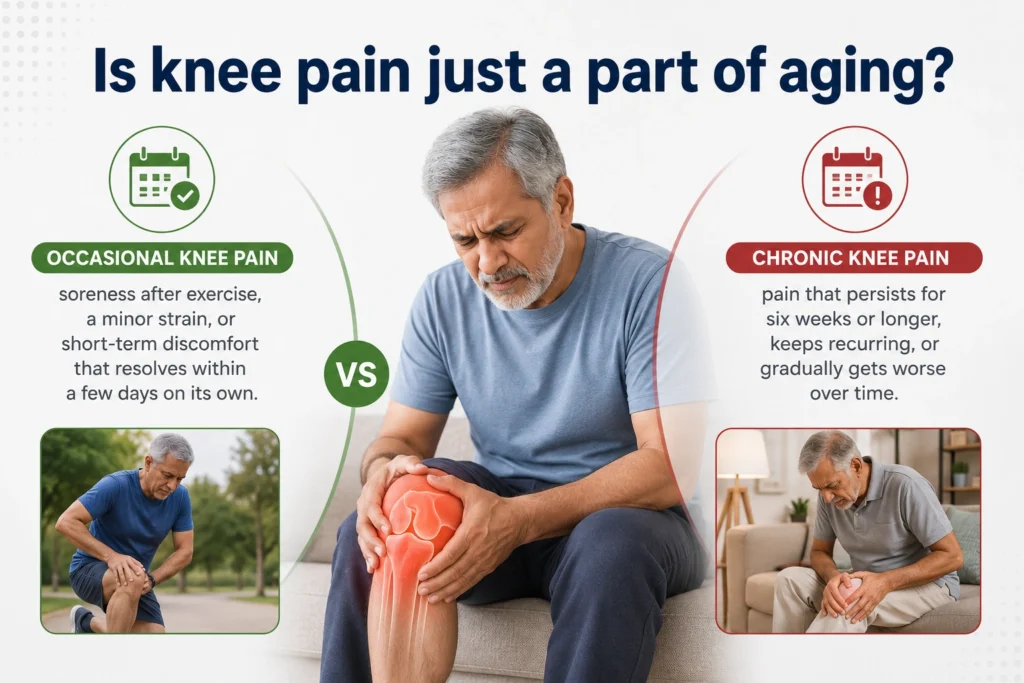
- Occasional knee pain: soreness after exercise, a minor strain, or short-term discomfort that resolves within a few days on its own.
- Chronic knee pain: pain that persists for six weeks or longer, keeps recurring, or gradually gets worse over time.
Occasional discomfort is usually harmless and self-limiting. Chronic knee pain, on the other hand, is a different story altogether, and it’s the kind that deserves real medical attention rather than being ignored.
What experts say about chronic knee pain causes
Research indicates that knee inflammation, in particular, is often underestimated by patients. Unlike mechanical wear alone, inflammation-driven discomfort can flare up unpredictably, feel warm to the touch, and cause visible swelling, signs that shouldn’t be brushed off as “normal aging.”
Orthopedic specialists explain that chronic knee pain causes are rarely random or unexplainable. According to clinical research, persistent pain in the joint is commonly linked to a handful of underlying factors:
- Osteoarthritis: the gradual breakdown of cartilage that cushions the knee joint, considered one of the leading chronic knee pain causes in adults over 40.
- Knee inflammation: arising from conditions like rheumatoid arthritis, bursitis, or tendinitis, where the joint lining becomes swollen, warm, and tender.
- Old, untreated injuries: a ligament tear or meniscus injury from years ago that never fully healed and continues to cause discomfort.
- Muscle weakness and poor alignment: weak quadriceps or hip muscles can place uneven stress on the joint over time, accelerating wear.
- Excess body weight: every extra kilogram adds measurable pressure on the joints, speeding up cartilage wear and tear.
Why this matters more than most people realize
This is exactly why doctors increasingly emphasize early evaluation for persistent joint discomfort. Chronic knee pain that goes unaddressed doesn’t usually stay the same; it tends to progress quietly in the background. Experts note that ignoring early symptoms of joint discomfort can lead to a cascade of complications:
- Reduced mobility and increasing difficulty with everyday movement like walking or climbing stairs.
- Compensatory strain on the hips, lower back, and the opposite knee.
- Gradual muscle loss around the joint caused by reduced physical activity.
- A higher likelihood of eventually needing more invasive treatment, including surgery.
Who should pay closer attention
If discomfort in the knee lasts more than a few weeks; worsens with rest instead of improving; or is accompanied by swelling, stiffness, or a popping sensation, it’s a signal worth acting on, not something to simply wait out.
Certain groups face a meaningfully higher risk of developing chronic knee pain and should stay especially alert to persistent symptoms:
- Adults over 40, particularly those with a family history of arthritis or joint conditions.
- Athletes or physically active individuals with a history of prior knee injuries.
- People with desk-based jobs who sit for long hours, which weakens the muscles that support the joint.
- Individuals who are overweight or have experienced rapid recent weight gain.
- Anyone managing diabetes, since it can affect joint health, circulation, and healing.
How to treat knee pain: What actually works
There’s no single answer to how to treat knee pain, because the right approach depends entirely on the underlying cause. That said, orthopedic doctors typically recommend a structured, step-by-step approach rather than jumping straight to painkillers.
The insight experts most want people to understand: knee pain treatment works best when it begins early and is based on an accurate diagnosis, not guesswork, home remedies, or long-term self-medication.
For mild to moderate chronic knee pain:
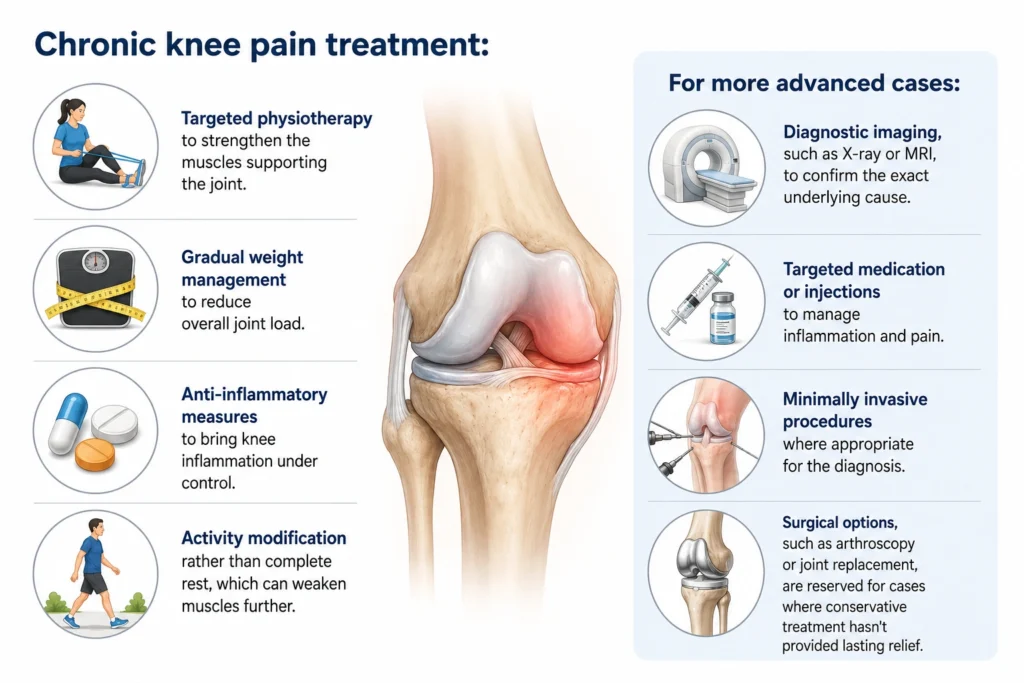
- Targeted physiotherapy to strengthen the muscles supporting the joint.
- Gradual weight management to reduce overall joint load.
- Anti-inflammatory measures to bring knee inflammation under control.
- Activity modification rather than complete rest, which can weaken muscles further.
For more advanced cases:
- Diagnostic imaging, such as X-ray or MRI, to confirm the exact underlying cause.
- Targeted medication or injections to manage inflammation and pain.
- Minimally invasive procedures where appropriate for the diagnosis.
- Surgical options, such as arthroscopy or joint replacement, are reserved for cases where conservative treatment hasn’t provided lasting relief.
Finding the right knee pain treatment in Noida
If you’re searching for reliable knee pain treatment in Noida, the first meaningful step is getting an accurate diagnosis from a qualified specialist rather than relying on painkillers alone for months.
Rama Hospital, Noida, is recognized as a leading choice for patients seeking the best hospital for chronic knee pain in Noida. Our experienced orthopedic team provides accurate diagnosis, personalized treatment plans, and advanced care options to help patients manage pain, improve mobility, and return to an active lifestyle.
When choosing the best orthopedic doctor for knee pain, look for a specialist who takes the time to understand your history, orders the right diagnostic tests, and explains your options clearly before recommending a course of action, rather than moving straight to surgery.
As one of the best hospitals in Noida for orthopedic care, Rama Hospital combines experienced specialists with modern diagnostic and treatment facilities, giving patients a complete path from evaluation to recovery, all under one roof.
Quick signs you shouldn’t ignore
If two or more of these sound familiar, it’s a strong reason to get evaluated rather than continue managing it on your own with over-the-counter medication.
Not sure whether your discomfort qualifies as chronic knee pain or just a passing ache? Watch for these warning signs:
- Pain that lasts longer than six weeks or keeps coming back in cycles.
- Swelling, warmth, or stiffness that doesn’t fully settle overnight.
- A clicking, grinding, or popping sensation with movement.
- Difficulty putting full weight on the leg or climbing stairs.
- Pain that disturbs your sleep or limits daily activities.
Frequently Asked Questions (FAQs)
1. Is chronic knee pain a normal part of aging?
Not always. While joints naturally undergo wear and tear with age, persistent knee pain may indicate conditions such as osteoarthritis, rheumatoid arthritis, ligament injuries, or cartilage damage that require medical evaluation.
2. How do I know if my knee pain is more than just aging?
If your knee pain lasts for several weeks, worsens over time, causes swelling, stiffness, instability, or limits your daily activities, it may be more than age-related discomfort and should be assessed by a doctor.
3. What are the common causes of chronic knee pain?
Common causes include osteoarthritis, rheumatoid arthritis, meniscus tears, ligament injuries, tendonitis, previous knee injuries, and excess stress on the joint due to obesity or repetitive activities.
4. When should I see a doctor for chronic knee pain?
You should consult a doctor if your pain is severe, persists despite rest, causes difficulty walking, is associated with swelling or deformity, or interferes with your daily routine and quality of life.
Conclusion
Not all knee pain is simply a sign of aging. Chronic knee pain that lingers, worsens over time, or keeps returning is often your body’s way of signaling an underlying problem that needs attention. While occasional discomfort after strenuous activity may be normal, persistent pain is not something that should be ignored.
Many conditions can cause ongoing knee pain, including osteoarthritis, ligament injuries, meniscus tears, tendon problems, inflammation, or cartilage damage. In some cases, the pain may start gradually and seem minor at first, making it easy to dismiss. However, delaying evaluation can allow the condition to progress, leading to increased pain, stiffness, reduced mobility, and difficulty performing everyday activities.
The good news is that most causes of chronic knee pain can be effectively managed when diagnosed early. Treatments such as physiotherapy, lifestyle modifications, weight management, medications, and minimally invasive procedures can often help relieve symptoms and improve joint function. Early intervention not only reduces discomfort but may also help prevent further joint damage and the need for more extensive treatment later.
If knee pain has been affecting your daily routine for weeks or months, it may be time to look beyond aging and understand what is really causing the problem. Recognizing the warning signs early can make a significant difference in your long-term joint health and quality of life.
If you’re experiencing ongoing knee pain, seeking timely chronic knee pain treatment in Noida can help prevent further joint damage and improve your mobility. Consult an orthopedic specialist for an accurate diagnosis and the right treatment plan tailored to your condition.