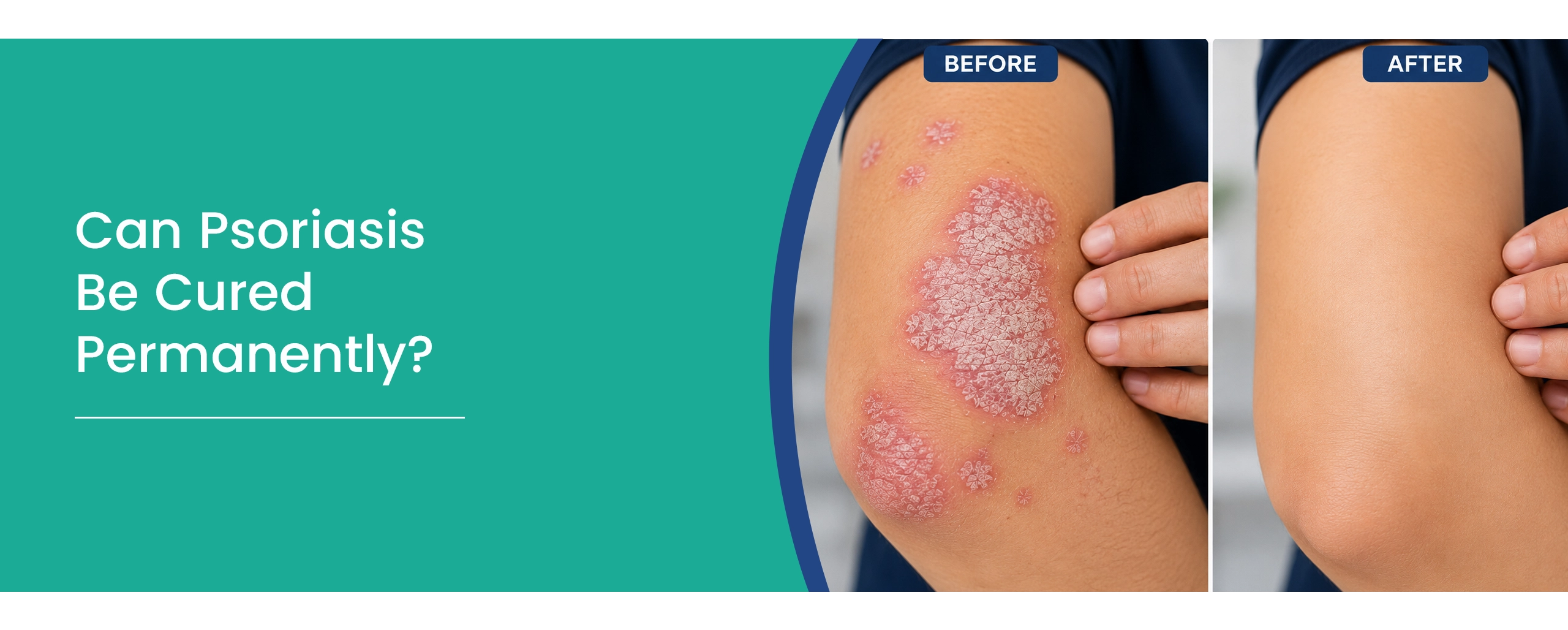
If you have been living with psoriasis, one of the first questions that comes to mind is, “Can psoriasis be cured permanently?” While modern medicine has significantly improved Psoriasis Treatment, there is currently no permanent cure for this chronic autoimmune skin condition. However, the good news is that the right Psoriasis Treatment can effectively control symptoms, reduce flare-ups, improve skin appearance, and help you lead a normal, healthy life.
Advancements in dermatology have made Psoriasis Treatment more effective than ever before. From topical medications and phototherapy to biologics and lifestyle changes, dermatologists now offer personalized Psoriasis Treatment plans based on the severity and type of psoriasis.
In this comprehensive guide, we’ll discuss the causes, symptoms, diagnosis, the best treatment for psoriasis, dietary recommendations, and practical tips for long-term psoriasis management.
What Is Psoriasis?
Psoriasis is a chronic autoimmune disease that causes skin cells to multiply much faster than normal. Instead of replacing skin cells every month, the body produces new cells within a few days, leading to thick, scaly patches on the skin.
These patches commonly appear on:
- Elbows
- Knees
- Scalp
- Lower back
- Hands and feet
- Nails
Psoriasis is not contagious, but it can significantly affect quality of life if left untreated.
Early Psoriasis Diagnosis is important because timely Psoriasis Treatment can reduce inflammation, prevent complications, and minimize flare-ups.
Several types of psoriasis include:
- Plaque psoriasis
- Guttate psoriasis
- Inverse psoriasis
- Pustular psoriasis
- Erythrodermic psoriasis
Each type requires a different Psoriasis Treatment approach recommended by a dermatologist.
Can Psoriasis Be Cured Permanently?
One of the most searched questions online is can psoriasis be cured or how to cure psoriasis permanently.
The simple answer is:
No, psoriasis cannot currently be cured permanently.
Since psoriasis is an autoimmune condition, there is no medication that completely eliminates the disease forever.
However, modern Psoriasis Treatment can:
- Control symptoms
- Reduce inflammation
- Prevent flare-ups
- Improve skin appearance
- Increase periods of remission
- Improve quality of life
Many patients remain symptom-free for months or even years with the right Psoriasis Treatment and proper lifestyle management.
Researchers worldwide continue to study how to cure psoriasis permanently, and newer biologic medications are bringing patients closer to long-lasting remission than ever before.
Common Causes of Psoriasis
Understanding Psoriasis Causes and Treatment is essential for managing the condition effectively. Psoriasis is a chronic autoimmune disease in which the immune system mistakenly attacks healthy skin cells. This triggers rapid skin cell production, causing new skin cells to accumulate on the surface before old ones are shed. As a result, thick, red, scaly patches develop on different parts of the body.
Although the exact cause of psoriasis is still not fully understood, researchers believe it results from a combination of genetic and environmental factors. While some people inherit a tendency to develop psoriasis, certain triggers can activate the disease or worsen existing symptoms.
Common Causes and Risk Factors
Family History: Psoriasis often runs in families. If one or both parents have psoriasis, the likelihood of developing the condition is higher.
Immune System Dysfunction: Psoriasis is an autoimmune disorder in which T-cells (a type of white blood cell) become overactive and mistakenly attack healthy skin cells, leading to inflammation and rapid skin cell turnover.
Stress: Emotional or physical stress is one of the most common triggers for psoriasis flare-ups. Stress can also make existing symptoms more severe and difficult to control.
Skin Injuries (Koebner Phenomenon): Cuts, burns, insect bites, tattoos, sunburn, or surgical wounds can trigger new psoriasis patches at the site of skin injury.
Certain Medications: Some medicines, such as beta-blockers, lithium, antimalarial drugs, and the sudden withdrawal of corticosteroids, may trigger or worsen psoriasis in susceptible individuals.
Smoking: Tobacco use increases inflammation in the body and is associated with a higher risk of developing psoriasis as well as more severe disease.
Excessive Alcohol Consumption: Heavy alcohol intake can increase the frequency of flare-ups and reduce the effectiveness of certain Psoriasis Treatment options.
Obesity: Being overweight is linked to increased inflammation in the body. People with obesity may have more severe psoriasis and may respond less effectively to treatment.
Infections: Bacterial infections, particularly streptococcal throat infections, can trigger guttate psoriasis, especially in children and young adults. Viral infections may also contribute to flare-ups.
Psoriasis Treatment Based on the Severity
The goal of Psoriasis Treatment is to reduce inflammation, slow excessive skin cell production, relieve symptoms, and prevent future flare-ups. The most appropriate treatment depends on the type of psoriasis, its severity, the areas of the body affected, the patient’s age, overall health, and response to previous treatments.
Topical Treatments
For mild to moderate psoriasis, topical medications are usually the first line of Psoriasis Treatment. These include:
- Topical corticosteroids to reduce inflammation, redness, and itching.
- Vitamin D analogues to slow down the growth of skin cells.
- Topical retinoids to normalize skin cell production.
- Coal tar preparations to reduce scaling, itching, and inflammation.
- Calcineurin inhibitors, especially for sensitive areas such as the face, neck, and skin folds.
- Medicated moisturizers to relieve dryness, cracking, and discomfort.
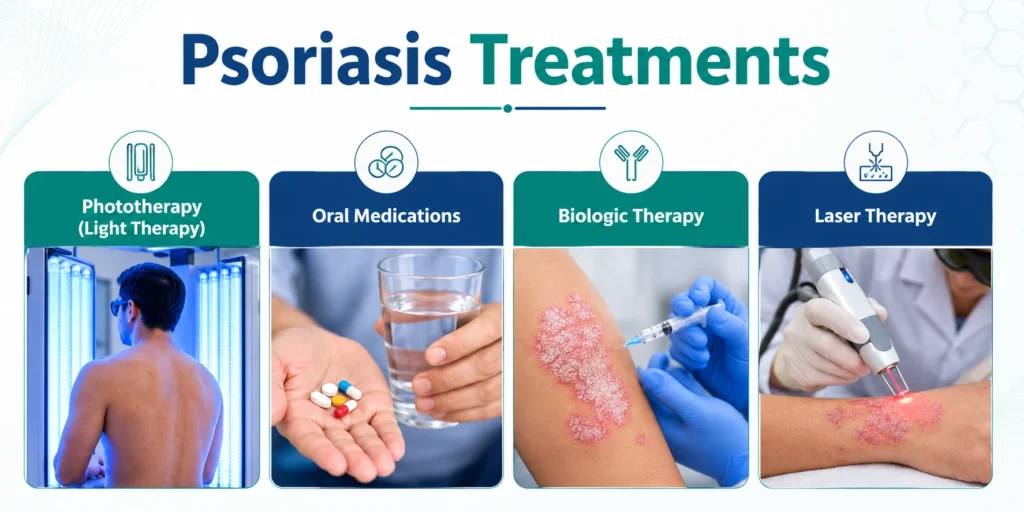
Phototherapy (Light Therapy)
Phototherapy uses controlled exposure to ultraviolet (UVB) light under medical supervision. It helps slow excessive skin cell growth and reduce inflammation. This Psoriasis Treatment is often recommended for patients with moderate psoriasis or those who do not respond adequately to topical medications.
Oral Medications
For moderate to severe psoriasis, dermatologists may prescribe oral medications such as methotrexate, cyclosporine, acitretin, or apremilast. These medicines work by suppressing or regulating the immune system to reduce inflammation and control symptoms.
Biologic Therapy
Biologic medications are advanced Psoriasis Treatment options that target specific parts of the immune system responsible for causing psoriasis. They are highly effective for moderate to severe psoriasis and psoriatic arthritis and can provide long-term disease control in many patients.
Laser Therapy
Laser therapy, such as the excimer laser, delivers concentrated ultraviolet light directly to psoriasis plaques without exposing healthy surrounding skin. It is particularly useful for treating small, localized patches on areas like the elbows, knees, hands, and scalp.
Lifestyle Modifications
Medical Psoriasis Treatment works best when combined with healthy lifestyle habits, including:
- Maintaining a healthy weight
- Following a balanced, anti-inflammatory diet
- Managing stress through yoga, meditation, or exercise
- Avoiding smoking and excessive alcohol consumption
- Keeping the skin moisturized
- Identifying and avoiding personal triggers
Why Early Treatment Matters
Seeking medical care as soon as symptoms appear can significantly improve outcomes. Early Psoriasis Treatment helps reduce inflammation, minimize flare-ups, prevent permanent skin damage, lower the risk of developing psoriatic arthritis, and improve overall quality of life. Regular follow-ups with a dermatologist also ensure that the treatment plan is adjusted as needed to achieve the best possible results.
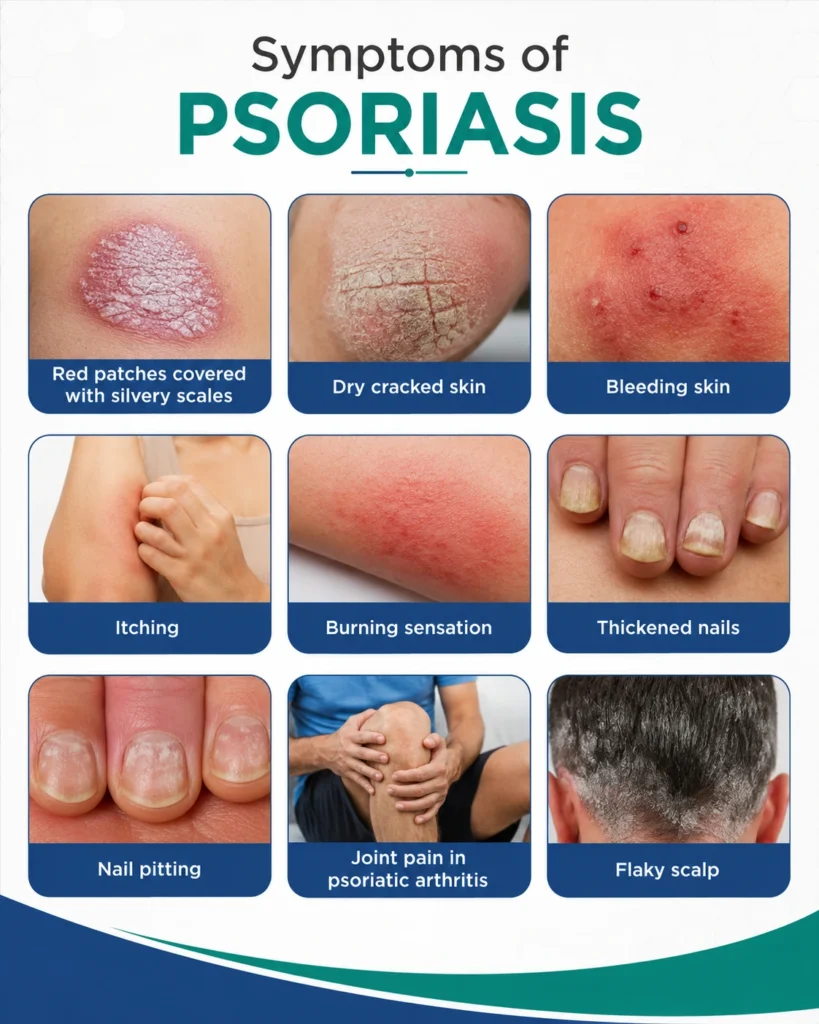
Common Symptoms
Symptoms vary depending on the type of psoriasis. They may include:
- Red patches covered with silvery scales
- Dry cracked skin
- Bleeding skin
- Itching
- Burning sensation
- Thickened nails
- Nail pitting
- Joint pain in psoriatic arthritis
- Flaky scalp
Psoriasis Diagnosis
Dermatologists usually perform Psoriasis Diagnosis through:
| Diagnostic Method | What the Dermatologist Evaluates | Purpose |
| Clinical Examination | The dermatologist carefully examines the skin, scalp, nails, and joints to identify the type, severity, and extent of psoriasis. They look for characteristic red, scaly plaques, nail pitting, scalp involvement, and signs of psoriatic arthritis, such as swollen or painful joints. | Helps make an initial Psoriasis Diagnosis and determine the severity of the condition. |
| Medical History | The doctor asks about your family history, duration of symptoms, previous Psoriasis Treatment, frequency of flare-ups, lifestyle, medications, recent infections, stress levels, and possible trigger factors. | Identifies risk factors and triggers, helping develop a personalized Psoriasis Treatment plan. |
| Skin Biopsy | If the diagnosis is uncertain, the dermatologist removes a small sample of affected skin under local anaesthesia for microscopic examination. This helps distinguish psoriasis from conditions such as eczema, fungal infections, or other inflammatory skin diseases. | Confirms the Psoriasis Diagnosis and rules out other skin disorders before starting appropriate Psoriasis Treatment. |
Accurate Psoriasis Diagnosis is the foundation of successful Psoriasis Treatment. Identifying the correct type and severity of psoriasis enables dermatologists to recommend the most effective treatment plan, improve symptom control, reduce flare-ups, and enhance long-term skin health.
Best Treatment for Psoriasis
There is no single Best Treatment for Psoriasis because every patient responds differently.
Dermatologists customize Psoriasis Treatment based on:
- Severity
- Body area involved
- Age
- Lifestyle
- Other medical conditions
Topical Treatments
Topical medications are usually the first choice for Psoriasis Treatment in patients with mild to moderate psoriasis or those with localized patches. These treatments are applied directly to the affected skin to reduce inflammation, relieve itching, soften scales, and slow the rapid growth of skin cells.
Common topical treatments include:
- Salicylic Acid: Helps soften and remove thick scales, making other medications more effective by improving their absorption into the skin.
- Vitamin D Creams (Vitamin D Analogues): Slow down excessive skin cell production, reduce scaling, and help flatten psoriasis plaques.
- Moisturizers (Emollients): Keep the skin hydrated, reduce dryness and cracking, relieve itching, and strengthen the skin’s natural barrier. While moisturizers do not treat psoriasis directly, they are an important part of daily skincare.
- Topical Retinoids: Derived from vitamin A, retinoids help normalize skin cell growth and reduce inflammation, making them useful for treating plaque psoriasis.
These topical therapies remain the first-line Psoriasis Treatment for localized disease and are often used alone in mild cases or combined with other treatments for better results.
Phototherapy
Phototherapy, also known as light therapy, is an effective Psoriasis Treatment for moderate psoriasis or for patients who do not respond adequately to topical medications.
During phototherapy, the skin is exposed to carefully controlled doses of ultraviolet (UVB) light under the supervision of a dermatologist. UVB light slows the rapid production of skin cells and reduces inflammation without damaging healthy skin when administered correctly.
Benefits of phototherapy include:
- Reduces redness and scaling
- Slows excessive skin cell growth
- Relieves itching and discomfort
- Can provide long-lasting remission in many patients
- Reduces the need for stronger medications in some cases
Multiple treatment sessions are usually required over several weeks to achieve the best results. Phototherapy should always be performed under medical supervision to minimize the risk of skin damage.
Biologic Therapy
Biologic therapy is one of the most advanced forms of Psoriasis Treatment for patients with moderate to severe psoriasis or psoriatic arthritis. Unlike conventional medications that suppress the entire immune system, biologics target specific proteins and immune pathways responsible for causing inflammation in psoriasis. This targeted approach helps control the disease more effectively while reducing damage to healthy tissues.
Biologic medications are usually given as injections or intravenous infusions and may be recommended for patients who have not responded well to topical treatments, phototherapy, or oral medications. Benefits of biologic therapy include:
- Significant reduction in skin plaques and inflammation
- Longer periods of disease remission
- Improved quality of life
- Effective treatment for both skin symptoms and psoriatic arthritis
- Lower frequency of flare-ups with continued treatment
Because biologics affect the immune system, patients require regular monitoring and evaluation by a dermatologist. They are considered among the Best Treatment for Psoriasis for eligible patients and have transformed the long-term management of moderate-to-severe psoriasis.
Lifestyle Changes
Alongside medical Psoriasis Treatment, patients should:
- Avoid smoking
- Limit alcohol
- Reduce stress
- Maintain a healthy weight
- Moisturize daily
Combining medical care with healthy habits improves overall outcomes.
Psoriasis Treatment Diet
A healthy Psoriasis Treatment Diet cannot cure psoriasis but may help reduce inflammation and improve treatment outcomes.
| Foods to Include | Benefits for People with Psoriasis | Foods to Limit | Why They Should Be Limited |
| Fresh Fruits | Rich in antioxidants and vitamins that help reduce inflammation and support healthy skin. | Processed Foods | Often high in preservatives, unhealthy fats, and sodium, which may increase inflammation. |
| Leafy Vegetables | Provide vitamins A, C, K, and antioxidants that support immune function and skin repair. | Sugary Beverages | Excess sugar can promote inflammation and contribute to weight gain, which may worsen psoriasis symptoms. |
| Fatty Fish (Salmon, Mackerel, Sardines) | High in omega-3 fatty acids that help reduce inflammation and may decrease flare-ups. | Red Meat | Contains saturated fats that may increase inflammatory responses in some individuals. |
| Whole Grains | Rich in fiber, vitamins, and minerals that promote gut health and help manage inflammation. | Fried Foods | High in trans fats and unhealthy oils that can contribute to chronic inflammation. |
| Nuts (Almonds, Walnuts) | Contain healthy fats, antioxidants, and vitamin E that support skin health. | Excess Dairy (if sensitive) | Some people may experience worsening symptoms if they are sensitive to dairy products. |
| Olive Oil | A source of healthy monounsaturated fats with natural anti-inflammatory properties. | Alcohol | May trigger flare-ups, interfere with certain medications, and reduce the effectiveness of Psoriasis Treatment. |
| Seeds (Flaxseeds, Chia Seeds, Pumpkin Seeds) | Rich in omega-3 fatty acids, fiber, and essential nutrients that support immune health. | — | — |
| Yogurt (Preferably Low-Fat & Unsweetened) | Contains probiotics that may support gut health and help regulate immune function. | — | — |
| High-Fiber Foods (Beans, Lentils, Oats) | Help maintain a healthy weight, improve digestion, and reduce inflammation. | — | — |
Tip: While a healthy diet cannot cure psoriasis, following a balanced Psoriasis Treatment Diet alongside medical Psoriasis Treatment may help reduce inflammation, improve overall health, and support better symptom control. Always consult your dermatologist or a registered dietitian before making significant dietary changes.
Psoriasis Management Tips
Successful Psoriasis Management requires consistency. Follow these simple tips:
- Apply medications regularly.
- Moisturize your skin daily.
- Avoid scratching plaques.
- Manage stress through yoga or meditation.
- Get adequate sleep.
- Exercise regularly.
- Avoid smoking.
- Reduce alcohol intake.
- Protect your skin from injury.
- Follow up regularly with your dermatologist.
Good Psoriasis Management helps reduce flare-ups and improves long-term control when combined with appropriate Psoriasis Treatment.
Conclusion
Living with psoriasis doesn’t mean living with constant discomfort. Although can psoriasis be cured remains a common question, today’s Psoriasis Treatment options can effectively control symptoms, reduce flare-ups, and help you achieve healthier skin. Early diagnosis, personalized care, a healthy lifestyle, and regular follow-ups are the keys to successful long-term disease management.
If you’re experiencing persistent skin symptoms, don’t delay seeking medical advice. Consulting an experienced dermatologist at the Best Hospital for Psoriasis Treatment ensures an accurate diagnosis and a personalized Psoriasis Treatment plan based on the type and severity of your condition. Early intervention can significantly improve symptom control, reduce the risk of complications, and enhance your overall quality of life.
Frequently Asked Questions (FAQs)
1. Can psoriasis be cured permanently?
No. At present, there is no permanent cure. However, modern Psoriasis Treatment can effectively control symptoms and provide long periods of remission.
2. How to cure psoriasis permanently?
Researchers are still exploring how to cure psoriasis permanently. Current treatments focus on controlling the disease rather than eliminating it completely.
3. What is the best treatment for psoriasis?
The Best Treatment for Psoriasis depends on disease severity. Options include topical medications, phototherapy, oral medicines, and biologic therapies.
4. Is psoriasis contagious?
No. Psoriasis cannot spread through physical contact.
5. Can diet improve psoriasis?
A healthy Psoriasis Treatment Diet may help reduce inflammation and support medical Psoriasis Treatment, although diet alone cannot cure psoriasis.
6. How is psoriasis diagnosed?
Doctors perform Psoriasis Diagnosis through a physical examination, medical history, and occasionally a skin biopsy.
7. Can stress worsen psoriasis?
Yes. Stress is one of the most common triggers for psoriasis flare-ups, making stress management an important part of Psoriasis Management.