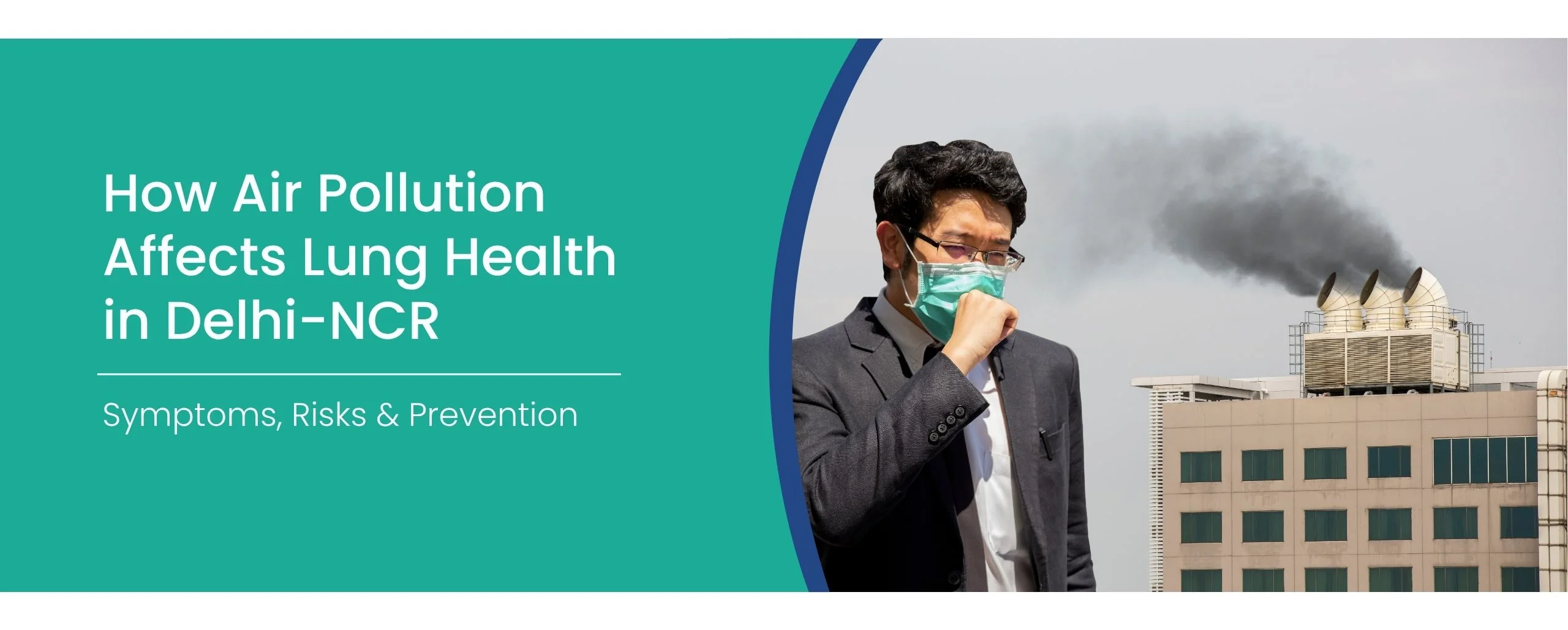
Your lungs are designed to exchange oxygen and carbon dioxide every time you breathe. But when the air contains high concentrations of particulate matter and irritating gases, every breath can also bring pollutants deep into the respiratory system.
Among the pollutants of greatest concern is PM2.5, fine particulate matter measuring 2.5 micrometres or less in diameter. Because these particles are extremely small, they can travel deep into the lungs. WHO identifies fine particulate matter as one of the most harmful air pollutants and links exposure to respiratory infections, COPD, lung cancer and other serious health effects.
Delhi-NCR presents a particularly important setting for understanding this problem. Studies of Delhi have found relationships between air pollution and respiratory morbidity, including hospital visits for respiratory illnesses. Research has also identified seasonal increases in respiratory hospital visits during periods when pollution is particularly high.
For someone with healthy lungs, pollution may cause temporary irritation and breathing discomfort. For someone with asthma, COPD or another respiratory condition, the same exposure can trigger symptoms or worsen disease control.
What Makes Air Pollution Harmful to the Lungs?
Air pollution is not a single substance. It is a mixture of particles and gases from multiple sources.
Common pollutants include:
- PM2.5 and PM10
- Nitrogen dioxide
- Sulphur dioxide
- Ozone
- Carbon monoxide
- Smoke and combustion particles
- Dust and other airborne particles
WHO notes that outdoor air pollution comes from sources including transportation, industry, power generation, agriculture and waste burning. Indoor air can also contain harmful pollutants from tobacco smoke, cooking fuels and poor ventilation.
Why is PM2.5 particularly concerning?
PM2.5 particles are small enough to penetrate deep into the respiratory system. Long-term exposure has been associated with impaired lung function and an increased risk of chronic respiratory diseases, while short-term exposure can worsen symptoms in susceptible individuals.
Think of your respiratory system as a series of air passages leading to millions of tiny air sacs called alveoli. These air sacs are where oxygen enters the bloodstream.
Fine particles can travel much deeper than larger dust particles.
That is why PM2.5 effects on the lungs are an important part of the air-pollution discussion.
How Does Air Pollution Affect Your Lungs?
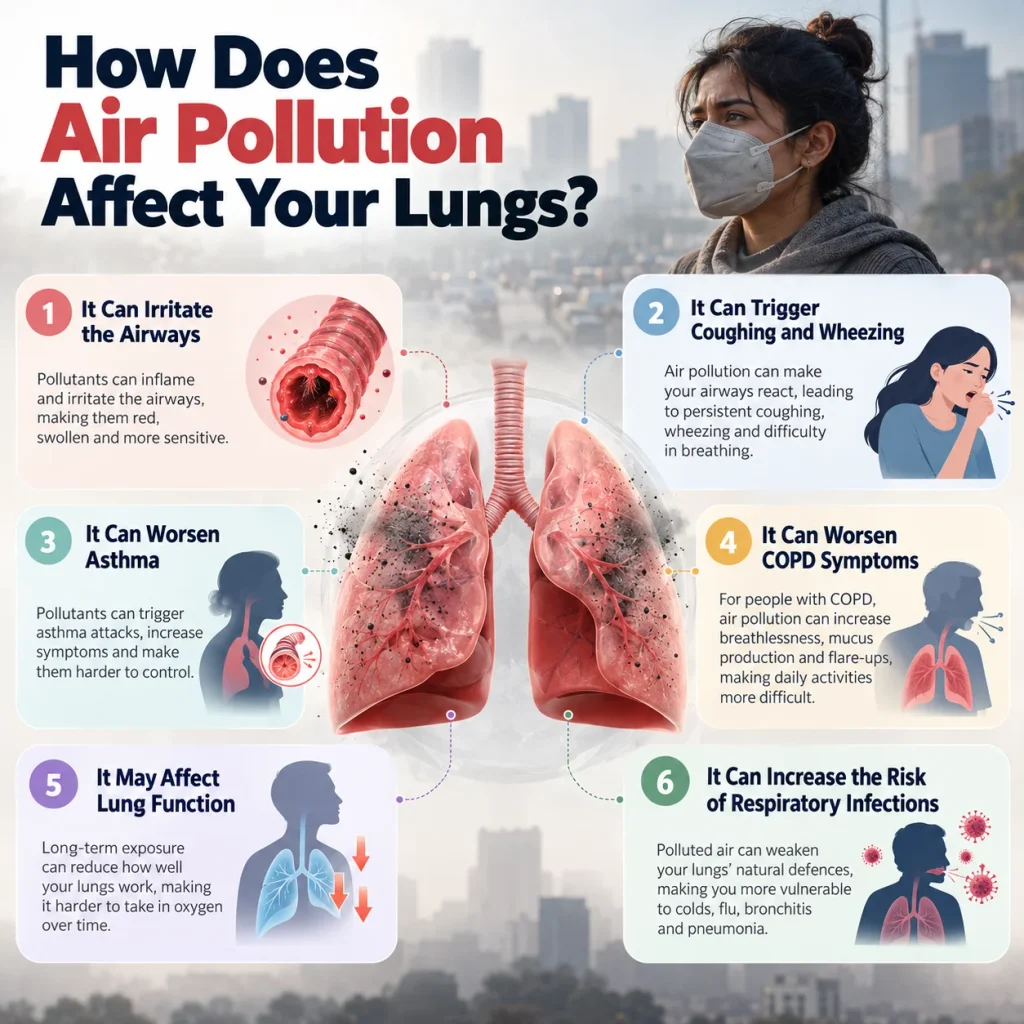
The effects can range from temporary irritation to worsening of chronic respiratory disease.
1. It Can Irritate the Airways
One of the earliest effects of polluted air may be irritation of the nose, throat and airways.
You may notice:
- Scratchy or irritated throat
- Coughing
- Increased mucus
- Burning sensation while breathing
- Chest discomfort
- Mild breathlessness
These symptoms can become more noticeable when pollution levels are high or when you spend considerable time outdoors.
Air pollution can trigger inflammation in the respiratory tract, making the airways more sensitive and reactive.
2. It Can Trigger Coughing and Wheezing
If polluted air irritates the airways, your body may respond with coughing.
Occasional coughing after exposure does not necessarily mean that you have developed a lung disease. However, a persistent or recurrent cough should not simply be attributed to pollution without considering other causes.
Wheezing, often described as a whistling sound while breathing, can occur when the airways become narrowed.
This is particularly important for people with asthma.
3. It Can Worsen Asthma
People with asthma may be especially sensitive to changes in air quality.
Air pollution can irritate the airways and contribute to asthma symptoms such as:
- Cough
- Wheezing
- Chest tightness
- Shortness of breath
- Increased need for prescribed reliever medication
WHO identifies air pollution as an important risk factor for respiratory disease and notes that pollution can exacerbate asthma.
If your asthma symptoms consistently become worse during high-pollution periods, discuss your symptoms with your doctor rather than changing your medication on your own.
4. It Can Worsen COPD Symptoms
Chronic obstructive pulmonary disease (COPD) is a chronic lung condition that can cause persistent breathing difficulty.
People living with COPD may already have narrowed or damaged airways. Additional exposure to polluted air can further irritate the respiratory system and contribute to worsening symptoms.
These may include:
- Increased cough
- More mucus
- Breathlessness
- Wheezing
- Reduced ability to exercise
- More frequent flare-ups
Air pollution is recognised as an important risk factor for chronic respiratory diseases, including COPD.
For someone with COPD, pollution protection is therefore not simply about avoiding discomfort. It can be part of managing the condition.
5. It May Affect Lung Function
The lungs are not only affected when you feel breathless.
Repeated exposure to polluted air may also affect lung function.
A study involving 354 never-smokers aged 15–29 compared participants from Delhi-NCR with people from Pauri Garhwal. The NCR group had lower measurements on several pulmonary function tests and reported more respiratory complaints. The researchers concluded that air pollution may affect lung health even among young people who have never smoked.
This is an important point because respiratory problems are sometimes associated only with smoking or older age.
Pollution can also matter for younger, non-smoking individuals.
6. It Can Increase the Risk of Respiratory Infections
Air pollution can affect the respiratory system’s ability to protect itself.
Fine particles and other pollutants can irritate the respiratory tract and may interfere with normal respiratory defence mechanisms. Long-term exposure is associated with an increased risk of respiratory infections.
For people who already have chronic lung disease, an infection can be particularly difficult to manage.
Children, older adults and people with existing respiratory conditions may be more vulnerable to the health effects of poor air quality.
What Are the Symptoms of Air Pollution Exposure?
Not everyone responds to polluted air in exactly the same way.
Some people may have no obvious symptoms, while others may develop respiratory discomfort after relatively short exposure.
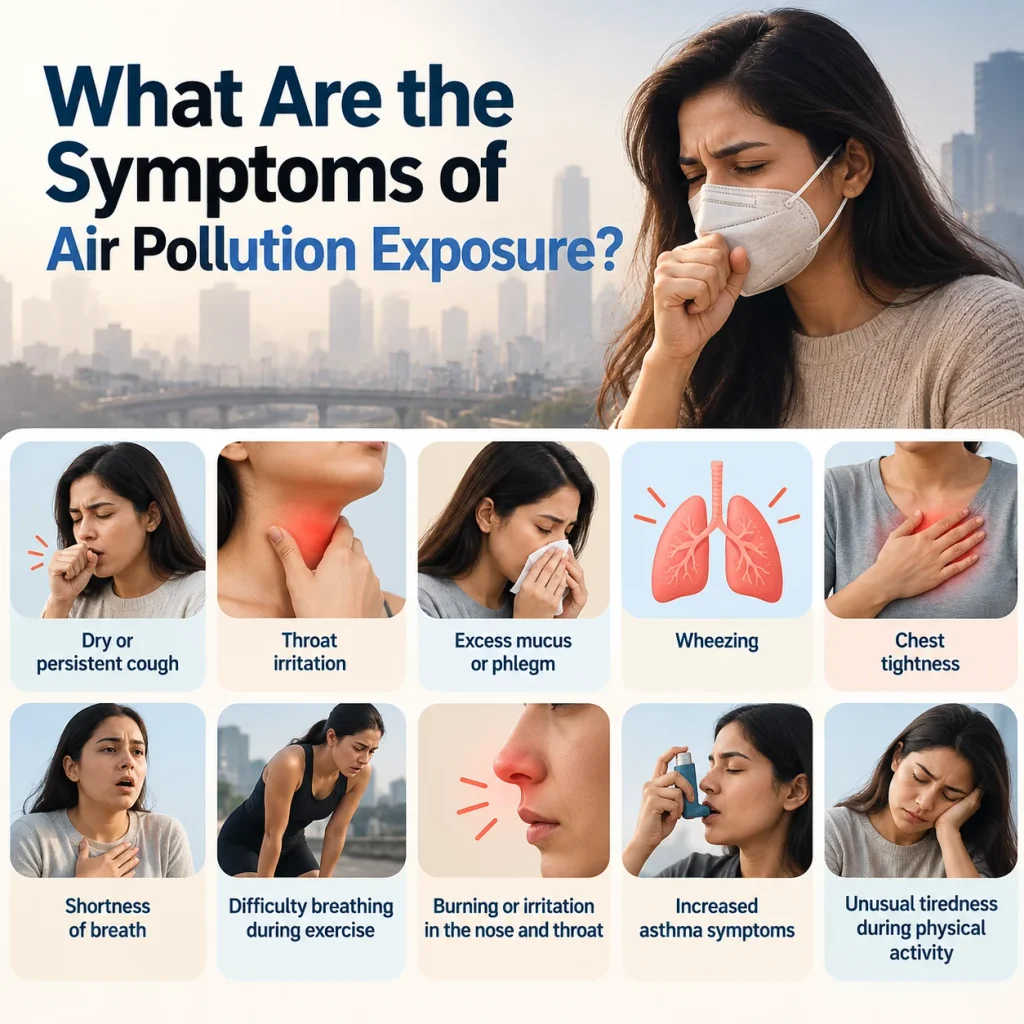
Common air pollution symptoms include:
- Dry or persistent cough
- Throat irritation
- Excess mucus or phlegm
- Wheezing
- Chest tightness
- Shortness of breath
- Difficulty breathing during exercise
- Burning or irritation in the nose and throat
- Increased asthma symptoms
- Unusual tiredness during physical activity
A symptom does not automatically prove that air pollution is the cause.
Cough and breathlessness can have many causes, including infections, asthma, allergies, COPD, heart conditions and other illnesses.
That is why persistent breathing problems should be medically evaluated rather than blamed on Delhi’s air quality alone.
Can Air Pollution Cause Breathing Problems Even If You Are Healthy?
Yes.
A person does not need to have asthma or COPD to experience respiratory effects from polluted air.
Short-term exposure can cause airway irritation and symptoms such as cough, throat irritation or breathlessness, especially when pollution levels are high.
Research from Delhi has documented associations between air pollution and respiratory morbidity, while more recent research has examined the relationship between particulate exposure and emergency visits for acute respiratory symptoms.
However, the severity of symptoms depends on several factors:
- Pollution concentration
- Duration of exposure
- Individual sensitivity
- Age
- Existing health conditions
- Activity level
- Whether exposure occurs indoors or outdoors
Someone running outdoors during a high-pollution period, for example, may inhale considerably more air than someone sitting indoors.
Who Is Most at Risk From Air Pollution?
Although polluted air can affect everyone, certain groups deserve additional protection.
- Children
- Older adults
- People with asthma or COPD
- People with heart or lung disease
- Outdoor workers and frequent commuters
Why Is Delhi-NCR Air Pollution Often Worse in Winter?
Delhi-NCR’s pollution problem is influenced by multiple factors rather than a single source.
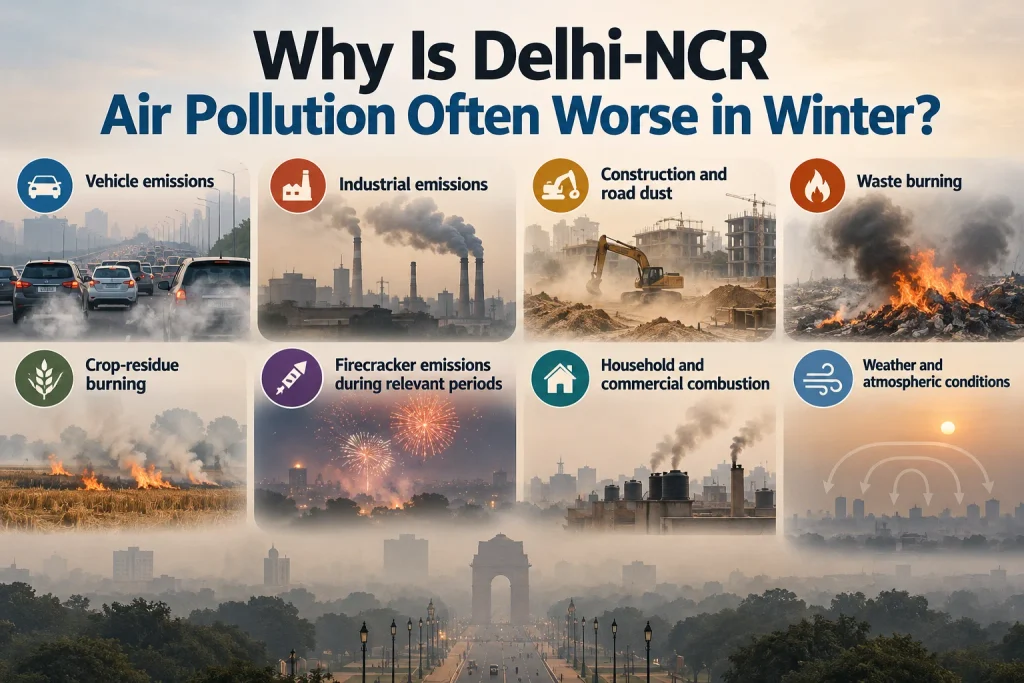
These can include:
- Vehicle emissions
- Industrial emissions
- Construction and road dust
- Waste burning
- Crop-residue burning
- Firecracker emissions during relevant periods
- Household and commercial combustion
- Weather and atmospheric conditions
During certain seasons, weather conditions can limit the dispersion of pollutants, allowing them to accumulate closer to the ground.
Research on Delhi has found that respiratory hospital visits tend to increase during autumn and winter periods when pollution is particularly problematic.
This is why many people notice that their cough, wheezing or breathing discomfort becomes more troublesome during the colder months.
Does an Air Purifier Protect Your Lungs From Pollution?
An air purifier can help reduce certain indoor airborne particles when the device is appropriately selected, maintained and used in a suitable room.
However, it is not a complete solution to outdoor air pollution.
Think of pollution protection as several layers:
Monitor → Reduce exposure → Improve indoor air → Use appropriate protection → Manage existing disease → Seek medical care when needed
An air purifier can be one part of that strategy.
It does not mean you can ignore outdoor exposure, smoke indoors or continue activities that worsen respiratory symptoms.
How to Protect Your Lungs From Air Pollution
You cannot control Delhi-NCR’s outdoor air quality by yourself, but you can reduce your personal exposure.
1. Check the air quality before outdoor activities
On days when air quality is poor, consider reducing unnecessary outdoor exposure, especially if you have asthma, COPD or another respiratory condition.
If you normally exercise outdoors, consider moving your workout indoors when pollution levels are particularly high.
2. Avoid exercising outdoors during severe pollution
Physical activity increases your breathing rate.
This means you may inhale more polluted air during strenuous exercise.
Walking, running or cycling outdoors during periods of very poor air quality may therefore increase your exposure.
3. Keep indoor air cleaner
Simple steps can help:
- Keep windows closed when outdoor air quality is particularly poor.
- Avoid smoking indoors.
- Avoid burning incense or other materials unnecessarily.
- Ensure adequate ventilation when outdoor air quality is better.
- Consider an appropriate air purifier if indoor particulate pollution is a concern.
- Clean dust regularly.
Remember that indoor air can also be polluted. WHO identifies tobacco smoke and polluting household fuels among important sources of indoor air pollution.
4. Wear a well-fitting mask when appropriate
When outdoor particulate pollution is high and exposure cannot be avoided, a well-fitting particulate-filtering respirator can reduce inhalation of fine particles.
The effectiveness depends heavily on fit and correct use.
A loose-fitting mask may not provide the same level of protection.
5. Don’t ignore respiratory symptoms
If you develop a cough every winter, repeatedly experience wheezing or become breathless while doing activities that previously felt easy, don’t simply assume that it is “because of pollution.”
Recurring symptoms deserve evaluation.
6. If you have asthma or COPD, follow your treatment plan
Do not stop prescribed inhalers or other medication because you feel better.
Likewise, don’t increase or change your medication without medical advice.
Your doctor may help you create a plan for managing symptoms during periods of poor air quality.
When Should You See a Pulmonologist?
Occasional throat irritation after exposure to polluted air may not require specialist care.
But persistent or recurring respiratory symptoms should not be ignored.
Consider consulting a pulmonologist in Noida or respiratory specialist if you experience:
- Cough lasting several weeks
- Repeated wheezing
- Breathlessness during routine activities
- Recurring chest tightness
- Frequent respiratory infections
- Persistent phlegm
- Reduced exercise tolerance
- Asthma symptoms that are becoming harder to control
- COPD symptoms that are worsening
- Repeated symptoms during pollution seasons
A doctor may recommend tests based on your symptoms and medical history.
Frequently Asked Questions (FAQs)
1. Can air pollution damage your lungs?
Long-term exposure to polluted air can adversely affect lung health and is associated with reduced lung function, respiratory infections and chronic diseases such as asthma and COPD. Fine particles such as PM2.5 can travel deep into the lungs.
2. What are the symptoms of air pollution affecting the lungs?
Common symptoms can include cough, throat irritation, wheezing, chest tightness, excess mucus and shortness of breath. Persistent symptoms should be evaluated because they can also have causes unrelated to pollution.
3. Does Delhi air pollution cause asthma?
Air pollution can contribute to the worsening or triggering of asthma symptoms, particularly in people who already have asthma. However, asthma has multiple causes and risk factors.
4. Can air pollution cause COPD?
Air pollution is a recognised risk factor for chronic respiratory diseases, including COPD. COPD also has other important causes, particularly tobacco smoke and occupational exposures.
5. Is PM2.5 harmful to the lungs?
Yes. PM2.5 is small enough to penetrate deep into the respiratory system and is considered one of the most harmful components of air pollution. Long-term exposure is associated with respiratory and cardiovascular health risks.
6. How can I protect my lungs from Delhi air pollution?
Reduce unnecessary outdoor exposure when air quality is poor, avoid strenuous outdoor exercise during severe pollution, keep indoor air cleaner, avoid indoor smoking and follow your doctor’s treatment plan if you have a respiratory condition.
7. Should I see a doctor for a pollution-related cough?
If a cough is persistent, recurrent or accompanied by wheezing, breathlessness, chest tightness or reduced exercise tolerance, it is sensible to consult a doctor. A lung specialist in Noida can evaluate whether the symptoms are related to pollution, asthma, COPD, infection or another condition.
8. Can healthy people be affected by Delhi-NCR pollution?
Yes. Healthy people can experience respiratory irritation and symptoms after exposure to polluted air. Research in young non-smokers from Delhi-NCR has also reported poorer pulmonary-function measures compared with a lower-pollution comparison group.
Conclusion
Air pollution may be part of everyday life in Delhi-NCR, but persistent cough, wheezing or breathlessness should not become something you simply accept.
Your lungs have an enormous capacity to work quietly in the background—but they also need protection, particularly when the air around you is unhealthy.
If you are experiencing recurring respiratory symptoms, getting evaluated early can help identify conditions such as asthma, COPD or other lung problems and guide appropriate management.
For patients looking for a pulmonologist in Noida, respiratory specialist in Noida or lung specialist in Noida, Rama Hospital can provide evaluation and respiratory care based on individual symptoms and clinical needs.
Protect the air you breathe. And when your breathing changes, listen to what your lungs are telling you.